Horror

Art of darkness | 14 September 2017

Stephen King, 69, has sold more than 350 million books, and tries not to apologise for being working-class, or imaginative, or rich. The snobbery has ebbed a little, though; in 2003 he won the National Book Foundation’s Medal for Distinguished Contribution to American Letters, and now the BFI is screening a series of adaptations of his novels, which show how versatile he is. Why can’t you write stories like Rita Hayworth and Shawshank Redemption, a woman asked him once. I did write it, he told her, but she did not believe him. King has published 59 novels, but he is a recovering addict and can’t remember writing them all. Most of Cujo (1981), a story about a rabid dog and adultery, is news to him.

Nut job

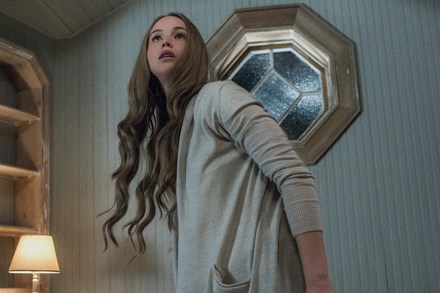
The film-maker Darren Aronofsky says he wrote Mother! in five days as if in a ‘fever dream’ and, as a general rule, what happens in a fever dream should stay in the fever dream, as the content will be plainly nuts. This is plainly nuts. This is even plainly nuts with an exclamation mark. Plainly nuts! However, it’s never plainly dull, so it does have that going for it. I think. Described as a psychological horror thriller, the set-up has a poet and his younger wife living in a magnificent, isolated house in the countryside that she is doing up. She is Mother (Jennifer Lawrence) and he is Him (Javier Bardem). She is in thrall to Him, and exists only to serve Him, while he is suffering from writer’s block and is distant.

Do not be afraid

From our UK edition

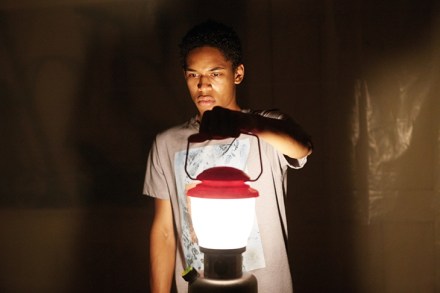
It Comes at Night is a horror film and I can’t say horror is my favourite genre. In fact, as far as I can see, I haven’t reviewed a horror film since 2009 (Paranormal Activity; scared the bejeezus out of me). But I’d read that this was clever, engrossing and original, so why not? My bejeezus can take it once every eight years, surely. So we were braced, my bejeezus and I, but rather unnecessarily, as it turned out. This is not especially scary (thankfully, but even so) and, what is more, the storytelling is so spare that I never understood what ‘it’ was and whether it did come at night or at any other time. Mid-afternoon, say. The film is written and directed by Trey Edward Shults, whose 2016 breakthrough film, Krisha, was terrific (look it up).

Assayas’ Personal Shopper is slick, unnecessarily complex and totally irrelevant

From our UK edition

Creaking doors, rustling leaves and leaky taps make up the soundtrack of Olivier Assayas’ improbable horror film Personal Shopper. But the most unnerving (and grating) sound in this supernatural fashion show are the iMessage alerts that may or may not be coming from the beyond. If that sounds ridiculous, that’s because, like so much else in this baffling film, it is. Assayas has made some excellent films over the past two decades and more, and I think his nosedive with Personal Shopper can be explained by his latest muse, Kristen Stewart. Sure, she’s pretty – if that emaciated-junkie look turns you on. But why the former Twilight star has turned Assayas’ head is simply beyond me.

Worming out the truth

From our UK edition

In Delmore Schwartz’s story ‘In Dreams Begin Responsibilities’, a young man dreams he is watching his father and mother’s engagement onscreen from a seat in a cinema. Weeping at the certain knowledge of the pain to come, he’s patted on the back by a woman. ‘There, there,’ she says, ‘all of this is just a movie.’ In a way, this moment distils the challenge of all oneiric narratives — it’s a fiction within a fiction, one in which anything can happen, but without real-world consequences. In this dark, brilliantly controlled debut, the Argentinian Samanta Schweblin uses the fabric of a dream to weave a novel in which everything is at stake and at risk: identity, love and existence.

Dumb and dumber | 5 January 2017

From our UK edition

Katie Hopkins did something dreadful this week, which is not unusual, because she craves such things. She retweeted praise — also not unusual, for she is narcissistic for a masochist — from a Twitter account called AntiJuden SS. The page even featured a swastika, should AntiJuden SS not have been clear indication enough. For Hopkins, however, neo-Nazi praise is a dog making love to your ankle. It would repel most people, but for her it still counts. Fake outrage begat fake outrage and Hopkins de-tweeted the retweet, and apologised: ‘My New Year’s resolution is to show contrition.’ To show contrition, not to be contrite; that is quite precise for Hopkins.

Whisper who dares

From our UK edition

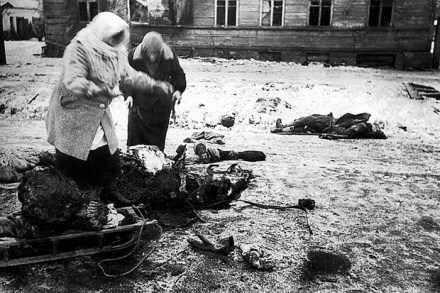
Stand aside, Homer. I doubt whether even the author of the Iliad could have matched Alexis Peri’s account of the 872-day siege which Leningrad endured after Hitler’s army encircled the city in September 1941. I never knew, for example, that if an adult starved for months on a few ounces of bread daily, a sip of soup and very little water — if they were lucky enough to get their daily rations — you couldn’t tell when they were naked whether they were male or female. I wouldn’t have believed that starving parents might eat their dead children, or vice versa; yet 1,500 Leningraders were arrested for cannibalism.

Deadlier than the male | 3 November 2016

From our UK edition

Teenage girls all over the world have suddenly developed electro-magnetic powers that can be unleashed on anybody who bugs them. The effect of these electrical jolts ranges from a tingly sensation to scarring, shock, pain, permanent disability, dismemberment and sometimes death. So girls have all the ‘power’ now. Older women soon start zapping too, and thereby move into high office and make millions. It is the end of patriarchy as we know it: almost overnight, women’s tolerance of bullying and sexual harassment sinks to zero, and men start dropping like flies. They now become the world’s cowering victims, servants, slaves and playthings. Men have to adapt swiftly to their new lowly status, and to kinky, often catastrophic, types of sex.

Looking for treasure island

From our UK edition

It is not easy to avoid clichés when writing about J.M.G. Le Clézio. Born in Nice in 1940, the recipient of the 2008 Nobel Prize for Literature is known in the Anglophone world as an ex-experimental novelist. His early work, exploring language and insanity, was praised by Michel Foucault. But since the 1970s his style has become more mainstream and his subjects — childhood, travel and landscape — more lyrical. Reviewers quibble over the quality of translations, especially when there are two of the same novel in relatively quick succession. Le chercheur d’or (The Prospector) (1985), was translated into English by Carol Marks in 1993, and has now been retranslated by C. Dickson.

The American dream goes bust

From our UK edition

One happy aspect of Lionel Shriver’s peek into the near future (the novel opens in 2029) is the number of unusually rounded elderly characters she presents. Her pitiless eye notes every mark of age and vanity in the older generation of the Mandible family, but they remain in robust health, sharp without being merely spry, and full of personality. They have too much life as far as the younger family members are concerned, waiting impatiently for the wealth to trickle downwards. Jayne and Carter, already in their sixties, will be disappointed, for Shriver’s doomsday scenario concerns a catastrophic devaluation of the dollar which wipes out the family fortune overnight. The Mandibles descend the social order rapidly, along with everyone else in the United States.

Humour and horror for children

From our UK edition

In the Californian town of San Bernadino, children are going missing; smiling faces grace a gallery of milk cartons. One September evening in 1969, Jim Sturges’s brother Jack rides under a bridge and never comes out. All that’s left is his Sportcrest bike, its front wheel spinning. Forty-five years later, 15-year-old Jim Junior lives in a state of reluctant siege. Traumatised by loss, his father has armour-clad their home, calling the cops if Jim gets home seconds after sunset. Jim has other problems, too; he and his friend Tub have caught the eye of Steve Jorgensen-Warner, the school bully. And now something nasty seems to be emerging from the sewers.

The most expensive typing error ever?

From our UK edition

In Paul Gallico’s 1939 novel The Adventures of Hiram Holliday, the hero’s journey is set in motion by a comma. Hiram is a copy-reader on a New York morning paper, and the comma — ‘eventually known as the $500,000 comma’ — is one he inserts into a contentious article that saves his employer in a libel case. The publisher rewards him with a $1,000 bonus and a month’s paid vacation, and he sails for Europe, where he fights Nazis and rescues a princess. In real life, sadly, publicity comes not to the Hirams of the world but to the anti-Hirams. Another one had his day in the stocks last week, when the High Court gave its judgment on what may eventually be known as the £8.8 million ‘s’.

Cronenberg attempts a teleportation from cinema to fiction. Cover your eyes…

From our UK edition

Following his beginnings as a science-fiction horror director, David Cronenberg has spent the past decades transforming himself into one of cinema’s most literary filmmakers. He has adapted for the screen — often brilliantly — novels by J.G. Ballard, William Burroughs and Don DeLillo. In each, he has paraded his obsession with lurid mutations in human form wrought by technology, disease and the imagination. In Crash (1996), he had bodies melding with machinery. In Naked Lunch (1991), he had bodies melding with insects — plus insects melding with typewriters.

Education in horror

From our UK edition

When my brother and I were teenagers growing up in the arse end of nowheresville — Bromsgrove to its friend — we were mainly looked after by Nanny VHS. When my brother and I were teenagers growing up in the arse end of nowheresville — Bromsgrove to its friend — we were mainly looked after by Nanny VHS. Every day, Mummy would take us to the rental store to hire a new video so as to keep us off her back. Sometimes it would be war porn, like The Deerhunter, which I think we must have watched about eight times — and the key Russian Roulette scene about 500 times. Sometimes it would be horror porn like Shivers or the Texas Chainsaw Massacre. I’d quite forgotten I’d seen Shivers until I watched A History of Horror with Mark Gatiss (BBC4, Monday).

Stephen King – return of the great storyteller

From our UK edition

Stephen King’s latest novel, Mr Mercedes, is dedicated to James M. Cain and described as ‘a riveting suspense thriller’ — a phrase so closely approaching 100 per cent semantic redundancy (a non-riveting thriller? A thriller entirely free of suspense?) that it tells us precisely nothing. All it does is declare that the reader will keep turning the pages. Which we will. That’s what King makes us do. Except Mr Mercedes isn’t, on the surface, a thriller; and you can bet that the consensus will be that King is writing what will be called ‘off-piste’. It’s a slender book, by his standards — only 400 pages — you can get it in your briefcase. There’s nothing particularly weird.

Across the literary pages: Jeanette Winterson

From our UK edition

The fanfaronade for Ian McEwan's latest book Sweet Tooth, a seventies spy novel tantalisingly based on his own life and featuring a cameo from Martin Amis, has begun ahead of its publication date tomorrow. Two puff interviews (one in the Guardian and a slightly sexier one in the Daily Mail) with McEwan managed to include everything we already know about him. The first review in the Financial Times promises a 'rich and enjoyable' read. Wonderful. Given we'll be hearing quite enough about the book (which wasn't–gasp–nominated for the Booker Prize) we'll look at another big beast captured in the literary pages this week: Jeanette Winterson. The Daylight Gate is the second novel in the Hammer literary imprint series after Helen Dunmore's The Greatcoat.

Mary’s secret

From our UK edition

The story is well known. One wet summer by the shores of Lake Geneva, Mary Shelley — 18 years old, living out of wedlock with the poet Shelley — had a horrifying dream, one that she would later write as the novel Frankenstein. What is less well known is that another of the key pillars of modern horror fiction — the vampire myth — was born during that same extraordinary holiday. Shelley and Mary had taken lodgings near Lord Byron, recently escaped from England following the scandal of his divorce, and — many speculate — incestuous affair with his half-sister. Accompanying him was his handsome and neurotic doctor, Polidori. In Shelley's party was Mary's half sister Claire, already pregnant by Byron and desperate to see him again.

Who’s the real monster?

From our UK edition

‘The first monster that an audience has to be scared of is the film-maker. They have to feel in the presence of someone not confined by the normal rules of decency.’ Thus decreed Wes Craven, that maestro of horror who gave us, among other gems, The Last House on the Left (1972), in which a girl is forced to urinate on herself by a gang of rapists. And on some level, he is obviously right. But as Jason Zinoman points out in his deft study of the rise of New Horror — that is, horror movies of the late 1960s and 1970s, which were more realistic, and so a hell of a lot scarier, than the Hammer-style schlock that had gone before — the pioneers of the style actually tended to be mild-mannered, geeky types, at least to outward view. Peaceniks. Film buffs.

BOOKENDS: Flesh and blood

From our UK edition

Flesh. Lots of flesh. That was the simple promise of a Hammer horror film. In this collection of classic Hammer posters (The Art of Hammer by Marcus Hearn, Titan, £24.99) we have cleavages, writhing torsos and shining thighs aplenty. But it’s not just that kind of flesh. Over most of our female subjects leers a monster (usually played by the magisterial Christopher Lee), threatening to butcher their curves and leave behind a carcass. Little wonder that the blood-red acrylic is applied so liberally. More interesting, although generally less striking, are the posters that don’t follow the formula. The horribly sensationalist advert for The Camp on Blood Island (1958) carries the tagline, ‘Jap war crimes exposed!

The child is not there

From our UK edition

The ghost story is a literary form that favours brevity. Its particular emotional effects — the delicious unease it creates, the shapeless menace and the unsettling uncertainty — work particularly well in concentration, as both Henry James and M. R. James knew so well. A ghost story does not need distractions. Susan Hill has already established herself as a distinguished modern exponent of the genre with The Woman in Black and The Man in the Picture. She returns to it in her latest novel — or, rather, novella, The Small Hand. It is set firmly in the present, in a world with emails and trips to New York; but, as so often with a ghost story, it is also full of echoes from the past. Adam Snow, the possibly unreliable narrator, is an antiquarian bookseller.