Horror

M3GAN is a biting satire of screen-obsessed parenting

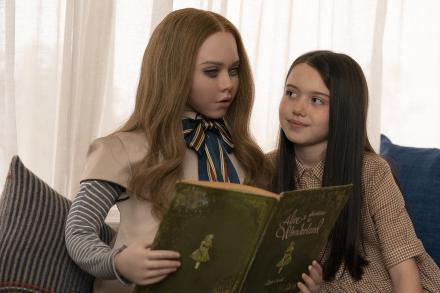
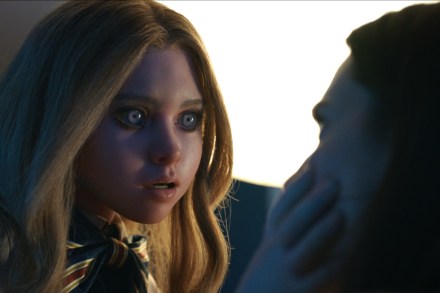
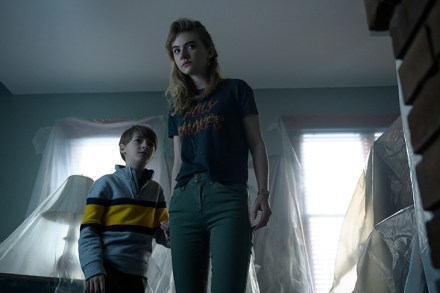
There’s a bit of moviegoing conventional wisdom that says January is the dumping ground for Z-list schlock films, all the genre fare not good enough for the holiday or summer seasons. And that’s why M3GAN — directed by Gerard Johnstone, and boasting story and production credits from legendary horror/thriller director James Wan — is such a pleasant surprise. It’s a nasty little cinematic bonbon packed with memorable images, and one that manages to say a few interesting things about modern life. After eight-year-old Cady (Violet McGraw) witnesses her parents’ deaths in a horrific auto accident, she’s sent off to live with her single aunt Gemma (Allison Williams).

M3gan is a tale of millennial mothering

If horror films today are largely read as political satires or commentaries, then the “moral” of Gerard Johnstone’s M3gan, about a sentient robot doll unwisely invited into the family home, is clear enough. Playing on our fears of the AI technology increasingly being used as “labor-saving devices,” M3gan is a tale of bad mothering and the price to be paid by career-oriented millennial women if they try to “have it all.” This may make it catnip for trolls and conservative commentators who love to chide women for any parenting style that doesn’t involve frilly aprons and a plastered-on smile. But you need to squint a bit to see this latent message. If you do, you’re missing a more complex (and more horrifying) story.

Halloween Ends succeeds because it’s barely a horror film

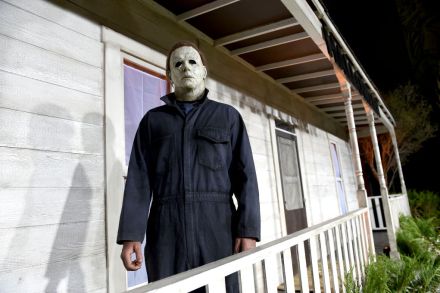
Michael Myers has always occupied a curious space among horror icons. “The Shape,” ever since he first appeared in 1978, has been silent and implacable, a killer who acts from no clear motivation at all. Whereas Freddy Krueger and Jason Voorhees and Leatherface all possess intricate, tangled backstories, Myers began as an avatar of something else: the presence of an evil that cannot be psychologized away. That sort of evil, as a concept, isn't really in vogue so far as modern horror goes. Rob Zombie’s 2007 reboot tried to retool Myers's backstory by blaming his murderous tendencies on bad parenting. And plenty of other contemporary horror flicks, from The Babadook to Smile, place psychological trauma and its consequences front-and-center.

Long live the New England horror story

There is a spot, about a twenty-minute drive from the New England town in which I grew up, where the devil is said to appear to hikers. It isn't known why he does this or if he's ever decent enough to bring a six-pack with him. But the legend is such that a high school friend of mine once refused to go there, presumably out of fear that she'd come back with a hex. That's New England for you, where growing up you assume that every town has its eerie old house and every county its howling boarded-up insane asylum. That diabolical trail is just one of countless spooky yarns native to the region, catalogued in collections of ghost stories you can buy in bookstores and airports.

new england

Wanted this Halloween: terror films, not horror

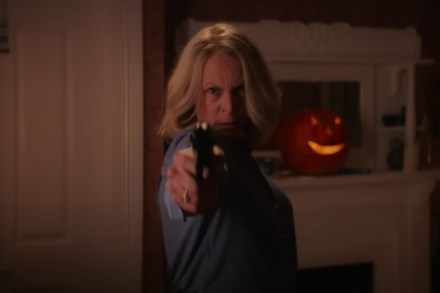
Yet another Halloween film was released last weekend, this time illogically entitled Halloween Kills. By now, the saga is about as well-known as the Bible, and considerably less enjoyable. There is an ill-intentioned madman on the loose named Michael Myers, who wears a faceless white mask. He enjoys slicing up various members of the supporting cast unfortunate enough to have agents who did not negotiate them multi-picture deals. Opposing Myers, primus inter pares, is the character Laurie Strode, who has on some occasions been portrayed as his understandably resentful sister, and on other occasions as merely a resourceful woman who manages to get the drop on him before, Lazarus-like, he rises again in time for the next installment.

halloween

Lurking beneath the gore are moments of wit and sensitivity: Squid Game reviewed

From our UK edition

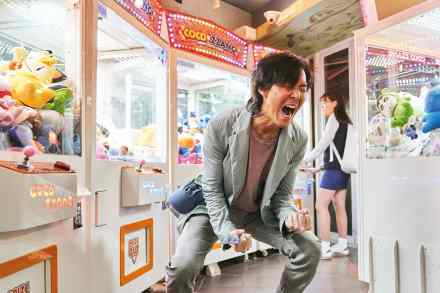
Should we be worried that Squid Game is the most popular show in Netflix’s history? If it’s a case of art imitating life, then the prognosis for our civilisation is not good: most of us will die, horribly, sooner rather than later, but for the very few who survive there will be untold riches to enjoy in the company of the cruel and capricious controlling super-elite. Squid Game is a Korean update of the Japanese cult classic Battle Royale (2000) which spawned — or revived; let’s not forget Rollerball (1975) — the genre known as ‘death games’. These films take place in a dystopian future where ordinary, desperate folk compete in a series of gladiatorial to-the-death contests for the amusement of the ruling oligarchy.

Stitch-up: why will no one touch The Human Centipede director’s new film?

It’s no secret that political correctness has stunted pop culture. Comedians walk on eggshells for fear of offending the wrong person. A day hardly goes by without a public apology for old comments. Hollywood is perhaps furthest down this road to insipidity. It means creative types who enjoy pushing boundaries, offending viewers, making even the most hardy of us as uncomfortable as humanly possible, can’t thrive. One such person is the director Tom Six. In 2009, Six made popculture history with his shock-horror flick The Human Centipede — a movie about a Nazi-like German doctor who kidnaps and stitches his victims together, anus to mouth — as a sadistic experiment.

six centipede

Gripping high gothic psychological horror: Saint Maud reviewed

From our UK edition

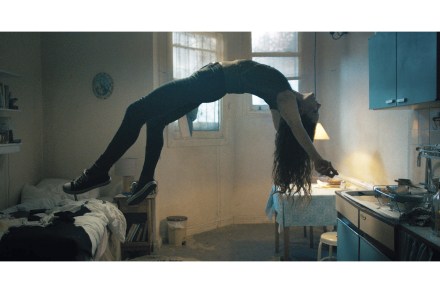
Saint Maud is a first feature from writer-director Rose Glass and it’s being billed as a horror film. But it’s not your common-or-garden horror film. There are no chases through woods. No one watches a doorknob being twisted from inside the room. Also, there are no maypoles. (Always bad news, maypoles.) Instead, it’s more of a character study, as well as a study of religious fervour, told in the high gothic style, grippingly, with wonderful originality and no dilly-dallying. Eighty minutes, and that’s it. (Sorkin, Nolan, Scorsese, Tarantino… please take note.) The film stars the terrific Morfydd Clark who, I think, you cast when you can’t get Molly Windsor who, in turn, you cast when you can’t get Morfydd Clark.

An extraordinary debut: Make Up reviewed

From our UK edition

Make Up is the first full-length film from writer--director Claire Oakley, set in an out-of-season holiday park on the Cornish coast where the wind blows, waves crash, rain lashes and gulls screech so you know it’s not a rom-com (foxes shriek in the night too). But while it’s easy to say what it isn’t, it’s harder to say what it is. It’s a thriller but not quite a thriller, and a horror flick but not quite a horror flick, and a psychosexual fantasy but not wholly a psychosexual fantasy… It may be we can settle only on one thing, and the one thing is this: it is very, very good.

Too edgy and clever to be wasted on kids: Netflix’s Locke & Key reviewed

From our UK edition

One of my perpetual gnawing terrors is that I’ll recommend a series that looks initially promising but turns out to be total rubbish, meaning I’ll for ever have thousands of viewers’ wasted lives and disappointment on my conscience. But my even greater fear is that I’ll peremptorily condemn something after one or two episodes which subsequently reveals itself to be a near-masterpiece. This almost happened with Locke & Key (Netflix). ‘You realise I’m watching this on sufferance. The second you’ve seen enough to review, we’re moving on to something else,’ declared the Fawn. And I could sort of see her point.

The haunting of Russell Kirk

Russell Kirk’s novel Old House of Fear became a surprise bestseller when it was first published in 1961. First issued in hardcover by a small publishing house called Fleet, Old House quickly went through multiple paperback reprintings by Avon Books. Mary MacAskival, the red-haired love interest, has an increasingly tantalizing appearance on Avon’s succession of cheesecake covers. ‘Rich in atmosphere and intimations of impending doom… from the first muffled cry to the final midnight scream,’ declared the New Yorker of an edition on whose cover Mary sneaks around a Gothic portal in pink pajamas. ‘Wild excitement, sadistic violence.

russell kirk fusionism virtue

Scooby Doo with better CGI: Doctor Sleep reviewed

From our UK edition

Wheeeere’s Johnny? Nearly 40 years ago Jack Nicholson went berserk in a snowbound Rockies hotel, smashing an axe through a bathroom door behind which a pop-eyed Shelley Duvall cowered in terror. It is one of cinema’s truly iconic scenes, once voted the most petrifying in movie history. Now award yourself points if you remember that the family in The Shining were called Torrance. They had a son, Danny, a psychic little boy haunted by apparitions as he pedalled on his trike along the corridor’s hallucinogenic carpets. Danny has now grown up into Dan Torrance and assumed the form of Ewan McGregor who stars in the sort-of-sequel Doctor Sleep.

Our appetite for ‘folk horror’ appears to be insatiable

From our UK edition

This eerie, shortish book apparently had an earlier outing this year, when it purported to be a reissue of a 1972 ‘folk horror’ novel by Jonathan Buckley. Now John Murray reveal it as the third novel by Andrew Michael Hurley, whose gothic debut, The Loney, received widespread plaudits. Folk horror, a term popularised by the actor and writer Mark Gatiss, is one of those definitions, like ‘new weird’ or indeed, science fiction, useful to and immediately understood by those already familiar with the territory, but harder to nail down. It’s largely British, rooted in landscape, in isolated rural communities, in the subversion of religious practice and the suspicion that older, pagan forces are at work, sowing discord, suspicion, mayhem and death.

The Hunt and conservative cancel culture

Cancel culture claimed another victim this week. This time it was The Hunt, a Universal Studios thriller in which a group of — presumably liberal — elites go around hunting and killing ‘deplorables' for sport. The premise is awful, and it does nothing to encourage the kind of spiritual healing Marianne Williamson correctly believes our nation so badly needs. https://www.youtube.com/watch?v=x8IifEu67yU But consider some other cinematographic successes. ABC’s Designated Survivor tells the story of a terror attack that wiped out the entire American government, leaving a lowly Secretary of Housing with the job of Commander in Chief.

the hunt

Meet the folks

From our UK edition

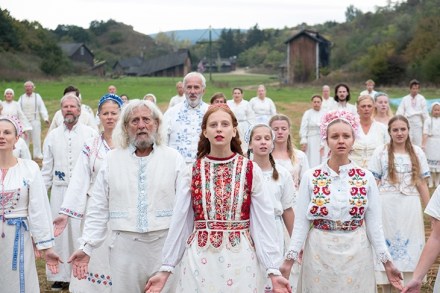
Midsommar is the latest horror film from Ari Aster, who made Hereditary, which starred Toni Collette and was a sensation. That was a domestic, claustrophobic scenario packed with jump scares — well, jump-ish scares; I wasn’t that scared, actually — whereas this is pastoral and relies more on building a quiet dread. It’s set in the remote countryside where a pagan community has its own superstitions and rituals and ‘elders’ and a maypole — and they are never good news, maypoles. This is clever and gripping in its own right, but it is also familiar and will certainly put you in mind of The Wicker Man. That is, the 1973 original, not the 2006 remake starring a deranged Nicolas Cage jump-kicking women in the throat, which we will never talk of again.

Sweet nothings

From our UK edition

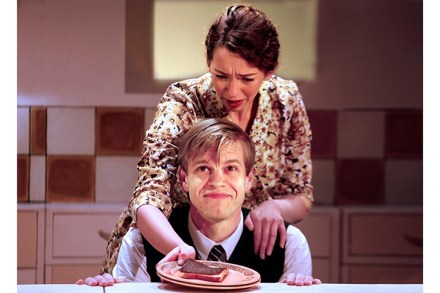
Nigel Slater is popular because he’s an exceptionally meek cook. Not for him the sprawling restaurant empire or the transatlantic TV career to excite envy and loathing. He writes about his trade in simple vivid prose and his bestselling memoir, Toast, has become a play. Young Nigel enters as a 1960s schoolboy, with shorts and a side parting, living in a posh suburb of Wolverhampton. Dad is a kindly but remote presence, an alien in his own home. Mum is a braindead kitchen-limpet who encourages Nigel’s first culinary experiments. The family are adventurous. They try spaghetti bolognese. Dad takes charge at the dinner table and loads each plate with a heap of yellow string topped by garnish the colour of lava spewed from a volcano. Nigel pronounces the dish quite good.

Resident Evil 2

From our UK edition

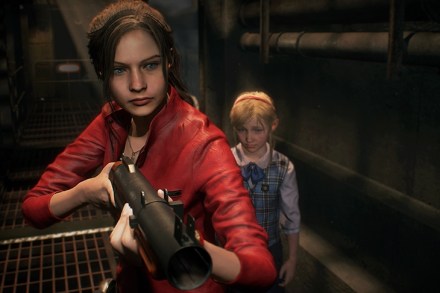
Grade: B Resident Evil 2 takes the original zombie shooter, which has become a cult classic and, to many, the quintessential horror video game, and gives it a lick of digital paint. Gone are the blocky hallways of the Raccoon City police station, along with the slow moving hordes of undead who, if you squinted, might’ve had a pixel of drool at the corner of their mouth. In their place is a German expressionist labyrinth of disorientating shadows, and antagonists so realistically putrefied the game ought to come with the sort of warnings they put on particularly pungent cheese.

No fear | 21 June 2018

From our UK edition

Hereditary is the horror film that has been described as a ‘ride of pure terror’ and likened to The Exorcist and Rosemary’s Baby and The Shining, to which I can say only: in its dreams. Given I’m such a wuss when it comes to anything frightening — the child-catcher from Chitty Chitty Bang Bang still scares the living daylights out of me — I’m rather thankful, but I’m perplexed as to why it received such rave reviews. Ride of pure terror? I’ve had more terrifying rides on the teacups at the fair. I saw it at the paying cinema with my adult son and his girlfriend, who were also bored out of their minds and could only conclude that ‘all other critics are idiots’.

To hell and back

From our UK edition

The Exorcist opened in 1973 accompanied by much hoo-ha in the press. Scenes of panic, nausea and fainting were recorded at every performance. Movie-goers showed up to witness mass hysteria rather than to enjoy a scary movie. This revival, produced by Bill Kenwright, targets the early 1970s demographic. At press night, the stalls were thronged with pensioners eager to relive a lurid evening from their adolescence. As one who dislikes shocks of any kind, I sat through this ordeal with my eyes bent towards the floor and my fingers wedged so firmly in my ears that their tips turned crimson. The show opened with a CRUMP loud enough to shake the theatre to its foundations. Everybody screamed. Then they all giggled. This pattern of shrieking followed by feathery tittering continued throughout.

The gloves will come off

From our UK edition

You know where you aren’t with director Yorgos Lanthimos. The Greek allegorist creates parallel worlds which superficially resemble our own. In Dogtooth an overweening patriarch incarcerates his three adult children in a state of infantilised innocence. The Lobster punishes those unable to find a mate by transfiguring them into animals. His acerbic commentaries on flawed modernity feel like lurid horror stories the ancients forgot to write down. The Killing of a Sacred Deer invokes pagan sacrifice in its title. Iphigenia is even mentioned in dispatches — the subject of a schoolgirl essay that doubles as a mythological flare. The film opens on a close-up of open-heart surgery in which a sickly pink organ throbs garishly.