Horror

Zach Cregger’s Weapons is a new kind of cinema

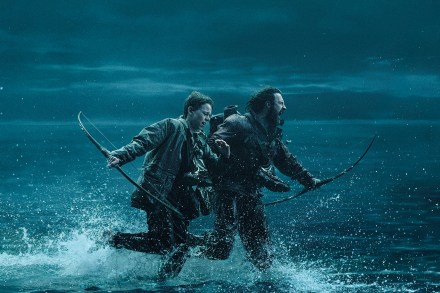
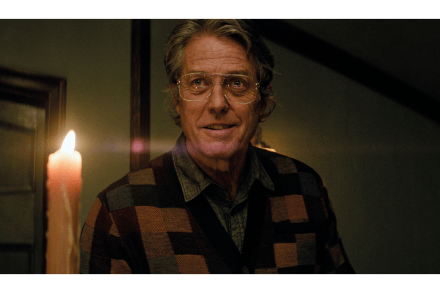
Weapons, Zach Cregger’s sophomore picture after the acclaimed Barbarian, was a conspicuous success story in its opening weekend: brilliant reviews, an A- CinemaScore from audiences (rare for the horror genre, in which anything above a B is considered a major hit) and, of course, a massive box office. Its first weekend gross was $43.5 million, an astonishing amount for a film without an existing intellectual property, A-list stars (although Josh Brolin, Alden Ehrenreich and Julia Garner are hardly unknowns) or big-name director.

Weapons
the hunt

The Hunt and conservative cancel culture

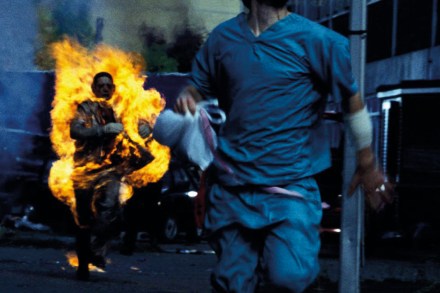
Cancel culture claimed another victim this week. This time it was The Hunt, a Universal Studios thriller in which a group of — presumably liberal — elites go around hunting and killing ‘deplorables' for sport. The premise is awful, and it does nothing to encourage the kind of spiritual healing Marianne Williamson correctly believes our nation so badly needs. https://www.youtube.com/watch?v=x8IifEu67yU But consider some other cinematographic successes. ABC’s Designated Survivor tells the story of a terror attack that wiped out the entire American government, leaving a lowly Secretary of Housing with the job of Commander in Chief.

This month in culture: January 2025

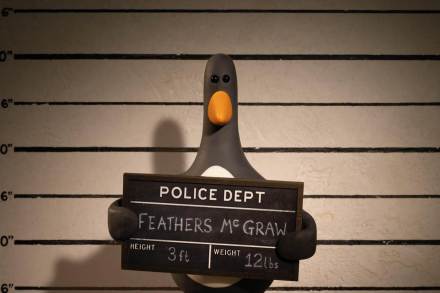
Wallace and Gromit: Vengeance Most Fowl January 3, Netflix The panic that gripped the McMorris household in November 2023 was rivaled by that of the great toilet paper shortage of 2020. Greater even, for this crisis could not be solved with a credit card and the willingness to fight hand-to-hand against fellow Costco members. Aardman Animations, the last bearable producer of children’s entertainment, was running out of clay. The sole remaining British factory that produced the stuff behind Wallace and Gromit and Shaun the Sheep had shuttered. Only a pitchfork would suffice. The advent of CGI has fried parental eyeballs with neon ever since Toy Story and only Aardman has resisted the trend, delivering us stop-motion Stan and Ollie routines.

culture

Stephen King’s You Like it Darker shows a master at his peak

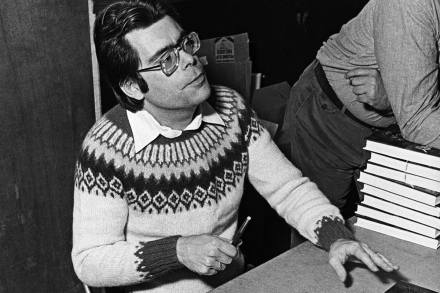
It is not hyperbole to call Stephen King the most influential horror writer alive. Across page and screen alike, nobody else can claim to have had such an expansive and lasting impact on popular culture. King’s name has become so commonplace that it’s easy to take it and him for granted, and to forget that behind the ultrafamiliar and now-ubiquitous branding there lies, in fact, a wild and strikingly original mind and a beating, bloody, passionate heart. You Like It Darker, King’s latest offering, is a highly accomplished and masterful collection of twelve short (and not so short) stories, all blistering examples of King’s powers. Though some have seen the light of day elsewhere, most are published here for the first time. All are worth the purchase.

King

The lamentable rise of VFX in horror films

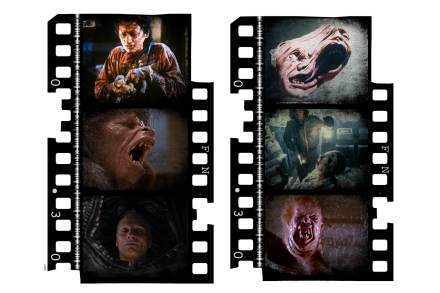
The Thing is not a monster movie. Sure, John Carpenter was remaking the 1951 The Thing from Another World, itself an adaptation of the 1938 pulp-sci-fi novella Who Goes There? — but it’s not a shlocky B-movie horror. It’s too vicious, cynical and psychological for that. Rather, it’s the ultimate paranoia thriller. For the unfamiliar, the 1982 flick is about a group of researchers, stuck in an Antarctic base, who discover a strange shape-shifting alien, which consumes its victims and then mirrors their look, smell, speech and manner. They’re all marooned together, being hunted down by an unearthly terror, and any of them — friend, stranger, dog — could be it, waiting to strike.

vfx horror films
carroll

Emily Carroll’s new graphic novel plays on our deepest fears

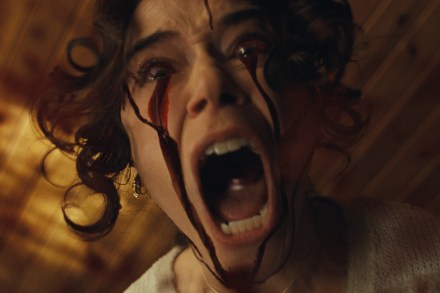
Emily Carroll’s new graphic novel, A Guest in the House, is an involving, beautifully plotted study of the madness of isolation, steeped in the tropes of fairy tale and horror. And, as all good fairy tales do, it confidently deals in the imagery of the unconscious. Narrated via an innovative combination of text and cinematic, sweeping illustration, it concerns the boundaries of the imagination, and the dynamics of a small family as it threatens to fall apart. Abby is a young wife, listless and bored, who has married an older man (David, a normal kind of guy, with that most humdrum of jobs: dentistry). The setting, depicted with haunting precision in muted tones, is 1990s Canada.

Why What We Do in the Shadows works

Before Taika Waititi achieved his current state of half-ironic, half-irritating ubiquity, he made small, often brilliant films. One of the most notable ones was the 2014 New Zealand comedy horror picture What We Do in the Shadows, which he co-created and co-directed with Flight of the Conchords star Jemaine Clement. Horror comedies are notoriously tricky to get right tonally, but the film — which admittedly leant far more heavily on the comedic aspects — was a modest box-office hit and became yet another step on Waititi’s stroll to Hollywood dominance.

what we do in the shadows

The Pope’s Exorcist isn’t scary enough

All worthwhile horror films are products of their culture. They distill its neuroses and fears, forcing protagonists to make value judgments with life-or-death stakes. And that’s why the genre continues to compel: beyond the adrenaline rush of jump scares, watching old chillers is like opening a metaphysical time capsule. They show how past generations understood their world. The exorcism subgenre tracks that pattern — only its questions tend to be explicitly religious. William Friedkin’s 1973 classic, arriving at the height of modernist theology, directly foregrounded the question of faith within a liberal world order.

Pope’s Exorcist

Knock at the Cabin is a better-than-average Shyamalan film

The thing about a new M. Night Shyamalan movie is that, going in, one never knows whether it’ll be “one of the good ones.” Few directors have quite as uneven a track record: in the wake of the much-loved The Sixth Sense, Unbreakable, Signs, and The Village, Shyamalan helmed a string of disasters, culminating in the big-budget catastrophe that was 2013’s After Earth. On the other hand, 2016’s Split and 2019’s Glass were both great. Knock at the Cabin falls somewhere in the middle. The film centers on a gay couple, Andrew and Eric (Ben Aldridge and Jonathan Groff, respectively), and their adopted daughter Wen (Kristen Cui), who are forced to confront a nightmare scenario. Holed up in a lonely cabin in the forest, they are accosted by a quartet of heavily armed outsiders.

M3GAN is a biting satire of screen-obsessed parenting

There’s a bit of moviegoing conventional wisdom that says January is the dumping ground for Z-list schlock films, all the genre fare not good enough for the holiday or summer seasons. And that’s why M3GAN — directed by Gerard Johnstone, and boasting story and production credits from legendary horror/thriller director James Wan — is such a pleasant surprise. It’s a nasty little cinematic bonbon packed with memorable images, and one that manages to say a few interesting things about modern life. After eight-year-old Cady (Violet McGraw) witnesses her parents’ deaths in a horrific auto accident, she’s sent off to live with her single aunt Gemma (Allison Williams).

M3gan is a tale of millennial mothering

If horror films today are largely read as political satires or commentaries, then the “moral” of Gerard Johnstone’s M3gan, about a sentient robot doll unwisely invited into the family home, is clear enough. Playing on our fears of the AI technology increasingly being used as “labor-saving devices,” M3gan is a tale of bad mothering and the price to be paid by career-oriented millennial women if they try to “have it all.” This may make it catnip for trolls and conservative commentators who love to chide women for any parenting style that doesn’t involve frilly aprons and a plastered-on smile. But you need to squint a bit to see this latent message. If you do, you’re missing a more complex (and more horrifying) story.

Halloween Ends succeeds because it’s barely a horror film

Michael Myers has always occupied a curious space among horror icons. “The Shape,” ever since he first appeared in 1978, has been silent and implacable, a killer who acts from no clear motivation at all. Whereas Freddy Krueger and Jason Voorhees and Leatherface all possess intricate, tangled backstories, Myers began as an avatar of something else: the presence of an evil that cannot be psychologized away. That sort of evil, as a concept, isn't really in vogue so far as modern horror goes. Rob Zombie’s 2007 reboot tried to retool Myers's backstory by blaming his murderous tendencies on bad parenting. And plenty of other contemporary horror flicks, from The Babadook to Smile, place psychological trauma and its consequences front-and-center.

Long live the New England horror story

There is a spot, about a twenty-minute drive from the New England town in which I grew up, where the devil is said to appear to hikers. It isn't known why he does this or if he's ever decent enough to bring a six-pack with him. But the legend is such that a high school friend of mine once refused to go there, presumably out of fear that she'd come back with a hex. That's New England for you, where growing up you assume that every town has its eerie old house and every county its howling boarded-up insane asylum. That diabolical trail is just one of countless spooky yarns native to the region, catalogued in collections of ghost stories you can buy in bookstores and airports.

new england

Wanted this Halloween: terror films, not horror

Yet another Halloween film was released last weekend, this time illogically entitled Halloween Kills. By now, the saga is about as well-known as the Bible, and considerably less enjoyable. There is an ill-intentioned madman on the loose named Michael Myers, who wears a faceless white mask. He enjoys slicing up various members of the supporting cast unfortunate enough to have agents who did not negotiate them multi-picture deals. Opposing Myers, primus inter pares, is the character Laurie Strode, who has on some occasions been portrayed as his understandably resentful sister, and on other occasions as merely a resourceful woman who manages to get the drop on him before, Lazarus-like, he rises again in time for the next installment.

halloween

Stitch-up: why will no one touch The Human Centipede director’s new film?

It’s no secret that political correctness has stunted pop culture. Comedians walk on eggshells for fear of offending the wrong person. A day hardly goes by without a public apology for old comments. Hollywood is perhaps furthest down this road to insipidity. It means creative types who enjoy pushing boundaries, offending viewers, making even the most hardy of us as uncomfortable as humanly possible, can’t thrive. One such person is the director Tom Six. In 2009, Six made popculture history with his shock-horror flick The Human Centipede — a movie about a Nazi-like German doctor who kidnaps and stitches his victims together, anus to mouth — as a sadistic experiment.

six centipede

The haunting of Russell Kirk

Russell Kirk’s novel Old House of Fear became a surprise bestseller when it was first published in 1961. First issued in hardcover by a small publishing house called Fleet, Old House quickly went through multiple paperback reprintings by Avon Books. Mary MacAskival, the red-haired love interest, has an increasingly tantalizing appearance on Avon’s succession of cheesecake covers. ‘Rich in atmosphere and intimations of impending doom… from the first muffled cry to the final midnight scream,’ declared the New Yorker of an edition on whose cover Mary sneaks around a Gothic portal in pink pajamas. ‘Wild excitement, sadistic violence.

russell kirk fusionism virtue