Horror

Glorious: Resident Evil – Requiem reviewed

From our UK edition

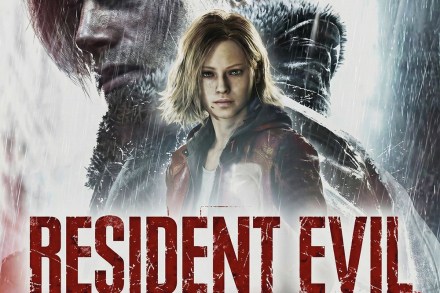
Grade: A Lordy. The Resident Evil survival horror series is three decades old. It probably qualifies by now as Sitting Tenant Evil. Picture it snacking on flies in just the sort of dingy, hasn’t-been-tidied-for-30-years rent-controlled apartment that would make a good setting for a scene in the game. We’re still waiting for the instalment in which the Umbrella Corporation – a biotech firm that makes Purdue Pharma look like a model of caution and probity – faces a class-action lawsuit (X button to file an amicus brief; circle button to object in cross-examination), so for now here’s more of the glorious same. After all these years, it’s still capable of being ace.

Zach Cregger’s Weapons is a new kind of cinema

Weapons, Zach Cregger’s sophomore picture after the acclaimed Barbarian, was a conspicuous success story in its opening weekend: brilliant reviews, an A- CinemaScore from audiences (rare for the horror genre, in which anything above a B is considered a major hit) and, of course, a massive box office. Its first weekend gross was $43.5 million, an astonishing amount for a film without an existing intellectual property, A-list stars (although Josh Brolin, Alden Ehrenreich and Julia Garner are hardly unknowns) or big-name director.

Weapons

I watched it between my fingers: Bring Her Back reviewed

From our UK edition

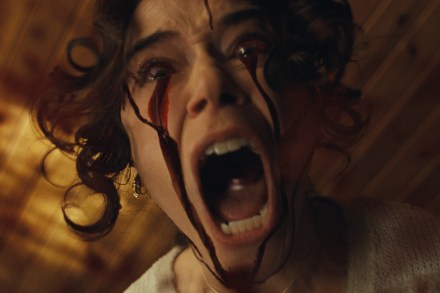
The Australian twins Danny and Michael Philippou started off as YouTubers known for their comically violent shorts – Ronald McDonald Chicken Store Massacre (2014) has accrued 67 million views. They then raised the money to make their first feature. This was the quietly disquieting Talk To Me (2022), which cost $4.5 million and made $92 million. Bring Her Back (they like three-word imperatives, these lads) is their second and it may not be as successful. It stars Sally Hawkins and this isn’t, alas, horror at its most fun, inventive and camp. This is horror horror: gory, grisly and one that properly goes for it at the end – which, if you are not a horror nut, can’t come soon enough.

Magnificently bloodthirsty: 28 Years Later reviewed

From our UK edition

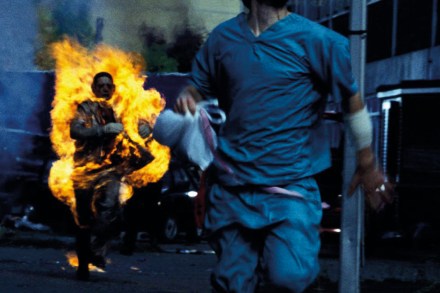
First it was 28 Days Later (directed by Danny Boyle, 2002), then 28 Weeks Later  (Juan Carlos Fresnadillo, 2007) and now Boyle is back at the helm with 28 Years Later, which is, as I understand it, the first in a new trilogy. This post-apocalyptic horror franchise could go on for ever. As the last film was generally (and rightly) regarded as a desultory cash grab, there is much riding on this one. The verdict? It’s entertaining but not outstanding. The biggest surprise is its tonal swerve into sentimentality. Jodie Comer and Ralph Fiennes, however, bring character and heft and, just to put your minds at rest, yes, it’s as magnificently bloodthirsty as ever.

The politics of horror

From our UK edition

Everyone forgets the actual opening scene of 28 Days Later, even though it’s deeply relatable, in that it features a helpless chimp strapped to a table and forced to watch doomreels of ultraviolence until it loses its little monkey mind and eats David Schneider. But it’s eclipsed by the famous sequence that follows where Cillian Murphy wakes in a hospital bed to find that he has slept through a deadly pandemic and the ensuing collapse of civilisation. As Murphy drags his not-yet-world-famous cheekbones through an eerily abandoned metropolis, we see Piccadilly plastered with the names and faces of the missing and the dead. Audiences in 2002 were reminded of the recent World Trade Centre attacks, which happened in the middle of filming.

A psychopath on the loose: Never Flinch, by Stephen King, reviewed

From our UK edition

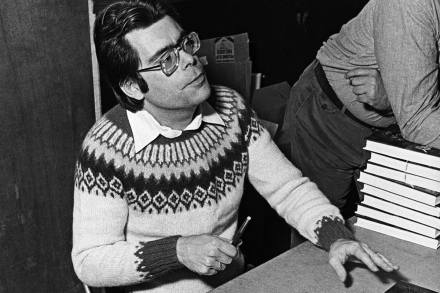
Stephen King, 77, is a writer of towering brilliance whose fiction appeals to a reading public both popular and serious. His 60th novel, Never Flinch, unfolds in Buckeye City, Ohio, where a serial murderer is on the loose under the alias of Bill Wilson – the name of the man who co-founded Alcoholics Anonymous. Wilson has sworn to kill 14 people in revenge for the death of a friend and former alcoholic who was framed and convicted for child pornography offences. The plot is steeped in AA lore (‘Honesty in all our affairs’) and an awareness of the deleterious effects of drinking to excess. It’s no secret that King is himself a recovering alcoholic.

Urban gothic: I Want to Go Home, But I’m Already There, by Roisin Lanigan, reviewed

From our UK edition

A horror story in three words: London property market. That’s the starting point for Roisin Lanigan’s brilliantly creepy debut novel, set in the sheer hell of being a young renter. Because once you’ve run the gamut of carbon monoxide-leaking boilers, coked-up estate agents, absentee landlords and frosty housemates (and been gouged in rental costs for the privilege), maybe a haunting isn’t a deal-breaker. The main character, Aine, is adrift in her twenties with a vaguely online job and a prescription for unspecified mental health issues. She’s also pathologically passive: she ends up in London because Laura, her best friend from university, asks to flatshare and Aine can’t think of anything else to do. ‘So why not London?

Proudly dumb – and all the better for it: The Monkey reviewed

From our UK edition

The monkey is an organ-grinder’s monkey toy. Wind up the key jutting out of its back, and its lips will part to reveal two rows of yellow grimacing teeth. Then its clockwork arms will wheel up and down, banging a little drum as fairground music plays. And then someone nearby dies in an extremely gory freak accident. Maybe their head will be sliced off in a knife-twirling incident at a teppanyaki restaurant and slide gently on to the grill. Maybe they’ll fall through the stairs and into a box of fishhooks and then set their head on fire over a gas hob, and then run outside and impale themselves on a wooden spike. Maybe some huge Rube Goldberg arrangement of faulty wiring and loose roofing tiles will cause their body to explode in a shower of soft crimson globs.

This month in culture: January 2025

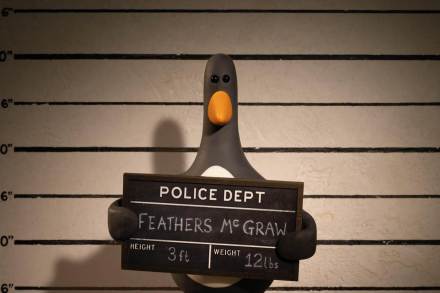
Wallace and Gromit: Vengeance Most Fowl January 3, Netflix The panic that gripped the McMorris household in November 2023 was rivaled by that of the great toilet paper shortage of 2020. Greater even, for this crisis could not be solved with a credit card and the willingness to fight hand-to-hand against fellow Costco members. Aardman Animations, the last bearable producer of children’s entertainment, was running out of clay. The sole remaining British factory that produced the stuff behind Wallace and Gromit and Shaun the Sheep had shuttered. Only a pitchfork would suffice. The advent of CGI has fried parental eyeballs with neon ever since Toy Story and only Aardman has resisted the trend, delivering us stop-motion Stan and Ollie routines.

culture

Hugh Grant is an amazingly convincing villain – who’d have thought it?

From our UK edition

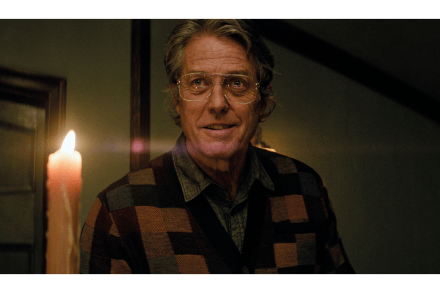
Heretic is the latest horror film from writer-directors Scott Beck and Bryan Woods (A Quite Place) and stars Hugh Grant, now enjoying the villainous chapter of his career. (See: Paddington 2, The Undoing, The Gentlemen, etc.) Here, he plays a fella who imprisons two young Mormon missionaries as he seeks to torment and terrify them into renouncing their faith. What Grant’s most good at, it turns out, is being thoroughly bad Though the film doesn’t quite land and may not be as clever as it thinks it is, it builds tension nicely, and it’s enjoyable watching Grant have so much fun. All those years as a rom-com star when what he’s most good at, it turns out, is being thoroughly bad.

Make Halloween scary again

From our UK edition

It was the early evening of 31 October and I was three years old, sitting in the living room with Mum, on the brink of bedtime, when I turned to the corner and a decorative wicker armchair. (It was the 1980s.) ‘Mum,’ I enquired sweetly, ‘who’s that man sitting there?’ Mum, suitably unnerved, asked me for details about the invisible guest, whereupon I outlined a farmer resembling every description Mum had heard of her great-grandfather. Her great-grandfather was a 19th-century ploughman who worked the fields where our home would later be built. My parents had never spoken of him in my presence.

The mystery of Area X: Absolution, by Jeff VanderMeer, reviewed

From our UK edition

I have to confess that I am not a fan of horror fiction. I have a stack of unread H.P. Lovecrafts sent to me by enthusiasts. M.R. James scares me silly. Even Elizabeth Bowen’s ghost stories remain neglected among her other much-loved books. I have, however, been impressed over the years by writers usually identified as belonging to the movement described in the late 1990s by M. John Harrison as the New Weird, which marries chiefly supernatural themes to realism or naturalism. As a stylist, Harrison remains the greatest of these writers. They included Angela Carter, China Miéville and Jeffrey Ford. The movement is naturally associated with the science fiction New Wave, whose best known practitioner was J.G.

Not for the squeamish: The Substance reviewed

From our UK edition

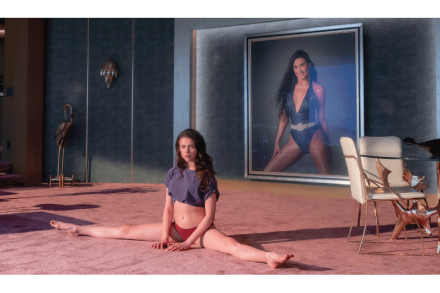
Both horribly familiar and wonderfully shocking, this body-horror film written and directed by Coralie Fargeat does a very traditional thing – turning the scramble for youth and beauty into a monster of immeasurable disgust and immorality – in a huge way. There is nothing minimal or restrained or overly clever here; nothing of the nuance in language or wit that makes its forerunner, The Picture of Dorian Gray, so haunting. This is a presentation of the horror of ageing for the bombastic mash-up age, melding vampire, sci-fi, feminist tragicomedy and dystopian genres. It’s like a reverse Barbie but with lashings of Poor Things, Blonde, the uncomfortably up-close Marilyn Monroe biopic, and plenty more.

Stephen King’s You Like it Darker shows a master at his peak

It is not hyperbole to call Stephen King the most influential horror writer alive. Across page and screen alike, nobody else can claim to have had such an expansive and lasting impact on popular culture. King’s name has become so commonplace that it’s easy to take it and him for granted, and to forget that behind the ultrafamiliar and now-ubiquitous branding there lies, in fact, a wild and strikingly original mind and a beating, bloody, passionate heart. You Like It Darker, King’s latest offering, is a highly accomplished and masterful collection of twelve short (and not so short) stories, all blistering examples of King’s powers. Though some have seen the light of day elsewhere, most are published here for the first time. All are worth the purchase.

King

Basic, plodding and lacking any actual horror: Doctor Jekyll reviewed

From our UK edition

Tis the season of horror, as it’s Halloween, which we celebrate in this house by turning off all the lights and pretending not to be in. (We look forward to it every year. It’s nice occasionally to go bed at around 5 p.m. and pretend not to be in.) But I thought I’d show willing by at least reviewing a horror film so it’s Doctor Jekyll, starring Eddie Izzard. It’s the latest from Hammer, which you didn’t know was still around, but is. I have a fondness for these films as they were always on TV during my teenage years, with Peter Cushing creeping around some crypt, hammy and campy – ‘Good heavens, man! The lady you saw has been dead for 300 years!’ – rather than terrifying.

The lamentable rise of VFX in horror films

The Thing is not a monster movie. Sure, John Carpenter was remaking the 1951 The Thing from Another World, itself an adaptation of the 1938 pulp-sci-fi novella Who Goes There? — but it’s not a shlocky B-movie horror. It’s too vicious, cynical and psychological for that. Rather, it’s the ultimate paranoia thriller. For the unfamiliar, the 1982 flick is about a group of researchers, stuck in an Antarctic base, who discover a strange shape-shifting alien, which consumes its victims and then mirrors their look, smell, speech and manner. They’re all marooned together, being hunted down by an unearthly terror, and any of them — friend, stranger, dog — could be it, waiting to strike.

vfx horror films
carroll

Emily Carroll’s new graphic novel plays on our deepest fears

Emily Carroll’s new graphic novel, A Guest in the House, is an involving, beautifully plotted study of the madness of isolation, steeped in the tropes of fairy tale and horror. And, as all good fairy tales do, it confidently deals in the imagery of the unconscious. Narrated via an innovative combination of text and cinematic, sweeping illustration, it concerns the boundaries of the imagination, and the dynamics of a small family as it threatens to fall apart. Abby is a young wife, listless and bored, who has married an older man (David, a normal kind of guy, with that most humdrum of jobs: dentistry). The setting, depicted with haunting precision in muted tones, is 1990s Canada.

Why What We Do in the Shadows works

Before Taika Waititi achieved his current state of half-ironic, half-irritating ubiquity, he made small, often brilliant films. One of the most notable ones was the 2014 New Zealand comedy horror picture What We Do in the Shadows, which he co-created and co-directed with Flight of the Conchords star Jemaine Clement. Horror comedies are notoriously tricky to get right tonally, but the film — which admittedly leant far more heavily on the comedic aspects — was a modest box-office hit and became yet another step on Waititi’s stroll to Hollywood dominance.

what we do in the shadows

The Pope’s Exorcist isn’t scary enough

All worthwhile horror films are products of their culture. They distill its neuroses and fears, forcing protagonists to make value judgments with life-or-death stakes. And that’s why the genre continues to compel: beyond the adrenaline rush of jump scares, watching old chillers is like opening a metaphysical time capsule. They show how past generations understood their world. The exorcism subgenre tracks that pattern — only its questions tend to be explicitly religious. William Friedkin’s 1973 classic, arriving at the height of modernist theology, directly foregrounded the question of faith within a liberal world order.

Pope’s Exorcist

Knock at the Cabin is a better-than-average Shyamalan film

The thing about a new M. Night Shyamalan movie is that, going in, one never knows whether it’ll be “one of the good ones.” Few directors have quite as uneven a track record: in the wake of the much-loved The Sixth Sense, Unbreakable, Signs, and The Village, Shyamalan helmed a string of disasters, culminating in the big-budget catastrophe that was 2013’s After Earth. On the other hand, 2016’s Split and 2019’s Glass were both great. Knock at the Cabin falls somewhere in the middle. The film centers on a gay couple, Andrew and Eric (Ben Aldridge and Jonathan Groff, respectively), and their adopted daughter Wen (Kristen Cui), who are forced to confront a nightmare scenario. Holed up in a lonely cabin in the forest, they are accosted by a quartet of heavily armed outsiders.