Homer

The rebirth of Greek wine

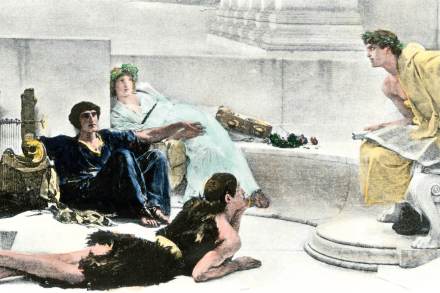
One of the great stories in the world of wine over the last half century is the rebirth of Greek wine. I say “rebirth” because wine has been an inextricable part of the story of Greece from time immemorial. What would Plato’s Symposium — literally “drinking party” — be without wine? And the story of Greek wine goes back much further than that. According to experts, wine grapes have been cultivated in Greece from about 6000 BC. Anyone who has read Homer recalls his frequent deployment of the epithet “οἶνοψ πόντος.” That is usually translated as “wine-dark sea,” though it literally means “wine-faced” or “wine-eyed” (οἶνος + ὄψις) sea. What color do you suppose “wine-dark” is?

greek wine

Two excellent books that offer new insight into The Iliad

The Iliad, Homer’s extraordinary epic poem, begins with Apollo, the god of light, zooming down from heaven “like night,” bringing plague to the Greek camp before Troy. Many days later, after the Trojan Hector’s funeral rites, the poem ends, at dawn. The light god brings darkness; dawn brings the doom of Troy. Such are the ironies that underpin the epic, revealing it as a work of supreme artistry, probably composed by one hand alone. For decades, I have lived in the light and shadow of The Iliad, reading it at first piecemeal in Greek, then in various translations, then all the way through in Greek (an experience both taxing and exhilarating). My Loeb edition, its prim English translation opposite the raw Greek, is never far from my side.

iliad

Let’s hear it for horiatiki

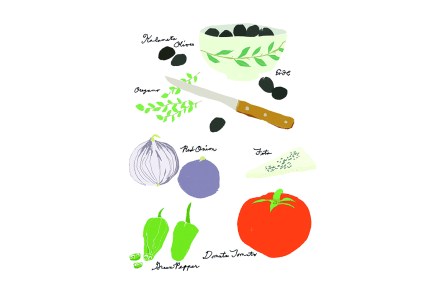
Time to send your kitchen knives out for sharpening. The hot weather is coming, and you know what that means: Greek salad, or horiatiki as the Greeks call it. Is there any pleasure in life quite like dicing tomatoes, cucumbers and peppers with a knife that balances properly in the palm, whose blade possesses just the right steely flex and strength, and — above all — that is properly sharpened? With the right edged tool, it is hard to stop cutting things up for Greek salad. With the right ingredients, it is hard to stop eating it. This is why Greek salad is the perfect dish to make for a dinner party. As your friends buzz about the kitchen, drinks in hand, you can chop away on autopilot, chatting merrily as your cutting board fills with heaped tomato chunks.

greek horiatiki

Was Penelope really a ‘silenced’ woman?

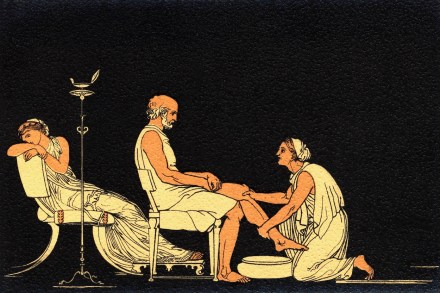
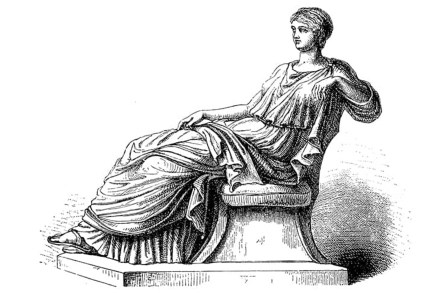
Problems about the misuse of history, especially on subjects such as race and colonialism, have been running for a long time. But when it comes to the ancient world, there are also problems about the misuse of literature. Dame Mary Beard’s “manifesto” Women and Power (2018) contains an example of the problem. Her thesis is that women’s voices in the public sphere (my emphasis) have been “silenced” by men ever since the West’s first literature (Homer’s Iliad and Odyssey) gave us our first access to “Western” thoughts, deeds, beliefs, hopes and fears (c. 700 BC). The problem exists in the first example of her thesis, to which she returns four times — Penelope, the wife of Odysseus.

Penelope

In search of the Iliad

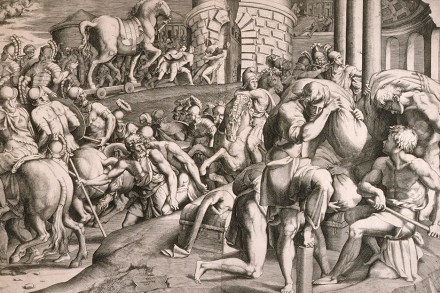
A wooden horse, a fallen hero and Helen, the most beautiful woman in the world. These three things transformed a hillock in Asia Minor into a legendary city. Few places can conjure up such stories of love and loss, homesickness and heroism, gallantry and grief as Troy. Over 3,000 years after Homer wrote in The Iliad of the 10-year siege of King Priam’s mighty citadel, I’m standing on an unremarkable patch of scrubland in northwestern Turkey. This unpromising site claims to be the real Troy — the very spot where Zeus’s daughter Helen fled to make love to Paris; where the mighty Hector, the Trojan general, fell at the hands of Greek warrior Achilles; and where the giant Trojan Horse entered the city concealing Greek warriors in its wooden belly.

troy