History

Where does power lie? Or where should power lie?

From our UK edition

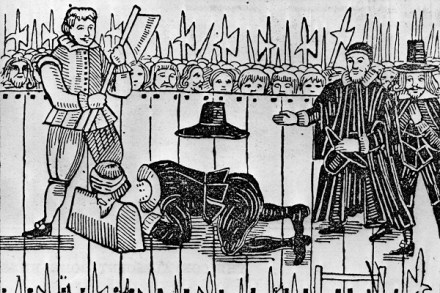
Iain Martin has written a cracking piece for the Telegraph entitled: ‘The coming battle with the EU is about sovereignty.’ Iain recommends a new play, 55 Days, which tells the story of the aftermath of the English Civil Wars and the execution of Charles I. He was gripped by this tale of power and politics, and asked Tristram Hunt and Douglas Carswell why the civil wars continue to resonate. Carswell, in his new book, The End of Politics: And the birth of i-democracy, argues that the 2010 intake, on both sides of the House, has revived parliament. MPs are defying the whips to assert their constituents’ views. The MPs are doing this, Carswell says, because the internet has brought them closer to their constituents.

Do you wish you were far from the madding crowd?

From our UK edition

From ‘Elegy Written in a Country Churchyard’ 'The curfew tolls the knell of parting day, The lowing herd wind slowly o'er the lea, The ploughman homeward plods his weary way, And leaves the world to darkness and to me. Now fades the glimmering landscape on the sight, And all the air a solemn stillness holds, Save where the beetle wheels his droning flight, And drowsy tinklings lull the distant folds; Save that from yonder ivy-mantled tower The moping owl does to the moon complain Of such as, wandering near her secret bower, Molest her ancient solitary reign. Beneath those rugged elms, that yew-tree's shade, Where heaves the turf in many a mouldering heap, Each in his narrow cell for ever laid, The rude forefathers of the hamlet sleep.

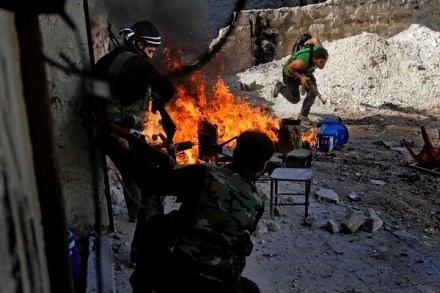
Picking sides in Syria, the Algerian experience

From our UK edition

Some thirty-five years ago, in 1977 to be exact, I first published A Savage War of Peace, a definitive history of France’s war in Algeria. The war dragged on from 1954 to 1962, torpedoed six French governments, and the Fourth Republic itself, bringing de Gaulle to power. It also introduced a new meaning to the word ‘insurgence.’ Thanks to the indolence of my publishers, the book was allowed to go out of print. When the Iraq War began, to my fury I learned that it was changing hands on the free market in Washington at over $200 a copy, with quantities being bought by the Pentagon.

The Great Irish Famine revisited

From our UK edition

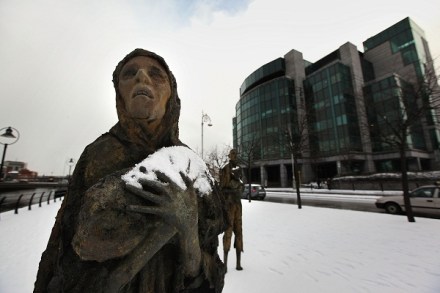
The bare statistics of the Great Irish Famine are chilling enough: in 1845-55 more than a million people died of starvation and disease and a further two million emigrated. Ireland’s population fell by more than a third. John Kelly does an excellent job of sketching the background in The Graves are Walking: massive population growth (the Irish population doubled in the second half of the eighteenth century and almost doubled again in the first four decades of the nineteenth), division of land into ever smaller plots and consequent dependence on the potato, exploitative landlords, resentment at rule by London. When blight struck the potato crop in 1845, it was not as if the British government was unaware of the danger ‒ ‘If the potato fails . . .

Puffing Pamela: Book hype, 18th-century style

From our UK edition

There are quite a few candidates competing for the title of the first novel in English literature. You can make a strong case for Robinson Crusoe, published in 1719, or Gulliver’s Travels of 1726, or even – at a push – argue for Sir Philip Sidney’s Countess of Pembroke’s Arcadia, issued over a hundred years before, but one of the super-heavyweight contenders will always be Samuel Richardson’s 1740 novel-in-letters, Pamela. When it first appeared Pamela was as much of a sensation as the X Factor and Fifty Shades rolled into one, a genuine ‘multi-media event’ more than two hundred years before that phrase was even coined.

The Fuhrer was not amused

From our UK edition

‘The German sense of humour,’ Mark Twain famously observed, ‘Is no laughing matter.’ Although many Greeks, stretched on the Euro's rack at Berlin's behest, may be inclined to agree, Rudolph Herzog's intriguing study of humour in and against Hitler's Germany, Dead Funny: Telling Jokes in Hitler's Germany, proves conclusively that the Teutonic funny bone, while it may be difficult to locate, definitely exists.

William Rowley and the death of Prince Henry – poetry

From our UK edition

‘To the Grave’ Unclasp thy womb, thou mortuary shrine, And take the worst part of the best we had. Thou hast no harbourage for things divine, That thou had'st any part was yet too bad. Graves, for the grave, are fit, unfit for thee Was our sweet branch of youthful royalty. Thou must restore each atom back again When that day comes that stands beyond all night. His fame (meanwhile) shall here on earth remain, Lo thus we have divided our delight: Heaven keeps his spirit stalled amongst the just, We keep his memory, and thou his dust. Prince Henry was the eldest son of James I and VI (that’s first of England, sixth of Scotland). In 1612 he died at the age of eighteen. An extraordinary period of spontaneous popular mourning followed.

The Continental Divide: Why are Red States So Red and Blue States So Blue? – Spectator Blogs

From our UK edition

So, for the third time in the last four American elections it looks as though this contest is gonna be a close one. As in 2004, however, the narrow-but-significant advantage still lies with the incumbent President. Indeed it is possible that this is one of those rare occasions in which the electoral college actually hurts the Republican candidate. Be that as it may, the United States remains pretty evenly divided between its Blue and Red teams. Steven Pinker delves into history and anthropology in an attempt to explain why, as he puts it, "ideology and geography cluster so predictably?

Route to conflict? David Priestland’s Merchant, Soldier, Sage

From our UK edition

David Priestland is worried. Towards the end of his recently published book Merchant, Soldier, Sage, he warns: ‘[The crash of] 2008 has set the world on a course towards potential conflict, and the domestic and international forces that brought us the violence of the 1930s and 1940s are with us today – albeit still in embryonic form.’ It is fashionable, especially in heavily indebted Europe, to compare the uncertainties of the present with those of the 1930s. The Second World War is passing out of living memory and entering popular historical consciousness. Angela Merkel appeals to this when she warns that only the European project can guarantee peace; and Greek protesters who equate her with the Nazis assert the opposite view.

To take or not to take a pseudonym

From our UK edition

Literary pseudonyms have been on my mind lately, for a couple of reasons. The first is Salman Rushdie’s revelation that he chose ‘Joseph Anton’ as his cover name when in hiding during his fatwa, in tribute to Messrs Conrad and Chekhov. The second (and brace yourself, because this is going to hurt like pluggery) is that my own literary alter ego, Charlie Croker, has a new book out. Why do writers use pseudonyms, and how does it feel to see a book you’ve written get published with someone else’s name on the cover? Strictly speaking this isn’t what happened to Rushdie. Joseph Anton was his actual pseudonym rather than his literary one; his fictional books continued to appear under his real name, while his real life was lived under a fictional one.

Killing as entertainment

From our UK edition

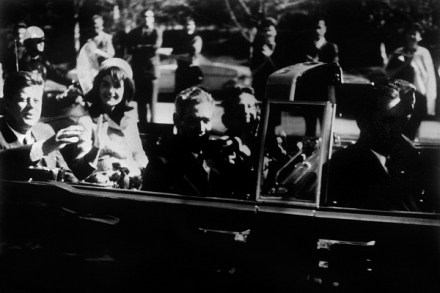
‘The history of our love affair with violence’ is how Michael Newton describes his new book, Age of Assassins. In fact, its scope is much narrower: assassination in Europe and the US from the murder of Lincoln in 1865 to the attempt on Reagan’s life in 1981. So, no Gandhi, no Allende, none of the killings carried out in the name of militant Islam. Even some of the assassinations within the author’s time frame are not considered – Olof Palme’s, for example, or the murders in Italy’s anni piombi in the 1970s and ‘80s. Newton’s central argument is that in the period covered assassination became less about political causes and more about the deed itself; and the framework of the book is essentially chronological.

What makes a man

From our UK edition

The Roman orator Quintilian offered some practical advice to the budding politician: don’t move too languidly, flick your fingers, or tilt your neck in a feminine way if you want to master the art of rhetoric. Doing all or any of these things could make you seem unmanly. You might have been born a man, but masculinity was definitely something you had to work at. I dare say little has changed there, though perhaps any decision to bolster one’s masculinity today comes less from the kind of external pressures put upon men by society in antiquity, than personal reactions to what is deemed a societal norm (to wax or not to wax that back?). Surprisingly, this sort of comparison between the ancient and modern world is not the type of legacy with which Brooke Holmes is concerned.

The shock value of John Wilmot, earl of Rochester

From our UK edition

‘The Maidenhead’ Have you not in a chimney seen A sullen faggot wet and green, How coyly it receives the heat, And at both ends does fume and sweat? So fares it with the harmless maid When first upon her back she’s laid; But the well-experienced dame, Cracks and rejoices in the flame. Rochester is a favourite of A-level students because he writes about sex and uses rude words. That in itself would not make him an accomplished poet. Sex is not an obscure subject and there are lots of words which rhyme with ‘prick’. But there are good reasons to read Rochester. One is that he had a knack for creating effects which we have come to associate with literary authenticity and originality.

The Nobel Prize’s EU joke prompts questions about the nation state

From our UK edition

The award of the Nobel Prize to the European Union is a tremendous joke; and like all great jokes it has brought people together. Commentators of left and right are united, for the most part, in condemning the Nobel Committee’s revision of history that claims the EU, a body that has only existed since 1993, deserves credit for securing ‘60 years of peace’ in Europe. Iain Martin and the legal commentator David Allen Green give the fullest accounts, rightly commending America’s enormous contribution to Europe since 1945. The timing of the award adds to the general mirth because there can be little doubt that events in the Eurozone are threatening the European project; or indeed that the European project is the author of its own misfortune.

Governing the world – an interview with Mark Mazower

From our UK edition

‘People begin to feel that… there are bonds of international duty binding all the nations of the earth together.’ This quotation, which resonates so clearly as yet more blood is shed in Syria, belongs to Guiseppe Mazzini, the 19th century Italian nationalist whose vision of a ‘Holy Alliance of peoples’ underscores much of Professor Mark Mazower’s Governing the World: The History of an Idea. Mazower’s book is an account of the ideas and institutions of international relations from the Concert of Vienna in 1814 to the present day United Nations. It is, then, the story of how Western hegemony has shaped the international sphere; this period of hegemony is soon to end and perhaps Mazzini’s international ambitions will die with it.

How should we mark the Great War’s centenary?

From our UK edition

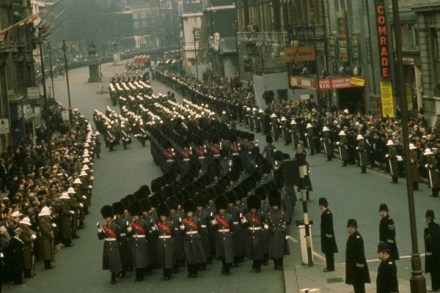
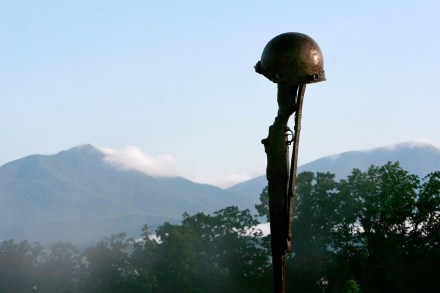
It seems strange now to recall that, it was not so many years ago, around the time of the millennium, that some in Whitehall were talking about how to scale down Remembrance Sunday. One theory was that marking the centenaries of the start and end of the Great War could also mark an appropriate moment to bring the solemn Cenotaph ceremonials to a gentle end. The assumption was that Remembrance would gradually lose its resonance and relevance once the generations who fought the Great War had all passed on. Such thinking did also reflect the mistaken New Labour view of the Dome era: that Britain would be able to face the future more confidently if it let go of the historical baggage which could weigh us down. That is not how things turned out.

Spreading the Word through patois

From our UK edition

The Jamaican High Commission in London held a party last night to launch a patois translation of the Gospels. The translation, published by the Bible Society, is the culmination of 20 years work by academics at the University of the West Indies and other institutions, studying the rules of the creole created by plantation slaves and committing them fully to paper for the first time. The project has been part-funded by donations from congregations whose primary (and often only) language is patois rather than English, the language in which scripture has always been written and read in the nominally English-speaking Caribbean. This is an important cultural moment.

Outliving Ozymandias

From our UK edition

In 1842, a wealthy heiress called Sarah Losh built a church in Wreay (rhymes with ‘near’, apparently), close to Carlisle. Coupling carvings of caterpillars with turtle gargoyles and a spattering of pinecones, she was, stylistically, half a century before her time. As a female architect and builder, she was still more precocious. The Pinecone by Jenny Uglow is the true, largely forgotten story of one of nineteenth-century England’s most forward-looking architects and – paradox standing - antiquarians. Sarah and her sister Katharine inherited land from their parents when their brother transpired to be ‘slow’.

Let’s not be beastly to the Germans

From our UK edition

The question of how Europe stumbled into the horrific abyss of  the First World War, the catastrophe which The Economist once called 'the greatest tragedy in human history' is obviously of much more than purely academic interest. (Though it is chiefly academics who have been arguing about it ever since). As we approach the centenary of the conflict's outbreak, one of them, Christopher Clark, Professor of Modern History at Cambridge University, has written a magnificently detailed study of the diplomatic dance that led the continent up to and over the edge. The Sleepwalkers should be required reading for politicians and decision-makers fumblingly steering the world in our own age, an epoch perhaps even more dangerous than the era of 1914.

Review – John Saturnall’s Feast, by Lawrence Norfolk

From our UK edition

Lawrence Norfolk has always liked to centre his novels around a mixture of existing and constructed myth, and then let the action which happens centuries later be informed by or feed back into this network. His first book in twelve years, John Saturnall’s Feast, explores how the Civil War affected the career of a 17th century chef, the kitchens of great country houses and the symbolism of food. Its mythic centre is a pagan rite belonging to a pre-Christian British people, in which serving and eating food was the basis of an egalitarian community. In Charles I’s reign the one person left alive with the key to this feast is an orphan called John Saturnall, who has gone to work as a kitchen boy at the local manor.