History

The poetic lies against Old Ironsides

From our UK edition

‘How the War Began’ by Thomas Jordan, 1663. 'I'll tell you how the war began: The holy ones assembled (For so they called their party then Whose consciences so trembled). They pulled the bishops from their seats, And set up every widgeon; The Scotch were sent for to do feats With oat-cakes and religion. They plucked communion-tables down, And broke our painted glasses; They threw our altars to the ground, And tumbled down the crosses; They set up Cromwell and his heir, The Lord and Lady Claypole; Because they hated Common Prayer, The organ and the maypole.' Three-hundred and fifty years ago, in September 1662, congregations in churches all over England were getting used to hearing services from the new Book of Common Prayer.

Review – Sebastian Faulks’s A Possible Life

From our UK edition

In a promotional video clip, Sebastian Faulks describes his new novel, A Possible Life, as like ‘a symphony in five movements... or an album in which the tracks are separate but the whole thing adds up to more than the sum of its parts.’ The idea of the musical novel – held together by themes, motifs and echoes rather than a linear plot – has been discussed or attempted by authors from Flaubert to Kundera. So what has Faulks, with his bestseller know-how, brought to this fragile form? We are given five separate stories with a large historical and geographical range.

Richard III should be buried in the north

From our UK edition

History is written by the victors. So Richard III might have anticipated that his death at Bosworth Field in 1485, the last English monarch to be killed on the battlefield, would only be the start of a downward reputational spiral. The last five hundred years have not been good for the man whose remains may just have been found under a Leicester car-park yesterday. Shakespeare did much of the damage, forever fixing our image of this hunched Machiavellian schemer and his ignominious downfall – 'my Kingdom for a horse' – though the Bard was popularising an existing Tudor narrative.

Channel 4 cancels Tom Holland’s history of Islam, but the extremists will not win

From our UK edition

In what may prove to be the most depressingly predictable story of the year, we learn that Channel 4 has chosen to cancel a screening of Tom Holland's programme 'Islam: the untold story' tomorrow night  because of threats to the author and presenter. If there is a reason why so many stories and facts to do with Islam remain 'untold' it is simply because of this. None of the people who threatened Tom Holland even have to mean it — the threat is enough to ensure that Channel 4 don't go ahead. I don't blame them, and have seen this happen too many times, in too many different countries, to be surprised.

Shelf Life: Patrick Hennessey

From our UK edition

Patrick Hennessey was a founder member of the Junior Officers' Reading Club, formed when the Grenadier Guards toured Iraq in 2006. He is the author of The Junior Officers' Reading Club — the story of how a ‘wise-arse Thatcherite kid’ became a thoughtful soldier. It is among the best examples of British military witness written since 1945. Hennessey, now a barrister, has recently penned a sequel of sorts, called Kandak: Fighting With Afghans. It is published by Penguin tomorrow. He has answered this week’s Shelf Life questionnaire.  1) What are you reading at the moment? I’m finally getting round to reading Life and Fate which is, so far, living up to its impressive reputation. 2) As a child, what did you read under the covers?

Midway: The overlooked battle

From our UK edition

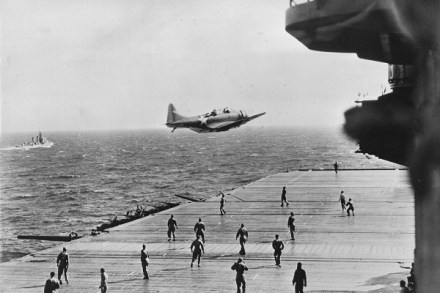
For many of us the Battle of Midway is just one more Hollywood spectacular in, to paraphrase Neville Chamberlain, a far-away sea of which we know little. But having recently taken a closer look at the battle I am struck both by what was at stake and what the consequences of the American victory were for the Allies at the time and geopolitics since then. When the Japanese attacked the American fleet at Pearl Harbour on 7 December 1941 they sank four battleships, destroyed 188 aircraft and damaged 159 other planes. Because, by sheer chance, there were no American carriers at Pearl Harbour on that day, the Japanese failed in their strategic aim: supremacy of the Pacific Ocean. They would have to fight again. The next major conflict between the two fleets was at Coral Sea in early May.

John Cleveland: discovering poetry

From our UK edition

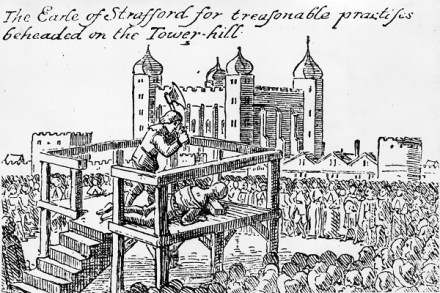
'Epitaph on the Earl of Strafford' ‘Here lies wise and valiant dust, Huddled up 'twixt fit and just: STRAFFORD, who was hurried hence 'Twixt treason and convenience. He spent his time here in a mist; A Papist, yet a Calvinist. His prince's nearest joy, and grief; He had, yet wanted all relief. The prop and ruin of the state; The people's violent love, and hate: One in extremes loved and abhorred. Riddles lie here; or in a word, Here lies blood; and let it lie Speechless still, and never cry.’ If Nick Clegg lived in bloodier times he might have ended up like Strafford by now. Executed on the eve of the civil wars, Strafford had a talent for alienating people who thought he was their natural ally.

The history of Islam is not off-limits

From our UK edition

I’ve only just got around to watching Tom Holland’s documentary for Channel 4 from earlier this week: ‘Islam: the untold story.’ It had some good things in it, despite suffering from the two problems all documentaries now suffer from: attention-grabbing statements at the end of segments which are not followed up on, and endless shots of the presenter doing strangely unconnected things (travelling on an elevator, sitting on a bed etc.) But Holland was an engaging and pleasant presenter, and the documentary was something of a landmark in that it finally brought to wider public attention a subject which has been almost completely off-limits in recent years.

American Exceptionalism: The Baloney and the Glory – Spectator Blogs

From our UK edition

I'm writing a column about Mitt Romney for tomorrow's Scotsman so more on him later. Suffice it to say that I thought his speech less impressive than it had to be but that, by the end of the evening, I was more impressed with and by Mitt the Man than I've been previously. This was because of the Mormons. Magic underpants and Missouri and all the rest of it be damned, Mitt should talk about his religion more. He may be reluctant to do so and that speaks well of him but this is an election and Mormonism is about the only thing discovered thus far that transforms Romney from battery-powered robot to actual flesh and blood. Be that as it may, I've also written a piece for Foreign Policy about another trope on full, flag-sized, display this week: American exceptionalism.

In England’s green and pleasant land

From our UK edition

The idea came to me after I had just got back from South America after a long trip to Peru.  Perhaps because I was badly jetlagged, everything about England looked strange, different — and certainly worthy of as much exploration as I would give to a foreign country. The few other times I've ever had really bad jet lag — the sort where you walk in a trance, as if under water and sedation — have been when I've travelled abroad, not travelled home.  The only cure then has been total immersion in the new culture. So I felt like plunging into England — and to do so by the darker, underground ways, like a mole, tracking the older paths. It was easy to live in the countryside, as I did in Oxfordshire, and not know what was stirring beneath its surface.

General Franco’s British foes

From our UK edition

David Lomon was one of the lucky ones. While fighting in Aragon in south-west Spain in the spring of 1938, the former salesman from Hackney was captured by one of the 100,000 Italian soldiers sent by Mussolini to fight for General Franco’s forces. Incarcerated in a Francoist concentration camp, his experiences were horrifying — brutal guards, starvation rations, insanitary and verminous conditions and a decidedly uncertain future — but he did at least survive. Many of his compatriots did not. Almost one in five were killed and most were wounded at least once in their fight to defend the Spanish Republic in the civil war of 1936-1939, in what some observers have seen as the opening salvo of the Second World War.

George Washington: Gentleman warrior

From our UK edition

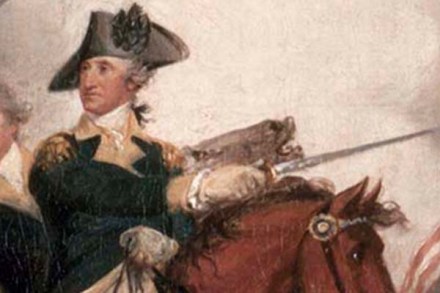
It is easy to forget that the dignified eighteenth-century gentleman whose image appears on the one-dollar bill, the first President and father of his nation, owed his position entirely to his prowess as a soldier. Stephen Brumwell’s book charts the two phases of his military career, firstly fighting for King George II, then fighting against King George III. George Washington was born into a landowning family in Virginia and was expected to become a gentleman planter like his forebears. But the appeal of adventure on the frontier drew him to enlist – with no formal military training ‒ as a militia officer. Five years of tough campaigning followed, defending the western fringes of Britain’s colonies against encroachment by the French and their Indian allies.

Across the literary pages: Pankaj Mishra

From our UK edition

An easy, sure-fire way of generating a bit of publicity is picking a fight with a provocative public intellectual. Rather than criticising Bernard-Henri Lévy's blow-dry, or kicking David Starkey in either of his legs, Pankaj Mishra memorably attacked Niall Ferguson in his review of Civilisation in the LRB last November. So the threat of a lawsuit from Ferguson now means we all vaguely know who Mishra is. (And that he's married to David Cameron's cousin.) His latest book From the Ruins of Empire - part biography of three prominent Eastern thinkers and part historical analysis - tackles the difficult relationship between East and West taking the Japanese destruction of the Russian warship in the battle of Tsushima in 1905 as its starting point.

The British invented the Olympics

From our UK edition

Is there any chance that you might, at any point in the next three weeks, be talking to anyone? About anything, in any setting, for any length of time? Then you’d better get a copy of The British Olympics by Martin Polley. Because it won’t matter what the primary purpose of your conversation is supposed to be — you will, in addition, be obliged to talk Olympics. Just a given, I’m afraid. Accepting that, you may as well have something interesting to say. And Polley’s book narrates a very interesting story: the one of how Britain invented the modern Games.

The delights of sin

From our UK edition

Epigram 7 from The letting of humours blood in the head-vaine ‘Speak gentlemen, what shall we do to day? Drink some brave health upon the Dutch carouse? Or shall we to the Globe and see a play? Or visit Shoreditch for a bawdy house? Let’s call for cards or dice, and have a game. To sit thus idle is both sin and shame.’ This speaks Sir Revel , furnished out with fashion, From dish-crowned hat unto the shoe's square toe, That haunts a whore-house but for recreation, Plays but at dice to cony catch or so, Drinks drunk in kindness, for good fellowship, Or to a play goes but some purse to nip. Like tabloid exposés of celebrity sexual shenanigans, satire can tread a fine line between condemnation and titillation. Good writing can exploit that confusion.

Interview: Bernard Wasserstein and the Nazi genocide

From our UK edition

As 1930s Europe moved towards the catastrophe of the Second World War, much of the greater part of the continent —  for Jews — was being turned into a giant concentration camp. Bernard Wasserstein’s On the Eve, The Jews of Europe Before the Second World War, captures the sorrows and glories of European Jewry in the decades leading up the Nazi genocide. From the shtetls of Lithuania, to the salons of Vienna, Jewish culture was already on the road to extinction. Wasserstein’s book also proves that contrary to received wisdom, there was a growing awareness that Jews were approaching a cataclysmic extinction. Bernard Wasserstein was born in London and has taught at Oxford, Sheffield, Jerusalem, Brandeis, and Glasgow Universities.

The paranoid centre and life in the American fever-swamp

From our UK edition

Reince Priebus, chairman of the Republican National Committee, told Fox News Sunday last weekend: 'The fact is, it’s not a question of whether can Mitt Romney win. The statement is, Mitt Romney has to win for the sake of the very idea of America. Mitt Romney has to win for liberty and freedom. We have to put an end to this Barack Obama presidency before it puts an end to our way of life in America.' There you have it, the conservative movement's flammable combination of hysteria, hyperbole and cynicism in a single soundbite. Verily, American politics has become an ugly thing, dominated by boors and scoundrels animated by a spirit of hyper-partisanship for the sake of it and to hell with the national interest.

Britain does not need more mass immigration

From our UK edition

Jonathan has already mentioned yesterday’s Fiscal Sustainability Report from the Office of Budgetary Responsibility. He appears to welcome mass migration both now and as an inevitable part of our future. Perhaps I could put a dissenting view? Migration itself can be a good thing. But mass migration (in the numbers it has happened in recent years in Britain and many other Western countries) is a bad thing. It strains our welfare systems, encourages people to ghetto-ise rather than assimilate and creates not so much a multi-racial society as a country made up of different mono-cultural centres. It causes a breakdown in trust both between and among communities, and erodes the possibility of any collective history or common culture.

Macmillan’s Night of the Long Knives

From our UK edition

One of the great goals of the pioneering Victorian explorers of Africa was to find the source of the Nile. The origins of the grievous miscalculation by Harold Macmillan of what became known as The Night of The Long Knives on Friday 13 July 1962, when he summarily sacked seven members of his Cabinet, may appear equally obscure, but can in fact be traced back to the Wallace Murder Case in Liverpool in 1931. At that time Selwyn Lloyd was a young lawyer on the Northern Circuit. Legal news in Liverpool in 1931 was dominated by the trial of William Wallace, who was convicted of the murder of his wife Julia. Though he was not involved in the case Lloyd was convinced from the start that Wallace was innocent and the victim of circumstantial evidence.

Raphael’s paintbrush

From our UK edition

One of the puns that circulated the cultured elite of Italy during the Renaissance compared the potency of an artist’s paintbrush, his pennello, with his penis, il pene. Raphael, who by all accounts liked his women, perhaps embodied that duality best of all. The artist’s fascination with female kind, Antonio Forcellino suggests in his brilliant and lyrical biography of the artist, helped shape his genius. Not long before Raphael died, aged just 37, of a malady popularly believed to have stemmed from excessive sexual activity, he painted La Fornarina — a young, brown-eyed beauty (perhaps his last lover), semi-nude but for a diaphanous veil draped beneath her décolletage. Around this date he also painted a heavily veiled woman, La Velata.