History

John Aubrey and his circle: those magnificent men and their flying machines

From our UK edition

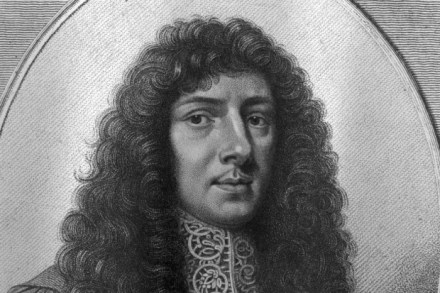
John Aubrey investigated everything from the workings of the brain, the causation of winds and the origins of Stonehenge to how to cure the fungal infection thrush by jamming a live frog into a child’s mouth (you hold it there until it — the frog — suffocates, then replace it with a fresh frog). He seemed half-cracked as often as not to less empirical 17th-century contemporaries, and for most of the next 200 years posterity forgot him. His astonishing renaissance in the last century owed much to two novelists: Anthony Powell, who published a biography, followed by a selection of Aubrey’s Brief Lives in 1949, and John Fowles, who brought out his Monumenta Britannica for the first time in 1980.

How long is it since anniversaries stopped being measured in years?

From our UK edition

‘You must promise to be with us for our silver wedding D.V. which will be in four years,’ wrote Queen Victoria in February 1861 to her daughter Vicky in Prussia, where her husband had just become Crown Prince. But D was not V, and dear Albert was dead before the year was out. I think the German connection is relevant here to the use of silver wedding, for mother and daughter would both have been familiar with the notion of a silberhochzeit. Silver wedding had not long been in English usage, although, in the late 18th century, some people aware of German customs used the phrase silver feast. I was thinking of silver weddings because of something odd that I heard on the wireless. Paddy O’Connell referred to a ‘25-year anniversary’.

America’s greatest tradition: inventing spurious traditions

From our UK edition

  Fredericksburg, Virginia Obama forgot he had a cup in his hand as he saluted and nearly poured the contents over his own head Americans crave traditions. The older they are the more we cherish them. Thanksgiving, which beats out Christmas, was invented by Abe Lincoln in 1863 but it is an outgrowth of the timeless harvest festival celebrated by the generations of mankind that formed the earliest agricultural communities. Much harder is inventing traditions from something new. In this we are unsurpassed. Take the president’s annual State of the Union address to congress. Ever since Thomas Jefferson’s time, a clerk from the House of Representatives read it in a rapid drone and then left.

Zac Goldsmith: How my dad saved Britain

From our UK edition

In recent weeks Ed Balls has been offering a new reason to vote Labour: it was his party, he says, that saved Britain from joining the euro. Now, the shadow chancellor is free to say what he wants — and in a way, I’m pleased that he feels the need to convey such an impression. But the true story of how Britain was saved from the euro is somewhat different. It all happened nearly a generation ago, between 1995 and 1997, when I was in my very early twenties. It was my father, James Goldsmith, who set out to ensure that Britain would never join the euro without the consent of the people. He dedicated the last years of his life to the cause. My mother campaigned in his constituency for 12 hours every day.

The first Lord Dufferin: the eclipse of a most eminent Victorian

From our UK edition

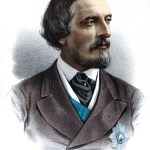
The first Marquess of Dufferin and Ava is largely forgotten today — rotten luck for the great diplomat of the Victorian age. In the second half of the 19th century, Dufferin zoomed around the empire, hoovering up the sweetest plums in the diplomatic service: Governor-General of Canada, ambassador to the courts of Russia, Turkey and Italy, ambassador to France, Viceroy of India. Why did Queen Victoria’s proconsul slip into oblivion? Andrew Gailey, the Vice-Provost of Eton — until now best known as housemaster to Princes William and Harry — answers the question, telling not just Dufferin’s sad, dazzling story but the story of the empire at its high point, before the fall. Practically all the good fairies gathered for Dufferin’s birth in 1826.

Julius Caesar could teach Isis a thing or two

From our UK edition

Isis disseminates videos of beheaded captives to spread simple terror. Julius Caesar knew all about it. In his diaries of his conquest of Gaul (58–51 bc), he constantly acknowledges the power terror wielded. When it became clear, for example, that in 58 bc he would have to take on the powerful German king Ariovistus who had crossed the Rhine into Gaul, his ‘whole army was suddenly gripped by such a panic that their judgement and nerve was seriously undermined’. Caesar, naturally, rallied the troops and in the ensuing engagement drove Ariovistus’ army back across the Rhine with massive losses. Ariovistus had been a ‘friend of Rome’. That is what Caesar did to ‘friends’ who threatened him. In 55 bc, two other German tribes crossed the Rhine.

Rowleys is Did Mummy Love Me Really? food – and it’s perfect

From our UK edition

I think Rowley’s is the perfect restaurant; but I am really a gay man. Rowley’s is at 113 Jermyn Street (the Tesco end). It was made in homage to the Wall’s sausage and ice-cream fortune, although it opened in 1976, after the Wall’s sausage and ice-cream company (I call it that because it sounds magical) was sold to Unilever (less magical). So it is quite a late homage. The Wall’s sausage and ice-cream fortune, how I love to type the words; did you know that Mr Wall moved into ice-cream so as not to sack staff in the summer months, when no one — except me and George IV — wants to eat sausages? That is worth remembrance.

Escape to victory

From our UK edition

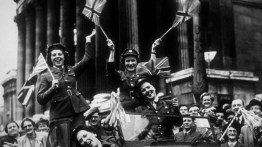
Breakfast is under way on 8 May 2015, and the party leaders have already started haggling. The possibility of a loveless Labour/SNP ‘anti-austerity’ pact has sent the markets tumbling. With the largest number of seats but no overall majority, the Tories are making eyes at the least un-attractive potential bedfellows. Assorted pressure groups are trying to rekindle the same ‘Purple Protest’ movement which sought to exploit the political void immediately after the 2010 election. Having spent all night telling the television cameras that all this voting stuff is, like, rubbish, an exhausted Russell Brand urges his followers to rise up and do, er, something. But the protestors find that the streets are already full of people.

Both lyricist and agitator: the split personality of Vladimir Mayakovsky

From our UK edition

Why increase the number of suicides? Better to increase the output of ink! wrote Vladimir Mayakovsky in 1926 in response to the death of a fellow poet. Four years later, aged 36, he shot himself. What drove the successful author, popular with the public and recognised by officialdom, to suicide? Bengt Jangfeldt provides some clues to this question in his detailed, source-rich biography. Mayakovsky came to poetry as a Futurist, co-authoring the 1912 manifesto A Slap in the Face of Public Taste, which granted poets the right ‘to feel an insurmountable hatred for the language existing before their time’. That the new era demanded a new language was a principle Mayakovsky adhered to all his life.

That annoying ‘likely’ is more old-fashioned than American

From our UK edition

What, asks Christian Major of Bromley, Kent, do I think of ‘this new, I assume American, fad for using the word likely as an adverb’, as in the great Taki’s remark that Alan Turing ‘likely won the war’ (Spectator, Letters, 31 January)? Well, I would most likely not use it in exactly that way, although you’ll have noticed that I have just done so slightly differently. The adverbial usage to which the Kentish Mr Major refers is now more likely to be heard on the lips of Americans and Scots, but it is hardly a fad, since it dates from at least as far back as the 14th century. In the 18th century, English speakers of English were quite happy to say ‘You’re likely in the right.

A walk through Fez is the closest thing to visiting ancient Rome

From our UK edition

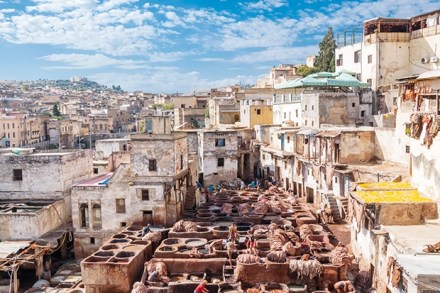
Fez is one of the seven medieval wonders of the world. An intact Islamic city defined by its circuit of battlemented walls, it is riven by alleyways. You pass doorways that look into a 10th-century mosque, then a workshop courtyard, before coming through a teeming covered market and twisting past the high walls of a reclusive garden palace. The aesthetic highlight of any visit will be the teaching colleges built in the 14th century by the Merenid Sultans, and nothing can quite prepare you for the colours and odours of the open-air tanneries or the drama of listening to the dusk call to prayer from the ruins of the Merenid tombs. To the north of the city rise the slopes of Jebel Zalagh, dotted with olive orchards.

Spectator letters: Oxfam’s Ebola appeal; what Cumberbatch should have said; and why Prince Charles is right and wrong

From our UK edition

In defence of Oxfam Sir: Mary Wakefield rightly praises Médecins sans Frontières but makes many misinformed claims about Oxfam and aid in general (31 January). Contrary to her suggestion, money donated to Oxfam and other charities’ emergency appeals must be spent solely on that crisis. This is stipulated by the Charity Commission and confirmed by our publicly available audited accounts. It is regrettably not possible for our website to provide a running commentary of developments in Liberia, but the British public can rest assured that their generous support is helping to save lives and to put lives back together.

The fallen idol: seeing Putin in a new light

From our UK edition

The way to think about Russia, Bill Browder told me in Moscow in 2004, using a comparison he recycles in Red Notice, is as a giant prison yard. Vladimir Putin, he argued then, had no choice but to destroy Mikhail Khodorkovsky, the yard’s top dog and country’s richest man. One of a tribe of Western financiers who traversed a hermetic circuit of offices, guarded apartments, upscale restaurants and the airport, Browder would berate reporters for banging on about human rights abuses or atrocities in Chechnya. Putin was already Putin, for anyone who cared to notice — autocratic, corrupt, nationalistic — but, for Browder, Russia was an oil-powered success story, and Putin was a seer.

Tony Judt: a man of paradox who made perfect sense

From our UK edition

Tony Judt was not only a great historian, he was also a great essayist and commentator on international politics. Few in this country will be familiar with his journalism, however, since it was largely published in America by the the New York Review of Books and the New Republic. Thankfully, this situation can now be remedied through this collection of his writings, ranging from 1995 to his untimely death in 2010 from motor-neurone disease. As was often observed during his life, Judt was a man of apparent paradoxes. A secular Jew, who as a teenager had been a left-wing Zionist, he was castigated for criticising the actions of Israel. A historian of Europe, he spent most of his career teaching in America.

History is the art of making things up. Why pretend otherwise?

From our UK edition

In a recent interview, the celebrity historian and Tudor expert David Starkey described Hilary Mantel’s Wolf Hall as a ‘deliberate perversion of fact’. The novel, he said, is ‘a magnificent, wonderful fiction’. listen to ‘David Starkey on Wolf Hall’ on audioBoom But if Oxford has taught me one thing, it’s that all the best history is. Starkey is a Cambridge man, and maybe they do things differently there. But any perceptive Oxford undergraduate will soon realise that a little bit of fiction is the surest way to a First. What the admissions material opaquely describes as ‘historical imagination’ turns out to be an irregular verb: I imagine, you pervert the facts.

Muriel and Nellie: two radical Christians build Jerusalem in London’s East End

From our UK edition

This is the tale of Muriel Lester, once famous pacifist and social reformer, and Nellie Dowell, her invisible friend. Nellie Dowell is invisible in the sense that Claire Tomalin described Nelly Ternan in The Invisible Woman. While Ternan, the mistress of Charles Dickens, simply ‘vanished into thin air’, Nellie Dowell, who may or may not have been the mistress of Muriel, trod so lightly on the ground that she left barely a footprint behind her. Muriel Lester, the daughter of a Baptist shipbuilder with progressive ideas, has been the subject of several books already, including Vera Brittain’s The Rebel Passion: A Short History of Some Pioneer Peacemakers.

Tom Holland’s diary: Fighting jihadism with Mohammed, and bowling the Crown Prince of Udaipur

From our UK edition

As weather bombs brew in the north Atlantic, I’m roughing it by heading off to Rajasthan, and the literary festival where you are most likely to be greeted by an elephant. The life of a writer is rarely glamorous, but for one week in January — should an invitation to Jaipur be forthcoming — it decidedly is. The festival is to India what a Richard Curtis film is to London: a fusion of all the fondest stereotypes that foreigners have of a place. The talks, which run the gamut from the Mahabharata to the future of the novel, are pure literary masala. The parties are visions of perfumed candles, shimmering saris and maharajas’ palaces. The last time I was in Jaipur, there was even a cricket match.

How long will it be before the climate forces us to change?

From our UK edition

This time last year, homeowners in Oxfordshire and Berkshire were recovering after storms had brought down power lines and blocked roads. Soon, power cuts were the least of their problems. The Thames flooded. In the south-west, the emergency services evacuated the Somerset Levels, and the sea wall at Dawlish in Devon collapsed — cutting the rail line to Cornwall. Political Britain burst its banks. Ed Miliband demanded action. David Cameron convened emergency committees. TV reporters brought us urgent reports as water lapped their boots, while newspaper correspondents named the guilty men. As in twenty20 cricket, you enjoy a quick intense hit with 24/7 news, then move on to the next game. The weather will not be an election issue.

Standing firm is the price of civilisation. Are we still ready to pay it?

From our UK edition

Reading Memoirs of a Fox-Hunting Man, as I have recently, you cannot help but be struck by what a perfectly idyllic place rural England must have been (at least for a young man of independent means) in the run-up to the first world war. Sassoon wrote it, of course, in middle age after he’d served his time in the trenches. But none of his wartime experiences are allowed to colour the innocent tone of his fictionalised memoir. As far as his narrator George Sherston is concerned, the bliss is going to last for ever. Because the first world war is now very familiar history, the mistake I think we’re inclined to make with the benefit of hindsight is to assume that, for those who took part in it, it was all a fait accompli.

Revealed: five British royals who definitely slept with underage girls

From our UK edition

Teen queens The Duke of York denied allegations in court papers that he had had sexual relations with a girl in Florida aged 17, below the age of consent there. Some of his ancestors who might now be in trouble: — King John, who married Isabella of Angoulême in 1200 when she was 12. — Henry VI, who married Margaret of Anjou in 1445 when she was 15. — James I, who married Anne of Denmark in 1589 when she was 14. — Charles I, who married Henrietta Maria of France in 1624 when she was 15. — William III, who married his cousin Mary in 1677 when she was 15.   Crude estimates The price of oil fell below $60 a barrel. There is nothing new about volatile oil prices.