History

How Grandma Moses’s art shaped American history

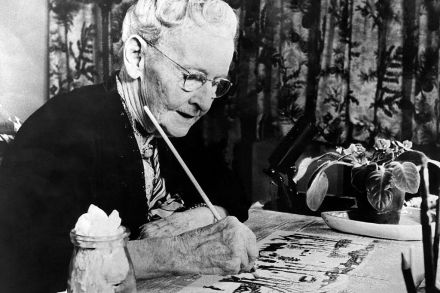
Growing up on the border of Pennsylvania and Ohio, I am well acquainted with a good country fair – that uniquely rural convergence of rodeo games, fried food, barnyard smells and arts and crafts. Washington DC too is now relishing the American-ness of state fairs by hosting the Great American State Fair in the weeks leading up to the semi-quincentennial. And the Smithsonian American Art Museum has prepared a temporary exhibition celebrating a quintessential American artist who first debuted her works at state fairs in rural New York. That gallery is Grandma Moses: A Good Day’s Work, a collection of 88 paintings which will be in DC until July 12, and then heads on tour.

Grandma Moses

The problem with ‘queer art’

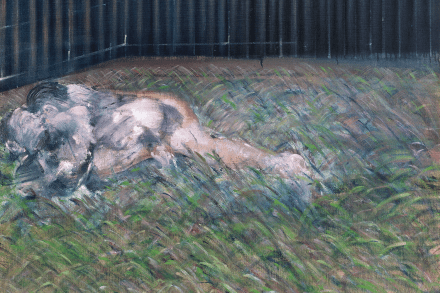
In 1911, Duncan Grant’s “Bathing” went on display as part of a design scheme for the dining room of the Borough Polytechnic in Southwark. This large painting depicts a group of strongly muscled male bathers diving, swimming and hauling themselves into a boat. Only one of them is wearing a bathing slip, and while this kind of spectacle might have been familiar to anyone educated at a public school at this period, the art critic of the Times complained that it could well have “a degenerative influence on the children of the working class.” The picture now hangs in Tate Britain, and is used on the gallery’s website to direct people to an account of “Queer Life and Art.

art

Bryan Cranston and Aaron Paul’s cocktail of choice for toasting the 250th

There’s something special about raising a glass with people you’ve built history with. For us, Dos Hombres has always been about friendship, craftsmanship and creating moments that bring people together. As America turns 250, we’ll be toasting to the freedom to build something of your own, the people who’ve been with you from the beginning and the simple joy of slowing down long enough to appreciate it all. Ingredients for one serving 1 oz Dos Hombres Blanco Tequila 60ml cranberry juice 1 oz Cranberry Juice (sweetened) 1/2 oz Aperol 1/2 oz Fresh Lime Juice Add all the ingredients into a mixing pitcher with ice. Shake well and strain into a large rocks glass rimmed with salt and chili powder.

Dos Hombres

The making of America

The story of the United States was determined from the start by the manner of its birth. The original 13 English colonies may seem lost in the distant past. Yet it was their diversity that was the key to their union. The creation of the US reflected the tensions of 17th-century England, pitting the Puritan republicans of Massachusetts against the landed gentry of Virginia, Quaker New Jersey against Catholic Maryland. The Founding Fathers resolved these tensions by instituting the concept of states’ rights. Their Constitution was a tissue of compromise, yet it was robust. What served to unite 13 colonies still holds together the mightiest nation on Earth.

America

America is still an English country

Americans have been enjoined, as we approach our country’s 250th anniversary, to be a bit more grateful. Good advice. It is not just the freedom of speech and the purple mountains’ majesties we should be taking stock of. It is also our knack, in recent decades, for miseducating ourselves, failing to read the signs of the times, making wrong choices – and then profiting from the fallout. In the global financial crisis that ran for a decade after 2008, blunders in American financial engineering, from complex derivatives to mortgage-backed securities, bankrupted debtor countries and cost several others their sovereignty, most notoriously Greece.

england

America at 250 remains an exceptional country

Who could ever have imagined what was being unleashed on the world when Thomas Gage ordered 700 Redcoats to march out from Boston and seize supplies in the town of Concord? Who could have dreamed, 250 years ago, what would be built by the descendants of those 56 men who put their names to the Declaration of Independence while gathered in the Pennsylvania State House? The United States of America turns 250 having enjoyed a near-uninterrupted run of success unmatched in world history. By her 100th birthday, the US was already master of an entire continent. By her 200th, she had won two world wars, invented the airplane, the atomic bomb and the transistor; created the motion picture and rock ’n’ roll; become the first automobile nation and put a man on the Moon.

The real ‘Thucydides Trap’ Beijing and Washington must avoid

These are good times to be a scholar of the classical world. Last summer, Donald Trump issued an order that all federal architecture needed to be “beautiful,” noting that the Founding Fathers “wanted America’s public buildings to inspire the American people and encourage civic virtue.” George Washington and Thomas Jefferson had therefore “consciously modeled the most important buildings in Washington, DC, on the classical architecture of ancient Athens and Rome.” It was time to go back to these principles, said Trump. From now on “classical architecture shall be the preferred and default architecture for Federal public buildings” in the District of Columbia.

Is it OK to be a horse guy?

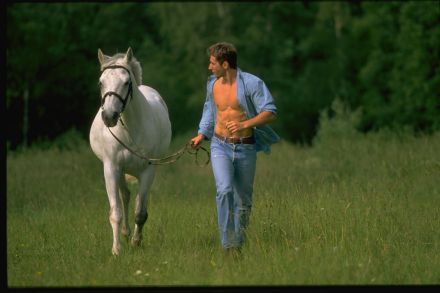
Is it gay to be a horse guy? According to my parents, the answer, hilariously, is “yes.” I never grew up riding in a very professional or competitive manner because, as I recently learned as an adult, my parents thought it was just too gay. Everyone knows the stereotype of a horse girl. My parents certainly did, after raising two girls in the horse-show world. Linked to social privilege, emotional intensity and a bit of naivety, the horse girl eventually shifts the obsession with her horse into her boyfriend and becomes the caricature of a high-maintenance clinger. I can see why my parents wanted to avoid that type of socialization for their only son. But the stereotype isn’t all true (my sisters turned out normal.

David Abulafia was a rare, truth-seeking historian

Death arrives on a day just like any other, often rudely unheralded. We all know that, but it never ceases to shock. So it was with news that David Abulafia had died on Saturday night. Notwithstanding his lifelong fascination with the Mediterranean, David was a Brexiteer in 2016 Readers of The Spectator will know him as one of the shockingly small number of professional historians who care enough about the historical truth – and the public’s perception of it – to risk woke ire in exposing ideologically fabricated history for the corrupting trash it is. So, last June here he was, in these pages, debunking yet another attempt to make the past a boring, narcissistic mirror of ourselves, by claiming that the "diverse" Vikings were sometimes black and Muslim.

david abulafia

Why are we so obsessed with Hitler’s penis?

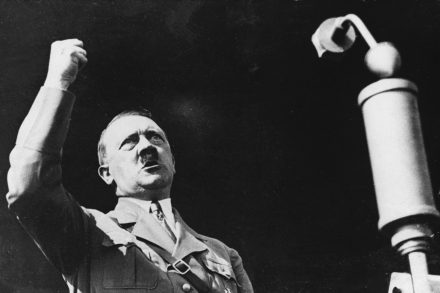
We care about Adolf Hitler’s penis, as a society. Quite a lot, it seems. A British documentary claims, finally, to have solved the mystery of the Nazi leader’s schwanz – was it big or was it small? – and to have proven, beyond a shadow of a doubt, that the famous chant of “Hitler’s only got one ball,” a favorite among British soldiers, wasn’t just an idle insult. The key evidence is genetic: a blood-stained piece of fabric from the Hitler bunker. The documentary filmmakers tested it against a sample from one of Hitler’s closest living relatives to make sure the blood was his. And it was. That meant his genome could be sequenced and then analyzed for genetic clues about his personality, health and, of course, his manhood.

Hitler

The strange death of England

Whatever happened to Britain, or the UK, or England, or whatever they're calling it? We can't even agree on what it's called. But what happened to England, the England that, if you're over 50, you grew up learning about, the England that controlled the world, the England that ran the largest empire in human history at the end of World War One?  Britain, which is an island in a pretty inhospitable climate, controlled literally a quarter of the Earth's surface – and not controlled in the way the United States controls the rest of the world with an implied threat or with economic ties through trade, but with administrators and people sitting at desks with eyeshades, counting things.

Andrew Ross Sorkin reconstructs the 1929 crash

During the great financial panic of 1907, the banker J.P. Morgan locked the titans of the financial world in his lavish private study to determine which banks to rescue and which to let fail. This intervention saved the banking system, restoring public confidence. But trust in Wall Street was shaken to its core. Six years later, Congress passed the Federal Reserve Act, which sought to stabilize the American financial system by establishing a central bank to regulate credit and serve as lender of last resort. By the mid-1920s, the very mechanisms that were designed to promote stability had fueled a surge in stock market speculation.

1929 crash
corkscrews

Cheers to corkscrews!

For the first 50 years of the corked bottle, there was no easy way to get into it. The combination of cork and a strong glass bottle came together around 1630, but the first mention of a device to open the bloody thing wasn’t until 1681. Cavalier get-togethers must have resembled the teenage parties I attended, with everyone desperately trying to open bottles using keys, pens, knives etc. Or using that technique where you bang the bottle against a wall with the heel of a shoe. Halcyon days. More likely the Cavaliers would have just taken the top off cleanly with a swift blow from a saber. Early devices for extracting corks were called “bottle screws.” According to wine writer Hugh Johnson, the word “corkscrew” was first used in 1720.

The sinister rise of Churchill revisionism

Winston Churchill is one of Britain’s enduring symbols. His relentless drive, deep conviction and steadfast leadership means that he remains admired by millions around the globe. Yet for years, the political mainstream has been compelled to defend his memory from spurious attacks from the left, such as the British politician John McDonnell calling him a “villain.” Depressingly that threat – and the same pernicious desire to denigrate one of the West’s greatest heroes – can now be found on the right. Spawned from a sinister fringe of the ultra-MAGA movement, these views have been propagated to millions. Tucker Carlson hosted the pseudo-historian Darryl Cooper on his podcast in an episode that has attracted over 33 million downloads.

winston churchill

Happy Birthday, Aleister Crowley

Aleister Crowley, who was born 150 years ago today, was once one of my idols. No one else seemed to match the panache of someone who could make a name for themselves as a magician, poet, artist, novelist, prophet, journalist, mountaineer, and spy. Yet, the outsized influence of such characters frequently attracts legions of charlatans. I met one during my adolescence when I became a student of a Tibetan Buddhist lama who claimed to be Aleister’s living son. It did not immediately occur to this bright-eyed seeker that the alleged son's chief interest seemed to be in shagging his female students, but eventually it did, and I grew disillusioned.

Crowley

The atomic bomb saved Japanese lives, too

It’s August 6, which means that it is the anniversary of the atomic bombing of Hiroshima.   Every year at this time there are a spate of articles about that horrific event. Some of the articles are condemnatory; some hand-wringing; some are defiantly supportive.  This year, the recent release of Christopher Nolan’s new movie about J. Robert Oppenheimer and the making of the atomic bomb has given the controversy over the development and deployment of that awesome weapon a new urgency.   Something else that has contributed to the fraught atmosphere is the war in Ukraine. After all, one side in that conflict, Russia, controls the world’s largest arsenal of nuclear weapons, more than 6,000 warheads. My friend Roger L.

hiroshima atomic bomb japanese

Milan Kundera’s ‘transcendental buffoonery’

I was just leaving France when I got the news that that the Czech novelist Milan Kundera had died, aged ninety-four. He had emigrated to Paris in 1975, when he was forty-six, a refugee from the crackdown in Prague following the Russian obliteration of the Prague Spring in 1968. He died in his adopted city on July 11, full of honors but also, or so it seems to me, largely forgotten.  I had not been following Kundera’s work for many years. But there was a moment, in the 1980s, when he was the talk of the posh, intellectual literary town. I wrote a longish essay about him for the New Criterion in 1986. I draw on that work here.  Kundera was in his late thirties when he published his first novel, The Joke, in Prague in 1967.

milan kundera

John F. Kennedy’s trip worth remembering

Sloppy Joe Biden may face strong political headwinds with just seven months to go before the first presidential primary, but at least he’s in good company. Assessing the Washington landscape in mid-June 1963, when John F. Kennedy set off on a European tour designed to bolster not only the NATO alliance but his own poll numbers, the British ambassador David Ormsby-Gore cabled back to London: He will be leaving behind a disquieting domestic situation, [with] economic troubles to the fore... The Negro leaders are beginning to talk about large scale civil disobedience on a nation-wide basis... Moreover, the racial crisis is causing new difficulties for [Kennedy’s] legislative program...

Kennedy in Berlin
test scores

Why civics test scores are falling in American schools

Twenty years ago, one of the most popular bits on late-night television was “Jaywalking,” where Tonight Show host Jay Leno quizzed passersby on world events, geography, history and more. He would ask random people on the street about literature, who the vice president was, or who we fought in World War Two. The clips that made the cut inevitably involved embarrassingly ignorant answers. Today, America is a nation of Jaywalking Allstars; whereas it was once a punchline for someone to be that ignorant, ignorance is now the norm. In early May, news emerged about record low scores for history and civics for eighth grade students nationwide.

Netflix’s Queen Cleopatra girlbosses against historical fact

The most controversial aspect of Netflix’s new drama-documentary Queen Cleopatra — not least in Egypt — was the casting of a black actress, Adele James, in the title role. After all, one of the few things that seems certain about Cleopatra’s early life is that she was a Macedonian Greek. Luckily, though, the show had a powerful counterargument to this awkward and Eurocentric fact. As the African-American professor Shelley P. Haley put it with a QED-style flourish, back when she was girl, her beloved (if uneducated) grandmother once said to her: "I don’t care what they tell you in school, Cleopatra was black.

queen cleopatra netflix