Happiness

The happiness police

On a recent sodden weekend walk, I tried to cheer myself up by thinking: it’s not so bad. Not the slugs or the sky or the rain making its way down a gap between neck and waterproof. But I couldn’t do it. Losing heart, I turned back. Glump, glump, glump through the puddles. It rained through breakfast, lunch, tea and dinner. Same the next day. And the day after. I wore grey and sighed at the window. But I am aberrant. Melancholy is against the rules nowadays. I should have put on my yellow wellies, twirled my spotty umbrella, photographed myself in the garden and put it online with the hashtag #singingintherain. That’s what everyone else seems to be doing. If, like me, you are a natural Cassandra, then the present Pollyanna tendency is a trial.


Long life | 27 August 2015

We learn from a new report that children in England are among the unhappiest in the world — more unhappy, even, than the children of Ethiopia, Algeria or Israel. Why should this be so? Life is still quite good in England. It is generally peaceful and prosperous. Yet, in the admittedly rather haphazard list of countries surveyed by the Children’s Society and the University of York, the only one in which children were found to be more miserable than here was South Korea. The children of Romania and Colombia were all far happier. The two main reasons offered for this despondency among English children were bullying in schools and worries, particularly among girls, about their appearance.

Low life | 11 June 2015

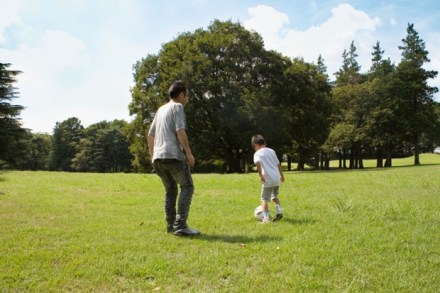
On Sunday morning, I was kicking a football in the back garden with my grandson. I had bought him his first pair of football boots, Optimum Tribals, junior size 11, blue and orange, each boot furnished with six very adult-looking steel studs: four on the sole, two at the back of the heel. We were shirtless. With a football at his feet and his shirt off, my grandson is transformed from an intelligent, biddable boy who is perhaps overly concerned with questions of right and wrong into an arrogant, argumentative liar given to pettish sulks. He tackles like a terrier gone berserk during a rat hunt. It wasn’t long before I was rolling around on the grass clutching my ankle bone after a two-footed studs-first challenge. I sat up and rolled down my sock to inspect the damage.

Horace still understands happiness better than the LSE

So here comes another book about how to be happy, written by Professor Dolan, an ‘internationally renowned expert’ at the LSE. The key evidently lies in ‘pleasure and purpose’, derived from your ‘daily felt experiences’, an analysis hymned in the introduction by a Nobel prize-winner as a ‘bold and original move’. Really? Since Dolan asserts that happiness derives from your ‘felt experiences’ (or ‘paying attention to the things that make you happy’), he is simply saying that it is a state of mind. Very original. This old hat is a form of 4th century bc Stoicism, which asserted that happiness depended on what went on inside your head, because that was all that you could ultimately control.

Looking for the meaning of life? Come to Constantine Phipps’ poetic theme park

A favourite game of mine is to imagine Virgil and Homer today, plying their trade among the supermarkets and office blocks. What would they sing? Can modern life aspire to the epic, and can such a form still be understandable, even useful? C.S. Lewis, though he did translate the Aeneid beautifully, didn’t quite manage a similar feat with his bizarre modern epic, Dymer. It’s not a field many wish to enter. And yet Constantine Phipps, in his third book, What You Want, has made not only an epic, but a didactic epic, accessible, relevant and involving. In precise, lucidly flowing iambic pentameters, the poem is a meditation on the nature of being, married with a strong narrative. It stands aware of its influences: Lucretius is its guiding spirit and Dante its model.

Why are Scandinavians so happy when they should be so sad? 

As I sit here in my Sarah Lund Fair Isle sweater, polishing my boxed sets of Borgen and nibbling on a small piece of herring, it briefly occurs to me that perhaps I too have fallen victim to the prevailing mania for all things Scandinavian. Just about the only person who’s stayed resistant, it seems, is Michael Booth, the author of this book. At home in Copenhagen — he’s married to a Dane — watching the incessant drizzle falling through the perpetual twilight, Booth begins to think he’s losing his mind. How come every survey ever commissioned into human happiness puts the Scandinavians at the top of the list?, he wonders.

Gyles Brandeth’s diary: The pub where the Queen came in by the fire escape

Hard on the heels of the 90th birthday of Nicholas Parsons (10 October) comes the 65th birthday of the Prince of Wales (14 November). Neither is due for retirement any day soon. Indeed, I suspect retirement would be the death of the long-serving host of Radio 4’s Just A Minute. The Duchess of Cornwall listens to his programme, I know. Perhaps her husband does too. Either way, Parsons is a perfect role model for Prince Charles. Nicholas is young at heart, unfailingly charming and wholly committed to the strange lot that fate has accorded him. He has been hosting Just A Minute for 46 years and not missed a single recording. He will be at it until he drops. For his birthday I gave Nicholas a copy of my book The Seven Secrets of Happiness.