Hamas

What’s the matter with Columbia?

From our US edition

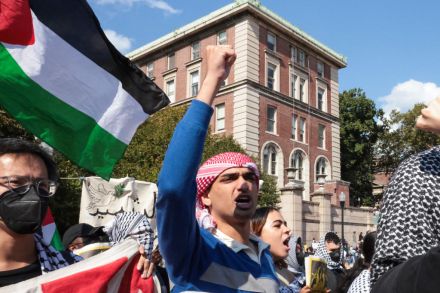
It was the first day of the spring semester when masked individuals burst into the classroom, shouting and throwing posters at students. As they yelled, the professor asked the protestors calmly, and in Arabic, to leave. The class was on the History of Modern Israel, the campus was Columbia University, and the protestors were part of the highly engaged and increasingly extreme “Palestine liberation” movement. It transpired that the masked students did not speak Arabic, that they did not intend to engage in a dialogue, and their primary concern was causing disruption and documenting that disruption for social media.

Palestine

How the ancient Greeks tackled treaties

Israel and Hamas signed a ceasefire agreement. Though the ancients would have employed oaths, the practical ancient Greeks often ensured there was a flexibility about them: the real world might intervene. For example, treaties between city-states were agreed between opposing generals. Hostages were exchanged, oaths sworn and the terms of the treaty widely inscribed on stone and bronze pillars, but it was citizens who oversaw the treaty’s maintenance. In a Greek democracy, however, there was no saying how, under the influence of different leaders, policy might change and annul a treaty at a stroke. Then again, though treaties could be sworn to last forever, ‘circumstances’ were very unlikely to remain so accommodating.

Colombia yields to Trump’s tariff threats

From our US edition

President Donald Trump and Colombian president Gustavo Petro feuded yesterday over the return of immigrants living illegally in the US, but after Trump’s threats of tariffs, Petro agreed to send his own plane to pick up the criminals. Trump’s plans to return the immigrants back to their country of citizenship were temporarily thwarted by Petro, who denied the flights permission to land. He claimed he rejected the repatriation flights because of the lack of “dignity and respect” shown to these Colombians, as they would have arrived on military planes while handcuffed. Petro stated, “We will receive our fellow citizens on civilian planes, without treating them like criminals.

How will Trump take on the administrative state?

From our US edition

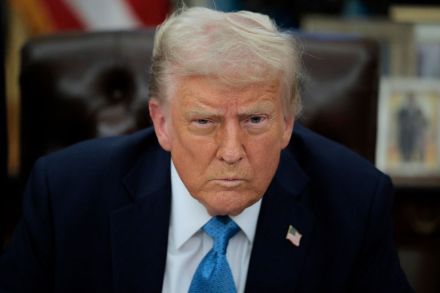
By the time you read this, the first raft or two of Donald Trump’s executive orders will have been promulgated. No one outside the charmed circle of his close advisors knows what is coming down the pike, but all indications are that the orders will be energetic and far-reaching. Colin Powell would probably have pulled out the phrase “shock and awe.” Most observers believe that there will be robust attention to immigration, the border, energy, regulation, taxes and the conduct of elections. There will probably also be orders touching the fate of some 1,500 people charged in connection with the self-guided tour of the Capitol on January 6, 2021. I would not be surprised if there were also orders regarding the conduct of some of the prosecutors involved in those cases.

administrative

Is Biden working to sabotage Trump’s transition?

From our US edition

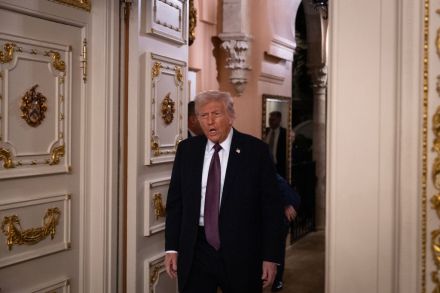
President Joe Biden has taken actions that will make former and President-elect Donald Trump’s transition into the White House difficult, slowing him down with federal rules and other roadblocks, according to inside sources and Trump himself.  Last week, Trump talked to reporters outside of Mar-a-Lago about the departing Biden administration.  “They’re trying everything they can to make things more difficult,” Trump said.  He also told reporters that Biden was being “sneaky,” despite the current president’s public pledge to cooperate with the incoming administration’s transition into the White House.  “They try to be sneaky,” Trump said at a press conference.

Trump show starts in earnest with cabinet picks

From our US edition

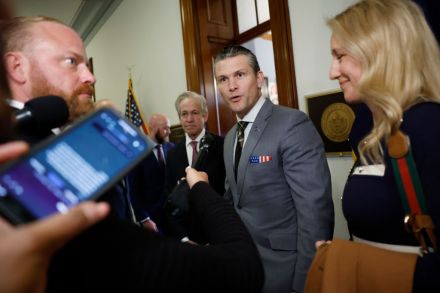
Donald Trump doesn’t take office for another week, but the Trump show starts in earnest this week with a confirmation hearing for Pete Hegseth, followed shortly by Pam Bondi, Kristi Noem, Doug Burgum, Doug Collins and others.While some drama is to be expected, Trump’s current nominees have mostly run the gauntlet unscathed. Not all were so lucky, however. Former congressman Matt Gaetz quickly withdrew his name from consideration to be attorney general once he felt that he no longer had a foreseeable path forward; another Florida man, Hillsborough County sheriff Chad Chronister, withdrew his name from consideration due to concerns from the right about his record during Covid-era lockdowns.

pete hegseth cabinet

What does Gaza have to do with the Los Angeles fires?

From our US edition

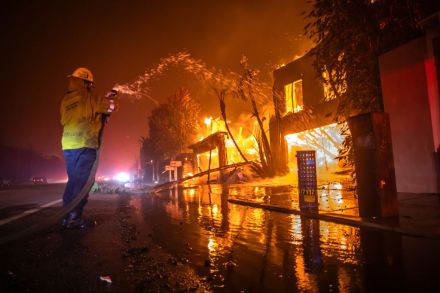
The insanity displayed by the pro-Hamas crowd never ceases to amaze. But the latest salvo feels extreme even by the extremist standards that have come to define the global political climate post-October 7. According to some of the most vocal online anti-Zionists, the raging inferno now overwhelming much of Los Angeles is not the result of government neglect or poor urban planning or even climate change. No, the thousands of homes and tens of thousands of acres now destroyed across Southern California are the handiwork of Jews and Zionists and Israel.  There are many streams leading to this nonsensical conclusion — all rooted in time-worn tropes of nefarious Jewish alliances and global domination.

Trump is already the diplomat-in-chief

From our US edition

The United States only has one president at a time. Until January 20, that’s Joe Biden. But President-elect Donald Trump and his skeleton foreign policy team are waiting in the wings, plotting policy behind the scenes on issues — Ukraine, Gaza, Iran, Middle East peace — that have stymied the Biden administration for the last year. In fact, Trump is already influencing the respective calculations of allies, partners and adversaries before he even steps foot in the Oval Office. And Biden’s advisors seem perfectly fine with it. Trump fancies himself as a master negotiator, somebody who’s inherently skilled at poking, pressuring and sweet-talking the opposite side of the table until he gets what he wants.

diplomat

Beware the Qataris

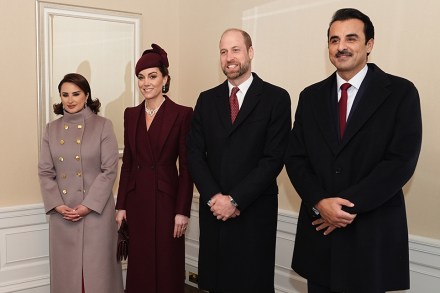
I feel some sympathy for the British royal family because of the ghastly people they are forced to meet. The late Queen had to greet Nicolae and Elena Ceausescu, Idi Amin and Robert Mugabe. This week the King and Prince and Princess of Wales had to meet the Emir of Qatar and his wife. True to form, the state media in Britain managed to miss every major problem with this. The BBC did say that there might be protests around the visit because of Qatar’s record on ‘LGBT rights’. But more troubling is that Britain should ever have welcomed the leadership of such a sordid, terrorist-supporting statelet.

The ICC’s rogue prosecutor

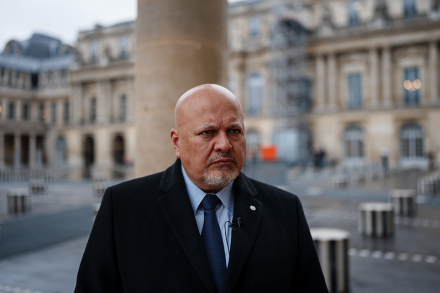
Yahya Sinwar, the mastermind of 7 October, went to meet his maker last week. Having spent a year being pursued through the underground tunnels of Gaza that he had built, he finally put his head up above the surface in the Tal al-Sultan area of Rafah. The world that had told the IDF not to go into Rafah was once again proved wrong. Sinwar was killed in an exchange of fire by a 19-year-old Israeli soldier who was not even in uniform on 7 October. People inside the ICC were annoyed by the way Khan made himself a sort of ‘world policeman’ A couple of days after Sinwar’s demise, I went into Rafah to see the house where he spent his final minutes.

The endgame: Biden’s quest for a foreign policy legacy

From our US edition

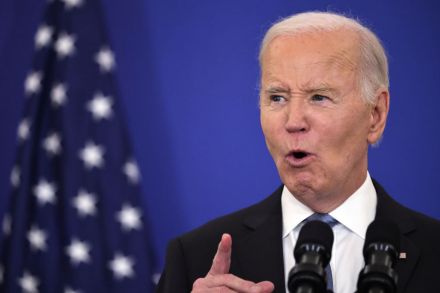
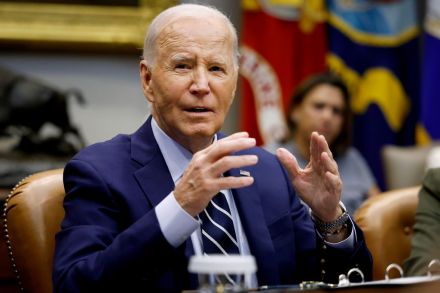
President Joe Biden only has a few more months before he steps out of the White House, hands over the keys to his successor and spends his remaining days soaking in the Delaware sun. But before he enjoys retirement, the lifelong public servant has a big piece of unfinished business: scoring a major foreign policy win that will secure his place in the history books. Unfortunately, dreaming about being a statesman is one thing; being one is quite another. The two conflicts that would give the president that coveted status — the wars in Gaza and Ukraine — aren’t presently amenable to diplomatic resolution. And while Biden and his advisors may be committed to doing the impossible, all the commitment in the world won’t do much if the combatants are intent on slugging it out.

Biden

What follows Sinwar’s death in Israel’s war in Gaza and beyond 

From our US edition

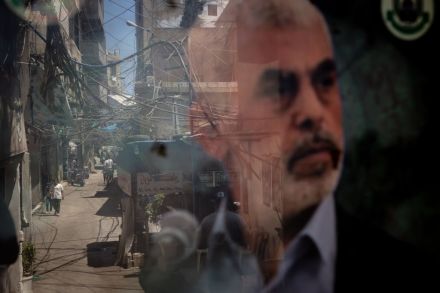
Yahya Sinwar, the Hamas leader and strategist responsible for the largest massacre of Jews since the Holocaust, is dead, killed by the Israeli Defense Forces in a tunnel beneath his hometown of Rafah in Gaza.   Although the Biden administration (rightfully) congratulated Israel, both President Biden and Vice President Harris had previously demanded Israel not stage a major military operation in Rafah, where Sinwar and other Hamas leaders were killed. That advice matched the administration’s strategic wisdom throughout the conflict.   With Sinwar gone, the key questions now are: what is the endgame in Gaza? And how does Israel’s success in Gaza affect the current battle against Hezbollah in Lebanon and the future battle against the Islamic Republic of Iran?

yahya sinwar
sinwar netanyahu

How will Yahya Sinwar’s death change Netanyahu’s calculations?

From our US edition

It was a short, stern, matter-of-fact message from the Israeli Defense Forces — "Eliminated: Yahya Sinwar." The man the Israeli military establishment was searching for throughout Gaza's alleyways, underground tunnels and blasted-out buildings for more than a year, responsible for the worst terrorist attack on Israel since the founding of the state, is now dead and gone. Sinwar becomes the latest in a long line of Hamas leaders and commanders — Ahmed Yassin, Abdel Aziz Rantisi, Mohammed Deif and Ismail Haniyeh, to name a few — who have eventually met their fate at Israel’s hand.  Sinwar, however, often made the others look like conciliatory men. The sixty-something-year-old Palestinian, born in a Gaza refugee camp, lived and breathed Hamas for his entire adult life.

Trump returns to site of first assassination attempt

From our US edition

President Donald Trump triumphantly returned to Butler, Pennsylvania on Saturday — exactly twelve weeks after an attempted assassin shot Trump in the ear, killed a rally attendee, Corey Comperatore, and injured several others.Trump previously promised he would go back to finish his rally in Butler, and he did indeed show up at the same spot where he was very nearly killed, kicking off the event with an acknowledgment that the last time he was there, his speech was cut short. “As I was saying...” Trump said to cheers and laughter. He referenced the famous illegal immigration chart that likely saved his life, as he turned his head to look at it at the exact moment the shooter fired, ensuring the bullet grazed his ear and did not go through his head. “I love that chart.

Why the age-old ‘Jews are white’ trope is back on center stage

From our US edition

During Rosh Hashanah dinner this past week, my mother — an occasional yet focused steamer — recommended I check out the Israeli show A Body That Works on Netflix. And so I did. The series focuses on the marital joy and strife that emerges during a surrogate pregnancy situation between an affluent Tel Aviv couple and a single mother from far more modest circumstances.  Clearly shot before last October 7, I couldn’t help thinking that A Body That Works reflects all that is great about Israel — a place I’ve visited and lived in for decades. There’s Tel Aviv’s balmy seafront location. The series’ hip and hunky cast.

Where conflict in the Middle East goes from here

From our US edition

Anything written on the Middle East at this moment in history is almost instantly out of date. As Lenin said: “There are decades where nothing happens; and there are weeks where decades happen.” The Arab-Israeli war in 1967, the Iranian revolution in 1979, the invasion of Iraq in 2003...the region may once again be at one of those forks in the road that dictate the fate of nations for years to come. Journalists’ predictions age like milk out of the fridge. Nevertheless, here are some: Israel attacks Iran. This isn’t a hard one. The question is what form that attack will take. The prime minister, Benjamin Netanyahu, has wanted to bomb Iran’s nuclear facilities before, only to be stopped by the US.

Israel’s revenge, farewell Fraser & the demise of invitations

37 min listen

This week: Israel’s revenge and Iran’s humiliation. As the anniversary of the October 7th attacks by Hamas approaches, the crisis in the Middle East has only widened. Israel has sent troops into southern Lebanon and there have been attempted missile strikes from the Houthi rebels in Yemen and from Iran. Is there any way the situation can de-escalate? And how could Israel respond to Iran? Former BBC foreign correspondent Paul Wood and defence and security research Dr Limor Simhony join the podcast (1:03). Next: it’s the end of an era for The Spectator. This issue is Fraser Nelson’s last as he hands over the reins to Michael Gove. Having spent 15 years as editor, with 784  issues to his name, what are his reflections on his time here at 22 Old Queen Street?

Voices from Gaza, historic city in ruins

I have been reviewing for decades and this is by far the most difficult book I have taken on: difficult to read because it relates to what Israel has done in Gaza over the last year, and difficult to write about because the subject is so divisive. But whether you think Palestinians deserve what is happening to them or that Israel is a rogue state, please read to the end. First there is the title. Not Catastrophe, or Genocide, or Reckoning in Gaza, but Daybreak. This is a book that carries the promise of a new day, or a dawning – a book that looks forward, but does so also by looking back over 4,000 years of history.

Black Sunday: reckoning with October 7 a year later

From our US edition

October 7 was the bloodiest day in Jewish history since the Holocaust. Some refer to it as Israel’s 9/11, though proportionally it was like fifteen 9/11s. However, numbers rarely tell the full story and here they fall devastatingly short. I was awake when it started. I’ve always been a night owl but staying up until six in the morning is unusual for me. On that bright fall morning I heard sounds like a thunderstorm and went outside to see what was going on. I live on a hill overlooking Gush Dan, the informal megalopolis that’s home for almost half the population of this stamp-sized country. When something big happens I can often see it.

October 7

The joy of our deluded politicians

There are a number of joys in life that do not get enough attention. One is the sheer, unadulterated pleasure that can be gained from watching a politician speak about something they know nothing about. This season Kamala Harris is giving especially abundant material for connoisseurs. Recognising that there is plenty she doesn’t know about, her campaign team are hoping that, Starmer-like, she can glide into office without having to say anything about what she might do once there. On the rare occasions when she does sit down and get asked questions, she is a master in her peculiar field.