Green energy

The end of the climate cult

From our US edition

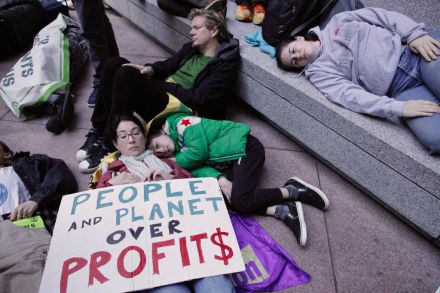
Finally, thankfully, the global warming craze is dying out. To paraphrase Monty Python, the climate parrot may still be nailed to its perch at the recent COP summit in Belém, Brazil – or at Harvard and on CNN – but elsewhere it’s dead. It’s gone to meet its maker, kicked the bucket, shuffled off this mortal coil, run down the curtain and joined the choir invisible. By failing to pledge a cut in fossil fuels, COP achieved less than nothing, the venue caught fire, the air-conditioning malfunctioned – and delegates were told on arrival not to flush toilet paper.

Climate

James Heale, Margaret Mitchell, Damien Thompson, Rebecca Reid & Julie Bindel

26 min listen

On this week's Spectator Out Loud: James Heale considers the climate conundrum at the heart of British politics; Rebecca Reid explains why she's given up polyamory; Damien Thompson recounts the classical music education from his school days; Margaret Mitchell asks what's happened to Britain's apples; and Julie Bindel marvels at the history of pizza.  Produced and presented by James Lewis.

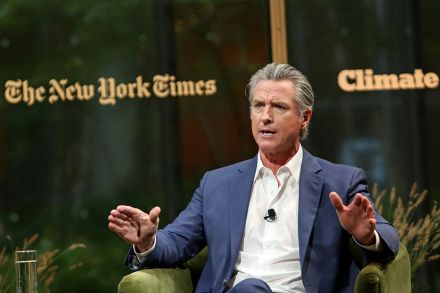
Gavin Newsom’s fossil-fuel flip-flop

From our US edition

Gavin Newsom once touted California as the fossil fuel industry’s “foe.” In 2024 he declared energy workers “the polluted heart of the climate crisis.” Together with Attorney General Rob Bonta he famously filed an outlandish climate lawsuit in 2023 demanding oil majors pay the costs of climate change. And under Newsom anti-energy lawfare has been coupled with burdensome environmental regulations, delays in permitting and punitive legislation such as a pledge to end oil drilling across the state by 2045. But now, a decade since the madness started, the strategy has turned out to be a dud. The “bold” climate plan has produced no reliable or affordable alternatives to oil and gas – and has even forced major refineries to up and leave.

Gavin Newsom

The myth about electric car owners

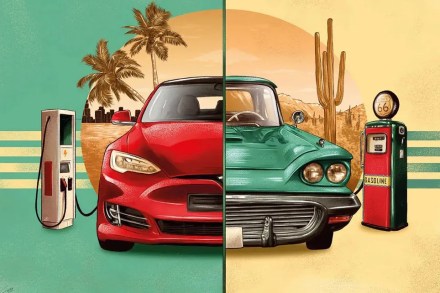
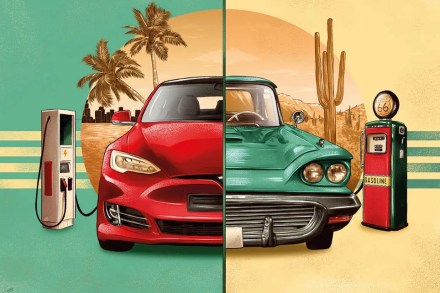
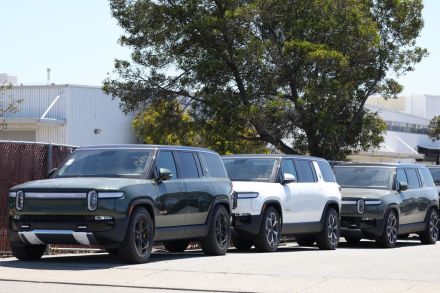
Every time I write about electric cars, there is an explosion of hostile comments online in which readers angrily denounce electric vehicles and the people who drive them. Much of this animus rests on a plausible yet mistaken assumption – that EV owners are all passionate environmentalists, sanctimoniously swanning around in their zero--emission vehicles while disdaining the ghastly, planet-killing masses burning dinosaur juice. Let me disabuse you of this. That stereotype was perhaps partly fair when applied to the Toyota Prius – although even then I suspect it concerned only a minority of owners.

Why being anti-car is a luxury belief

It happened six years ago on a flight back from the United States. ‘Sir, I’m pleased to say you’ve been upgraded to first class.’ ‘Wonderful! Where would you like me to sit?’ ‘Anywhere you like, you’re the only passenger.’ The anti-car movement is idiotic – a luxury belief shared by deluded metropolitans For the next few hours I dined on fine food brought to me at any time I chose and drank the finest wines known to humanity. I had a staff of three to myself. At one point they brought me a silver tray with magazines on it, one of which was The Spectator. ‘Would you like anything to read, sir?’ ‘Yes, I’d like to read something written by, let me see… oh, I know – me!’ I didn’t actually say that, you understand, but I thought it all the same.

How to solve ‘range anxiety’

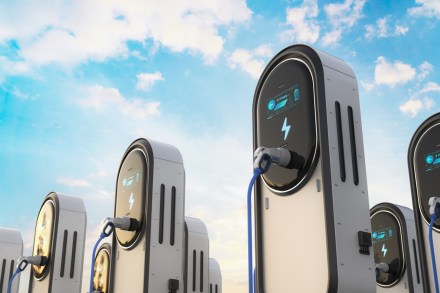
In ‘The Adventure of Silver Blaze’, Sherlock Holmes mentions ‘the curious incident of the dog in the night-time’. ‘But the dog did nothing in the night-time,’ argues Inspector Gregory. ‘That was the curious incident,’ replies Holmes. You never hear anyone say: ‘We finally stumbled across a charming little petrol station nestling among the trees’ Along with Donald Rumsfeld’s ‘Unknown unknowns’, this is perhaps the most famous example of what you might call ‘perceptual asymmetry’. We mostly act instinctively based on what is salient, giving little thought to what is easily overlooked. It is hence surprisingly easy to change what people do simply by changing what they pay attention to.

Is the West ready to face the challenges of advancing technology?

From our US edition

The theme of this month’s edition is technology. The advancement of space exploration, defense technologies, artificial intelligence and the like should excite us. Yet the geopolitical issues they present are great and Western governments seem ill-prepared to grapple with them. Watch any congressional hearing where a crusty congressman tries to keep pace with Silicon Valley’s top autists if you need further evidence — and read Spencer A. Klavan’s analysis of the high-skill but low-status rejects uniting into a formidable social class on p.12. The Silent Generation and boomers simply cannot keep up. The Space Race is back on, as tycoons seek to cash in on the final frontier.

space technology
gaslighting

The rise of reverse gaslighting

From our US edition

We live now in an age of reverse gaslighting. Ordinary gaslighting — the term was popularized by the 1944 movie Gaslight — describes a process of psychological manipulation whose goal is to make ordinary people question their sanity. Reverse gaslighting, by contrast, aims to convince us that insane realities are perfectly normal. Imagine: practically the entire population quarantines itself because a couple of government bureaucrats tell them to. Everyone starts wearing little paper masks as patents of their capitulation and, secondarily, as badges of their virtue.

Going electric requires electricity. Who knew?

A lead article in the sober-sided New York Times is seldom funny. Yet ‘A New Surge in Power Use is Threatening US Climate Goals’ earlier this month cracked me up. Check out this sternly dramatic first paragraph: ‘Something unusual is happening in America. Demand for electricity, which has stayed largely flat for two decades, has begun to surge.’ Personally, I’d have headlined that article ‘Well, duh’ – perhaps with the subhead ‘Aw, shucks’. Lo and behold, when you push people to electrify everything in their lives – cars, cookers, heating systems – while bribing them to go all-electric with lavish government subsidies, it turns out they use more electricity. Who would have thought?

The message from Michigan

From our US edition

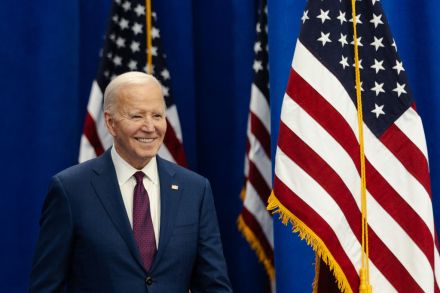
Both Joe Biden and Donald Trump won overwhelming victories in Tuesday’s Michigan primary, but their undeniable success doesn’t answer the hard questions facing each candidate in the general election. They won’t get the answers next week on Super Tuesday, either, even though both candidates are expected to win easily. What are those questions, on which victory in November depends? Oddly, some are the same for Biden and Trump. Can they recapture the reluctant wings of their party, the factions that have refused to vote for them so far? Can they move beyond consolidating support within their parties to win over independent voters, who outnumber both Republicans and Democrats? Despite that similarity, there is a fundamental difference between the refusenik wings of each party.

michigan

China cons US on green energy agenda

From our US edition

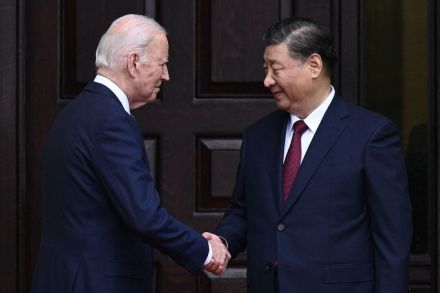
Right before President Biden and Chinese president Xi Jinping met in San Francisco this week, the US State Department and the Chinese Ministry of Ecology and Environment each released a statement on “enhancing cooperation to address climate change.”  “[T]he United States and China reaffirm their commitment to work jointly and together with other countries to address the climate crisis,” the Sunnylands Statement says. Addressing “energy transition,” the statement declares that both countries support pursuing efforts to triple renewable energy capacity globally by 2030 and accelerate renewable energy deployment as a substitute for fossil fuels.

The EV election?

From our US edition

You can lead an electorate to the electronic vehicle charging station, but you can’t make them plug in.   That’s the lesson President Biden is learning as American consumers reject the “green” future the administration has been trying to mandate through the EPA’s proposed emissions standards and billions in EV subsidies and tax credits.   The American people, however, just aren’t buying the climate change is “even more frightening than a nuclear war” line Biden is selling.

Biden’s green agenda threatened by historic labor strike

From our US edition

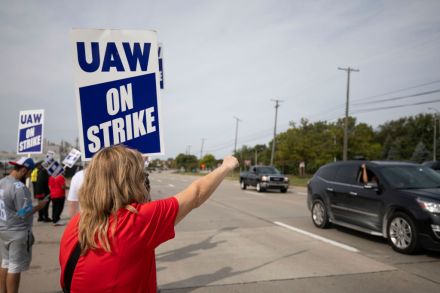
At midnight Friday, more than 12,000 workers walked out of factories owned by Ford, General Motors and Stellantis, marking the first time in history that the United Auto Workers union has gone on strike against all of the Big Three auto manufacturers at once. The UAW started contract negotiations asking for a 40 percent pay increase over four years and a four-day work week. The Big Three have countered with an offer of an approximately 20 percent pay increase, which would make up for real wage decline due to inflation since 2008. Neither side has moved significantly since bargaining began two months ago.  The unprecedented strike is centered in the Midwest, but it no doubt has major political ramifications back in the nation’s capital.

Wildfire apocalypse, not

From our US edition

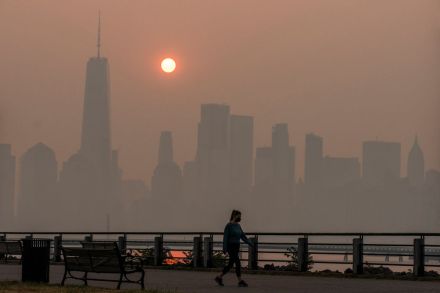
There was nothing new about springtime wildfires in Canada until the wind shifted unexpectedly last week. That shift blew smoky air all over the northern and eastern US, producing memorably apocalyptic-like orange air in New York City. Not wanting to waste a crisis, the lamestream media jumped right in with both feet. They blamed the wildfires on the much-dreaded “climate change,” scared the daylights out of everyone about the air quality and then warned that more like it was on the way unless we changed our fossil fuel-burning ways. Not unexpectedly, the media’s knee-jerk take was all wrong. Wildfires and smoky air have always occurred wherever there are forests. At least eighteen of these dark or “yellow days” occurred in the US and Canada from 1706 to 1910.

wildfire

The US is greening itself toward more dependence on China

From our US edition

A pair of Wall Street Journal headlines announced last week that "renewables surpassed coal power generation in 2022 for first time,” and “coal prices tumble while use of wind power, solar energy leaps ahead.” Taken at face value, you might believe fossil fuels are about to go the way of the floppy disk. Not so. News of renewable triumphs is often greatly exaggerated. Pretending that we can dismiss coal and other fossil fuels as energy sources anytime soon is to bite the hand that feeds us.

green china

East Palestine and the roots of rural mistrust

From our US edition

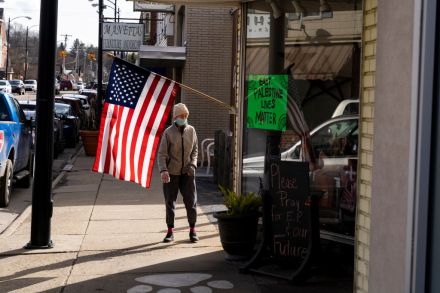
The East Palestine, Ohio, train derailment has thrust rural America into the national spotlight. Town mayor Trent Conaway, a hefty, scruffy figure who resembles many a resident of flyover country, has been all over cable news expressing his “frustration” over how the federal government has handled the disaster. “Frustration” is exactly the word I’d use to describe the predominant feeling I encountered last week during my visit to East Palestine. It’s the same attitude I come across constantly in my rural Pennsylvania homeland. The way the East Palestine disaster has unfolded magnifies the rural perception of government, and both sides of the aisle would be wise to take a closer look and listen.

rural

How the population scare predicted today’s climate hysteria

From our US edition

Stanford professor Paul Ehrlich's recent appearance on CBS’s 60 Minutes reminds us what can happen when those with impressive academic credentials begin making end-of-the-world predictions. It was 1968 when Ehrlich published The Population Bomb, a book that declared with absolute certainty that “the battle to feed all of humanity is over.” Because so many people were living so close together and consuming so much of the world’s limited resources, the inevitable future was one of “mass starvation” on “a dying planet.” A year after the book’s publication, Ehrlich went on to say that this “utter breakdown” in Earth’s capacity to support its bulging population was just fifteen years away.

The delusion that unites Biden and Macron

From our US edition

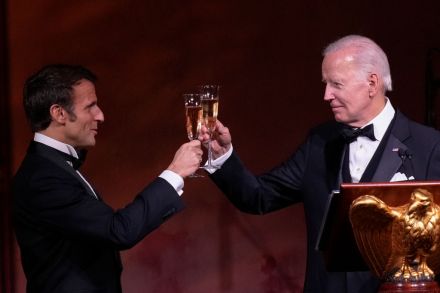
Friday, and it was hard to tell whether we were witnessing a clash of civilizations or a reconvergence. After a state dinner with Joe Biden in Washington, France's president Emmanuel Macron touched down in New Orleans, that most French of American cities, where he was greeted on the tarmac by a jazz band. If you've ever wanted to see a Frenchman cut a rug, now is your chance (though it was Macron's wife Brigitte who seemed the looser of the two). From there, Macron was off to the French Quarter, where he received a personal tour from New Orleans mayor LaToya Cantrell. And really, I just hope they did it right. I hope they took him to Bourbon Street and emerged on that one block with Larry Flynt's strip club and the giant sign: "Relax. It's just sex." (Told you it was French.

Feeling grateful for coal in West Virginia

From our US edition

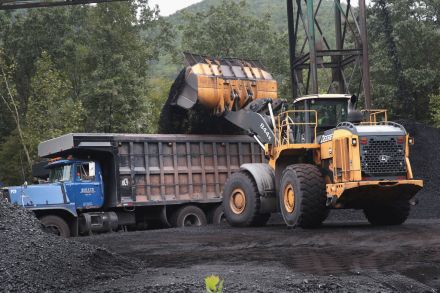
Never did I think the day would come when I would be writing about West Virginia coal miners and Lululemon’s “Hotty Hot pants” in the same article. What truly strange times we live in. Last week, I traveled down to wild and wonderful West Virginia for the Bluefield Coal & Mining Show, “A Show for Mining: Past, Present, and Future.” It was a cloudless day in early fall, with crisp air, manly Southern gentlemen with the most charming drawls, huge, impressive, American-made machinery, and free beer everywhere. “Almost heaven” indeed!

Rashida Tlaib demands banks stop funding new oil and gas products

From our US edition

Cockburn was busy vigorously shaking his evening martini, James Bond-style, last night, so he missed the first half of Representative Rashida Tlaib’s insufferably long-winded and self-righteous speech ahead of a really dumb question. Her overly accentuated red lips (a similar shade of blood sported by fellow Squad member AOC) spewed all sorts of nonsense, while her attention-grabbing glasses risked flying from her face as her head gestured dramatically back and forth on screen. Cockburn’s mixology ended just in time to hear Tlaib charge J.P. Morgan CEO Jamie Dimon with: “Please answer with a simple yes or no, does your bank have a policy against funding new oil and gas products, Mr. Dimon?