Government

Exit the Tsar

From our UK edition

Helen Rappaport’s new book makes no claim to be a complete account of the Russian revolution. Instead it presents a highly readable and fluent description of the events of 1917 in the capital, Petrograd, as experienced by the city’s many foreign residents. Russia’s booming prewar economy had attracted every sort of business person and technical expert, as well as diplomats, journalists, adventurers and fleets of governesses. Their first-hand revolutionary experiences were too extraordinary not to record, and those who did not write contemporaneous accounts often produced memoirs later. Rappaport has unearthed striking new material from archives in Russia, the US, France and at the University of Leeds.

Chris Grayling gets off to a bad start with Southern commuters

From our UK edition

Oh dear. Less than a month into his tenure as transport secretary, and Chris Grayling already has a crisis on his hands. As commuters on Southern Rail face a week of rail chaos across London and the South East thanks to strikes, there is a growing anger that Grayling is yet to take charge of the situation -- despite describing it as his 'top priority'.

Portrait of the week | 21 July 2016

From our UK edition

Home Theresa May made a speech in the open air in Downing Street after kissing hands with the Queen as the new Prime Minister. ‘As we leave the European Union,’ she said, ‘we will make Britain a country that works not for a privileged few, but for every one of us.’ In her new cabinet Boris Johnson, the failed contender for the leadership of the party, was made Foreign Secretary, replacing Philip Hammond, who became Chancellor of the Exchequer in place of George Osborne, who was sacked. Amber Rudd became Home Secretary, replacing Mrs May, and Liz Truss became Justice Secretary and Lord Chancellor, replacing Michael Gove, who was sacked. She is the first female Lord Chancellor in the millennium-long history of the office.

Cameron’s Legacy

From our UK edition

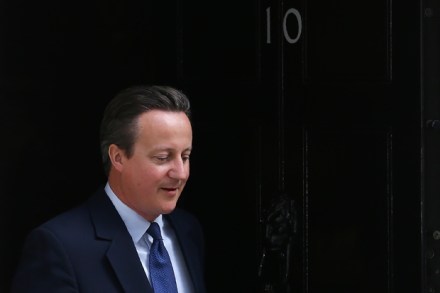
Midway through his final cabinet meeting, David Cameron realised — with some horror — that it had turned into a political wake. Theresa May had just lavished praise upon him, and his eyes had moistened. Then it was George Osborne’s turn: the Chancellor was a bit more humorous, but no less affectionate: ‘Being English, David, you’ll hate all this praise,’ he said. ‘You’re quite right,’ Cameron replied. ‘I am English, and I don’t much like it.’ Fearing that every member of his government was about to deliver an elegy, he brought the meeting to an abrupt end. Defining Cameron’s legacy is an important task for the Conservatives if they are to build on it.

Lily Cole’s £200,000 government grant fails to pay off

From our UK edition

What will be David Cameron's legacy? The former Prime Minister is keen to be remembered for his social justice reform, but it's more likely he'll be remembered for taking Britain out of the EU. However, it's some of his financial decisions that continue to trouble Mr S. Take, for example, the £200,000 of taxpayers’ money the Cabinet Office has gifted Lily Cole since 2013. Under the Innovation in Giving fund, the millionaire model received the money to fund her 'sharing economy' website Impossible. The site launched with the aim to match people with requests for help with those who have the skills to assist. So, a good use of taxpayers' money? Perhaps not.

Who to nudge next

From our UK edition

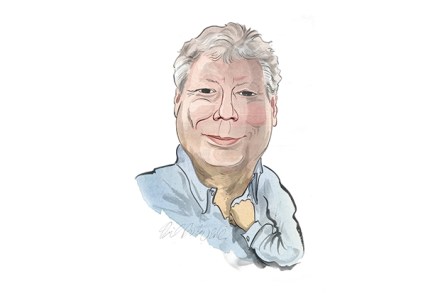
‘For ten years or so, my name was “that jerk”,’ says Professor Richard Thaler, president of the American Economics Association and principal architect of the behavioural economics movement. ‘But that was a promotion. Before, I was “Who’s he?”’ Thaler has had to get used to putting noses out of joint. His academic research, initially controversial, sparked an entirely new branch of economics, and now governments are adopting his theories across the globe. But he met plenty of resistance along the way. ‘You get your ideas straight when you argue with those whose views are most different from yours,’ he says.

Brexit, and the return of political lying

From our UK edition

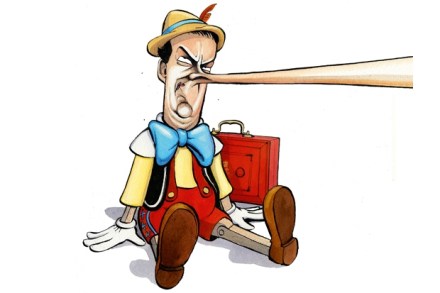
Sir John Chilcot’s report into the Iraq invasion, due to be published on 6 July, is expected to highlight the novel structure of government created by New Labour following its landslide victory of 1997. As Tony Blair started to make the case for war, he began to distort the shape and nature of British government in several ways — the most notable being the deliberate debasement of the traditional idea of a neutral, disinterested civil service. Under Blair, civil servants were told to concern themselves less with the substance than the presentation of policy. They were informed that their loyalty lay more with the government of the day, less with the British state. This had dramatic effects.

In praise of doctors’ handwriting

From our UK edition

My baby and I excel at blood tests. He (tiny, jaundiced) stretches out naked under the hospital’s hot cot-lamps like a Saint-Tropez lothario. The nurse rubs his foot to bring blood to his veins, and I lean over the cot to feed the greedy midget, who squawks just once as he’s stabbed. I watch the drops bulge and drip and I puzzle over the NHS and its mysteries. Why do nurses collect baby blood in glass straws with an opening no wider than a pin? It’s like an impossible task set by a whimsical tyrant. Even more surreal is the way the NHS handles patient records. Because the midget and I have visited so many parts of the NHS — maternity wards, A&E, GP surgeries, neonatal units — we’ve become a crack two-man investigative team.

The slow death of environmentalism

From our UK edition

Would you describe yourself as an ‘environmentalist’? I would, mainly to annoy greenies, but also because it’s true. If your definition of an environmentalist is someone who loves immersing himself in the natural world, makes a study of its ways and cares deeply about its future, I’m at least as much of one as David Attenborough. But I can see why many fellow nature lovers might balk at the term, especially now that it has become so grievously politicised. That would explain the recent Gallup poll — it was taken in the US but I suspect it applies to Britain too — showing how dramatically this label has plunged in popularity. In 1991 the majority of Americans self-identified as environmentalists — 78 per cent of them.

Let’s make assisted dying legal for Brightonians

From our UK edition

I am having terrible trouble with my hair at the moment. It is lank, flat and lifeless. There are split ends. Also, it doesn’t smell too good. What’s that appalling stench, my wife asked recently while sitting next to me on the sofa as we watched a rerun of the old racist editions of Midsomer Murders starring the excellent John Nettles. ‘Probably the dog, again,’ I replied — but I knew that was a lie. I knew it was my hair. It smelt like that rotten cheese Italians eat. I don’t know why, because I wash it frequently enough. Maybe, to adapt Orwell’s mordant observation, at the age of 56 everyone has hair which smells exactly as they deserve. In my case, Gorgonzola, with a subtle undertone of raw sewage.

Who needs governments?

From our UK edition

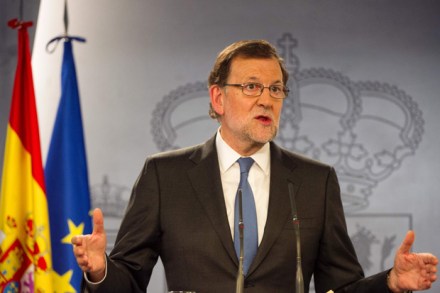
On 26 October last year, the Spanish government shut up shop in preparation for a general election. This duly took place in December but then a strange thing happened: after all the build-up, the arguments, the posters and the television coverage, the result was… nothing. The various parties were so balanced, so mutually distrustful and ill-assorted that no government could be formed. Since last October, therefore, there has been no government in Spain. One can imagine that the average political correspondent would think this a terrible problem, maybe even a crisis. The Financial Times has referred to Spain ‘enduring’ months of ‘political uncertainty’. This is assumed to be a matter requiring furrowed brows and grave tones.

Desperate straits

From our UK edition

 Istanbul Shops in a rundown neighbourhood sell fake life jackets to refugees planning to brave the Aegean Sea. Last year, nearly 4,000 refugees died trying to make this journey. ‘But what am I to do?’ says Erkan, a shopkeeper, as he pushes me out of his shop. ‘I tell them they are fake but the poor souls continue to buy them. The genuine ones don’t sell so well.’ We’re in the suburb of Aksaray, the makeshift centre of the smuggling trade in the city. Here the language is Arabic and the restaurants are Syrian. A town square serves as a hub for migration brokers. This is where dreams are sold. Each night, hordes of Syrians fill the area, their lives on their backs, preparing for the dangerous journey ahead.

Letters | 18 February 2016

From our UK edition

Governmental ignorance Sir: Your leading article (13 February) blames junior doctors for playing with lives in their dispute; but what alternative do they have when confronted with the monumental ignorance of our present government (and the last, and the one before that, for that matter)? The NHS, when it started, was propped up by the amazing dedication of the post-war generation and then the baby-boomers. Even so, by the 1960s it was dependent on cheap foreign labour. If people want a first-class service they have to pay for it. It is about time somebody made our government aware of the facts of life — and the junior doctors seem to have stepped up to the plate.

Flying doctors

From our UK edition

A few months ago, paramedics were on the brink of industrial action. They had legitimate grievances. Ambulance services were being run down, their staffing levels were dangerously thin — and the mismanagement (much of it exposed by Mary Wakefield in The Spectator) was horrendous. But in the end they stepped back from the brink — for good reason. It went against their nature to endanger lives, and in addition it would have been a tactical mistake. If a single patient died as a result of the strike, paramedics would have lost public sympathy. Should a nationalised health service really use the unwell as a bargaining chip? English doctors have not shown the same strategic foresight.

The Spectator’s Notes | 21 January 2016

From our UK edition

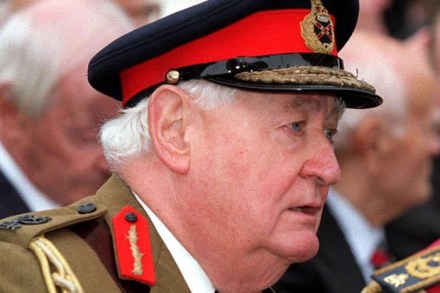
Many have rightly attacked the police for their handling of the demented accusations against Field Marshal Lord Bramall, now at last dropped. They ostentatiously descended on his village in huge numbers, chatted about the case in the pub and pointlessly searched his house for ten hours. But one needs to understand that their pursuit of Lord Bramall — though not their exact methods — is the result of the system. Because the doctrine has now been established that all ‘victims’ must be ‘believed’, the police must take seriously every sex abuse accusation made and record the accusation as a reported crime (hence the huge increase in sex abuse figures).

The Clare Valley

From our UK edition

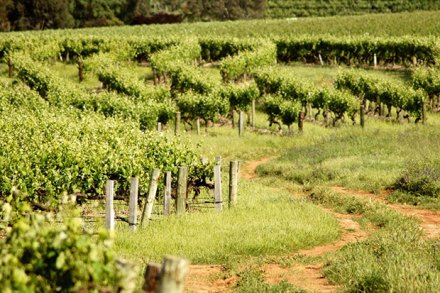
It is a century and a half since The Spectator noted the exceptional qualities of South Australia, a colony of free settlers untainted — unlike the rest of the continent — by the convict stain. ‘Everywhere … the enclosures over miles of plain, the hedged gardens, the well-grown orchards and well-appointed homesteads, proclaim the possession of the land by an industrious and thrifty yeomanry,’ wrote a Mr Wilson in these pages in 1866. ‘It is England in miniature, England without its poverty … with a finer climate, a virgin soil … more liberal institutions and a happier people.

Keynes’s big mistake

From our UK edition

Some things are universally accepted as true. Water finds its own level; crumpets are best eaten in winter; and the England football team will not win the World Cup again, ever. On a par with these things, the most accepted part of economics is Keynesianism. Of course, John Maynard Keynes said lots of things about economics in between his many and varied sexual encounters. But, as is the way of the world, one of the things he said turned out to be particularly influential. It is so influential that it has gone around the world. It is repeated and relied upon by Japanese finance ministers, New York Times columnists, Nobel prize winners and anti-austerity demonstrators. It is in textbooks around the globe. It is on page 262 of the Edexcel Economics A-level text book.

The best things in the world spring up by accident

From our UK edition

Since no one has bothered to ask what my must-read book of last year was I’m going to tell you here: it’s Matt Ridley’s Evolution of Everything. I don’t think it has appeared on nearly so many recommended lists as his previous bestsellers Genome and The Rational Optimist, nor has it been so widely reviewed. And I have a strong inkling as to why: its message is so revolutionary as to alienate pretty much everyone across the spectrum, from Christians and Muslims to corporate bosses, historians, feminists, educationalists and conspiracy theorists, from Greens and socialists all the way across (if there’s a difference) to Conservatives like George Osborne and David Cameron.

Where’s the joy gone?

From our UK edition

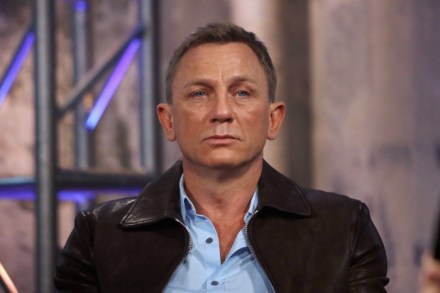
Have you seen Spectre, the latest Bond film? If not, the opening sequence is terrific. Lots of action and excitement. The whole film is full of stunts and thrills. But after watching it, I realised there was something missing: joy, or joie de vivre. Daniel Craig plays Bond like an android who has spent too much time muscle-building instead of having a good time. Contrast Spectre with From Russia With Love, one of the early Bond films. The first scene in which we see Sean Connery as Bond, he is humorous and amorous as he snogs a beautiful woman in a punt moored at the side of a river. He lifts out a bottle of champagne which he has left cooling in the water, tied with a piece of string. He tests it to see if it is cool enough.

What I got right

From our UK edition

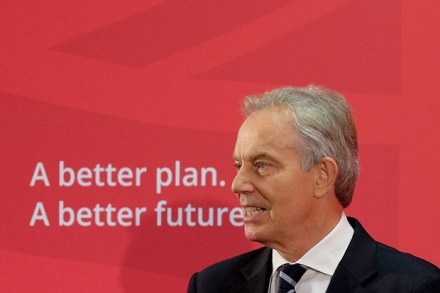
All wings of the Labour party which support the notion of Labour as a party aspiring to govern — rather than as a fringe protest movement — agree on the tragedy of the Labour party’s current position. But even within that governing tendency, there is disagreement about the last Labour government; what it stood for and what it should be proud of. The moral dimension of Labour tradition has always been very strong, encapsulated in the phrase that the Labour party owed more to Methodism than to Marx.