Gordon brown

Osborne, class and competence

The Sunday Mirror and the Independent have jointly commissioned an opinion poll which finds that George Osborne is ‘too posh’ to be chancellor. This just happens to fit the prejudices of both newspapers, and I for one do not believe it. Poshness certainly obsesses Tory strategists, and Gordon Brown sometimes played the class card because he saw how much agony it caused them. But Brown’s card was not the winning trump he hoped for because the British public is not as obsessed about class as the British elite. That’s why it backfired when Labour tried a class strategy in the Crewe by-election campaign. That by-election suggested that the average British person cares more about competence than class. This is Osborne’s present problem.

Osborne’s debt spiral

‘If we lose sight of the central role of debt in this crisis, we will come to the wrong conclusions about how to respond,’ said George Osborne last night — before announcing another massive tranche of debt. The Mail and The Telegraph put it at £140 billion, the Times and the FT at £100 billion and Bloomberg at £5 billion a month. ‘The government, with the help of the Bank of England, will not stand on the sidelines and do nothing as the storm gathers.’ CoffeeHousers may hear an echo of Gordon Brown’s language here, contrasting advocates of a Keynesian spending plan with the ‘do nothing Conservatives.

A more ambitious approach to fighting poverty

‘You attack poverty by knowing what you do changes the lives of those people.’ In that phrase on this morning’s Today programme, Iain Duncan Smith summed up the difference between his approach to combating poverty and Gordon Brown’s. As Fraser has put it, Brown saw poverty as ‘a statistical game… his great spreadsheet puzzler’. The aim of the game? To reduce the number of people living in households below the ‘poverty line’ — set at 60 per cent of median income. The easiest way to achieve this is to move people from just below the line to just above it by giving them a bit of extra cash (in the form of tax credits). Brown called this ‘lifting people out of poverty’.

Vintage Brown

Gordon Brown’s appearance at Leveson is yet another reminder of his stubborn refusal to ever admit error. The contrast between his and Tony Blair’s testimony is striking. One is left wondering how Brown ever became Prime Minister. Brown is maintaining that he didn’t get too close to the Murdochs, and that he never knew or encouraged his special advisers to brief against Tony Blair or other colleagues. Taking Brown at his word, the latter suggests that his operation was even more dysfunctional than we thought. One thing worth noting is that Brown has denied wholesale Rupert Murdoch’s claim, made on oath, that Brown called him after The Sun withdrew its support from Labour and told him that he had no choice but to 'make war' on the company.

Leveson summons the big dogs

Gordon Brown, Sir John Major, Ed Miliband, Harriet Harman, Alex Salmond, Nick Clegg, George Osborne and David Cameron will appear before the Leveson Inquiry next week, for what will be the inquiry's last week of evidence. All eyes, of course, will be on Cameron, who is due to appear on Thursday. He will be embarrassed once again by his past proximity to disgraced News International executives, and his handling of the News Corp BskyB takeover. He previewed his likely answers on BSkyB in an interview with Andrew Marr last week. He said that his intention was for Vince Cable to marshal the bid, but that was scuppered by Cable’s preposterous comments about ‘declaring war’ on the Murdochs, made to Telegraph journalists posing as concerned floozies.

No time to tinker

Next week, the Institute of Directors and the Taxpayers' Alliance will release what I humbly suggest will be the most powerful summary of the case for radical supply-side reform in a generation. The report of the 2020 Tax Commission runs to 417 pages, choc full of academic literature showing how big government chokes growth, and looking at what the optimal size of the state is. Broadly speaking, government spending is about half the size of economic output now and the optimal size is about a third. The recommendations are not being released until Monday, but it opens a very timely debate, which I preview in my Telegraph column. Here are my main points. 1. There is no recovery in sight.

Murdoch versus Brown

Testimony A, from Rupert Murdoch speaking to the Leveson Inquiry today: ‘Mr Brown did call me and said “Rupert, what do you know, what’s going on here?”, and I said “What do you mean?” and he said “The Sun, what it’s doing and how it came about”. I said I was not aware of the exact timing, but I’m sorry to tell you Gordon that we have come to the conclusion that we will support a change of government when there is an election. He said — and no voices were raised — “Well, your company has declared war on my government and we have no alternative but to make war on your company”. I said “I’m sorry about that Gordon. Thank you for calling.

Mr Cameron goes to Leveson

One of the media’s vices is to assume that the public are as interested in stories about journalism as journalists are. This always makes me slightly reluctant to write about the Leveson inquiry - more fascinating for my trade than to anybody else. But the Leveson inquiry is about to enter its political phase which, I think, makes it more relevant. Politicians will start appearing before it from towards the end of next month and, as I say in the Mail on Sunday, David Cameron is scheduled to face the inquiry which he created in mid-June. Six other Cabinet ministers are expected to be summoned before the inquiry. For Cameron, this is going to be a tricky moment (think horses, Oxfordshire weekends etc).

Tax transparency is a triumph for Osborne

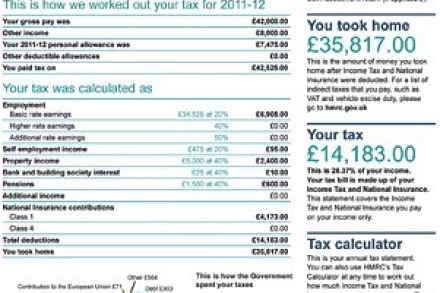
Transparency marches on, and what a joy it is. According to the newspapers today, George Osborne will tomorrow turn Ben Gummer MP's call for tax transparency into government policy. And so we will all get statements detailing just what our tax pounds are spent on. To use the example being bandied around this morning, a £50,000 earner will learn that they contribute £4,727 towards welfare payments. As James put it at the weekend, George Osborne tends to have both economic and political motives behind his actions — and the two are present, if almost indivisible, here. No doubt the Chancellor hopes that taxpayers, on seeing where their hard-earned ends up, will be keener for cuts in both spending and taxation.

Balls lays into Brown — but why?

Normally, pre-Budget interviews with shadow chancellors are dry and methodical. But the Times's interview with Ed Balls (£) today is the opposite: frenetic, relatively non-fiscal and utterly, utterly strange. Given that CoffeeHousers are probably waking up to brunch, I thought it might be a bit much for you to wade through his thoughts on food and on crying (‘OK. Crying. What do you want to know about crying?’). So I've pulled out some of the main political points from the interview here: 1) Laying into Brown. The quotation that gives the interview its headline is an eye-opener, coming as it does from Ed Balls. ‘Nobody is going to look back at any point in history,’ he says, ‘and say that Gordon Brown was a great Prime Minister.

Go on, George — scrap the 50p rate

Will George Osborne scrap the 50p tax in next week's Budget? Whispers to this effect have been getting louder, and now the Guardian is saying that it will come back down to 40p, and it makes a lot of sense. As I argued in my Telegraph column a fortnight ago, this is the perfect time to do it. Axing the tax paid by 1 per cent of the population will be unpopular with the remaining 99 per cent, so if Osborne is going to take a political hit he should do so now. Anecdotal evidence of its harmfullness has been getting stronger: multinational companies saying they can't persuade people to relocate to Britain, and early figures suggest a drop in tax from the rich in 2010-11.

How Mervyn King’s role has changed

A week devoted to Mervyn King and his eight-year reign at the Bank of England sounds like pretty turgid stuff. But, already, the series that has started in the Times (£) this morning — building up to an interview with the man himself — is anything but. Here, for instance, is a snippet from one of its articles, by David Wighton, on how Mr King reacted to the crumbling of Northern Rock: ‘As the plight of Northern Rock and other banks worsened, Sir John Gieve and Paul Tucker were urging Sir Mervyn to act, but he would not budge. “He mocked them as ‘crisis junkies’ and more or less accused them of enjoying it,” one former official says. Sir Mervyn took a different approach.

Ed Miliband turns back to Brown (again)

At the end of last year, Ed Balls suggested that Labour would be ‘taking a tougher approach to conditionality [for benefit claimants]. If people can work, they should work.’ Now the party are starting to outline what that means. As the Independent puts it today, summarising a speech that Liam Byrne has given in Birmingham, ‘The unemployed would be guaranteed the offer of a job but could lose their benefits for six months if they turned it down, under a tough new policy on welfare planned by Labour.’ The paper characterises this as an attempt to ‘outflank the Tories on welfare,’ which is surely true. But the whole thing also reminds me of the Brown era.

Labour’s PMQs strategy: the Super-Vulnerable Voter ploy

A sombre and muted PMQs this week. Dame Joan Ruddock raised the issue of benefits and asked David Cameron if he was proud of his new reforms. Tory backbenchers cheered on the PM’s behalf. ‘Then would he look me in the eye,’ Dame Joan went on, ‘and tell me he’s proud to have removed all disability payments from a 10-year-old with cerebral palsy.’ This tactic — the Super-Vulnerable Voter ploy — is highly manipulative and highly reliable. But Dame Joan had forgotten something which Mr Cameron is unlikely to forget. Explaining his reform of the Disability Living Allowance he glared angrily at her. ‘As someone who has had a child with cerebral palsy I know how long it takes to fill in that form.

Salmond chooses the Brownite way

Can you trust someone like Alex Salmond to save Scotland from future crashes? The First Minister appeared on BBC1’s Sunday Politics earlier, where he was challenged about how he sees it. And it seems he may just be a graduate of the Gordon Brown school of Scottish financial mismanagement. In a Times debate on Friday,  SNP deputy leader Nicola Sturgeon said they’d use sterling — whether the Bank of England liked it or not — and would not need the Bank to be a lender of last resort because Scotland would be so sensible it wouldn’t need it. An interesting suggestion, given that the 1707 Union between Scotland and England is the result of a bailout.

The time for Osborne to shed Brown’s 50p rate is now

Will George Osborne have a better chance to abolish the 50p tax than this month’s Budget? It would be unpopular, so it’s the kind of move he’d be unlikely to make before an election. The Lib Dems have something they want to trade: permission to raise the tax threshold towards £10,000. And two recent reports, by the CEBR (pdf) and IFS (pdf), have reinforced that this tax is losing money. At the heart of the 50p tax is a deeper question: is Osborne a transformative Chancellor who will change the terms of debate? Or is he doomed to operate within parameters set by Gordon Brown? I look at this in my Telegraph column today. Here are my main points:   1.

Miliband guarantees a return to Brown’s Big Idea for the NHS

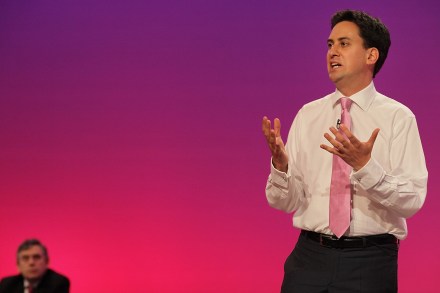
It would be so much easier for Ed Miliband to attract headlines if he could shout in Andrew Lansley's face. As it is, the Labour leader has had to make do with giving a speech today attacking the NHS reforms. Within the parameters of what he might say, it's an okay effort. The predictable lines about ‘creeping privatisation’ are leavened by the admission that ‘the question is not reform or no reform. It is what type of reform.’ And he adds, by way of a cross-party sweetener, that he would ‘get round the table’ with David Cameron to discuss ‘the future of the NHS’. But the substance of the speech, rather than its rhetoric, is a little more questionable.

Alexander identifies Labour’s problem

Douglas Alexander may sometimes hide the meaning of what he says under a layer of jargon but he remains one of the more interesting political strategists on the Labour side. Alexander, a Brown long-marcher turned Blairite, saw before many of his colleagues the need for Labour to level with the public on cuts. He privately thought that Gordon Brown’s attempt to fight the last election on a reprise of the investment versus cuts strategy of ’01 and ’05 was a mistake. So, it is no surprise that Alexander, now shadow Foreign Secretary, is trying to use the opportunity created by Ed Balls’ acceptance of the need for a public sector pay freeze to try and move Labour into a better fiscal place.

Osborne needs to come up with radical growth policies, and soon

When it comes to defending the free market, and making the case for fiscal sanity, there's scarcely anyone better than David Cameron. He was on superb form in Davos yesterday, giving much-needed blunt advice to the continentals. ‘Eurozone countries must do everything possible to get to grips with their own debts,’ he said. And he's right. The snag, as I say in my Daily Telegraph column today, is that Cameron's definition of getting to grips with debt involves increasing it more than Labour planned to, more than France, Germany, Italy or Portugal. On the first sign of trouble, his government gave up on its deficit reduction timetable – it will now halve the deficit over five years, whereas Darling promised to do it in four.

Ed under siege — and under threat

There was a fun game we used to play during Gordon Brown's premiership: counting the number of ‘buck up, or we kick you out’ ultimatums that Labour MPs delivered to their leader. There were, suffice to say, a lot of them. And tallying them up illustrated two things: the constant, sapping pressure that the Brown leadership was under, and Labour's persistent inability to actually finish him off. I mention it now because of this story in today's Mail on Sunday. It collects the increasingly public criticism of Ed Miliband by his own MPs, including Graham Stringer's warning that ‘Ed has got to get a grip and turn it around before the May elections.’ It's not at the level of the Brown Ultimatums yet, but it's certainly remiscent of them.