Gordon brown

Brown goes shopping for votes

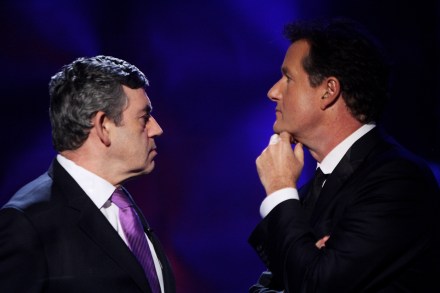
There’s an interview with Gordon Brown today in the Mirror about his relationship with his mother. As you might expect given the subject, it is hardly an interrogation. Indeed, it manages to make Piers Morgan’s questions to him resemble the final part of the Frost Nixon interview. But what caught my eye was this note at the end, “This article appears in Tesco magazine, published by Cedar Communications Ltd. The magazine is available in store from March 1.” Tesco magazine isn’t small beer. Its circulation is more than five and a half million and data shows that more women read it than any other magazine. To Brown, the attraction of this kind of interview is that it is a no lose situation for him.

Purnell leaves parliament but not politics

The news that James Purnell is to stand down is a shock. It is clear that Purnell was disenchanted with Brown’s continued leadership and with the direction in which the Labour party was heading. Purnell was marginalised in parliament and his much vaunted alliance with John Cruddas came to nothing. Plainly, he believes that he can exert more influence outside the parliamentary Labour party than within it. The Tories stole the limelight this week with their commitment to public sector co-operatives; Purnell’s response fell flat, caught in the contradictory statist language that even the most uber-Blairites cannot escape.

Sunny side up?

Earlier this week I asked what Obama's experience could teach a Cameron government. At the same time, there has been a well-argued debate in The Times about whether the Tories should go negative or not. There is one point where the two issues converge - and that is in how a newly-elected government should deal with the country's economic legacy. Once in power, a Tory government will be tempted to be optimistic, to point to the sunny uplands. General Colin Powell said "positive thinking is a force multiplier" and the Cameron team come across as natural adherents to this viewpoint. There is also the fact that the modern Tory agenda - of decentralisation and trust in people - is at heart a positive philosophy of government, not a mistrustful statist one.

The numbers spoil Labour’s narrative

Labour have certainly come out of the traps snarling and gnashing this morning.  For one, they're making the most of two letters in the FT, signed by 60 economists, which ostensibly support their position on the public finances.  And then there's Gordon Brown's speech to European leaders, in which he implores them to tackle the "hatred" of "the right".  Naturally, by "the right", he means "David Cameron". It's those letters which really grab the attention, though.  Not really because of what they say, or who has signed them, but because they're suggestive of how the debate over the public finances is going to go.  Yep, the Tories get 20 economists to write a letter in support of their deficit-reduction plans, so Labour respond with 60 economists of their own.

Can it get much worse than this?

£4.3bn in the red, that is the gruesome fact of the government’s January accounts. Never before has the government borrowed money in January, usually a month of surplus as self-assessed income and corporation tax receipts line government coffers. Analysts forecast a surplus of £2.8bn, denoting just how bad the situation is. This is an exact copy of last July’s accounts, lending weight to the analysis that Britain’s recovery is slow and very precarious, an analysis confirmed by the weakest mortgage lending figures for ten years. Obviously tax revenues have collapsed.

If Brown-Morgan can’t move the polls, what about the TV debates?

Brace yourselves.  There's going to be poll after poll after poll in the weeks leading to the election.  And the onslaught starts in the Sun today, with the first of their YouGov daily tracker polls.  It is also the first to be conducted in the aftermath of the Brown and Morgan interview. So what's the story?  Well, Labour's vote is more or less unmoved - suggesting, in turn, that the public were more or less unmoved by Brown's interview with Piers Morgan.  They're on 30 percent (down 1), with the Tories on 39 percent (up 1), and the Lib Dems on 18 (down 1).  That's a 9 point lead for the Tories. Of course, you could say that this is because the public didn't like what they saw on the Brown interview.

Bare Argentine aggression

The Falklands are sovereign British territory and must be defended. The Times reports that Argentina’s President Kirchner has issued a decree (how quaintly autocratic) that all ships sailing in waters claimed by Argentina will require a permit. Presumably, that includes Desire Petroleum’s rig, which is en route to drill for an oil field comparable to the North Sea field. Over at Conservative Home, Daniel Hamilton points out that the decree contravenes international law and that Britain has a right to explore for oil unimpeded. So what are the Argentines up to? Nile Gardner explains: 'If the floundering, corrupt and increasingly unpopular government in Argentina is foolish enough to choose a confrontation, it must be prepared to face the consequences.

The Tory wobble is over, for the moment

The media are obsessed with a Tory crisis. And why not? It’s a good story. The Telegraph is cheerleading the circus. It gave exhaustive coverage to the absurd hen-fight in Westminster North; on Monday it reported on more ‘rumblings and grumblings’ in the shires; yesterday, their subject was David Cameron’s heavy handed response to the ‘backwoodsmen’; and today Simon Heffer collates these events into the conclusion that ‘even if  Mr Cameron doesn’t see how disenchanted the public is by its lack of lack of choice and his lack of definition, many of his MPs do. The ride is about to get rocky.’ By accident or design, the Telegraph’s analysis is consistent. If there is such a thing as ‘Cameronism’ it is conflicted.

The Tories needed to be negative

There is only one way the Tories can lose the election and that is if it becomes a referendum on them rather than a choice between them and the government. We are in such an anti-politics moment that the electorate is unlikely to give a positive endorsement to any politician or political party. This—not the poor choice of photo—was the real problem with the Tories’ opening ad of the year: it invited voters to judge Cameron in isolation. Cameron is the biggest asset the Tories have but he is their biggest asset when contrasted with Gordon Brown. This is why I think Daniel Finkelstein is wrong to argue that the Tories should eschew negative campaigning. They need to remind voters what the alternative to them is. Danny is critical of the Tory death tax campaign.

Why is Charlie Whelan allowed into Portcullis House unaccompanied?

The parliamentary pass system is supposed to be strictly adhered to in order to stop lobbyists and interest groups getting undue access to politicians (indeed I recently received a slap on the wrist for not updating the journalists' register of interests immediately after I left the New Statesman. And quite right too).  Guests of passholders are supposed to be accompanied at all times. So I was surprised to see drunken thug Charlie Whelan, the Prime Minister's mockney fixer, wandering around Portcullis House unaccompanied yesterday. Perhaps he had simply slipped his minder. But I would be interested to know how he qualifies for a pass as a trade union official. One Labour MP simply tweeted "public schoolboy" after I mentioned this on Twitter yesterday.

Short term or long term inflation?

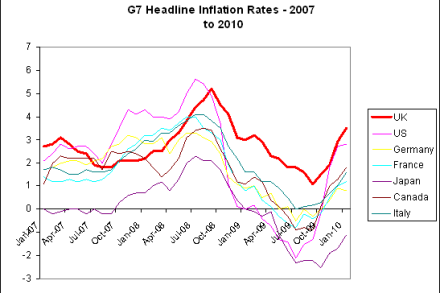
The news that the CPI rose to 3.5 percent doesn’t seem to have affected the markets, but the cost of living is soaring. Mervyn King has written to Alistair Darling predicting that inflation will fall back to the benchmark 2 percent over the course of the year, and that the current explosion is a result of short term factors such as the restored VAT rate, a 70 percent rise in oil prices and the depreciation of sterling. David Blanchflower is right: inflation may eat a little of Brown’s debt mountain and it will help those who now hold negative equities on houses. But it does precious little else that is positive, especially as wages are unlikely to follow suit in this climate.

Cutting it with the Fink

I couldn't let today pass without a response to Danny Finkelstein. We do agree on the ends, but not the means. And, as he says, this debate mirrors one about the methods of reform. So, let¹s go through his points. 1. 'I am afraid I think Fraser overestimates (a lot) how politically difficult this is all going to be. And how personally painful for a lot of people. And how technically difficult.' Painful, yes, but necessary ­ and it will be resented if Cameron is not straight about the cuts he will have to make. But how painful? Gordon Brown¹s great intellectual victory is to persuade the Tories that 'cuts' can only mean frontline services cut ­ so (as Brown once said) 10% cuts 'mean schools close and hospitals close.

Turbo-charged fiscal crises

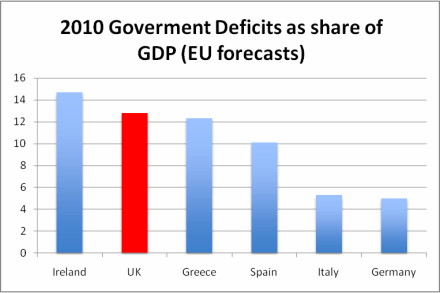
The crisis in Greece shows just how quickly a fiscal crisis can blow up. Just two-and-a-half weeks ago, Greece was able to raise several billions in financing, with demand for almost 25 billion of their debt in an auction. The very next day, their bond market collapsed and the rout began. Just ten days later, they were turning up in Brussels with a begging bowl, and inviting the European Commission and IMF to Athens to start making their tax and spending decisions. There can be nothing worse for a government than having your economic policy dictated by the markets, and then other governments, as access to finance disapears. All you can do is rush out announcement after announcement, promising tax hikes and spending cuts, and pray that the market pressure eases up.

Will Brown’s next interrogators be the public?

So what next for the new, more human, Gordon Brown (as seen on TV)?  Well, according to today's Times, there are some ministers who want him to take the show on the road.  The idea is to let voters tackle Brown directly - but about the topics Piers Morgan kinda skipped over: the economy, MPs' expenses, Afghanistan, and all the other big stuff.  And the hope, in turn, is that this "masochism strategy" will make the public respect Brown more. Would it work?  Well, just like the Morgan interview and its wider impact, that's something which is difficult to pre-judge from the confines of Westminster.

Does George Osborne finally have a big idea?

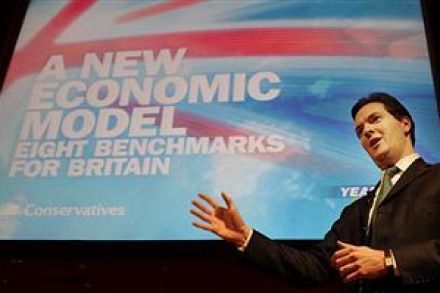
Listening to George Osborne on Today (and stripping away the visceral prejudice I always feel at his sneering patrician tone) I have to recognise that he was saying something very interesting. The idea of throwing open the public sector to worker-control is very, very intriguing. Co-operatives are the future of Britain: this is not something I ever thought I would hear from the mouth of a Conservative politician. I don't know if George Osborne has any experience of living or working in a co-op (it strikes me he is not the type). They can be a mixed bag, but the principle is great one.

Now Gordon Brown has to live with himself

It's not hard to see why the Prime Minister opted for a soft interview with Piers Morgan as his latest attempt to relaunch himself with the British public. Forget that he said he wasn't the kind of politician who used his family as political props (always a daft thing for someone in public life to say). The Life Stories show is perfect format for the purposes of the celebrity-politician, designed to reveal only that which the guest carefully intends to share with the public. It is anti-journalism.  All the pre-briefing and carefully-managed reaction was designed to leave all control in the hands of the invitee. This is particularly true of the moment of supposed loss of control - "the weep". The whole package is demeaning to everyone concerned.

The best publicity Brown is ever likely to get

Brown is very lucky to have a friend in Piers Morgan. He did him a great service in the ITV interview tonight - and while it would have made CoffeeHousers nauseous (if they watched it), it will be the best television the PM will get this year and probably ever. Mark my words: the Labour Party will not produce anything that shows Brown in such a sympathetic light. It was powerful, I'd say, because it was not party political propaganda: Morgan genuinely likes Brown and did his utmost to project the human side of him. Those hours of coaching from Alastair Campbell paid off. He kept smiling in a credible way - telling anecdotes in exactly the way that he does, in private, when he's trying to charm people.

It is Brown and Balls versus Darling and Mandelson again

If there was a story in the Sunday papers of a split between David Cameron and the two most senior figures in the shadow Cabinet over economic strategy it would be the talk of the town. But because it is about Brown and Balls versus Darling and Mandelson it is on the inside pages; it is as if the split over economic policy between these four men is priced into Labour’s standing. Patrick Hennessy reports that Brown and Balls would like to use the Budget as a pre-election springboard, announcing larger than scheduled increases in public spending and challenging the Tories to match them.

A ceasefire in the VAT war?

Has another dividing line faded into the sand?  It sure looks like it, going off this Times report on how both Labour and the Tories are considering hiking VAT to 20 percent.  If you recall, it was thought that Brown blocked Alistair Darling's plan to introduce the rise in last year's Pre-Budget Report - and all so he could attack the Tories over reports that they would do similar.  The PM will find it a lot harder to stage that attack after this morning. A few weeks ago, the rumour was that Labour would make keeping VAT at 17.5 percent a "main election pledge".  Whether that pledge now appears, or not, will say a lot about the shifting balance of power between Brown and his Chancellor.