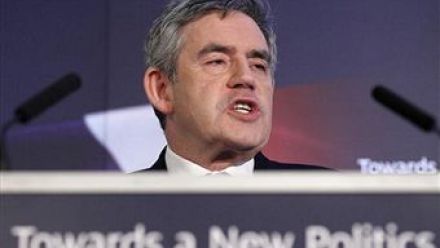
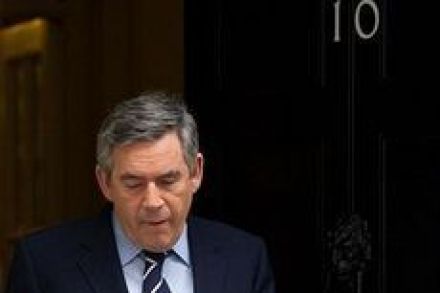
Video clip: Piers Morgan interview with Brown
Hat-tip: Tim Montgomerie P.S. You can read selections from the interview transcript here.
Is it just me, or is there something grimly hilarious about The Man Who Claimed To Have Abolished Boom-And-Bust describing our recent economic turmoil as a "one-off"? Yep, here's Brown in today's FT: "We are paying a one-off cost for globalisation." More seriously, this is the technocratic side of Brown which Downing St will hope to contain during the election campaign. Calling the recession and its rocky aftermath a "one-off cost" is unlikely to play well with people who have lost their jobs and businesses.
Gordon Brown is a creature of habit. Every morning at 7:30 he holds a telephone conference with his cabal of Shakespearean fools, who review the papers for him. I imagine a scene of domesticity, of coffee and muffins, an adoring wife and child milling about offering tactile affection – a hand on the shoulder, a kiss on the head. But then again Brown is a latter day John Knox and this morning he must have sat in pale fury as an aide summarised the extract from Lance Price’s latest book, published in the Independent. Price, Andrew Rawnsley and Peter Watt share the same lexicon. ‘Unforgivable’, ‘not a nice place for people to work’, ‘psychologically flawed?
The Tory graveyard poster – brilliant and shocking – cast a long shadow over PMQs today. The debate itself came down to fine judgements about the validity of the leaders’ arguments. Cameron demanded to know if Brown planned to introduce this grim levy or not. He quoted acidic comments from senior Labour figures who’ve called the tax ‘a cruel deception’, ‘badly costed’ and ‘poorly constructed.’ Brown’s response, which seems reasonable, is that the Conservatives ‘voted for this in the House and now they’re refusing to help us to give local authorities the resources they need.
This death tax levy is gutter politics at its most visceral and it’s thrilling drama. Brown's and Cameron's loathing for each other is pure soap opera, and they’re having a right old slanging match. I agree with Pete, it is dispiriting to see the Tories stoop to misrepresenting policies, the show-stopper in Brown’s repertoire. Together with Cameron’s personal attacks, the Tories have surrendered the high ground, but as Iain Martin notes is anyone really surprised? The Tories have been expecting, righty, Labour to fight a grubby election campaign and have decided to fight Brown’s mob with fire. Personal attacks appeal largely to those whose minds are settled, so I see little electoral advantage in delivering them.
Stay tuned for live coverage from 1200. 1200: And we're off, bang on time. First question on Labour's elderly care plans. Brown delivers a load of platitudes about how the government is committed to better care. Even adds that he hopes for cross-party backing. 1201: Cameron now. He leads on elderly care plans too - and how they will be funded. With a nod to a letter in today's Times, he adds that people who will have to implement it thinks its disastrous. 1202: Brown's on fiesty, if typically disingenous, form. He says that he "knows how [Cameron] likes personality politics". His substantial point, though, is that the Tories supported the Bill in the Commons. 1205: Cameron effectively repeats the point with his second question.
Yesterday's Guardian story about a potential death tax would have been perfect material for Cameron in PMQs. Even after Andy Burnham's denials, there are still legitimate questions to be asked about it. For instance, would the government say that they will never propose the tax? And, if not, how will they pay for their social care guarantees otherwise? Fired across the dispatch box, these enquiries could have put Brown on the back foot. But now that the Tories have jumped the gun, and released that poster attacking a Labour policy which isn't actually a Labour policy, they've rather limited that line of questioning. If the death tax comes up, all Brown need do is point to the poster and cry foul play. He can even throw in a few words like "misleading," for good measure.
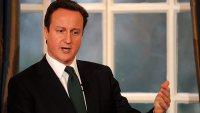
A strident interview from David Cameron in today's Express, in which he touches on everything from inheritance tax to not, never, ever joining the Euro. It's this passage that jumped out at me, though: “Middle Britain has had a wretched time under Labour. This Government has taxed mortgages, marriages, pensions, petrol and travel and raised national insurance and the top rate of income tax. We cannot keep squeezing hard-working families." Why so noteworthy? Well, off the top of my head, this is the first time that Cameron has referred to the current system as a "tax on marriage".
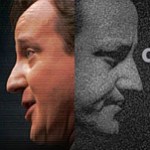
Labour’s new ad with David Cameron facing both ways highlights what was wrong with the Tories’ opening ad of the year, that one dominated by Cameron’s face. The Tory strategy for the election campaign has to be to try and make it into a referendum on this failed government. But that ad, which emphasised Cameron so strongly, gave Labour an opening to try and turn the election not just into a choice between two parties but into a referendum on David Cameron and Tory policy. Labour’s success in doing this is largely responsible for the Tory wobble. The contrast between Cameron and Brown does work to the Tories’ advantage. But it works because it is a contrast.
If you're going to take anything away from Andy Burnham's press conference this morning – apart from his denials about a £20,000 "death duty" – it's how heavily those Labour "guarantees" are going to feature in the election campaign. Here we had social care guarantees, cancer treatment guarantees, waiting line guarantees, and even a new website and poster (see above) attacking the Tories for not signing up to the same guarantees. So far as the government is concerned, it matters not that these pledges have been made before – what matters is the opportunity to draw more dividing lines across the landscape of British politics. "Caring" versus "cruel", as far as the eye can see.
Contain yourselves, CoffeeHousers. I know that we're all really excited about today's Parliamentary vote on an alternative vote referendum (it is, after all, something our Prime Minister has described as "a rallying call for a new progressive politics"), but it isn't a done deal just yet. That "new politics" might still be put on hold. Indeed, things could get messy for Brown in just a few hours time. You'd expect him to win the vote, what with Labour's majority and the creeping sense that Downing St very much wants this to happen. But even the slightest hint of a Labour rebellion, or of Lib Dem disquiet, and the story could turn toxic for the PM.
‘We just need to ram Gordon Brown down the electorate’s throat’ one Tory staffer said to me today when talking about how the party could get back on the front foot. The unspoken thought was that the prospect of five more years of Gordon Brown would be enough to send voters into the welcoming arms of David Cameron. The Tories are frustrated that in the last few weeks this election has gone from being the referendum on the government to almost being a referendum on them and their plans for government. They are determined to turn the focus back onto Brown, hence Cameron’s aggressive attack on Brown this morning. PS The Populus poll for The Times tomorrow has the Tories on 40 and Labour on 30, a narrowing of the Tory lead from their last poll.
Bruce Anderson’s column in the Independent is a must read today and it concludes with this telling anecdote: ‘The other day, a Cabinet minister had lunch with a journalist. "What happens if you win?" enquired the hack. The minister looked astonished. It was clear that this possibility had not occurred to him. Having regained the power of speech, he replied: "There'd be an immediate leadership challenge".’ Really? Brown was immovable when trailing by twenty points; a mandate will make him impervious to everything except death and possibly blindness. A narrow Conservative victory followed by a second election this autumn is a more likely scenario than a Labour win. Would Brown be unseated then?
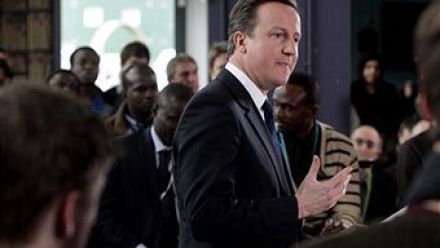
The Tories will be happy with their start to the week. David Cameron’s speech this morning has succeeded in highlighting how Labour had not suspended the whip from the three MPs charged by the CPS and drawn one of the Tories’ favourite contrasts, decisive Cameron versus dithering Brown. It was also refreshing to hear Cameron take a tough line on lobbying, proposing to double the waiting period before ministers leaving office and taking private sector jobs to two years. Lobbyists already have far too much influence on our politics. But there are risks to Cameron in this Obama-style play. As one Tory insider said to me just before party conference, ‘we’ve very vulnerable on the lobbying front.
Finally, Brown has withdrawn the whip from Chaytor, Morley and Devine. This is a significant victory for Cameron in the latest battle over expenses. Once again, the Tories are streaks ahead on this issue. As Henry Macrory notes, it took Cameron 86 minutes to reach the obvious conclusion that Lord Hanningfield should be suspended; Brown agonised for 4305 minutes. Truly, this is the man who can be trusted to ‘take the tough decisions’ on the economy when needed – my guess is that most of us all will die at a Keatsian age in Dickensian penury. One point that occurs to me is that it's been clear for some time that Chaytor et al were personae non grata. Why therefore has Chaytor been used as a government plant at PMQs twice this year?
David Cameron will re-launch his election campaign with a personal attack on Gordon Brown. Cameron will embark on the straightforward task of proving that the Road Block is not a moderniser – the Prime Minister’s sudden avowed passion for PR is merely a marriage of electoral convenience. Cameron has led the expenses reform debate and will use Brown’s dithering over the latest furore to condemn him as a ‘shameless defender of the old elite’. According to Francis Elliot, Cameron will say: “There is no chance Gordon Brown will do what is right and put the public interest before his own political interests. He cannot reform the institution because he is the institution: he made it.
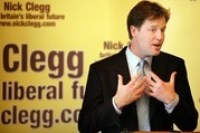
Gordon Brown is usually at his most patronising when confronting Nick Clegg. Last week, however, hectoring gave way to affection. Brown was almost tender. Of course, this sudden change has an obvious explanation. Brown and Clegg are brothers in arms: devotees of electoral reform, or so the Road Block would have us believe. Robert McIlveen laid counter-arguments against Brown’s opportunism and Boris Johnson repeats them in his Telegraph column today, concluding: ‘There is one final and overwhelming reason why Britain should not and will not adopt PR – that it always tends to erode the sovereign right of the people to kick the b––––––s out.
Aspiration is Gordon’s middle name. The Observer has an extensive interview with Brown and though the classification has changed class remains his obsession: Brown wants to fight the election on the middle classes. He spoke of little else. Education and family policy will be defined by Sure Start, child tax credits and the school leaving age; the NHS will offer yet more choice and unaffordable luxuries, such as one to one care. It may seem peculiar for a man who is synonymous with stealth taxes, and whose time in government will be remembered for the polarisation of society, to frame his arguments in such terms; but his reason is clear: Brown doesn’t want to debate the economy.
Yesterday, Gordon Brown was less Macavity, more the Cheshire cat. Now both he and Blair have helped to bring a modicum of peace to Northern Ireland, and Brown was a ubiquitous, beaming presence on the TV throughout the day - jaunty not jowly. Naturally, Brown’s confidence fell victim to the absurdity that lurks behind him like some familiar. Sky Sports News asked him if he thought John Terry should retain the England captaincy. Brown pondered the question - the arguments for and against and the possibility of his bringing peace to Cobham - before conceding that the decision was entirely Capello’s. It was priceless. To suggest that this latest Hillsborough accord is a final panacea is to tempt fortune.
Strange that there's really only one major political point arising from Gordon Brown's interview in the Standard today. But, then again, maybe that is the point. Like the PM's interview with the News of the World a few weeks ago, the emphasis is far more on the personal than anything else: his relationship with Sarah Brown, the death of his daughter Jennifer, his upbringing, and so on. We even learn why his handwriting is so bad ("due to the way he was taught to write at school," apparently). And with a TV appearance alongside Piers Morgan in the schedules, it does seem that Brown is keen to present a more human front. As for that political point, it's Brown's confirmation that Tony Blair will play a "major role" in Labour's election campaign.