Germany

Biden’s backhanded bid to kill Nord Stream 2

From our UK edition

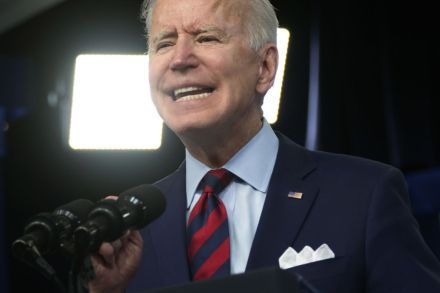
Washington, D.C. is universally known as a town divided, a place where compromise and dialogue are often sacrificed at the altar of competing agendas. But on one issue, at least, there is consensus: the 764-mile Nord Stream 2 pipeline that will pump Russian natural gas into Germany is a project that must be stopped. And the United States needs to use all of the economic and diplomatic tools at its disposal to do it. In both congressional testimony and in meetings with Nato allies, U.S. Secretary of State Antony Blinken has reiterated the official U.S. view that Nord Stream 2 is 'a bad deal' for Europe, a potential cash windfall for Russia, and a potential geopolitical coup for Vladimir Putin.

Berlin has been bounced into accepting Sputnik

From our UK edition

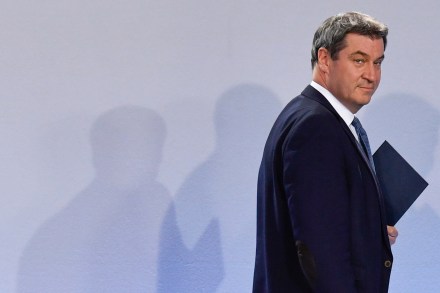
Munich has had enough of the vaccine chaos in Berlin and Brussels. In a surprise announcement on Wednesday, Bavaria’s minister president Markus Söder stated that he would sign a preliminary purchase agreement for the Russian Sputnik vaccine. The leader of the Bavarian Free State explained that he would pre-order two and a half million doses of Sputnik V in the hope of receiving these by July. Söder, who is a potential candidate to replace Merkel, was keen to stress that this was dependent on regulatory approval by the European Medicines Agency.

Merkel’s blundering lockdown U-turn

From our UK edition

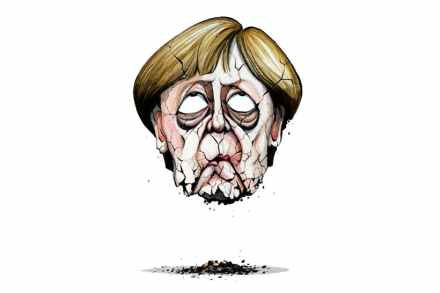
During her 16 years in office, Angela Merkel has produced a couple of memorable sentences that will be imprinted into her legacy. She added a few more on Wednesday, when she announced that the government rescinds plans of a radical Easter shutdown, saying: ‘This mistake is my mistake alone.’ Merkel’s CDU is rapidly losing the support of voters — their approval rating has dropped 9 per cent to just 26 within a week It is quite remarkable to see a leader taking the full blame for what has been perceived as a hasty and impetuous decision. Merkel and Germany’s 16 state premiers had agreed on a radical lockdown over the Easter holidays in yet another attempt to curb the rise of coronavirus infections.

Merkel declares a ‘new pandemic’ as Germany locks down again

From our UK edition

A year on from the onset of the Covid crisis, Angela Merkel had grim news for Germans this morning: our country is in the midst of a 'new pandemic'. 'The British mutation has become dominant,' she warned, as she announced a strict new lockdown, which will shut almost all shops and churches over Easter.  The new lockdown rules were thrashed out in a tetchy 12-hour meeting between the chancellor and Germany’s state premiers. It used to be EU summits that prevented Merkel from catching some sleep. Not any longer. The leaders struggled to find common ground on an approach to contain the spread of coronavirus, amidst a worrying spike in infections which has seen cases climb to 7,500 a day.

Could the Green party revive Germany’s fortunes?

From our UK edition

The BMWs and Mercs will be banned from the autobahns. People will only have electricity when there is enough of a breeze to keep the windmills turning. And the factories will be on a three-day week, while the airports will be converted into organic farms. Most businesses, and of course conservatives of any sort, will be nervous at the increasingly likely prospect of the Greens taking charge in Berlin later this year. But they shouldn't be. In fact, they would be a huge improvement on Angela Merkel’s chaotic twilight years. As she heads towards retirements, Merkel’s legacy is looking very tarnished. The CDU is slumping in the polls. It has made a mess of Covid-19, imposing a botched vaccine procurement programme on the whole of Europe that has come badly unstuck.

Europe’s reckless caution over AstraZeneca

From our UK edition

The first smear campaign against AstraZeneca, when Emmanuel Macron falsely claimed at the start of the year that the jab was ‘quasi--ineffective’ in over-65s, did serious damage to public confidence in the Oxford vaccine across Europe. The latest concerted action by the leaders of Germany, France, Italy, Spain and the Netherlands may have destroyed it altogether. The decision temporarily to ban Astra-Zeneca originated in the German health ministry, which was spooked by reports of cerebral venous sinus thrombosis, and was blindly followed by other European leaders. This is a scandal whose roots are political, not medical, and it will have terrible consequences.

Germany’s vaccine debacle goes from bad to worse

From our UK edition

Germany's decision to stop using the AstraZeneca Covid vaccine has been condemned internationally. It has also gone down badly with Germans. Once again, the country's health minister Jens Spahn is under fire.  A year into the pandemic, Germans are fed up with what they see as a government which is too cautious to use its only weapon out of this crisis. Even before the suspension of the vaccine this week, the rollout was painfully slow. While Britain has issued 22million doses, Germany is lagging way behind: only 9.3million of its people have received their vaccinations. This latest hold-up will only further slow down the vaccine programme. And Germans fear that this means the anticipated end of most corona-related restrictions by summer is now more and more unlikely.

Support for Merkel’s party is crumbling

From our UK edition

On Sunday, Angela Merkel’s Christian Democratic Union of Germany (CDU) suffered a historic election defeat in their former heartlands of Baden-Württemberg and Rhineland-Palatinate. ‘The state elections struck deep at the heart of the union of the CDU and CSU,’ said Markus Söder, leader of the CDU’s Bavarian sister party, the Christian Social Union. To an increasingly frustrated public, the ruling parties in the capital look tired and devoid of ideas. There is no incentive for Merkel and her cabinet to turn things around. After 16 years in government and on the brink of retirement, she has become a lame-duck chancellor. Some German journalists have even begun to call the whole sorry saga ‘the duck tales’.

The mask scandal threatening to destroy Merkel’s legacy

From our UK edition

In Germany, masks have been one of the least controversial elements of this pandemic. Most people have accepted that they have to be worn in the supermarket or on public transportation. But now these items of PPE are at the centre of a full-throttle political scandal that risks badly damaging Angela Merkel’s Christian Democrats in this important election year. The Christian Democrats Georg Nüßlein and Nikolas Löbel are accused of profiting from government deals to purchase face masks. Löbel is alleged to have received £200,000 in payments as part of a state purchase of masks, while Nüßlein is accused of making £500,000 through a consultancy firm.

Why Grüner is my go-to

The first person ever to tell me something true about wine was my first real boss, a generous and wise woman who toted me along to the Frankfurt Book Fair with her for several years in my early twenties. At the time I drank mostly sweet red blends that came in denominations of ‘box’ or ‘jug’. When she sensed (or perhaps shared) my fear of humiliating us both when I was asked for my wine order at a long, formal luncheon in a rather famous hotel, she leaned across the many forks of her place setting and whispered to me, ‘Get the Grüner.’ She elaborated that the American white wines I’d had were probably sweet or buttery, but German whites, like dry Rieslings and Grüner Veltliner, were mineral and fresh and lovely. They paired well with all foods.

grüner

The rapid fall of Germany’s health minister

From our UK edition

Young, polished and confident, Germany’s health minister became the country’s most popular politician in 2020. A darling of the conservative right, Jens Spahn, was even tipped as a candidate to succeed Angela Merkel as chancellor. At the peak of his popularity last November, surveys indicated approval from nearly two-thirds of all Germans. He seemed to reflect the success story that was Germany’s handling of the pandemic, the personification of friendly German efficiency. Fast forward to last week, and you find a defensive Spahn facing a hostile one-hour long grilling in parliament. His arms crossed and his jaw set, the 40-year-old was visibly tense as he braced himself for questions from angry MPs.

What Angela Merkel can learn from the Queen about vaccine scepticism

From our UK edition

You have to feel for Germany. After a fraught vaccine procurement process, not only is the government struggling to persuade its citizens to take the Oxford AstraZeneca vaccine, but Angela Merkel has now stated that she will not be given the jab on account of her age.  ‘I do not belong to the recommended age group for AstraZeneca,’ the German chancellor told Frankfurter Allgemeine Zeitung newspaper. It could well be the final nail in the coffin for an EMA-approved, safe vaccine that has cost her country millions. Merkel’s view may be aligned with government policy – she is 66 and therefore, under the German rules which state that over 65s should not be given the vaccine, she does not qualify for a dose.

Germany is regretting its criticism of the Oxford Covid jab

From our UK edition

Germany’s fridges are filled with Oxford jabs. But there's a problem: 80 per cent of the 735,000 doses delivered to Germany so far have not been used. The vaccine is being described in the German press as a 'shelf warmer'. There are even reports of people missing appointments at vaccination centres if they have been notified that they will receive the AstraZeneca product. While this is alarming, a lukewarm reaction to the vaccine might not come as a surprise. The vaccine's reputation has been repeatedly undermined by reports about its efficacy. A decision in Germany not to use the vaccine for over-65-year-olds, despite the European Medicines Agency having approved it to be given to all adults, has hardly helped.

Are Germans losing faith in the European project?

From our UK edition

Germans are increasingly losing faith in the European Union due to its bungled handling of the vaccine roll-out. Germany and the other member states have assigned Brussels to organise and oversee the procurement and distribution of Covid jabs. But, so far, the roll-out has been a logistic mess. According to a poll by Civey, commissioned by the German newspaper Der Spiegel, more than 60 per cent of German citizens said their view of Brussels had worsened in light of the disastrous vaccination management. Almost 70 per cent laid the blame at the feet of fellow German Ursula von der Leyen, the President of the European Commission, who admitted last week that ‘mistakes were made’ in the bloc’s approach to the procurement of jabs.

Biden’s rift with Brussels is only set to grow

From our UK edition

It was meant to be a special relationship. After the tumultuous Trump years, President Biden was planning to reset relations with the European Union, Inherently liberal, rules-based, and engaged with climate change, it would be a natural ally, and far more so than a UK still tainted by Brexit. The Biden team were no doubt looking forward to working closely with officials in Brussels, Paris, and Berlin to repair the damage of the last four years and put the world on a more rational course.  But hold on. It is not going according to plan. There are already reports that the White House is growing increasingly frustrated with the EU. And in truth, that rift is only going to get wider and wider in the months to come.

Germany’s border controls risk an EU rupture

From our UK edition

On Sunday, Germany halted most travel for those moving between the country and its neighbouring Czech Republic and Austria. After the South African variant was found in Austria and the British variant was detected in the Czech Republic, Germany designated these regions as ‘virus mutation areas’ and announced the measures on its east and southern borders on Thursday. Initially, the German government wanted to avoid any new border controls after briefly bringing in restrictions last year. However, the fear of aggressive variants and their threat to the end of lockdown in mid-March has exceeded any concerns over the negative fallout from border controls.

Biden vs Merkel: the battle over Russian gas is heating up

From our UK edition

Two months ago, a Russian pipe-laying ship called the Akademik Cherskiy left the Baltic island of Rügen to finish the last few miles of the most controversial gas pipeline in the world. Germany hopes that Nord Stream 2 will improve its access to Russia’s vast reserves of natural gas. In America, however, the project is seen as a way for Moscow to exert influence over Europe. Its completion marks the biggest diplomatic crisis in transatlantic relations since the Iraq War and now, as then, we see Germany pitched against the US. But this time, Germany is far more determined. Since its inception, the pipeline —which runs directly from Russia to Germany — has been opposed by many in Europe who share America’s concerns about dependency on Russian energy.

Why Germany is eyeing up the Sputnik V vaccine

From our UK edition

After the EU’s vaccine distribution disaster, German lawmakers are now taking a closer look at Russia’s Sputnik V jab. If approved by EU regulators, Sputnik V could be the fourth vaccine available in the bloc after the BioNTech-Pfizer, Moderna and AstraZeneca vaccines. It’s easy to see why Germany could be tempted by the Sputnik V vaccine. The rollout of the BioNTech-Pfizer and Moderna jabs has been hampered by delivery delays and political blunders. And European regulators have remained wary of AstraZeneca’s vaccine – a scepticism that was solidified by a recent trial showing that the shot may not significantly reduce the risk of mild or moderate disease caused by the 501Y.V2 variant, also known as the South African strain.

Ursula von der Leyen has always left a trail of disaster

From our UK edition

The German Army had to join a NATO exercise with broomsticks because they didn’t have any rifles. It’s special forces became a hotbed for right-wing extremism. Working mothers were meant to get federally-funded childcare, to help fix the country’s demographic collapse, but it never arrived, and the birth rate carried on falling. Every child was supposed to get a hot lunch at school every day, but somehow or other it didn’t quite happen. There is a common thread running through the career of Ursula von der Leyen, the President of the European Commission. A series of catastrophic misjudgements, and a failure to deliver.

Germany has just undermined the EU’s vaccine argument

From our UK edition

Germany’s vaccine committee has advised the Oxford-AstraZeneca vaccine only be given to under-65s. The announcement marks a major twist in a week of muddled vaccine reports. On Tuesday, the German newspaper Handelsblatt suggested that German officials believed the Oxford vaccine was only 8 per cent effective for the over-65 groups (no evidence has been produced to support the 8 per cent claim). It has been heavily and extensively rebuffed by both AstraZeneca and the German government. Yet the German reporter who broke the story doubled down on the claims, raising the stakes as to whether he was making precarious reporting worse, or whether the European Medicines Agency may indeed conclude that the vaccine's efficacy is too low.