Germany

Germany is failing Ukraine

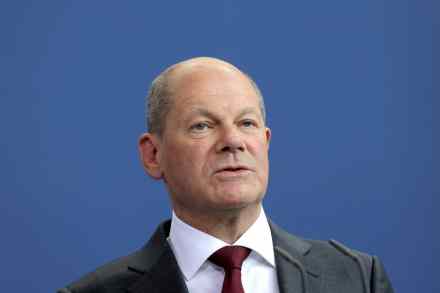
‘A giant step for German and European security,’ is how Chancellor Olaf Scholz described his government’s €100 billion cash injection for the country's depleted military. But while Germany’s newfound commitment to its own defence is welcome, its commitment to Ukraine’s is still questionable at best.   Over the weekend, the German newspaper Die Welt reported that it had seen documents showing that Berlin had reduced military support for Ukraine to ‘a minimum’. According to inside sources, only two German weapon deliveries have reached Ukraine since the end of March. Both contained light equipment such as mines, hand grenades and spare parts for machine guns.
Are sanctions making Russia richer?

Before the invasion of Ukraine, it was by no means certain that there would be a united response from the West. The sanctions imposed on Russia after Vladimir Putin’s annexation of Crimea in 2014 were fairly limited, especially from the European Union. Germany pressed on with the Nord Stream 2 gas pipeline to Russia. But now, America, Europe and much of Asia have been united in applying severe sanctions against Russian banks, companies and oligarchs. Three months on, it’s time to ask: are the sanctions working? The answer from the Bank of Russia’s balance of payment data for January to April isn’t reassuring. It showed that the sanctions are emphatically not working, at least not in the way that they were intended.

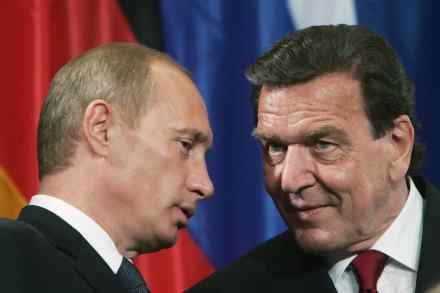
Sanction Gerhard Schröder

From the start of the war in Ukraine, the democratic world has shown striking unity in the economic boycott of Russia. But sanctions are always a blunt instrument: aimed at the regime, they end up harming the whole population. Ordinary Russians, too, are victims of Vladimir Putin’s corruption and misrule. Far better to target the Kremlin and those close to it. The system of targeted sanctions on named individuals is one way of doing this. Action has now been taken against 1,086 people, with assets suspended and travel bans imposed. To go after the rich and powerful is always a test for democracies, especially if such people are generous in their donations to political parties or have close political connections.

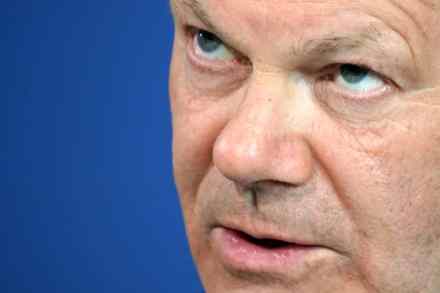
Olaf Scholz is tanking

North-Rhine Westphalia is Germany’s largest state, almost as large as the Netherlands. It was a traditional SPD fiefdom during the time of Helmut Kohl, but in 2005 it became a CDU state. Surely, if the SPD was on the march, ready to turn Germany’s regional politics red as it did the chancellery in last year’s election, a state like North-Rhine Westphalia would return to the party? But the big news from yesterday’s federal state elections is that the SPD, the party of German Chancellor Olaf Scholz, scored its worst-ever result in Westphalia: less than 27 per cent of the vote. The CDU won with 35.5 per cent and will probably form a coalition with the Greens.

Merkel is turning into Blair

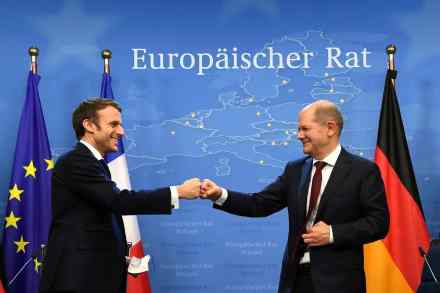
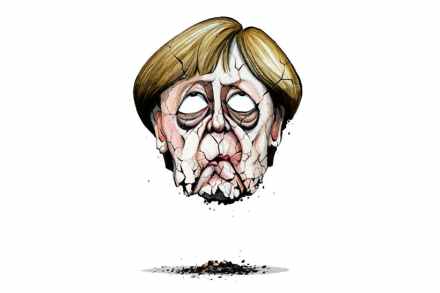
Angela Merkel left the German chancellery at the end of last year with a bunch of flowers, a standing ovation in the Bundestag, a fist bump from her successor Olaf Scholz, and an approval rating of 68 per cent. Rarely for a national leader, she left office on her own terms, remaining Germany’s most popular politician until the week she stepped down, set to become the country’s elder stateswoman. Less than three months later, Russia invaded Ukraine – immediately throwing her legacy into doubt. The 21st-century Germany she built is extraordinarily dependent on Russian energy thanks to years of dovish engagement with Vladimir Putin’s regime, placing German business interests firmly above concerns from eastern EU allies.

Germany’s wilful ignorance is hurting Ukraine

Berlin, Germany Germans have a complex relationship with their Erinnerungskultur, or ‘culture of memory’. Whenever the word appears, it almost invariably refers to how the country thinks about its difficult past. Determined never to forget the horrors of the Nazis, Germans have spent decades reflecting on the evil that their forbears unleashed upon the world. And yet this process isn’t helping us understand our present. As a German-Canadian whose grandparents spent their childhoods in bomb shelters, I’ve long respected German memory culture. But events in Berlin on VE Day this past Sunday have shaken my faith. Today, Ukraine is revealing how little we actually understand about our history in Germany.

The relentless march of Europe’s zombie centrists

Journalists rarely had it so easy as when it came to writing up the final result of the French presidential election on Monday morning. The copy almost wrote itself: the triumph of moderation, demonstrated by a convincing win for centrist Emmanuel Macron over his far-right challenger Marine Le Pen; the clear defeat of disruptive extremist politics that might otherwise have threatened European stability; and the return to EU business as usual, with euroscepticism once again off the table and the re-establishment of a stable Franco-German axis in charge of Brussels. Easy, but ultimately unconvincing. Centrists who can be trusted not to be too radical may indeed be in power in France, as they have been in Germany since the installation of Olaf Scholz as Chancellor late last year.

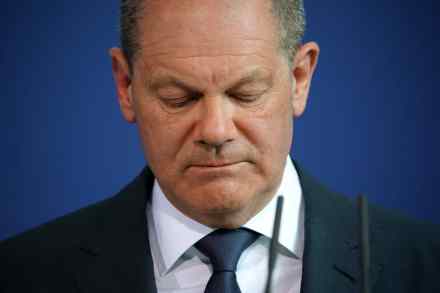
How long can Olaf Scholz last?

Just what exactly is going through German Chancellor Olaf Scholz’s head? ‘Russia must not win this war’, he says. But it is less certain about who Scholz wants to be the victor. Publicly, the Chancellor says that he is giving Ukraine the ‘strongest possible support’. But in a highly anticipated speech last week, he once again refused to deliver the heavy weapons Kyiv has been asking for. Many in Berlin were left wondering why Scholz chose to do the speech at all given that he had nothing new to say. He was disingenuous in his excuse that the G7 had agreed that the Ukrainian army needed Soviet-era technology. The Netherlands, Canada, the UK and US have all said they would provide western artillery or armoured vehicles.

Will economic pressures weaken the West’s alliance?

This morning’s retail sales update isn’t pretty. Sales volumes fell by 1.4 per cent last month, following a 0.5 per cent drop in February (revised, and worse, than the original estimate of 0.3 per cent). The biggest fall came in non-store retail shopping: almost an 8 per cent month-on-month fall. However, the Office for National Statistics points out that overall sales volumes are still roughly 20 per cent higher now than they were pre-pandemic. But the recent drop indicates that the cost-of-living crisis is already worsening, as inflation – now at 7 per cent – is taking its toll on real incomes and is already prompting changes in consumer behaviour. As Capital Economics notes today, the 9.

Elon Musk and tweeting on a volcano

From our US edition

Of all the hilarious freakouts over Elon Musk's bid to buy Twitter, my personal favorite comes from journalism professor and self-styled "NYC insider" Jeff Jarvis (as noticed by The Spectator's Bill Zeiser last week). Jarvis tweeted — and I quote — "Today on Twitter feels like the last evening in a Berlin nightclub at the twilight of Weimar Germany." One imagines Mehdi Hasan and Molly Jong-Fast manically jazz-dancing as the Bruenigs belt out a song from a cabaret stage. And surely nothing calls down the specter of fascist totalitarianism quite like Musk's pledge to end Big Tech censorship. Because that's what the Nazis did, right? They kicked down the door to the nightclub, stormed through the horrified crowd, and barked, "ATTENTION PLEASE!

elon musk

The case against a European army

The end of the Cold War was used by the victors to unite Germany. To balance this, Europhiles created a single currency which, by replacing the deutschmark, would ‘hold Germany down’. The reverse occurred. The euro made Germany the most important power in the European Union, and so it remains. Today, the same Europhiles want to use the rebirth of the Cold War to encourage Germany to re-arm. To balance this, they want to create a truly ‘European’ defence, of which Germany would be a vital part. The EU would prevent Germany from using its force for national needs. For this purpose, they say, Nato would be no good because it is intergovernmental.

Zelensky has snubbed Germany’s President

When Volodymyr Zelensky told the German President Frank-Walter Steinmeier yesterday that he did not want to see him in Kyiv, it hit his delegation like a slap in the face. The political class in Berlin still underestimates the depths of mistrust caused by Germany’s Russia policy. Whether trust with Eastern Europe can be rebuilt will depend on Berlin’s support for Ukraine – and certainly not on empty words, gestures and visits. Steinmeier had been on a state visit to Poland when Zelensky’s message reached him. He had travelled there in order to meet with President Andrzej Duda – in itself no easy encounter. Tensions between the two countries run higher than many in Germany realise.

Boris and Scholz parade the new Europe

Russia's invasion of Ukraine has changed Europe forever. That was the argument that Boris Johnson made on Friday when he held a joint press conference with German Chancellor Olaf Scholz. One of the changes Johnson was keen to emphasise was that European leaders are united in their support of Ukraine and against Putin. This, he argued, was one of the ways in which the Russian President had failed: he had sought to create divisions in Europe, but had 'demonstrably failed'. 'The Europe we knew just six weeks ago no longer exists: Putin's invasion strikes at the very foundations of the security of our continent,' he said, adding: 'Putin has steeled our resolve, sharpened our focus, and he has forced Europe to begin to rearm to guarantee our shared security.

Germany’s progressives have a Putin problem

Eighty-nine years ago this week, the German Social Democrats in the Reichstag cast the only votes opposing Adolf Hitler’s dictatorial power grab, the Enabling Act. Today’s SPD members often cite that moment as the proudest in their party’s 146-year history. With a memory like that, there is something awkward about the current SPD Chancellor’s position. Olaf Scholz is now having to come to terms with decades of SPD appeasement towards the dictator in Moscow. Before Putin’s invasion, Russian doves could be found across the German political spectrum, but Scholz's now-ruling SPD has an especially long and developed history of Kremlin cosiness.

Is Germany already backsliding on Russia?

Just three weeks after Chancellor Olaf Scholz announced that Germany would directly arm Ukraine, Europe’s economic powerhouse is running out of weapons to send. 'We’re delivering Stingers. We’re delivering Strelas. The Defence Minister has looked at what we can deliver but honesty also requires us to say: we don’t have enough,' Foreign Minister Annalena Baerbock told the Bundestag last week. 'If we could conjure up more weapons to send, then we would.' Scholz then appeared to revert to an old German habit: trumpeting the importance of diplomacy as an end in itself.

Angela Merkel’s legacy crumbles

From our US edition

Angela Merkel is one of the most recognizable names in modern politics and probably the only German chancellor since post-war leader Konrad Adenauer that Americans will remember. Merkel was the leader of the center-right CDU party and head of the German government for a full 16 years, making her one of the longest-serving chancellors in German history as well as the first woman to hold the post. Now the full scale of her disastrous reign is becoming clear. Following the nuclear power plant incident at Fukushima in 2011, Merkel began Germany's "Energiewende" (energy shift), intending to phase out of all of Germany's nuclear plants in favor of renewables.

merkel retirement

Putin the reckless gambler

From our US edition

Vladimir Putin’s two-week-long war in Ukraine is not going as planned. What the Russian strongman thought would be a romp of the Ukrainian army in a matter of days has turned into a slow-motion train-wreck, with thousands of Russian soldiers killed in battle, images of burned-out tank husks littering the roads and Russia’s economy circling the drain. CIA director William Burns told the House Intelligence Committee today that Putin is increasingly frustrated about the level of progress achieved thus far in the campaign. "He was confident that he had modernized his military and they were capable of quick, decisive victory at minimum cost,” Burns said during his testimony. “He’s been proven wrong on every count.

vladimir putin alexei navalny

Germany’s attitude to Russia is changing. Does it go far enough?

It’s hard to overstate the pace of the change now under way in Germany. A country that had been defined by its reluctance to deploy military force is now sending lethal weapons to Ukraine and promising €100 billion more in defence spending. The Nord Stream 2 pipeline, which would have ferried more Russian gas to Germany, has been abandoned. Germany has accepted Russia’s exclusion from the Swift banking system, in spite of the collateral economic damage. All of this adds up to the biggest policy shift that I can remember. Perhaps the most significant change is in the tone of German public debate. Take last weekend’s gathering of 100,000 on Berlin’s streets: it was not your usual anti-war protest.

Putin is making the EU great again

From our US edition

The Europeans have been jolted awake from their deep Pax Americana slumber, when the continent was largely content to eat the spoils of economic prosperity and allow the United States to do the heavy lifting on all things security. And we have Vladimir Putin to thank for it. Russia’s nearly week-long invasion of Ukraine has shocked the conscience of many who believed Europe would never return to the dark days of large-scale land warfare.

A new Europe is emerging from this crisis

With every hour that Kiev holds out, the geopolitics of Europe changes more. Germany, which so values its prohibition on sending weapons into warzones, has just announced that it is sending 1,000 anti-tank weapons and 500 Stinger missiles to support the Ukrainian forces. I expect that defence spending will rise considerably in the coming years Germany is also allowing other Nato members to export arms with German-made parts to Ukraine — which will make a material difference to the supplies that the Ukrainian government receives. Yesterday evening, it was announced that Russian banks are going to be cut off from Swift.