Germany

Blackout Britain — why our energy crisis is only just beginning

From our UK edition

BASF, the world’s largest chemical company, has been headquartered in Germany since before the country formally existed. Founded in 1865 by the industrial pioneer Friedrich Engelhorn, it still occupies the vast site on the banks of the Rhine at Ludwigshafen where its first dye and soda factories were built. A third of its staff are employed in Rhineland Palatinate. It is a global company, yet as German as Goethe and gummi bears. A few days ago Kurt Bock, the firm’s chief executive, warned that its Ludwigshafen plant may soon be forced to close, with BASF’s German jobs relocated elsewhere. The reason, he said, was Germany’s soaring energy costs and the crippling green levies being used to pay for ‘renewables’ such as wind farms.

Has Germany confronted its Nazi past? Not where art is concerned

From our UK edition

From repentance to restitution, Germany has done an exemplary job of facing up to its Nazi past — with a little help, it might waspishly be said, from the victorious Allies. Every aspect of life, from education and philosophy, to science, politics, music and the law, was held up to the light early on and thoroughly cleansed. There has, though, been one puzzling exception; a place where shadows linger. That is the art world. The discovery, announced this week, of almost 1,400 paintings stashed away in a Munich apartment, lifts the curtain a fraction, but only a fraction, on this hidden realm.

What to do about the EU? Work with Germany

From our UK edition

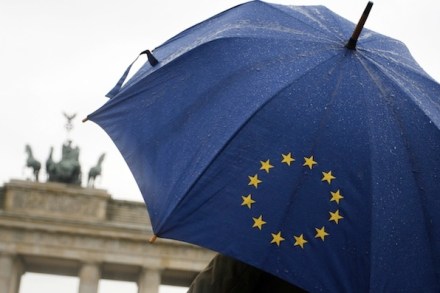
As the British Parliament continues deliberating the EU Referendum Bill, it's worth reflecting on the relationship between the UK and Germany: It could determine the future direction of the whole European Union. David Cameron made a big speech on the EU at the start of the year and there was much in it that centre-right politicians in Berlin could agree with. His five principles of wanting more competitiveness, flexibility, a rebalancing of powers between nation states and Brussels, democratic accountability and fairness had particular resonance. And what was especially appreciated, and came across in his speech, was his genuine desire to work with like-minded partners to help reshape the European Union into that more competitive and flexible entity.

Why Britain’s economy will overtake Germany’s

From our UK edition

What’s the most surprising thing that could come out of the current economic upturn? A rapid revival in northern manufacturing? The City really getting behind small British businesses? Ed Balls admitting higher public spending wasn’t always the best way to promote growth? Any of these eventualities would be fairly amazing. But the biggest surprise would perhaps be this: a gradual realisation that the UK is on track to become the largest economy in Europe. In the 19th century, at the height of the industrial revolution, the UK outproduced all of its European competitors. It steadily lost that position, however, ceding industrial leadership to the Germans and the French. In the next couple of decades that pattern will start to reverse.

The German Greens might do so badly they end up getting in

From our UK edition

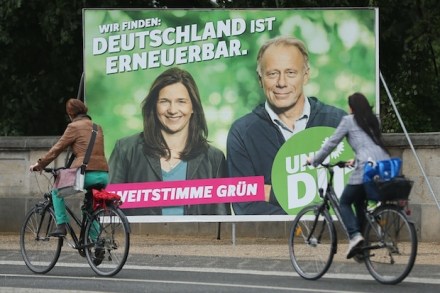
The German Green Party is having a torrid time. In an election campaign remarkable for static polls, come what may, the collapse of a third of the Green vote has been the most pronounced swing to be found. If in Sunday’s vote they do as poorly as it now looks like they will, this makes it more likely, not less, that they will end up in government. As it gradually became clear that Angela Merkel is staying put, and the real question was who she would end up with as coalition partners, the Greens looked like an unlikely option. For months they’ve put a wide gulf between themselves and Merkel’s Christian Democrats by calling for higher taxes and more redistribution.

Merkel will win – because my fellow Germans dare not speak of national self interest

From our UK edition

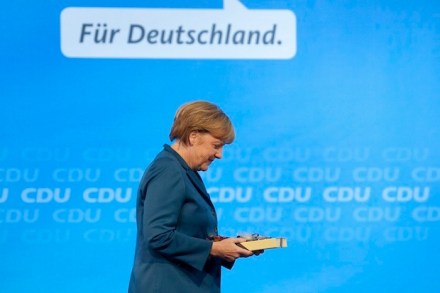
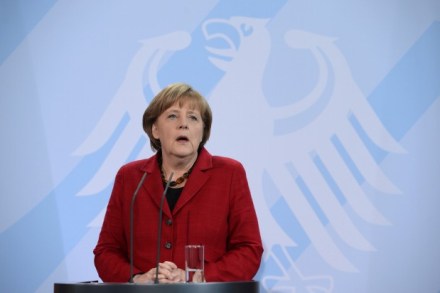
When Germany goes to the polls this weekend the question is not ‘Who will win?’ but ‘With whom will Chancellor Merkel govern?’ There may be another CDU-FDP coalition; there may be another Grand Coalition with the Social Democrats. But there is no doubt who will emerge triumphant. All this may baffle Brits: Angela Merkel has spent years sending German taxpayers’ money to bail out various spendthrift European countries and has seemed more concerned about being a good European than a good German. And she’ll be rewarded with another four years in power, reaffirming her role as the most formidable political leader in Europe. How has she managed it?

World Without Borders: Lebensraum for German Pensioners

From our UK edition

Borders matter less than they used to. That's not always apparent in this country protected as it is by the sea but on the continent frontiers are, once again, increasingly arbitrary and meaningless lines on a map. Modern Europe, in this respect, is beginning to look like an older Europe. Consider the new German invasion of the east. Invasion is, of course, too hysterical a term. Nevertheless, according to this fascinating Bloomberg report, (hat-tip: Tyler Cowen) increasing numbers of German pensioners are moving to Poland and elsewhere in search of more affordable care to ease them through their final years. Not quite lebensraum then but you get the idea.

Andrew Marr’s diary: Holidays after a stroke, and what the Germans really think of us

From our UK edition

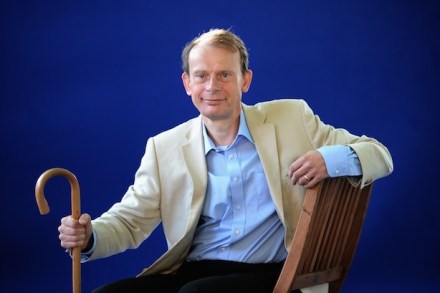
It’s been a strange summer. After a stroke, holidays are not what they used to be. We went to Juan-les-Pins for a week in a hotel. It seemed perfect because it had beaches for the family, and at nearby Antibes there is a great little Picasso museum for me to haunt. It has the best drawing of a goat ever made. My daughters and wife doggedly manhandled me across hot sand into and out of the water and I enjoyed that. But being surrounded by so many fit people running, cycling and swimming was a little dispiriting. Mind you, I’ve always been useless at holidays. I hate being too hot. I hate lying around on grit (rebranded as ‘sand’). I hate airports. I hate long car journeys. My idea of a good break involves a bracingly cold northern city and some good art galleries.

Angela Merkel’s Christian Democrats could still lose. It all comes down to the maths

From our UK edition

Just over a month before election day, Angela Merkel’s Christian Democrats (CDU) are in a commanding position. The latest polls give them over 40 per cent support – fully 16 points ahead of main rivals the Social Democrats (SPD). You might think they’d have little to worry about. However, Germany’s electoral system is so scattered with technical and arithmetical traps that they are not safe yet. Five per cent is a magical figure in German politics. Like many of its other national institutions, the voting system was designed with the country’s previous sins in mind; it is essentially proportional representation, but to stifle the rise of extremists, a party must gain 5 per cent of the popular vote to be awarded any seats.

Review: In Times of Fading Light by Eugen Ruge – a tale of rebellion and conformity

From our UK edition

In Times of Fading Light’s seven narrators exist in an almost permanent state of bewildered disappointment. Given that the narrators are various generations of the same family, what we’re shown is youthful hope turning recurrently to despair. The story begins in Berlin with Alexander, who is dying, visiting his now demented father, Kurt. This is 2001 and Kurt is at the end of his life, speechless and largely uncomprehending. Alexander, meanwhile, plans to elope to Mexico where his grandparents lived in exile almost 50 years previously.

The SPD has no credible answer to Germany’s Iron Lady as polling day nears

From our UK edition

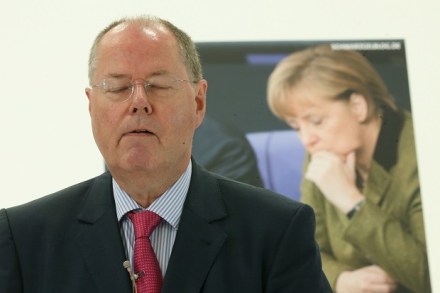
As symbolism goes, it borders on cliché. Running out of time to gain any serious traction, Germany’s Social Democrats last week unveiled their new campaign posters, and they promptly disintegrated on first contact with rain. The seven images neatly chronicle - or will do once they’re replaced - the profound failure of the main challengers to Angela Merkel’s re-election to provide any serious challenge at all. The first four have pictures of determinedly normal people standing alongside a totemic policy pledge: more childcare provision, lower rents, higher pensions, introduction of a minimum wage (Germany still doesn’t have one, though it has been a perennially topical debate).

David Goodhart tells David Cameron how to tackle immigration by reforming the EU

From our UK edition

Much, if not all, of the discussion about immigration in recent days has barely mentioned migration from the European Union, which, given the scale of such migration, was an oversight. Freedom of movement is sacred in Brussels – and indeed elsewhere on the continent. But the times they are a changing. The accession of Bulgaria and Romania has alarmed leaders on the frontier between old and new Europe, in capitals like Berlin, Stockholm and Copenhagen, where there is concern about the effect of a further wave of immigration on employment and public services. The think tank Demos says, in its response to the EU Balance of Competencies Review, that David Cameron should conspire with these nations to twist the European Commission’s arm.

Why Angela Merkel doesn’t want a haircut

From our UK edition

The announcement by Angela Merkel last week that there would be no second haircut for Greece may have surprised some readers unfamiliar with financial jargon. But once you know that ‘haircut’ means a debt write-down, nothing could be less surprising. Not because it’s a preposterous idea - in fact it’s almost bound to happen - but because two months before a general election, Merkel couldn’t say anything else. It’s pure Realpolitik. For a long time, speaking against European integration was taboo in Germany. In a country crippled by guilt for its past, insisting on German national interest or criticising European neighbours had too many uncomfortable echoes. The result was not so much public consensus as lack of public discussion.

Germany’s war on Barbie

From our UK edition

‘I embrace Barbie because I’m not threatened by her,’ says my friend Pippa, an early 40-ish antiques dealer from London who lives in Berlin. We are standing inside the ‘Barbie Dreamhouse Experience’, a 2,500-square metre Barbie museum; a pink monstrosity erected last month in a parking lot near Alexanderplatz. Inside, one can bake imaginary cupcakes, saunter down a fashion runway and gawk at the contents of Barbie’s hall of shoes. It’s a little out of place in the midst of the communist-era Plattenbau (pre-fabricated, council-style) apartment blocks that surround it. In 1989, East German activists gathered not far from this spot to welcome the downfall of socialist dictatorship.

Skills are the problem. But does anyone have a solution?

From our UK edition

For years, words ‘skills’ and ‘crisis’ have been joined in British political discourse. It’s a problem that no one seems able to crack and on May 2nd, The Spectator is holding a conference to get to the bottom of it. Labour excelled at explaining the problem. When Gordon Brown went through his phase of ennobling bankers and asking them to decide government policy, he asked Lloyds’ Sandy Leitch to conduct the Skills Review which found that Britain does well at educating its elite, but not well with others. Germany, by contrast, has 60pc of youngsters in upper secondary education in vocational training.

David Cameron makes the case for reform in Europe

From our UK edition

Germany has elections on the way, Spain is just about holding a lid on its economic crisis while keeping a wary eye on the uphill struggle that its neighbour Portugal faces to avoid a second bailout, and François Hollande has his own political crisis to deal with (and is apparently also mourning the death of a camel). So is now really the best time for David Cameron to pitch up in Madrid, Paris and Berlin to argue for reform of the European Union? The PM visits the first two cities today, with a meeting with Angela Merkel planned for later this week on the same topic.

A tale of two colonels

From our UK edition

This week, March 11th, marks the 50th anniversary of the shooting by firing squad near Paris of the last person (so far) to be executed by the state for political offences in France. 36-year-old Lieutenant-Colonel Jean Bastien-Thiry, a brilliant young officer of the French Air Force, was a rocket scientist (he invented the SS-10 anti-tank missile) - involved at the highest levels of France's attempt under President De Gaulle to forge a path independent of US hegemony in developing its own defence capability.

Germany realises the limits of the EU project

From our UK edition

Britain isn't the only country whose politicians are getting just a little bit jittery about an increase in Bulgarian and Romanian migrants. In this week's Spectator, Rod Liddle examines the German and Dutch response to the lifting of transitional controls. We were enjoined by the Romanians to believe that our fears of being ‘flooded’ or ‘swamped’, or whatever emotive term you wish to use, were greatly overstated, and that the citizens of Romania would prefer to travel to places with which the home country had historic links. Such as, for example, Germany. But that simply isn’t going to happen, is it? The Germans won’t let it happen.

Isn’t Germany’s attitude towards Romania a little at odds with the EU project?

From our UK edition

‘Can you imagine anything worse,’ a Hungarian once said to me, ‘than a Slav who thinks he’s Latin?’ He was referring to the Romanians, of course. There is a certain degree of tension in Romania between the ethnic Romanians, who run the place, and the ethnic Hungarians, who feel that they have been press-ganged into a chaotic and useless country and, worse, forced to learn a stupid language. The Hungarians hole up in the beautiful wilderness of Transylvania, yearning for the old empire and metaphorically spitting upon their political masters. But the enmity dissolves entirely when a third racial group is brought into the equation: the gypsies.

The EU must change | 26 January 2013

From our UK edition

I have been out of the country for a couple of weeks and away from the sweet furore of the internet. I'll be posting in the coming days on some of the bigger things which have gone on while I have been away. In the meantime, readers who are interested can read here a piece of mine published last week in Die Welt. Written before David Cameron's recent pronouncements, it is an attempt to explain the legitimate reasons for British EU-scepticism to a German audience.