Germany

Storm warning: the world economy’s October troubles aren’t over yet

From our UK edition

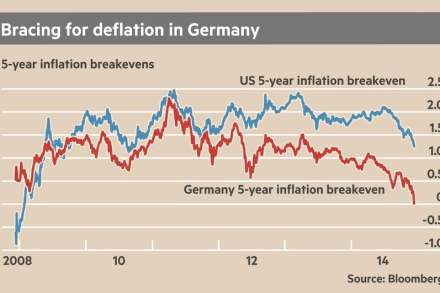
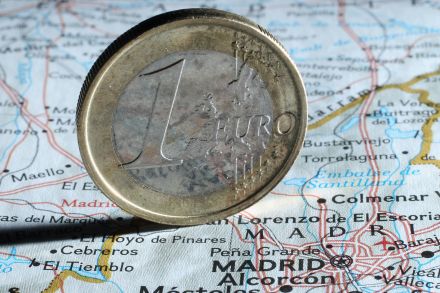
October is always a turbulent month, and I’m feeling uneasy about this one. The FTSE100 index, which looked set to break through 7,000 in September, has lost more than 500 points since then — and would have lost more but for manoeuvres in the mining sector. Pessimism stalks the bond markets, and even a falling oil price is read more as a harbinger of faltering growth than a stimulus for further recovery. Ebola is the new volcanic ash cloud, and attention is focused on the apparently incorrigible weakness of the eurozone — where the biggest problem is what was long seen as the most potent solution, namely the German economy. Fiscal discipline, strict wage control and relentless pursuit of export success made Germany the locomotive of Europe for the single-currency era; but a 0.

A Lab-Con coalition? It’s not as crazy as you think

From our UK edition

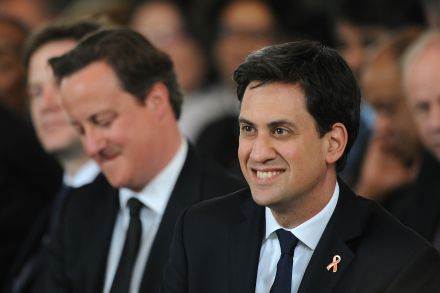
In the few days since Conservative defector Douglas Carswell gave Ukip its first Westminster MP and John Bickley scared the pants off Ed Miliband by almost snatching Heywood and Middleton from Labour, there has been much talk of a broken mould and a new age in British politics. listen to ‘John Bickley: ‘If there was an Olympic medal for hypocrisy, Labour would win gold’’ on audioBoom Election geeks have posited half-a-dozen or more governing permutations in the event that Ukip makes big gains next May.

All my doubts about Anselm Kiefer are blown away by his Royal Academy show

From our UK edition

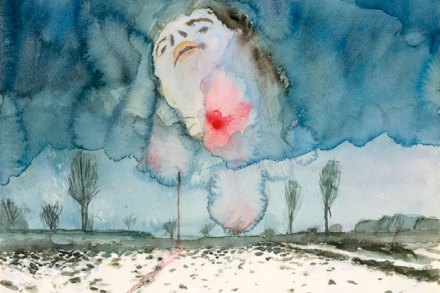
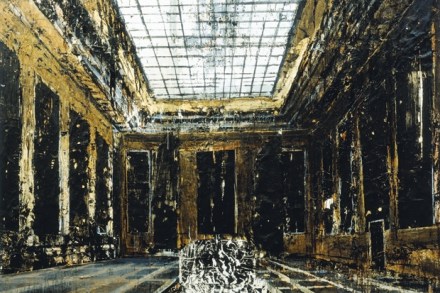
In the Royal Academy’s courtyard are two large glass cases or vitrines containing model submarines. In one the sea has receded, dried up, and the tin fish are stranded on the cracked mud of the ocean floor. In the other, the elegantly rusted subs are mostly suspended like sharks in an aquarium: a fleet in fact, all pointed in the same direction. These works are the visitor’s first sight of the vast and glorious exhibition by Anselm Kiefer (born Germany, 1945) currently occupying the main galleries of Burlington House, and they are apparently related to his interest in the Russian poet and futurist Velimir Khlebnikov. At once we are confronted by several Kiefer themes: war, poetry (he says poems are ‘like buoys in the sea. I swim to them, from one to the next ...

‘I like vanished things’: Anselm Kiefer on art, alchemy and his childhood

From our UK edition

At the entrance to Anselm Kiefer’s forthcoming exhibition at the Royal Academy visitors will encounter a typically paradoxical Kiefer object: a giant pile of lead books, sprouting wings. When I asked Kiefer to explain this strange object, he immediately — and characteristically — began talking about alchemy. Lead, of course, was the material from which alchemists hoped to make gold. ‘But at the beginning,’ Kiefer explained, ‘it wasn’t just a materialistic idea, it was a spiritual one: to transform matter into a higher spiritual state.’ So, I suggested, in a way all art is alchemy: transforming one substance — paint and canvas, for example — into something else entirely. ‘Yes, certainly,’ Kiefer replied.

The enigma of Werner Herzog

From our UK edition

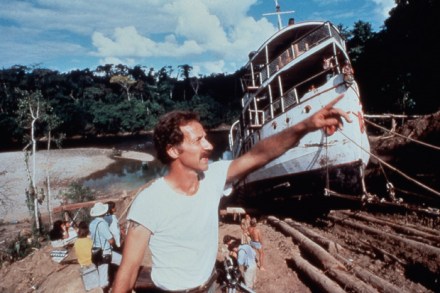
Strange things happen to Werner Herzog — almost as strange as the things that happen in his haunting, hypnotic films. In 1971, while making a movie in Peru, he was bumped off a flight that subsequently crashed into the jungle. Years later, he made a moving film about that disaster’s sole survivor. In 2006, while filming an interview with the BBC in Los Angeles, he was shot in the belly by some nutter with a small calibre rifle. Most film-makers would have been turned to jelly by this terrifying interruption; Herzog simply laughed it off, cheerfully dropping his trousers to reveal a bleeding bullet wound, and a natty pair of Paisley boxer shorts. ‘He has become a catalyst for extraordinary events,’ says his British producer Andre Singer.

Six decades and two chat-up lines

From our UK edition

 Gstaad In this freewheeling Swiss village of the 1950s, the unconventional was the norm and monumental drinking commonplace, but the manners of the players were always impeccable. Yes, there were ladies of lower-class parentage and with a dubious past, but they covered it up with a grand manner and an affected aristocratic confidence they had learned through experience. That’s how things were back then. The slags that pass as celebrities today would not have lasted a minute. Some might think it snobby, but it was nothing of the kind. One just had to act in a certain manner and that is all. Everyone knew where everyone else came from, so it wasn’t even a pretence.

If you want a lesson in how not to run an economy, take the Eurostar

From our UK edition

For the last five years, politicians of all shades have been banging on about how we should adopt this or that aspect of German economic policy. George Osborne argued in 2011: ‘We want to learn the lessons of the successful Mittelstand model, which has operated in Germany for many decades.’ Only a few weeks ago, Vince Cable argued: ‘Britain has not been as good as competitors like Germany in turning ideas into wealth creation.’ The German economy seems to be widely admired, despite lagging behind Britain’s for nearly a generation. It is true that Germany had a better post-crash period than the UK, but its financial sector was smaller and many of its problems were hidden from view.

The Spectator at war: How to talk to a pacifist

From our UK edition

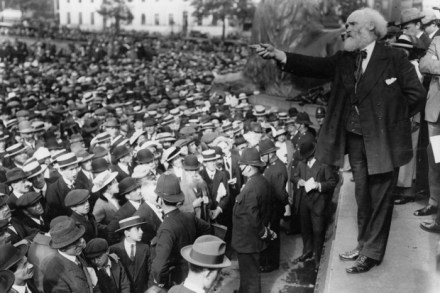
‘Keep your temper’, from The Spectator, 8 August 1914: ‘When a nation goes to war the policy of the Government nearly always fails to carry with it the convictions of a minority.  It is, of course, very rare for a Government who make war to find themselves without the support of the majority – for, as a rule, they would not even contemplate war without ascertaining the general tendency of public opinion – yet such cases have happened. It is probable that the majority were opposed to the war of George III. and Lord North against the American colonists.

Hitler’s Valkyrie: Unity Mitford at 100

From our UK edition

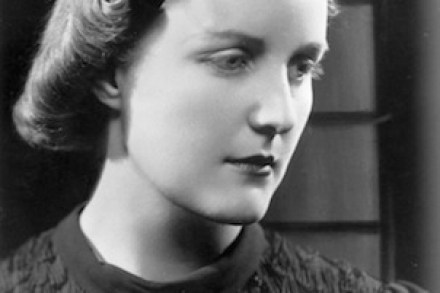
On 8 August 1914, four days after the declaration of war, Unity Valkyrie Mitford was born, the fifth child and fourth daughter of David and Sydney Freeman-Mitford, who admired the actress Unity Moore. Grandfather Redesdale suggested Valkyrie, after his friend Wagner’s Norse war-maidens. The fact that Unity Valkyrie had been conceived in the town of Swastika, Ontario, where her father was prospecting for gold, made it all the more portentous. A few weeks after her birth, Unity and her mother (‘Muv’) joined ‘Farve’, who was with his regiment in Newcastle. His quarters were so cramped that Unity was laid to sleep in a drawer.

The Spectator at war: ‘Why has it come?’

From our UK edition

From ‘Topics of the Day’, The Spectator, 8 August 1914: ‘How does it happen that within a week Germany and Austria-Hungary are at war with France, with Russia, with Britain, with Servia, with Belgium, and that it is exceedingly likely that to the list will have to be added Holland, Switzerland, and Denmark, and later Italy, Roumania and Greece? ‘…Our answer is one which we feel bound to give because we believe it, even though it may seem to a section of our readers unjust to Germany.

The Spectator at war: Are the lights going out?

From our UK edition

From ‘News of the Week’, The Spectator, 8 August 1914:  ‘A good many excellent people are talking now as if the present war would mean the destruction of all civilization. That, we venture to say with all respect, is rubbish. Civilization is a far tougher plant than these good people imagine. That the war is a terrible evil, and that it will bring great sufferings, we admit as fully as can the most determined pessimist. It is, indeed, because we feel this so deeply that we have struggled hard in favour of those preparations which alone could have averted war, or, at any rate, might greatly have shortened it. Nevertheless the war, frightful as it must be in its consequences, is not, in any true sense, without parallel, nor will its effects be permanent.

How to ruin a country – the belligerent life of ‘Kaiser Bill’

From our UK edition

Wilhelm II: Into the Abyss of War and Exile, 1900–1941 John C.G. Röhl, translated by Sheila de Bellaigue and Roy Bridge The role of personality in politics is the theme of this awe-inspiring biography. This is the third volume, 1,562 pages long, of John Röhl’s life of the Kaiser. It has been brilliantly translated — the labyrinth of imperial Germany navigated by many headed subdivisions in each chapter — by Sheila de Bellaigue. The fruit of what Röhl calls a ‘dark obsession’ with the Kaiser, it had its origin when, writing about Germany after the fall of Bismarck at the apogee of social and institutional history in the 1960s, he realised that he was analysing not a modern government but a court society.

‘We believe Germany made the war’

From our UK edition

The 1914 editions of The Spectator in the days surrounding the declaration of war give a sense of bewilderment. At first they couldn’t believe it would happen. After Archduke Franz Ferdinand was assassinated by Serbian nationalists on 28th June 1914, Austria-Hungary’s handed Serbia a list of demands, which looked like a provocation of war: ‘It is hard to see how Servia could acquiesce in them without in effect making an admission of guiltiness which she must naturally feel it impossible to make.

Germany’s forgotten war

From our UK edition

Britain is braced for the anniversary of the outbreak of world war one. Memorials and events are taking place across the country this weekend. Not so in Germany, where reticence reigns.  This week’s Spectator features a piece by Antonia Oettingen, a descendant of Karl Max von Lichnowsky, the Kaiser’s ambassador in London from 1912-1914. She explains why Germany is shy about the Great War. 'In 1912 Kaiser Wilhelm had an ambitious task for my great-great-great uncle Karl Max von Lichnowsky. He sent him to London to be our ambassador there, with orders to try to ensure Britain’s neutrality (at the very least, in cases of conflict with Russia and France).

What about August 1714? 300 years since the Hanoverian accession

From our UK edition

The centenary of the start of the first world war is getting much more attention than the tricentenary of the accession of George I, which also falls this week. As far as I can tell, no new biographies of the first Hanoverian king are imminent, whereas books on the great war are pouring forth. You can see why. The replacement of a plump, if benign, queen by an ‘obstinate and humdrum German martinet with dull brains and coarse tastes’ (Winston Churchill’s words), who presided over a huge financial scandal and died unlamented after a short reign, need hardly detain us. But forget the royals and focus on what we might call the reshuffle among politicians that accompanied the change.

Can the European Union agree a sanctions regime for Russia?

From our UK edition

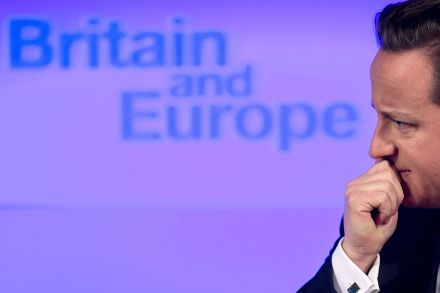
David Cameron talked tough on sanctions yesterday, suggesting that he had the German and French support. I believe he means what he says and is serious about following through with sanctions. I could even be convinced that France and Germany have hardened their positions to the point where they are genuinely willing to consider ‘stage three’ sanctions (which would hit specific firms and possibly sectors of the Russian economy). However, I remain far less convinced that the EU as a bloc can find a clear and united position – as Open Europe noted with its Dove/Hawk scale the divergences between countries are huge and the motivations for their positions is incredibly varied.

What Germans do worst

From our UK edition

Yes, alright. It turns out that Germans are pretty good at football. But they aren't quite so good at everything, as our Barometer column this week points out. Here are some things Germans aren’t very good at: Making reliable car engines. According to a survey by Warranty Direct last year, Audi came bottom, BMW seventh from bottom and Volkswagen ninth from bottom out of 36 manufacturers for engine failures. Making love. According to a spurious website survey of 15,000 women in 2009, German men were the world’s worst lovers, the main complaint being that they were ‘smelly’. (Englishmen were second worst.) Cricket. But they are not the worst.

Any other business: trouble spots in European banking

From our UK edition

‘1914: Day by Day’, the Radio 4 series by the historian Margaret MacMillan, is a gripping reminder that significant global events often arrive not in a single eruption but in a series of lesser happenings that only afterwards form an obvious pattern. Let’s hope that’s not what we’re watching in the banking sector as anticipation builds towards the results, due in October, of the European Banking Authority’s current round of ‘stress testing’. Last month’s trouble spot — with a certain resonance for the current centenary — was Austria, whose government forced losses on bondholders in the troubled Hypo Alpe-Adria-Bank by overriding a guarantee from the province of Carinthia.

World Cup diary — in defence of ‘pervy’ camera crews

From our UK edition

The best team won, and the best two teams reached the final. This is a comparatively rare event at a world cup. And it was a fine world cup in general, with plenty of things to gladden the heart – the hammering of Spain by the Netherlands, the hammering of Brazil by Germany, the eviction at stage one of teams who think too highly of themselves, the emergence of doughty underdogs (Iran, Ghana, Chile, Costa Rica). The Netherlands remain an enigma; they are either wonderfully fluent or suddenly turn into England. But their record, for a country with a fifth of our population, is excellent.

Why we’ll mostly be supporting Germany on Sunday

From our UK edition

If you’re walking through any built-up area in England between 8 and 10pm this Sunday and you hear a cheer you can be pretty sure it means one thing – Germany have scored yet again. One of the great myths we were fed as children in the 1980s and ‘90s was that the English don’t like the Germans, and in particular the living representatives of all things Teutonic on earth, the German national football team. We love ‘em, and I imagine most English people will be supporting Germany on Sunday. I remember being stuck in the countryside in 2006 and watching the Argentina-Germany quarter-final in a pub; the place went wild when Germany equalised and then won.