Germany

World Cup diary – best tournament in years

From our UK edition

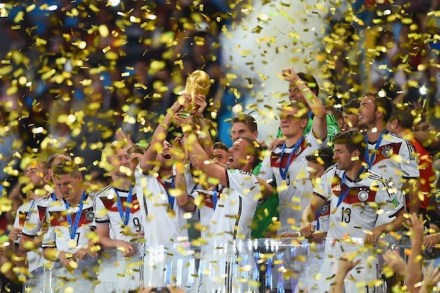
Sorry – bit of an interregnum in the World Cup diary, caused principally by England’s pathetic capitulation. But still the tournament gives pleasure, perhaps to a greater degree than it has done in thirty years or more. Watching Brazil get stuffed on their own midden heap was an enormous pleasure. Their thuggery in the previous round, against Colombia, came back to haunt them; there is karma in football. That’s why Leeds Utd are still in the lower reaches of the Championship.  Germany were magnificent; Brazil gave in after the second goal — but truth be told, they were never terribly good. One thing bothers me, though — at the start of these games the opposing players are horribly matey and affectionate to one another.

World Cup diary: Iran vs Nigeria. Who to support?

From our UK edition

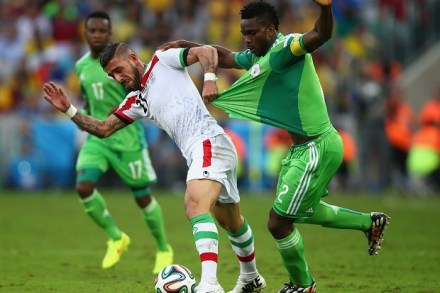
So – Nigeria versus Iran, then. I wonder who Boko Haram were cheering for, surrounded by their infidel abductees in some sand-blown, bilharzia riven hellhole. I was cheering for our new allies, Iran. We are told every year – since about 1986 – that African teams will take world football by storm. And they never do. They’re as useless as were Zaire in 1974. But that won’t stop the BBC spending our licence fee money on the African Cup of Nations, for political reasons. And then earlier, an enormous pleasure to watch Portugal’s pouting moppets, each of them seemingly named after a seaside donkey, thoroughly thrashed by good ol’ dependable Germany.

German or Romanian neighbour – which would you choose?

From our UK edition

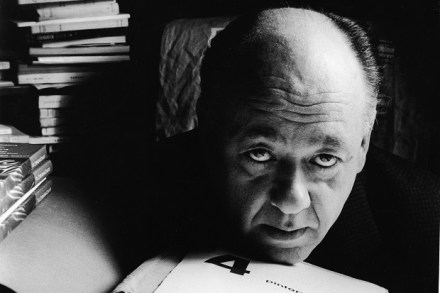
I would rather live next door to a German than a Romanian. I thought I’d just make that clear. I don’t mean I’d rather live next door to SS Obergruppenfuhrer Reinhard Heydrich than the humorously surreal dramatist Eugène Ionesco. I mean, in general, on average, given what I know about the people from both countries who have come here to live. Not all of them, obviously. Just as a generality, if you were to offer me the choice, without telling me any more about the respective merits of the people concerned, just here’s your choice, Rod – Germans or Romanians. I may be wrong, but I suspect most people in this country, if offered the same choice, would choose likewise.

What’s the difference between German and Romanian immigrants?

From our UK edition

Nigel Farage is in the papers again today – unbelievably! – this time with a full-page advert in the Telegraph responding to his remarks about Romanians on LBC radio. Such was the universal media condemnation over his interview with James O’Brien that on Saturday even the Sun had an editorial on anti-Romanian racism. You couldn’t make it up. Farage was stereotyping, and his tone of ‘you know what the difference is’ hit the wrong note, which lost him the argument over a fairly reasonable point; that is, the typical profile of a German migrant is very different to that of a Romanian migrant.

The Spectator’s Notes: Max Clifford’s conviction vindicates juries. But so did the acquittals

From our UK edition

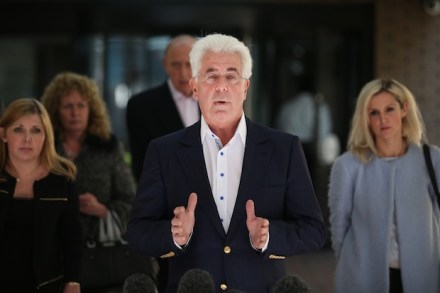
The conviction of Max Clifford for indecent assaults feels like a vindication of the jury system, as did the acquittal of the many other showbiz characters charged under Operation Yewtree. One reason I keep raising questions of justice about the current obsession with paedophilia is out of suspicion that those most zealous in their accusations are unhealthily interested in the subject. This was the case with Clifford himself and, of course, with the newspapers with which he did business. Celebrity culture is, in essence, a form of pornography which incites powerful people to exploit unpowerful people. It acquires an extra twist of perversion when it turns on those it has incited. It should not be allowed that escape route.

Nigel Farage’s diary: Comfort for Cameron, and the wonders of German traffic

From our UK edition

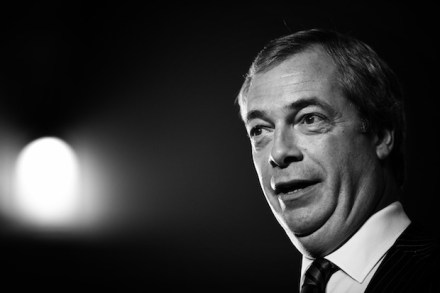
What a week! I was thrilled to have a chance to confront Nick Clegg but my excitement was tempered with disappointment that neither Cameron nor Miliband agreed to take part — although both were invited. I’d love to have challenged Miliband about the effects of uncontrolled immigration: wage compression, for instance, and the erosion of job opportunities within working-class communities. Why did he chicken out? My bet is he knows these facts are unanswerable. Cameron is, by all accounts, having kittens about Ukip but I think I can set his mind at rest. Our current wave of support seems to be thanks to working-class former Labour voters, which makes perfect sense.

The minimum wage is broken – here’s how to fix it

From our UK edition

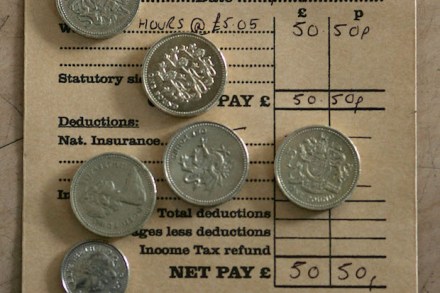
While welcoming George Osborne’s emphasis this week on raising employment, I have some caveats about his target – to have the highest employment rate in the G7. This isn’t hugely challenging. Those in employment currently amount to 71.2 per cent of the UK population of working age, well ahead of Italy (55.5 per cent), France (64.1 per cent) and even the USA (67.4 per cent). Germany, at 73.5 per cent, is the current table-topper and the one Mr Osborne aims to overtake. Aggregates like this, though, are dodgy to interpret and are affected by differences in age cohort size and other factors.

Upside down and right on top: the power of George Baselitz

From our UK edition

It’s German Season in London, and revealingly the best of three new shows is the one dealing with the most modern period: the post-second world war era of East and West Germany and the potent art that came out of that split nation. In Room 90 is another immaculately presented British Museum show of prints and drawings, focused this time around Georg Baselitz (born 1938). Of the 90 works on display, more than a third has been donated to the BM by Count Christian Duerckheim, the remainder lent by this assiduous collector. The show begins with Baselitz’s contemporaries and I was surprised to find myself quite liking some things by Gerhard Richter, currently the most overrated artist in the world.

Putin is making the West’s Cold Warriors look like fools

From our UK edition

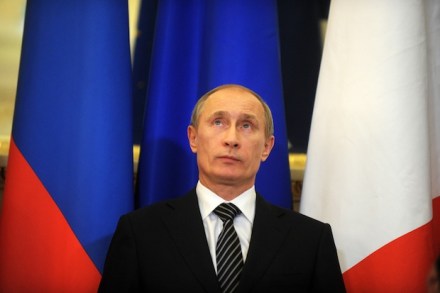
William Hague was on rather shaky ground when he argued this week that Moscow has chosen ‘the route to isolation’ by recognising Crimea’s referendum. On the contrary, it is the European Union and the United States who look as if they have seriously overplayed their respective hands in Ukraine. Across Asia, Africa and Latin America, the cry of ‘western hypocrisy’ has been heard much louder than complaints about Vladimir Putin. Even in the UK, mainstream opinion is steadily becoming more critical of western interventionism and our ‘New Cold War’ posturing, despite some pretty one-sided media coverage and much establishment tut-tutting.

The BBC’s march to war

From our UK edition

Perhaps we are growing war-weary – weary, that is, of the gathering storm of World War One documentaries on the BBC. There have been so many, not just Max Hastings (for) and Niall Ferguson (against), but Jeremy Paxman keeping the home fires burning and the reheated I Was There interviews with veterans of the conflict whom age withered, unlike those who left their corpses to stink in the mud of Flanders. For all that, 37 Days, the corporation’s recent reconstruction of the events leading up to Germany’s invasion of Belgium, was utterly compelling, once again confirming the place of docudrama in the history schedule.

Leave Ukraine to the Russians

From our UK edition

[audioplayer src="http://traffic.libsyn.com/spectator/Untitled_2_AAC_audio.mp3" title="Matthew Parris and Anne Applebaum debate the Ukraine situation"] Listen [/audioplayer]‘You can’t always get what you want,’ chorused Mick Jagger, ‘but if you try some time/You just might find/You get what you need.’ The danger with Ukraine is that the western powers will get what they want, not what we need. I write this as one who has travelled in Ukraine, loved the country and seen that its people (though poor) are talented and energetic. Any reference I make to basket cases refers to the Ukrainian state, not the country’s human resources.

Merkel makes it clear: no special status for Britain in the EU

From our UK edition

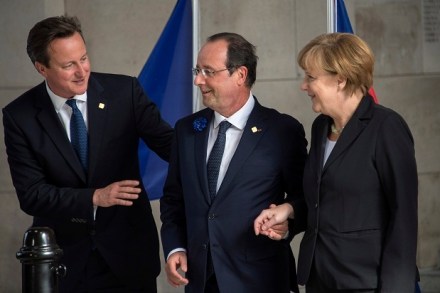
Angela Merkel's speech today didn't close doors on EU reform but nor did it open as many as some close to Cameron had hoped that it would. As the German Chancellor made clear at the start of her speech, she didn't want to say either that Britain could have what it wanted from the renegotiation or that Britain could have nothing. listen to ‘Angela Merkel: ‘We need to reform the political shape of Europe’’ on Audioboo The German Chancellor talked of the need for a more competitive EU, suggested that she might be open to some changes on freedom of movement and offered the vaguest hint of possible treaty change.

Only Angela Merkel can save David Cameron now

From our UK edition

[audioplayer src="http://traffic.libsyn.com/spectator/TheViewFrom22_20_February_2014_v4.mp3" title="James Forsyth and Isabel Hardman discuss Cameron's relationship with Merkel" startat=1204] Listen [/audioplayer]British politicians still prize a visit from the President of the United States above all others. Yet no American President has been as important to a British Prime Minister, in domestic political terms, as the German Chancellor is to David Cameron. Angela Merkel is the person who can both help him keep his party together as it approaches the next election and then, with luck, deliver his promised renegotiation of Britain’s EU membership. For Cameron, Merkel — far more than Barack Obama — is the indispensable ally.

The man who gave the world (but not London) the glass skyscraper

From our UK edition

Modern Architecture, capitalised thus, is now securely and uncontroversially compartmentalised into art history, its bombast muted, its hard-edge revolutions blurred by debased familiarity. You have been to Catford? You have seen a heroic vision compromised. Modern Architecture is no more threatening than abstract art, although the Swiss-French Le Corbusier retains a heady whiff of the opprobrium which attaches to bogeymen. His rival in stature was the German-American, Ludwig Mies van der Rohe, a very different designer. With Corb we think of head-butting bravura concrete. With Mies, as he is always known, we think of magnificently refined steel and glass: the beautiful architectural full stop of Hegel’s history.

The Nazis no longer deserve a place on the national curriculum

From our UK edition

Apparently there’s some sort of anniversary coming up to do with a war, you may have noticed. To commemorate this the British publishing industry has launched a ferocious selling offensive, no doubt aided by recent remarks from Michael Gove, Tristram Hunt and Boris Johnson. Like with any historical incident, our views of this conflict are more about now than then, 2014 rather than 1914, perfectly illustrated by the German Foreign Minister’s hugely helpful comment that Ukip is a threat to European peace – helpful to Ukip, that is, since the intervention of continental politicians inevitably helps euroscepticism.

Sarah Vine: Michael Gove loves Germany

From our UK edition

While Michael Gove and academic lefties continue to row about the causes of the Great War, the education secretary’s wife, Sarah Vine, has helpfully poured some fuel on the fire. Vine’s always-mischievous Mail column reveals that her husband admires the Germans: 'While I wasn’t looking, my husband, Michael Gove, appears to have declared war on Germany. This has prompted some commentators to compare him to Basil ‘Don’t mention the War’ Fawlty. This is understandable, but wrong: he actually loves Germany and all things Teutonic, from Richard Wagner to bratwurst.'  She mentioned it once; but I think she got away with it.

Blackout Britain — why our energy crisis is only just beginning

From our UK edition

BASF, the world’s largest chemical company, has been headquartered in Germany since before the country formally existed. Founded in 1865 by the industrial pioneer Friedrich Engelhorn, it still occupies the vast site on the banks of the Rhine at Ludwigshafen where its first dye and soda factories were built. A third of its staff are employed in Rhineland Palatinate. It is a global company, yet as German as Goethe and gummi bears. A few days ago Kurt Bock, the firm’s chief executive, warned that its Ludwigshafen plant may soon be forced to close, with BASF’s German jobs relocated elsewhere. The reason, he said, was Germany’s soaring energy costs and the crippling green levies being used to pay for ‘renewables’ such as wind farms.

Has Germany confronted its Nazi past? Not where art is concerned

From our UK edition

From repentance to restitution, Germany has done an exemplary job of facing up to its Nazi past — with a little help, it might waspishly be said, from the victorious Allies. Every aspect of life, from education and philosophy, to science, politics, music and the law, was held up to the light early on and thoroughly cleansed. There has, though, been one puzzling exception; a place where shadows linger. That is the art world. The discovery, announced this week, of almost 1,400 paintings stashed away in a Munich apartment, lifts the curtain a fraction, but only a fraction, on this hidden realm.

What to do about the EU? Work with Germany

From our UK edition

As the British Parliament continues deliberating the EU Referendum Bill, it's worth reflecting on the relationship between the UK and Germany: It could determine the future direction of the whole European Union. David Cameron made a big speech on the EU at the start of the year and there was much in it that centre-right politicians in Berlin could agree with. His five principles of wanting more competitiveness, flexibility, a rebalancing of powers between nation states and Brussels, democratic accountability and fairness had particular resonance. And what was especially appreciated, and came across in his speech, was his genuine desire to work with like-minded partners to help reshape the European Union into that more competitive and flexible entity.

Why Britain’s economy will overtake Germany’s

From our UK edition

What’s the most surprising thing that could come out of the current economic upturn? A rapid revival in northern manufacturing? The City really getting behind small British businesses? Ed Balls admitting higher public spending wasn’t always the best way to promote growth? Any of these eventualities would be fairly amazing. But the biggest surprise would perhaps be this: a gradual realisation that the UK is on track to become the largest economy in Europe. In the 19th century, at the height of the industrial revolution, the UK outproduced all of its European competitors. It steadily lost that position, however, ceding industrial leadership to the Germans and the French. In the next couple of decades that pattern will start to reverse.