George V

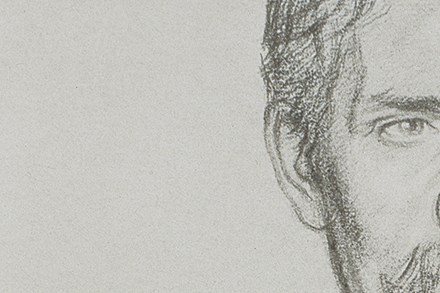
The vexed relationship of Winston Churchill and George V

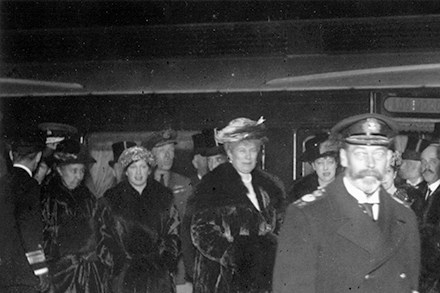
It is ironic that although Winston Churchill revered the concept of monarchy – his wife Clementine joked that he was the last believer in the Divine Right of Kings – half of the six monarchs under whom he served had anything but reverence for him.  He never met Queen Victoria, who signed his officer’s commission but died when Churchill was 26. He had a complicated relationship with Edward VII. As Prince of Wales, in 1876 Edward had been blackmailed by Winston’s father Lord Randolph Churchill, and had later slept with Winston’s mother, Jennie Jerome, after Lord Randolph’s death.
Why the General Strike of 1926 could never succeed

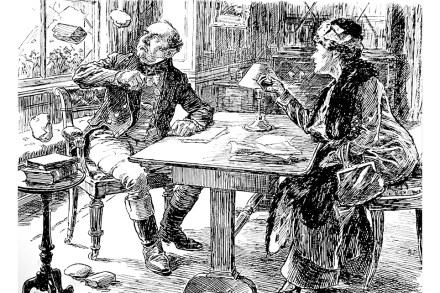
Although it may be in bad taste to have a favourite story about the General Strike of May 1926, one served up by David Torrance in his superb The Edge of Revolution is probably unbeatable. He quotes an anecdote told by Walter Citrine, the 39-year-old acting secretary of the TUC, who recalled a man ‘with rather sharp, hawk-like features’ turning up at the Congress’s London headquarters in Eccleston Square, near Victoria Station, and offering, in return for £1,000, to solve the unions’ problems.  He announced: I want 100 trusted men and if you cannot find them, I can. I will arm them, take them along to Downing Street, shoot the members of the cabinet and hold Princess Mary’s children as hostages.

The Labour party should finally grow up about Ramsay MacDonald and his conduct

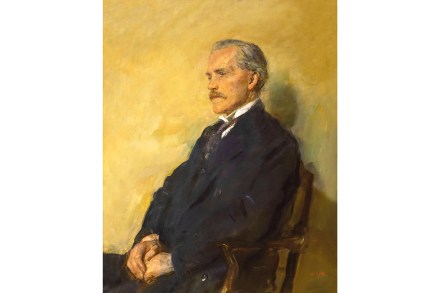
The subtitle of Walter Reid’s biography of James Ramsay MacDonald refers to ‘the extraordinary rise and tragic fall’ of Labour’s first prime minister. The rise was not especially extraordinary. In the first decades of the 20th century several people from relatively humble backgrounds – David Lloyd George and John Burns from outside MacDonald’s party, and Philip Snowden and Arthur Henderson (to give just two examples) from within it – reached the top or very near the top of British politics. But did MacDonald have a tragic fall? He was prime minister for six of the last eight years of his life; a cabinet minister to within six months of his death; and only left then because he was in his 71st year and in poor health. He turned down a peerage and the Thistle.

The magic of early radio days

‘Is it necessary to have the window open when listening to the new device?’ asked Edith Davidson, the wife of the Archbishop of Canterbury, in 1923, referring to the latest fashionable contraption, the wireless. We might laugh – but it does take time for the older generation to catch up with new technology. To this day I instinctively roll down my car window (unnecessarily, I’m pretty sure) to point my phone towards the sensor that will grant me access to my local club. In her joyous, richly illustrated book about the early years of radio from the listeners’ point of view, the BBC radio producer Beaty Rubens takes us inside the British home.

After Queen Victoria, the flood

Alwyn Turner writes early on that Little Englanders is ‘an attempt to take the temperature of the nation as it emerged from a century that had dominated the world and was beginning – whether it knew it or not – a long process of decline’. Perhaps for that reason, or perhaps because the high (and low) politics of the years from 1901 to 1914 – the Edwardian era continues for four years after the death of the eponymous sovereign, up to the lights going out all over Europe in August 1914 – have been so exhaustively covered in recent years, he tells his readers that he will draw heavily on popular literature, on the songs of the music hall and on the newspapers.

The travails of Britain’s first Labour government

Once the working classes were allowed to vote it was inevitable that sooner or later they would elect a government which reflected their interests. That moment came with the appointment, in January 1924, of the first Labour government.    The circumstances could hardly have been less auspicious. There had been three general elections in as many years. No party had an overall majority. Labour, with 191 seats, was not even the largest, with the result that, throughout its short life, the government was entirely dependent on the goodwill of the Liberals, which soon ran out. With a couple of junior exceptions during the wartime coalition, no Labour MP had any experience of government.