George osborne

Osborne and Cooper’s knockabout

Far more heat than light generated by this afternoon's urgent question on welfare spending – but a telling spectacle nonetheless. The question had been put forward by a dissenting Lib Dem voice, Bob Russell, and it was up to George Osborne to answer it. He did so with sweeping observations, and attacks on Labour, rather than specifics. And so we never really got into the small print of those £4 billion extra benefit cuts, but Osborne did wonder why Labour have never apologised for "leaving the country with the worst public finances in its history." It was knockabout stuff.   This is not to say that Osborne was ineffective. In party political terms, he had a message – and he pushed it as far as he could.
Benefit reform – one theatre in Cameron’s war

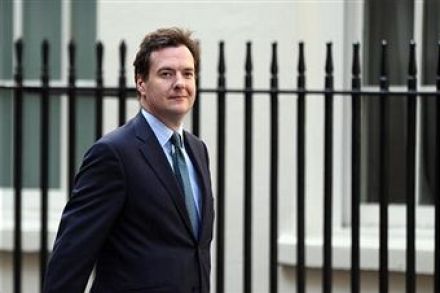
The Observer has received letters revealing that George Osborne plans to deliver net savings of ‘at least £2.5bn’ from the Employment Support Allowance by limiting the amount of time people can spend claiming it. Here is Osborne’s letter to IDS, Cameron and Clegg: ‘Given the pressure on overall public spending in the coming period, we will need to continue developing further options to reform the benefits as part of the spending review process in order to deliver further savings, greater simplicity and stronger work incentives.

The government should return the unions’ fire

The TUC is mustering in Manchester and its leaders are in bellicose mood. Brendan Barber has called for a general strike; Bob Crow, brimming with the satisfaction of having wrecked London’s transport earlier in the week, has called for his members to ‘stand and fight’ the government’s cuts. These statements have a ‘Me and my executive’ air to them, so ludicrous as to be beyond parody. But the message is rousing and clear. Not so the government’s – as Fraser argues today in his News of the World column. The government is caught in an intellectual cul-de-sac. Its sole refrain is that these cuts are Labour’s cuts and they are necessary. At the same time, the government defines the cuts debate in Labour’s terms.

Robert Chote is the new head of the OBR

Now this should dispel any worries that the Office for Budget Responsibility is partisan in the government's favour. Robert Chote, director of the Institute for Fiscal Studies and scourge of Osborne's "regressive" Budget, has been appointed as the body's new chief. It is, in many repsects, the most sensible and obvious choice. Not only is Chote respected across the political divide, but the OBR is an attempt to institutionalise the kind of fiscal oversight that his IFS has provided for years. I can't imagine that the Treasury Select Committee will try to block this appointment. In case you missed it first time around, Fraser interviewed Chote for the magazine back in June.

A banking split

Blame Bob Diamond. Until the "unacceptable face of banking" (© the utterly acceptable face of politics, Peter Mandelson) was appointed chief executive of Barclays, the issue of banking reform was trundling along noiselessly in the background. But now it has spilled, violently, back out into the open. Critics of Diamond say that his very presence makes the case for splitting the retail and investmet divisions of banks – you can't, they say, have someone who made their money via "casino banking" presiding over a high street banking chain. But the banks are warning that any such split would force them, and their tax dollars, abroad.   The government's official position is stasis.

The stars of the spending review

Insightful work by the FT's George Parker, who traces the choreography of the spending review in an article for the paper today. What's striking is how much the coalition expects to achieve by what Parker calls "peer pressure". Ministers who get through their spending settlement quickly and successfully will be held up as examples to their colleagues, and will be drafted into the the "star chamber" to cast an axeman's eye over other departments' plans. Ken Clarke, we are told, "can hardly wait". According to Parker, the process is already producing its darlings. Jeremy Hunt has exceeded the Treasury's demands by identifying 50 percent cuts in the budget for running his department.

A totemic austerity measure

As austerity measures go, the plan to share aircraft carriers with France is totemic stuff. Not only could it save the Exchequer a heap of cash – by reducing the need for two replacement carriers – but it also says a lot about how our government wants to operate in the world: multilaterally, flexibly and, perhaps, with less emphasis on military force. Divvying up one's navy with another country does not suggest a strident foreign policy. Indeed, future operations would have to be planned and conducted with the aid of phonecalls to Paris. Of course, this will likely be a controversial move.

Darling exhumes Cameron’s Big Mistake

Amid all the feverish commotion about cuts, it's easy to forget that it took the Tories until November 2008 to ditch Labour's spending plans - and, indeed, that it was barely a year ago when George Osborne first mentioned the c-word in public. Even David Cameron admits that this delay was his biggest mistake. It weakened his party's claim to foresight, and gave them less time to embed a new narrative about the economy before the election. So it's noteworthy that Alistair Darling exhumed this mistake on the airwaves earlier, telling the Beeb that "the Tories supported [our spending plans] until the end of 2008." This may sound like a cheap shot at Cameron and Osborne, but I expect we'll hear more of it in coming months.

Balls’ pitch for the shadow chancellorship

If there's one observation to make about Ed Balls's speech this morning it's that it's punchy stuff. His main point is that the coalition are "growth deniers" – not only do their "austerity and cuts" risk a slide back into recession, but they're also unnecessary. He explains: Attlee didn't make his "first priority ... to reduce the debts built up during second world war," and he left us with the welfare state – so why should we cut spending now? Et cetera, et cetera. These are, more or less, all arguments that we've heard from Balls before. But this is definitely the most concentrated form they have ever taken. It's an unrelenting barrage of Brownite economics. As always with Balls, there are exaggerations, inconsistencies and half-truths aplenty.

A New Labour landmine detonates

Has Mark Hoban just become the first victim of the New Labour landmines? He was asked on the Today Programme whether the Treasury had conducted a formal study assessing the impact of the cuts on ethnic minorities. Hoban was speechless - as well you might be. But the assessment, he was told, is required under Harriet Harman's Equalities Act. Has it been carried out? He avoided the question and was asked it again. And so it continued, a la Paxman v Howard. When Labour retreated, it sewed several landmines in the political territory it was about to cede. One of them was Harman's Equalities Act, which - as Pete blogged a while ago - mandates government "to consider how decisions might help to reduce inequalities associated with socio-economic disadvantage".

A lasting truce between IDS and Osborne

In the coalition, it is the rows within parties not between them that are most vicious. This is because in an internal party argument there is all sorts of emotional baggage involved. So it is two Tories, IDS and Osborne, who have provided the most spectacular row of the coalition so far. But it is worth noting that, as Tim said on Sunday, a truce has been reached between the two men and the contours of a deal agreed. It is also my understanding that both sides have put a stop to any briefing that could be considered as negative.   A deal on welfare reform looks more far more likely now than it did six weeks ago.

IDS versus Osborne: there can only be one winner

The Quiet Man is an odd moniker for Iain Duncan Smith. There was nothing quiet about his opposition to the Maastricht Treaty and he turned up the volume when he told the Tories to ‘unite or die’. Matthew d’Ancona observes that IDS is a noisy maverick again. IDS has threatened to resign if his welfare reforms are obstructed. Principles are one thing and tactics another. As d’Ancona notes: ‘Such talk is fine if a minister means he will quit if he himself fails. But in IDS's case it has sounded more like a threat: if the leaders of the coalition do not give him what he wants, he will resign and bring the temple walls crashing down around him.

Seconds out…IDS versus Osborne

Infamously, George Canning and Viscount Castlereagh fought a duel over a policy disagreement; Iain Duncan Smith and George Osborne will follow suit at this rate. I had thought they’d resolved their differences over the upfront costs of IDS’ welfare reform; but the Mail on Sunday reports otherwise, glorying in the glares, savage bon mots and expletives. This is the conundrum: if IDS doesn’t find £10bn in savings, he will not get the £3bn needed to enact his reforms to make work pay.

Trouble on the horizon | 18 August 2010

100 days in, a danger emerging for the coalition: the idea that it is balancing the budget on the backs of the middle class. The Daily Mail front page today warns in apocalyptic font of a ‘Bonfire of the middle class benefits’ while the Times says ‘Families to lose out in bonfire of the benefits.’   The problem for the coalition is that because it is committed to protecting the poorest and the most vulnerable, the cuts will have to be concentrated further up the income scale. This means that a lot of will what go in the cuts are the middle class bits of the welfare state. To compound the problem — and as as Paul Goodman notes - many of the coalition’s tax rises will worry the middle class.

The 100 Days

It’s been 100 days since love was in the air in the Rose Garden. So, how’s it been for you? For most, the Honeymoon continues. An ICM poll for the Telegraph reveals that 46 percent think the government is governing well and that 44 percent believe the government is doing a ‘good job’ in securing economic recovery, against 37 percent who think we’re irreversibly on the road to ruin. True, spending cuts have not yet hit the easily swayed and the government’s popularity will recede, but it won’t collapse – the 37 percent who think the economy is doomed do so for ideological reasons, the economy has not tanked yet.

Osborne emerges from the shadows

George Osborne has been quiet these past few weeks, tussling with ministers desperate to preserve some of their budget from his spending review. Today though, Osborne will emerge from the Treasury's recesses to launch a political attack on the ‘deficit denying’ opposition. Come on, Osborne will ask Darling et al, where are these £44bn of cuts you planned?   And answer comes there none, not even an incredible one. Labour’s refusal to countenance a spending review in government means it has very little to offer the spending debate in opposition.

Clegg must resist temptation

As Pete notes, Nick Clegg is moderating the debate over the spending review in David Cameron’s absence. It’s an unenviable task. IDS and Liam Fox have been the most cussed opponents of George Osborne, but all ministers are fighting for their budgets behind the scenes. This morning, reports suggest that Chris Huhne could break from the ranks of the silent. The Times gives details of ‘intense discussions’ over the future of nuclear clean-up and renewable energy funding, worth more than £2bn of the Energy department’s £3.4bn budget. Obviously, any reductions in environmentally friendly initiatives carry a political cost for the Liberal Democrats.

Osborne needs to hold the line

Even governors can be wrong. The Bank of England’s quarterly inflation report is expected to downgrade its original growth forecasts and predict a sharp increase in inflation, albeit one that peaks this year and returns to the target rate by 2012. A spike in inflation is scarcely surprising given the planned VAT rise, and the Bank’s original growth forecasts were, like Alistair Darling’s forecasts, absurdly over optimistic – predicting 3.4 percent growth next year and 3.6 percent the year after. The Bank’s revisions needn’t trouble George Osborne, whose forecasts of 2.3 percent growth next year and 2.8 percent in 2012 were drawn from the OBR. However, the OBR may have over-estimated recovery too.

IDS’ resignation would be a catastrophe

If Iain Duncan-Smith resigned from the government, the coalition would be in trouble. If Vince Cable is the coalition’s left tent peg, IDS is the right one: his departure would leave the coalition’s right side dangerously open to the elements. Which prompts me to oppose Ben Brogan’s blog saying that the coalition would not suffer much if IDS walked. If IDS left, the Cabinet would be dangerously unbalanced. There would, in these circumstances, be only two people in it who the Tory parliamentary party considers to be on the right, Liam Fox and Owen Patterson. The right, as the Liberal Democrats seem to appreciate, would in these circumstances demand far more policy concessions from Cameron in return for its support.

Ominous signs in the housing market – but Osborne must remain undaunted

Are we on the verge of a double-dip in housing? The graph above, courtesy of Citi, certainly looks ominous enough. The blue line is a Royal Institute of Chartered Surveyors metric for the balance of surveyors reporting rising house prices - and, last month, it slipped into negative territory for the first time since July 2009. The pink line is the rise in house prices, year on year - and it's heading downwards too. At first glance, the picture looks a lot like the peak which preceded the crash in 2008. The question is whether we're going to plumb a similar trough. Citi, it must be said, are fairly sanguine about our prospects.