George osborne

Osborne can go even further on middle-class benefits

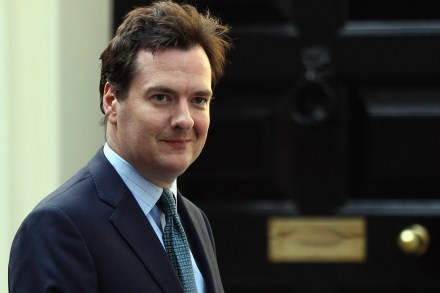
George Osborne had been expected to subject child benefits to tax. Instead he is to abolish them entirely for higher-rate taxpayers. I've spent this morning talking to friends, whose judgment I respect, who are furious about Cameron hitting the squeezed middle. I cannot agree, and here's why. We are not talking about the "squeezed middle" here – of the 30.5 million income tax payers in Britain, just 3 million pay the top rate of tax (figures here). They're the best-paid 10 percent – and I have never worked out why the tax of the average worker (who's on £22k) should be higher to afford the payment to those on twice as much money. Osborne reckons he will save £1 billion by this measure. If there are to be cuts, this strikes me as a fair cut.
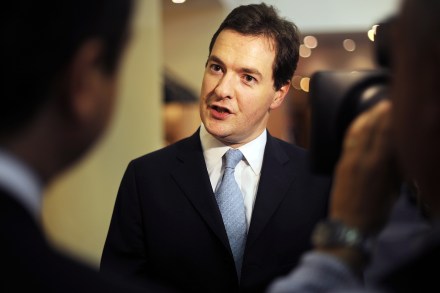
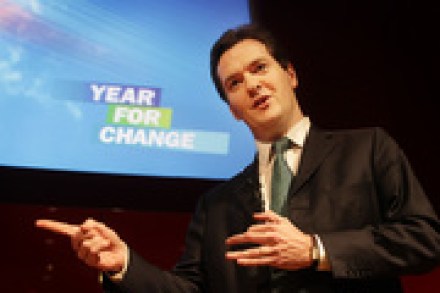
Osborne takes to the stage, armed with cuts

Rewind the tape to last year's Tory conference, and David Cameron was assuring us that, "It will be a steep climb. But the view from the summit will be worth it." Today, it falls to George Osborne to tell us more about both the arduousness off the ascent and the beauty of that view – although I expect that there will be a heavy empasis on the former. Already, the main passages are spilling into the papers and, as you'd expect, it's mostly cuts and debt. On that front, the main argument seems to be similar to that made by Nick Clegg in Liverpool: that the longer it takes us to pay down our debts, the more money we waste thanks to interest payments and the like. Or as Osborne will put it, "Delay now means pay more later. Everyone knows it's the most basic rule of debt.

OBR Watch

When Sir Alan Budd was head of the Office for Budget Responsibility, there was an insistent argument in opposition circles that the independent body was biased in favour of the coalition. Much of this cented around the OBR's growth predictions. How on Earth, came the question, can growth hit 2.3 percent next year and 2.8 percent the year after? Isn't that a bit optimistic in view of all the warnings about a double dip? Won't the cuts stifle growth? And so on and so on. A few months ago, I produced a graph which showed that, when compared to a range of independent forecasts, the OBR's growth predictions weren't really optimistic at all.

How Osborne and IDS reached agreement

I have found out a little more about the Universal Credit – and how the arguments over the summer were resolved. First, the backdrop. Money was always going to be a problem. This policy is about saving lives, not money. Right now, we pave the road to welfare dependency, creating a vacuum in the labour market that sucks in workers from overseas. Under Brown, the Treasury accepted this: cheap workers pay tax too, and as do companies who profit from them. Result: tax receipts up, but never fewer than 5 million on out-of-work benefits throught the boom years. The IDS plan was not sprung on Osborne. As I blogged a while ago, it was Osborne who suggested bringing him back – to implement this very policy.

Society 3, The State 0

Cameron and Osborne may just be about to pull off something incredible. This time last year, The Spectator ran a cover story about a new proposal which we could revolutionise welfare: the Universal Credit. It was an IDS idea: he’d sweep away all 50-odd benefits, and replace it with a system that ran on a simple principle – if someone did extra work, they’d get to keep most of the money they earned. It meant a bureaucratic overhaul, of a system that controls the lives of 5.9 million people. The resistance from HM Treasury, the architect of the tax credit system, was as fierce as it was predictable.

Double deficit

What's at the heart of the row over defence funding? George Osborne hinted at it today when he told the Telegraph that “frankly, of all the budgets I have seen, the defence budget was the one that was the most chaotic, the most disorganised, the most overcommitted”. The problem is that during the Labour years, various accounting scams were deployed to shunt costs further into the future - but this was not matched by resources. So they would, for example, delay an order by two years. There would be a price to pay for this delay, but it would be a cost that came after the election so Labour didn't mind. (One must remember that HM Treasury behaved disgracefully under Brown's instructions, concealing debt and adopting a 'scorched earth' strategy).

Labour’s historic mistake

I’ve already mentioned George Osborne’s interview with the Telegraph, but it certainly merits another. As Ben Brogan says, Osborne is in a rich vein of ‘election that never was’ form. As befits the inveterate schemer, Osborne’s tactical grasp is impressive. He is quietly vociferous about Labour’s ‘historic mistake’ in electing Ed Miliband. Revealing senior Tories’ continued respect for the electoral tenets of Blairism, he says: "They have chosen to move off the historic centre ground of British politics. I've seen more pictures of Neil Kinnock on television in the past week than I've seen in 20 years. That's old politics.

Fox, Osborne and Cameron engaged in Whitehall’s oldest battle

Tory on Tory is a brutal cock-fight when defence is concerned. After the leaking of Liam Fox’s now infamous letter and David Cameron’s measured retaliation, George Osborne has broken his silence. Making unspoken reference to the £38bn black hole in the MoD’s budget, Osborne tells this morning’s Telegraph that he was ‘not thrilled’ to learn of Fox’s ‘do we really want to cut defence this much letter’ and says that Labour left the MoD in ‘chaos’, signing Britain up to ‘expensive and pointless projects’. The press will run this as a conference Tory splits story.

Cameron needs to show that life is better under the Conservatives

The election of a new Labour leader means that proper politics has resumed. David Cameron now knows who he needs to beat to win the next election. As I argue in the magazine this week (subscribers), if the Tories are to secure a majority in 2015, they’ll need to do better among those in households with an income of thirty-odd thousand or so, what pollsters call the C1s. The last time the Tories won outright, they got 52 percent of the C1 vote—more than double Labour’s total. But in 1997, Labor and the Tories split this group evenly. The Tories have never fully recovered from this.  In 2010, the Tories garnered 39 percent with this group, a mere three percent swing since 2005.

The IMF delivers a boost for George Osborne

The proclamations of economists and economic bodies shouldn't be taken as the be-all-and-end-all of fiscal policy – for every one claiming that a decision is right, you can find another insisting that it is wrong. But the coalition will still be pleased by the influential International Monetary Fund's latest report, here. It begins: "The UK economy is on the mend. Economic recovery is underway, unemployment has stabilized, and financial sector health has improved. The government’s strong and credible multi-year fiscal deficit reduction plan is essential to ensure debt sustainability. The plan greatly reduces the risk of a costly loss of confidence in public finances and supports a balanced recovery.

A salesman for the cuts

One of the biggest problems facing the coaltion has been presentational: how to sell the cuts? In the absence of a coherent, vigourous message, the Balls school of economic thought has been allowed to grease onto the scene – to the extent that some polls have three-quarters of respondents rejecting the government's deficit reduction plan. But now, at last, signs that the coalition is getting into gear. It's a process which began last week, when Matthew Hancock – a new Tory MP and former adviser to George Osborne – highlighted falling interest rates in Parliament (column 606, here); a point he has been pushing around Westminster ever since. And today Hancock expands on it in an article for the Times (£).

The trouble with Cable’s posturing

What are we to make of the fact that No.10 gave the thumbs-up to Vince Cable’s bizarre anti-capitalist rhetoric today? “Capitalism takes no prisoners and it kills competition where it can,” he fumed – and you can argue that, technically, he is paraphrasing Adam Smith. But he has been in politics long enough to know what signal his speech sent out (and the reaction it would trigger). Mood music counts for a lot in politics, and in business. And the mood music from this government sounds like a bunch of politicians happy to tax the bejesus out of the high-paid - regarding them as ATM machines to be raided, rather than wealth creators to be welcomed. It's time to ask what harm all this posturing is doing.

Bonuses: a question of political economy

There is a reason why the coalition has used the Lib Dem conference to step up its rhetoric about the bankers and their bonuses. The coalition believes, rightly, that balancing the budget is a matter of political economy. It is acutely aware, and has been for some time, that the sight of banks paying out huge bonuses later this year just as the public sector begins to lay people off and cut services would be disastrous. This view is shared by everyone in the coalition from Cable to Osborne. Bumper bonuses would increase calls for new punitive measures against the banks and produce precisely the kind of political atmosphere that the more aggressive trade union leaders want.

Alexander’s arguments

Danny Alexander’s announcement of a £900 million clampdown on tax avoidance, evasion and fraud is designed to reassure Lib Dems that the coalition’s policies are fair, that it isn’t balancing the budget on the backs of the poor. In a deliberate echo of George Osborne’s comments about welfare, Alexander said that the years when people could treat tax avoidance and evasion as a "lifestyle choice" were over. This Alexander announcement is a preview of what we’re going to see at this conference, a series of sweetners to show the party that the Liberal Democrats are influencing government policy.

Pulling off a public finance rescue mission

This is the next of our posts with Reform looking ahead to the Spending Review. Earlier posts were on health, education, the first hundred days, welfare, the Civil Service, international experiences (New Zealand, Canada,Ireland) and Hon Ruth Richardson’s recent speech and selling the case for cuts to the public.   George Osborne was right to frame the forthcoming UK Spending Review as a once in a generation opportunity to reshape government.  While it is convenient to see the current fiscal debate as cyclical, the truth is that heavily indebted countries such as the UK have a structural problem rooted in the overreach of government.

Another difference of opinion on welfare?

For the briefest of moments, the welfare war seemed to have quietened down. But, this morning, a new front may have flared open. Answering questions from the work and pensions committee, Iain Duncan Smith has struck out against the figures for benefit cuts that emerged at the weekend. The Guardian's Haroon Siddique reports: "During questioning by the work and pensions committee, Duncan Smith was at pains to play down newspaper reports that he and Osborne were at loggerheads with each other. But when asked by committee chair Anne Begg about a variety of figures that had been 'bandied about' including the £11bn savings set out in the June budget and the £4bn, he responded: 'As with regards to figures like 4bn, I simply do not recognise that figure at all.

A Whitehall cabal has Fox by the short and curlies

The Defence Select Committee delivers a familiar litany this morning. The Strategic Defence Review (a structural reform of Britain’s defence establishment) is being driven by savings not threat, consultation has been insufficient and cuts will be implemented at terrifying speed. The committee’s report concludes that the review will be to the detriment of Britain’s defence capabilities. Liam Fox’s summer battle with Downing Street has been overshadowed by IDS’ belligerence. In truth Fox has already lost. The National Security Council, the Treasury and the Cabinet Office have put him in a strait-jacket and hijacked his review.

A Tory-Liberal pact is possible if the coalition lasts the distance

The outrider has returned to stables. Nick Boles MP, a one-time Cameroon confidante tipped for promotion, formally introduced the possibility of a Tory-Lib Dem electoral pact, it made a few cursory headlines and then David Cameron and Nick Clegg promptly denied any such intention. It had the appearance of the classic three-card trick. A formal alliance or non-aggression pact is highly unlikely unless the coalition survives to 2015. The government will collapse before then if enough Liberal Democrats believe its record is indefensible. However, if it doesn’t then the parties must defend their joint record and in doing so will offer a collaborative future. The alternative is absurd.

Cameron readies his forces

Carry on cutting – and carry on making the case for cuts. That's the message that David Cameron drilled into his ministers during a political session of Cabinet this afternoon. Paul Waugh has a typically precise account of what was said, and the Press Association has a decent round-up, but the key observation is just how forceful Cameron was in making his point. The government, he said, should take on the "vested interests" arguing against cuts – and the Budget was the right action taken at the right time. The PM, you sense, is limbering up for a fight. As Ben Brogan suggests over at the Telegraph, Cameron is right to hold the line. This is not a time for wavering at the chopping block, even if the public have their qualms about the bloodshed to come.

A worrying – but not disastrous – poll for the government

This morning's Times/Populus poll (£) will have supporters of the coalition grimacing into their cornflakes. The headline finding is bad enough, if rather familiar, with Labour closing the gap between themselves and the Tories to only two points. But what follows is worse. According to the poll, around three-quarters of voters reject the government's deficit reduction strategy – preferring, instead, what are loosely the approaches advocated by Labour and the unions. And, what's more, economic pessmism is arrowing upwards. The number of respondents who think "the country as a whole will fare badly," has risen by 13 percentage points since June. The number who think "me and my family will do badly" has gone up by 6 points.