George osborne

Fasten your seatbelts…

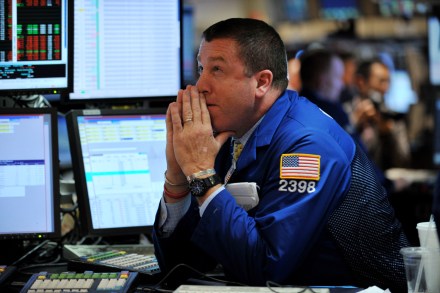
It has, to paraphrase Margo Channing, already been a bumpy night — and it's only going to get bumpier today. The latest news is how the Asian markets have trembled at what's happening in the West. Japan's main stock index is down 3.7 per cent. Australia's is down 4.2 per cent. Hong Kong's 5.3 per cent. And even oil futures joined in with the collective nosedive, which is continuing as the European exchanges open this morning. All of which adds to the catalogue of horror that was written yesterday. CoffeeHousers will read plenty of grim comparisons in the papers today, not least that yesterday's plunge in the Dow Jones was the worst since 2008.
Cable accentuates the coalition’s differences, but not without risk

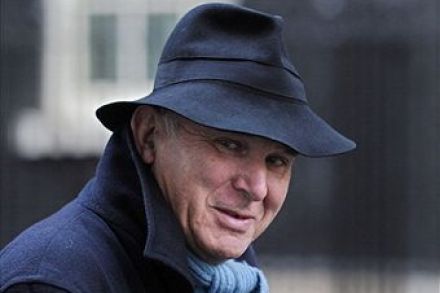
The Liberal Democrats are in something of a purple patch at the moment, dominating aspects of government policy in the media. Last weekend, Danny Alexander broke his usually modest mould to stand square behind the 50p rate, in contrast to Boris Johnson and George Osborne. The debate encapsulates the current vogue for the coalition partners to accentuate their differences. Today, enter Vince Cable pursued by a mansion tax. In an interview with the Telegraph, the Business Secretary concedes that the 50p rate is not a permanent fiscal instrument, but its removal (after 2015 when the income tax threshold has been raised to £10,000) will require a concession from the Conservatives.

An open letter to Will Straw about deficit reduction…

…or why the US cuts are actually faster than, and just as deep as, ours. Dear Will, We hope you don't mind us writing a letter-form response to your latest post on Left Foot Forward, which argues that the "coalition government's cuts are deeper and faster than the Tea Party's". But, as we see it, there are several problems with your figures which are easier to explain in a conversational format. Here they are, as best as we can express them: i) The first obvious problem comes when you say that Obama set out $83 billion of deficit reduction for 2012 in his March Budget. Actually, he didn't.

The IMF manages to please everyone

A bet-hedging sort of report into the UK's economy from the IMF today, which largely supports George Osborne's deficit reduction plan, but will also give some encouragement to his detractors. By way of a summary, here are the parts that might satisfy Osborne himself, as well as Vince Cable, Ed Balls and Mervyn King: The passage that the Chancellor will flash around Westminster comes on the very second page of the IMF document. "Strong fiscal consolidation is under way," it reads, "and remains essential to achieve a more sustainable budgetary position, thus reducing fiscal risks.

Which department could be replaced with a mathematical equation?

I answer the question in an article for the Times (£) today, in response to Francis Maude’s announcement yesterday. But for those CoffeeHousers who can't vault the paywall, here's the relevant passage: "I have been told of an internal report that makes the argument sublimely well. Before last year’s spending review, the Treasury asked a group of outside experts whether plans for a 40 per cent headcount reduction at the Department for Communities and Local Government were too ambitious. Their response? It wasn’t nearly ambitious enough. The staff cut ought to be at least 90 per cent. Responsibilities for fire prevention could be transferred to the Home Office; responsibilities for troubled families to the Education Department; responsibilities for .

Alexander rallies behind the 50p rate

Danny Alexander is usually the very model of collective responsibility: sober, unfussy and diligent, he sets about the coalition's work without ever causing a scene. Which is what makes his televised comments about the 50p tax rate earlier all the more striking. When pressed on the subject by interviewer Sophie Rayworth, the Chief Secretary to the Treasury was forceful in response. The government doesn't necessarily want to cut the rate, he suggested, and those who thought it would are inhabitants of "cloud cuckoo land". He went on: "We set out in the Coalition agreement, and it's something that we as Liberal Democrats pushed very hard for, that the Government's first priority in tax reductions would be tax cuts for people on low and middle incomes.

The good news story that Osborne wants you to hear

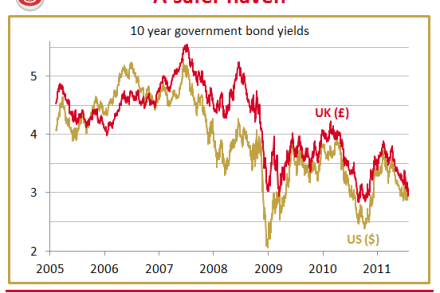
  There was much sly amusement earlier this week when George Osborne, responding to the latest growth figures, described Britain as "a safe haven in the storm". The idea that our high inflation, low growth economy might be a "safe" anything seemed, to many, a grotesque idea. But, in truth, the Chancellor may have had a point — and it's a point that he'll want to make again and again as the recovery stumbles on, and as other indicators fluctuate against him. What the Chancellor was referring to, I'm sure CoffeeHousers know, is the interest rates set by the markets on the UK bonds that fund our borrowing. Broadly speaking, the higher the rates, the less certain our creditors are that the Exchequer can meet its debts.

Boris to the fore

Politics has a big, blond hair-do today, with Boris wiff-waffing all across the airwaves. The Mayor of London has already, this morning, called on George Osborne to do more to cut taxes, specifically the 50p rate and national insurance. And he will be leading a series of events, throughout the day, to mark the fact that the Olympic Games are exactly one year away. The Aquatic Centre will be baptised, the medal designs revealed, and general celebration staged across the city. It's difficult not to see all this as part of Boris's re-election bid, and perhaps as a marker for his wider ambitions. Although London's Olympics have not been an unambiguous positive so far, they still give him a bigger and friendlier platform than most politicians will enjoy over the coming year.

Rengotiating the loan with Ireland

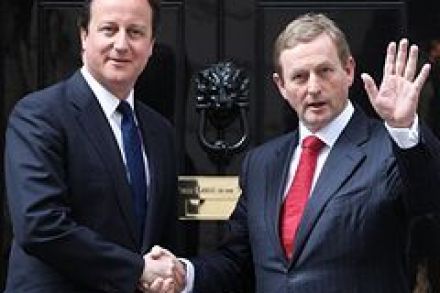
All eyes were on Greece at last week’s crisis summit in Brussels, but other indebted countries took advantage of Angela Merkel’s generous mood. In line with concessions made to Greece, the Irish secured a substantial cut in interest repayments on its bailout loan: the rate has fallen from 6 per cent to somewhere between 3.5 per cent and 4 per cent, and the loan period has been extended from seven to 15 years. This was a long-term goal of Enda Kenny’s government and the renegotiations are being heralded as a major victory. But the matter does not end there.

GDP grew by 0.2 per cent in Q2

Growth in the 2nd quarter was an anaemic 0.2 per cent, in line with recent predictions. Another headline is that manufacturing fell by 0.4 per cent, in line with global slowdown in the sector. Also, the ONS says that growth would have been 0.7 per cent if it weren't for the Bank Holidays, the fine weather and external economic factors. Now the political fun starts.

The Game of Growth

The release of the Q2 growth figures is still half-an-hour away, but Westminster is already on the boil. Much of the fuss and froth is because it's expected that the economy barely grew at all between April and June, or perhaps even shrank. But some of it is down to this Telegraph story, which suggests not just that "Downing Street aides [have] become increasingly impatient with a lack of growth," but that David Cameron's permanent secretary, Jeremy Heywood, recently held a meeting with Treasury and Business officials, and "read them them Riot Act". So is the longstanding friendship between Dave and George fraying at the edges? Benedict Brogan says not, but adds that things are far from rosy when it comes to their respective teams.

How to get from Plan A to Plan A+

Terrible events in Norway and the ongoing phone hacking scandal have kept the economy out of the media in the last couple of weeks. Coverage of the latest bail-out of Greece last week was comparatively muted, especially considering how important it is for the eurozone and, by implication, the UK. However, if the soothsayers are correct, it is unlikely that the release of the Q2 GDP figures tomorrow will fail to hit the headlines. When the Office for Budget Responsibility published their forecast for the UK economy in April they had forecast growth of 1.7 per cent this year, but signs are that tomorrow's Q2 data will raise stark questions about the likelihood of that level of growth. Indeed, many commentators have revised their UK GDP forecasts down in recent weeks.

What you need to know ahead of tomorrow’s growth figures

By now, George Osborne will have seen tomorrow's GDP figures and I suspect will be having a mid-afternoon whisky. Ed Balls will be warming up for his demands for a Plan B. "Austerity isn't working," he'll say — and will doubtless tour TV studios with his usual bunch of dodgy assumptions which he hopes broadcasters won't challenge. Here, as a counterweight, are a few facts and figures about austerity, how harsh it is, etc. — and the case for a Plan A+. 1. Where are the "deep, harsh" cuts? The Q2 GDP data will complete the economic picture for the first year of George Osborne's time in the Treasury. But where are the cuts? The Treasury produces figures for current spending each month. Here they are below, in cash terms and adjusted for CPI inflation.

Osborne’s summer of pain starts here

It has mostly been a weekend of terrible and grisly news, especially with the details emerging from Norway about Anders Behring Breivik and his murderous brand of politics. But there was also, behind it all, a slight rebalancing of the British political debate. After weeks of grandmaster-like focus on the phone hacking scandal, our politicians have started talking about the economy again. With the GDP growth figures for the second quarter of this year due out tomorrow, they're all trying to get their spin in early.

Getting a grip of the crisis

“I’m very worried, this building [the Treasury] is very worried and this government is very worried,” said George Osborne of the unfolding crisis in the Eurozone. In an interview with the FT, the chancellor goes on to say that he is in constant contact with his continental counterparts and urges them once again to “get a grip”. Eurozone leaders are meeting today to discuss further loans to Greece. Three options are being considered: first, an extension of the European Financial Stability Facility; second, private sector creditors re-lend money for a longer period and at a lower rate; third, impose a tax on banks to secure revenue for Greece.

Brooks comes to Cameron’s aid, perhaps unintentionally

Rebekah Brooks’s  appearance before the Culture Media and Sport Committee was largely uneventful. Most of the questions addressed her editorship of the News of the World, a period about which she cannot openly speak at present because of the criminal proceedings brought against her. However, Brooks was very keen to distance herself from David Cameron. Towards the end of the session, Tory MP Philip Davies asked of the stories circulating about her relationship with Cameron. She took the opportunity to deny them and set the record straight. “I have not visited David Cameron at Downing Street since he has become Prime Minister,” she said and then added that she had visited Tony Blair and Gordon Brown there on numerous occasions.

Might Gaddafi shunt Murdoch from the front pages?

Loyal Tories and government types are hoping that the media will soon move on from Murdoch. And the unusually heavy briefings emanating from George Osborne’s office last night were perhaps an attempt to shift the spotlight. But it will take a very gripping story to displace the phone hacking saga, especially if yet more has-been politicians shuffle back into public life to settle old scores with Murdoch. With the British press immersed in this tempestuous revenge drama and the whirl of hypocrisy that surrounds it, you wouldn’t guess that the euro has embarked on a 72 hour ordeal that may decide its future.   But, Rupert Murdoch’s mugshots could yet be superseded by those of Colonel Gaddafi.

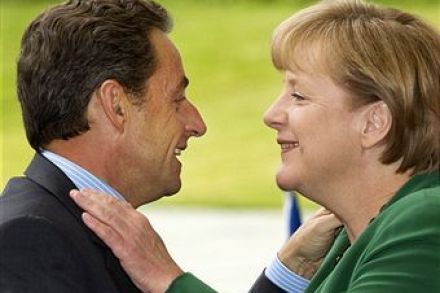
Osborne warns Eurozone that decisive action must be taken now

The UK government is becoming increasingly concerned about the situation in the eurozone and the fact that there does not appear to be the political will to address it. One government source complained to me earlier today that "unless they get their act together the eurozone are in danger of fiddling while Rome burns." Tonight, in a major departure from Britain’s previous softly-softly approach to the issue, George Osborne is issuing a statement calling on the eurozone countries to take "decisive action" to "prevent market uncertainty doing real damage to the world economy." The Chancellor calls on eurozone countries to: "...

The government urges Murdoch to drop the bid

The news that the government is to support Labour’s motion tomorrow calling on Rupert Murdoch and News Corporation to withdraw their bid for BSkyB is a victory for Ed Miliband — and a sign of how all political parties are rushing to distance themselves from Murdoch. George Osborne likes to say that the ‘first thing you have to do in politics is learn to count’ and the truth was that the government didn’t have the votes to block this motion even if it wanted to. Tory MPs had no desire to be seen to be voting for Murdoch in the present climate. But it is still remarkable that the Tories will join in urging Murdoch to withdraw his company’s bid to takeover BSkyB.