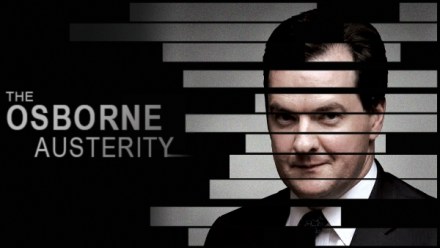
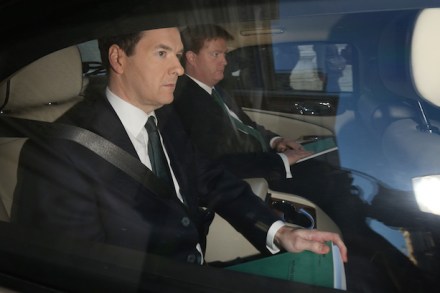
George osborne

Why must Grant Shapps spoil a good story with a porkie?

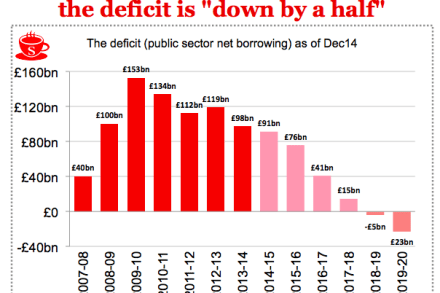
An email arrives from Grant Shapps, chairman of the Tory Party, listing the things the Coalition has achieved in four years.  Here they are:- Our economy has grown faster than any other major advanced nation (True - since last year) There are more people in work than ever before (True - and amazing) We've continued to reduce the deficit - down by a half since 2010 (Porkie) A million more children are in schools ranked 'good' or 'outstanding', getting a great start in life (True) We've delivered 2 million apprenticeships since 2010, helping young people learn a trade (True-ish.
Why is George Osborne’s aide paid £95,000? Because he’s worth it

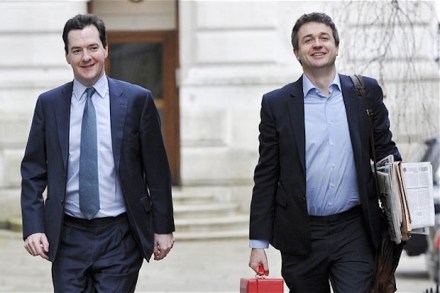
The Daily Mirror has today splashed on the fact that Rupert Harrison, chief economic adviser to the British government, has had a pay increase and is now on £95,000. Outrageous, says Kevin Maguire of the Mirror. I agree: he should be on far more. The British government is in the most almighty financial mess and the Chancellor of the Exchequer needs good advice. The national debt is soaring - by the time you finish reading this paragraph, it will have risen by more than £95,000. Money spent on someone who can help the government control this appalling situation would be money well spent. The Mirror says that Osborne has simply given his 'mate' a pay rise. God knows I have my criticisms of Osborne, but no one can accuse him of hiring his mates.

The fatal contradiction at the heart of the Tory message: there is no money, except for people we like.

Next year's general election looks like being the most gruesomely entertaining in years. Entertaining because no-one knows what is going to happen; gruesome because of the protagonists and the sorry misfortune that someone has to win it. All we can say for certain is that the Lib Dems will receive a doing. I still don't think that person will be David Cameron. In part for reasons previously detailed here. The single biggest thing preventing a thumping Labour victory is Ed Miliband. This is, it is true, a sturdy peg upon which the Tories may hang their hopes but it still may not prove sturdy enough. Not least because, by the standards they set themselves, this government has failed. It came to power promising to put Britain's finances in order.

Is David Cameron telling porkies on the deficit? His spokesman explains

As Fraser points out, David Cameron has gone from saying the deficit has been brought down by a third to claiming it has been halved, but with the often unspoken caveat that this is as a share of GDP. After the Prime Minister dropped this claim into his speech today without that very important small print, journalists grilled his official spokesman on whether Cameron was misleading voters at the afternoon lobby briefing. I’ve written up the transcript of our attempts to ask the same question many different ways. Journalist: When the Prime Minister said in his speech this afternoon the government had halved the deficit, did he qualify that in any way? Spokesman: How do you mean?

Why both the Tories and Labour now want a fight on the economy

Tomorrow, in a sign of how keen the Tories are to keep the political debate focused on it, both David Cameron and George Osborne will give speeches on the economy. Cameron will announce that he is bringing forward a scheme to offer first-time buyers under 40 a 20% discount on 100,000 new home. This scheme had originally been slated for the Tory manifesto but will now be up and running before May. Inside Number 10, they hope that this scheme will help demonstrate that there are tangible benefits for voters to sticking with the Tories and their long term economic plan.   Later on, Osborne will use an address in New York to challenge Ed Miliband on whether Labour would repay any of the national debt.

Jeremy Vine and the truth about government spending

Those who complain about the BBC (myself included) usually only refer to a small part of a massive and divergent operation. Nicky Campbell on Radio 5 is just superb – not a hint of bias in any of his breakfast show. Jeremy Vine, too, is pretty fair and balanced. He has just ran a report on the truth about public spending, asking if we are being deceived about debt. I was invited on to talk about it, as was Sir Simon Jenkins (who wrote about spending in the Guardian here). Our exchange, and the BBC package, can be heard here.

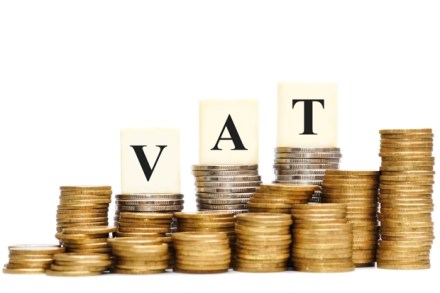
The tricks being played over a VAT rise

Today’s Treasury Questions was a bit odd, not least because neither George Osborne nor Ed Balls were there, so everyone seemed to be quite keen to get the thing over with. Labour’s latest line of attack is to force Treasury ministers into ruling out or obfuscating over whether or not a Tory government would put up VAT after the General Election. Here is the first exchange, between Shabana Mahmood and David Gauke: Shabana Mahmood: 'The Minister has failed to rule out another tax cut for the richest 1% of earners in our country. As he signalled in his answer, the Prime Minister has made £7 billion-worth of unfunded tax promises for the next Parliament.

We have a choice between competence and chaos, according to the Tories

Competence versus chaos—that’s what the Tory leadership want to frame the next election as a choice between. Hence George Osborne’s repetition of this phrase five times in one brief interview with the BBC’s Nick Robinson. The Tories want to make the voters think that they offer competence and everyone else chaos. As George Osborne puts it, ‘And it’s not just Liberal Democrats, it’s Labour, UKIP, you can put them all into the same mix. What they’re offering is a chaotic alternative of higher taxes, higher borrowing, a return to economic chaos.

Will Nick Clegg’s PMQs session highlight the tensions in the Coalition?

After being too busy talking to ‘normal people’ in Cornwall last Wednesday and missing previous PMQs presumably to do the same, Nick Clegg will not only be attending this Wednesday’s session, he’ll be taking it. David Cameron won’t be around because he’s visiting Turkey this week, and so the Deputy Prime Minister will step into his shoes. Today sees another rather tedious round of Coalition infighting in which the two parties remind everyone else that they’re separate. The Tory line seems to be that their partners are ‘all over the place’, with both George Osborne and Cameron using that phrase over the past couple of days. The Lib Dems want to talk about their different spending plans for the next parliament.

The Tories aren’t planning to run a £23 billion surplus in 2019/20

All the talk about the ‘colossal’ cuts to come if the Tories win re-election has been predicated on the assumption that the Tories are committed to running a £23 billion surplus in 2019/20. But this assumption is wrong. As David Gauke told Andrew Neil just now, ‘At the moment the OBR predicts that we will have a surplus of £23 billion, but we’re not making a commitment to the British people, that’s what the number will be in 2019.’ Instead, I understand — after extensive conversations with members of the Chancellor’s circle — that the Tories intend to start increasing spending in line with inflation once the Budget is back in surplus.

Coalition wars: What are George Osborne and Nick Clegg up to?

If the Coalition started cohabiting earlier this year, it has now moved into the phase where the two parties are posting mean things about each other on Facebook and trying to get the kids to take sides. George Osborne has a grump in today’s Sunday Times about the emphasis that the Lib Dems want to place on tax rises to plug the gap after the 2015 election. He writes: ‘The Liberal Democrats are now arguing with themselves, so it’s hard to work out exactly what they think. While they sign up to deficit reduction, they want more tax rises rather than spending cuts. But they shouldn’t pretend to people that the sums required can be achieved by their homes tax alone.

Should politicians grumble about awkward stories?

A lot of political types are very cross with the ‘biased media’ today. Ukip is currently the most aerated because some journalists ‘fabricated’ (which is today synonymous with ‘transcribed’) some remarks Nigel Farage made about whether or not restaurants are right to tell women to put napkins over themselves when breastfeeding. Number 10 is very angry with the BBC’s Norman Smith because he talked about the Road to Wigan Pier which is not an OK way of describing the public spending cuts still to come (but the IFS describing them as ‘grotesque’ and ‘colossal’ apparently is). Labour has been annoyed for months that journalists keep pointing out mistakes that Ed Miliband makes.

When a cricket ball cost Britain an heir to the throne

A fatal shot The sad death of Australian batsman Philip Hughes was a reminder that a cricket ball can kill. A blow on the cricket field may even have cost us an heir to the throne. — One of the earliest suspected victims was Frederick, Prince of Wales, the son of George II, who is first recorded as having played cricket in 1733 when he put up a team against Sir William Gage, in a match played on Mouley Hurst, Surrey. — In 1751, a few weeks after his 44th birthday, he was said to be suffering from an abscess in the chest caused by a blow by a cricket ball, or possibly a real tennis ball. He then caught a chill and developed pleurisy. He died on 31 March after the abscess burst.

The three Tory vulnerabilities Osborne is hoping to shut down

In the last few days, George Osborne has moved to close down three Tory vulnerabilities ahead of the election campaign. First, there was the decision to put another £2 billion into the NHS. Osborne has always believed that support for the NHS is the most important feature of Tory modernisation and this extra money has rather undercut Labour’s commitment to spend another £2.5 billion on the health service. The Tory hope is that this extra money, and the party essentially signing up to Simon Stevens blueprint for the NHS, will prevent health from becoming the major election issue that Labour need it to be. Second, Osborne has tried to neuter the appeal of the mansion tax.

The BBC is right to point out failure on debt. Osborne is wrong to complain about it

George Osborne has in the past year assembled a coterie of advisers to help him become more human, more stylish, thinner and more in touch with voters. But this morning it seemed he’d turned to his Cabinet colleague Iain Duncan Smith for media training before popping up on the Radio 4's Today programme, as the Chancellor quickly became tetchy when asked the ‘wrong’ sort of questions. He gets angry about 7 minutes in...

How HS2 has blighted my parents’ lives

Waiting to appear before a Commons select committee, my father turned to me. ‘This was not on my bucket list,’ he said. My father should be enjoying his retirement. Instead, he and my mother are still working full time in their seventies because they cannot sell their home due to the blight of HS2. And here they were now, about to present themselves to Parliament to petition the High Speed Rail Bill. Theirs is one of more than 1,900 petitions brought by people whose lives have been so adversely affected by the planned rail link that they will need to be heard in person by MPs before the Bill can be passed. Because of their age, I decided I would be the one reading a statement to the cross-party committee examining the effects of the Bill.

Cheap oil has finally arrived – and it looks like being a disaster

This oil price slump is turning into a ‘black swan’: one of those economic events that seem to come from nowhere with strange and unforeseen effects. As Brent Crude dips below $70 a barrel and Opec sits on its hands, major banks face losses on financings for US energy companies that must have looked like the safest borrowers in the field in an earlier phase of the shale gas boom. As the rouble plunges and the Russian economy implodes, anyone holding debt paper issued by a Siberian oil giant or a contract to build an oligarch’s superyacht may end up lighting the fire with it. The only thing that has barely flickered is the price of petrol at the pump, so consumers are feeling scant benefit.

Podcast special: a good Autumn Statement for George Osborne?

George Osborne appears to have delivered a successful Autumn Statement, but are there some dark secrets in the details? In this week's View from 22 podcast, Fraser Nelson, James Forsyth and I discuss the Chancellor's last major economic speech of this Parliament, the political consequences of the new measures announced and what it means for the next election.

George Osborne’s fact-finders come up trumps in the Autumn Statement

Osborne got his chance to audition for Number 10 today. He hasn’t the fluency and the synthetic chumminess of Cameron. And his emotional range is far narrower than the PM’s. He’s like Nigel Lawson, cool, uneasy, watchful. His brain-power is more than his head can bear and there’s a detached, arrhythmic otherness about him. He’s uncongenial, in the way a good Dr Who should be, but he can’t ad lib at the despatch box. If he’s interrupted he glances upwards, (with worried eyes and Nixon conk), and stares out, bewildered and a little frightened. With a script, and plenty of rehearsal, he has authority even though his basic mode is, ‘I told you so’. He does a good line in swotty, schoolboy scorn.