George osborne

George Osborne’s retreat on tax credits is genuine – and warmly welcome

Today, George Osborne stepped back from the brink. The Chancellor has reversed his calamitous plan to tear away tax credits from the working poor, and will instead phase in the new system so no one will lose out. And he has also abandoned his reserve plan: to pay for this by raiding Universal Credit. In other words, he has done precisely what The Spectator has been calling for him to do and, in his expensive U-turn, safeguarded the Conservatives’ right to be called the workers' party. I didn’t quite believe this when he first announced it; over the years a gap has emerged between what the Chancellor says in the chamber and what the small print of his budget reveals. But this really does seem genuine. It’ll cost him £3.

George Osborne falls into his own welfare cap trap

The political flourishes in George Osborne’s spending review were impressive. But how is the Chancellor doing when it comes to meeting targets set during previous political performances? Today the Office for Budget responsibility said that the welfare cap, which the Chancellor announced in 2014 as a trap for Labour, would be breached in three successive years. The OBR document reads: 'Our central forecast shows that the terms of the welfare cap are set to be breached in three successive years from 2016-17 to 2018-19, with the net effect of policy measures raising welfare cap spending in each of those years, and to well above the 2 per cent forecast margin in 2016-17 and 2017-18.

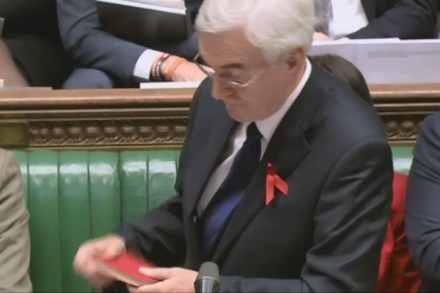
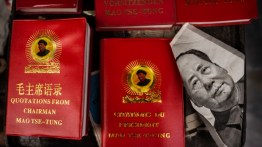
Did John McDonnell really think that quoting Chairman Mao would help Labour’s cause?

Preparing for the spending review, George Osborne must have written two speeches: his own, and the one he expected John McDonnell to make. He then clearly went through that Shadow Chancellor speech, ensuring that he'd crossed off every reasonably large line of attack. Tax credits cuts: reversed. More funding for social care and mental health (the latter in the form of a tax rise). No cuts to the police budget. As he announced this last, the Chancellor clearly enjoyed crushing poor Andy Burnham under his heel by pointing out that the Shadow Home Secretary had recommended a 10 per cent cut. George Osborne was clearly keen to make John McDonnell's job the most difficult job of any difficult Shadow Chancellor response to an economic statement.

Full text and audio: George Osborne’s 2015 Autumn Statement and Spending Review speech

Mr Speaker, this Spending Review delivers on the commitment we made to the British people that we would put security first. To protect our economic security, by taking the difficult decisions to live within our means and bring down our debt. To protect our national security, by defending our country’s interests abroad and keeping our citizens safe at home. Economic and national security provide the foundations for everything we want to support. Opportunity for all. The aspirations of families. The strong country we want to build. Five years ago, when I presented our first Spending Review, our economy was in crisis and there was no money left. We were borrowing one pound in every four we spent. Our job then was to rescue Britain.

Ministers seek spending review sanctuary in international development budget

One of the things to look out for in today’s spending review is the number of spending pots that have suddenly become very relevant to the international development scene. A number of Secretaries of State for unprotected departments have worked out that the best way to save some of their budgets from being slashed is to count them as overseas development spending, which therefore means they don’t need cutting. One of the reasons ministers are doing this is that the decision to continue with ring-fencing for politically important spending areas such as international development, pre-16 education and the NHS places a huge burden on the other unprotected departments. That’s quite obvious, but the lopsided nature of the state will become even more obvious today.

Autumn Statement and Spending Review 2015: what to expect

George Osborne will take to the Dispatch Box at 12:30pm today to deliver this year’s Autumn Statement — a mini-budget on the Treasury’s latest plans for spending and taxation. The Chancellor will also announce the results of the Spending Review, which will outline the cuts to departmental expenditure required to clear the deficit before 2020. Here’s what we already know about the Chancellor's big announcements today. ‘The biggest housebuilding programme since the 1970s’: Today’s FT reports that housing will be a key component of the Autumn Statement, with the Chancellor promising to build 400,000 new homes in England and shifting public subsidies from renting to buying.

Portrait of the week | 12 November 2015

Home David Cameron, the Prime Minister, outlined four changes he sought in Britain’s membership of the EU. He wanted to protect the single market for Britain and others outside the eurozone; to increase commercial competitiveness; to exempt Britain from an ‘ever closer union’; and to restrict EU migrants’ access to in-work benefits. Mr Cameron put the demands in a letter to Donald Tusk, the President of the European Council. David Lidington, the Europe minister, said that others in the EU could put forward ‘alternative proposals that deliver the same result’. In a speech to the Confederation of British Industry, Mr Cameron had said: ‘The argument isn’t whether Britain could survive outside the EU; of course it could.

Why I’m not talking bunkum

When George Osborne travelled to China in September, he took with him gifts of British artistic and cultural enterprise. He announced major projects on Shakespeare, Hockney and British landscape painting. It is British creative talent that appeals to China and the world. For how long will the Chancellor and his successors be able to do this?  For how long will we be able to promote abroad our cultural and creative talent, when at home they are being starved? The Chancellor understands the value and importance of the arts, but sadly others remain unconvinced. In an article last week Toby Young talks of ‘bunkum’ coming from the arts sector about the failure to give the arts a proper place in our education system.

George Osborne and the death of Tory idealism

The kindest way to treat your enemies is to hate them. Hate them and you don’t understand them or their appeal. Hate them and you cannot see their own doubts and divisions. The opponents of Conservatives see them as greed-driven monsters, concerned only with helping the rich and middle-class. They are so tawdry, so lacking in idealism, they make you hate your own country.

Michael Gove has a rare opportunity to reform the prison system. Will he take it?

The Chancellor announced this morning that he will sell off old Victorian jails, which are on prime land for housing development, and replace them with a series of new prisons. The decision to sell off old prisons is a relatively easy one to take. The old prison estate in London is worth a fortune, is expensive to maintain, and new prisons can be run more efficiently. What’s more, prison is notoriously bad at rehabilitating offenders and protecting the public – as nearly half of offenders go on to commit another crime within a year of being released. The harder decision for the government is: what should replace the old prisons?

If Iain Duncan Smith resigns over Osborne’s strivers tax, he’ll endanger his own legacy

Yesterday, the Daily Telegraph disclosed that George Osborne was planning to open a second front in his rather bizarre confrontation of the working poor by raiding Universal Credit, the government's new welfare-to-work scheme. Today, the Times reports that Iain Duncan Smith might resign if this goes ahead. Friends of Mr Duncan Smith escalated the row, saying that he would quit rather than carry out cuts he believes would wreck universal credit. “The Treasury have come after UC [universal credit] at every fiscal event and Iain has made clear every time that this is a red-line issue for him. That is the case now as it has been in the past,” one said.

Does George Osborne really want to make himself the scourge of the strivers?

Without George Osborne, we’d probably be living under Prime Minister Ed Miliband right now. His value to the government goes far beyond his brief as Chancellor; he is across most departments most of the time. But as Chancellor, he is judged by the success (or otherwise) of his Budgets – which is why he is now in a moment of great danger. His love of complexity has come to threaten not just his own reputation, but that of the Conservative Party too. Sometimes, Osborne is so clever that he can be downright stupid: This is one of these times. In my Telegraph column today, I say that Osborne is currently planning to soften – but not abandon – his tax credit cuts programme.

The Spectator’s notes | 5 November 2015

It is good to learn that the current management of the V&A want to reverse their predecessors’ lack of interest in Margaret Thatcher’s clothes. The museum’s original refusal showed a lack of imagination about how women have tried to gain greater power in a man’s world, and how clothes tell this story. Museums love to have suits of medieval armour. They reveal the amazing combination of defensive utility and elegant display which the age required. Even better if the armour was worn by a great warrior on a great occasion, like the Black Prince at Crecy. Mrs Thatcher’s clothes were her armour on her fields of battle — in Parliament, on television, in Moscow, at her party conference after the Brighton bomb. They helped her win.

Portrait of the week | 5 November 2015

Home The all-party Foreign Affairs Committee urged David Cameron, the Prime Minister, not to press ahead with a Commons vote on British air strikes against Islamic State positions in Syria. At its conference, Scottish Labour adopted a policy of opposition to Trident renewal, though Kezia Dugdale, its leader, remained in favour, while the Labour party in the United Kingdom as a whole favoured retaining the nuclear deterrent, though its leader, Jeremy Corbyn, opposes it. Britain was smothered in fog, except in Wales, where temperatures on 1 November reached a record 22˚C. A man had his ear bitten off in a pub in Aberystwyth on Halloween.

Five solutions for avoiding cuts to tax credits

While the Tories are still thinking about how to solve their tax credits quandary, the Resolution Foundation has come up with a simple solution: the cuts need to be reversed. In a new report out today, the think tank says any of the proposals for ‘lessening the impact of families during the transition’ (in the words of George Osborne) — such as tax cuts, childcare support, raising the minimum wage, gradually introducing the reforms and new measures to protect existing claimants – are still going to hit low-income families hard and the only way of helping them is to reverse the most punitive elements of cuts. Instead, the Resolution Foundation suggests five ways to raise the funds so the cuts don't need to happen.

Cameron’s Syrian stew

[audioplayer src="http://rss.acast.com/viewfrom22/civilwarinthecatholicchurch/media.mp3" title="Fraser Nelson and Isabel Hardman discuss whether MPs will ever vote to bomb Syria" startat=864] Listen [/audioplayer]David Cameron doesn’t do regret. It is not in his nature to sit and fret about decisions that he has taken and can now do nothing about. But there are still a few things that rankle with him. One of those is the House of Commons’ rejection of military action in Syria two years ago. This defeat was a personal and a political humiliation for Cameron. For months, he had been pushing for action against Assad. President Obama had finally accepted that something must be done following the Syrian regime’s use of chemical weapons.

George Osborne adds meat to Britain’s EU reform demands

George Osborne is speaking in Germany today, where he will apparently tell a business conference that Britain does not want ‘ever-closer union’ and the other EU member states will have to respect and work with this, if they don’t want to see a Brexit: ‘Remain or leave, is the question our democracy has demanded we put because, quite frankly, the British people do not want to be part of an ever-closer union. ‘We want Britain to remain in a reformed European Union, but it needs to be a European Union that works better for all the citizens of Europe - and works better for Britain too. It needs to be a Europe where we are not part of that ever closer union you are more comfortable with.

Osborne’s ‘living wage’ will help richer households the most

Last week’s tax credit debacle has highlighted how even well-informed people believe that the £9 minimum wage (misleadingly dubbed 'living wage' by the government) is a progressive measure that will help the poorest the most. The low-paid are being hit by tax credit cuts, it's argued, but don't worry, soon they'll get a £9 minimum wage! In fact, the minimum wage only affects the lowest 4pc of workers, and a surprising number of them are second earners in wealthier households. So the biggest cash gains will go to the richest households.