George orwell

Cabbages and kings

From our UK edition

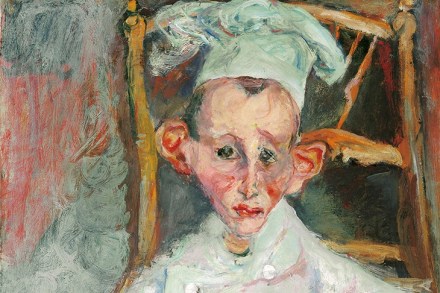
The first pastry cook Chaïm Soutine painted came out like a collapsed soufflé. The sitter for ‘The Pastry Cook’ (c.1919) was Rémy Zocchetto, a 17-year-old apprentice at the Garetta Hotel in Céret in southern France. He is deflated, lopsided, slouch-shouldered, in a chef’s jacket several sizes too big for him. His hat is askew, his body a scramble of egg-white paint. Soutine painted at least six cooks in their kitchen livery. In their chef’s whites they look like meringues that have not set (‘Pastry Cook of Cagnes’, 1922), îles flottantes that do not float (‘Cook of Cagnes’, c.1924), and, in the case of the ‘Little Pastry Cook’ (c.
Do we give a hoot?

From our UK edition

‘There is room for a very interesting work,’ Gibbon observed in a footnote, ‘which should lay open the connection between the languages and manners of nations.’ The manners of the peoples of the United Kingdom and of the United States are very different, although not always in the way that received prejudices have it: any English visitor to America must be struck by how much politer most Americans are than the average run of his compatriots. But The American Language, as H.L. Mencken called his great book, has developed in a way that isn’t always dainty. It has a vigor and color of its own, and a rich vocabulary which has combined with the central advantages English already possessed.

Prophesying doom

From our UK edition

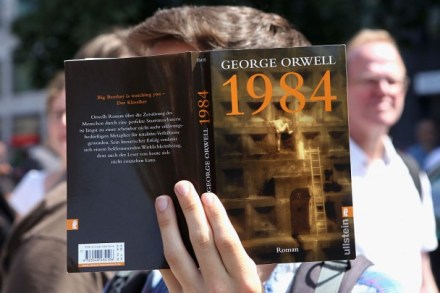
Boualem Sansal’s prophetic novel very clearly derives its lineage from George Orwell’s Nineteen Eighty-Four. A totalitarian surveillance state, a fundamentalist religious autocracy, is portrayed as being totally intolerant of free-thinkers. This is a powerful satire on an Islamist dictatorship. It is unsurprising that Sansal’s writings are censored in his native Algeria. The religious structure of the political state is familiar. The one true god is Yolah and his prophet or ‘Delegate’ is Abi. Abi’s book, the Gkabul, is the foundation of the religion; it is sacrosanct and immutable. Places of worship are mockbas and the nation is named Abistan after the true disciple. There are nine calls to prayer each day.

Thirtysomething blues

From our UK edition

If ever there was a book for our uncaring, unsharing times, it is Gwendoline Riley’s First Love, in which Neve, a woman in her mid-thirties, struggles with a truly awful family and with the men in her life, while trying to make a career as a writer. That latter point might suggest some kind of bildungsroman approach, but in fact the meat of First Love is in its rich character depictions, from which Riley teases out a series of painful but exquisitely comedic episodes. Neve’s father is a crude, self-styled ‘socialist’, full of class resentment and personal bitterness, while her pretentious mother, now remarried to a condescending Sunday painter, is so utterly self-absorbed that she is blind to Neve’s difficulties, forever complaining about her own lot instead.

A very special relationship

From our UK edition

You learn startling things about the long entanglement of the British with Spain on every page of Simon Courtauld’s absorbing and enjoyable new book, which is not a travelogue but a collection of historical vignettes arranged geographically. Did you know, for instance, that the first Spanish football team was founded by two Scottish doctors working for Rio Tinto in Huelva, and that in 1907 a team of seminarians from the English College in Valladolid defeated one representing Real Madrid? Or that the first visit by a reigning British monarch to Spain occurred when Queen Victoria went to have lunch with Queen Maria Cristina at the Aiete Palace in San Sebastián, travelling by train from Biarritz and returning the same afternoon?

Gin and boiled cabbage with George Orwell

From our UK edition

The Orwellian past is a foreign country; smells are different there. Pipe smoke and carbolic, side notes of horse dung and camphor — and that most inescapable odour, the ‘melancholy smell of boiled cabbage and dishwater’ seeping under a parishioner’s front door in A Clergyman’s Daughter. In Nineteen Eighty-Four, too, the hallway of Victory Mansions ‘smelt of boiled cabbage’. That was the quotidian stench of my childhood; long gone now, both the cabbage and the childhood. When Professor John Sutherland began re-reading Orwell after losing his sense of smell three years ago, the old familiar writings seemed ‘interestingly different’, their olfactory obsessions suddenly more conspicuous.

My big fat Gypsy fortune

From our UK edition

In his latest documentary for the This World series, the Romanian film-maker Liviu Tipurita could have been forgiven for treading carefully — and not just because it meant him entering the world of organised crime. After all, his previous film in the series, the uncompromisingly titled Gypsy Child Thieves, was ferociously denounced by Roma groups for showing how some Roma parents send their children into European cities with strict instructions to beg and steal — the charge being not that this was necessarily untrue, but that it might confirm ugly prejudices. So how would Tipurita tackle the equally awkward facts behind The New Gypsy Kings (BBC2, Thursday)?

No, thank you, Officer, I will not think before I speak

From our UK edition

As my daughter was preparing for her AS level exam on 1984 this week, George Orwell’s dystopian classic loomed back into a news headline: 'We are not the Thought Police, Chief Constable Tells Government'. Leicestershire chief constable Simon Cole, who’s in charge of the anti-radicalisation Prevent programme, told the press that the Government’s new counter-extremist and safeguarding bill risked asking the police to dictate “what people can and cannot say”. The top cop was adamant that “We absolutely don’t want to be the thought police.” Well, (to borrow from another literary classic, Evelyn Waugh’s Scoop): Up to a point, Lord Copper. The police may feel uncomfortable about being tasked with explicit political censorship.

Labour’s England problem

From our UK edition

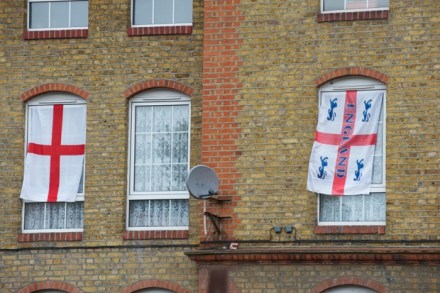
In the window of a council house on a working-class estate in Exeter was a sticker bearing the cross of St George and a simple warning: ‘If this flag offends you, why not consider moving to another country?’ For some canvassers working on Labour MP Ben Bradshaw’s 2015 campaign, such a symbol naturally meant the dreaded ‘A’ on the canvas sheet: ‘Against Labour’. In fact, it was a household of solid Labour voters — supporting a party far too often offended by the flag. The truth is that the Labour party has an English problem. While members might just about embrace Britishness, too many feel queasy about Englishness — with all those connotations of ethnicity and chauvinism.

It will take more than Labour’s ‘inquiry’ to deal with the left’s anti-Semitism problem

From our UK edition

Anyone concerned about anti-Semitism in the Labour Party should welcome the appointment of Shami Chakrabarti, the former head of Liberty, to lead an internal inquiry into the matter, but it’s a little late in the day to be addressing this issue. And will the inquiry’s terms of reference allow her to investigate the leader of the party? The Jewish Chronicle drew attention to Jeremy Corbyn’s links to a rogues gallery of “Holocaust deniers, terrorists and some outright anti-Semites” back in August of last year. Among other dubious acts, Corbyn donated money to an organisation run by Paul Eisen, a self-confessed Holocaust denier who boasts of links to the Labour leader dating back 15 years.

Polly’s pleb adventure

From our UK edition

Down and Out in Paris and London is a brilliant specimen from a disreputable branch of writing: the chav safari, the underclass minibreak, the sojourn on the scrapheap that inspires a literary monument. Orwell’s first book was turned down by Faber boss T.S. Eliot, who received the script under its original title, Confessions of a Dishwasher. New Diorama’s dramatisation brilliantly captures the raffish sleaziness of Paris in the 1920s. Orwell’s crew of thieves, parasites and drifters come across as comradely and charming in this magnificently squalid setting. The austere lighting and the ingenious stage effects are done with tremendous economy. There are flashes of bleak humour too.

Long may we laugh at our absurd demagogues

From our UK edition

In Reflections on the Revolution in France, Edmund Burke warned that ‘pure democracy’ was as dangerous as absolute monarchy. ‘Of this I am certain, that in a democracy the majority of the citizens is capable of exercising the most cruel oppressions upon the minority whenever strong divisions prevail,’ he wrote. He compared demagogues to ‘court favourites’ — gifted at exploiting the -insecurities of the powerful, whether the people or the monarch. For Burke, the risk of democracies being captured by demagogues then degenerating into tyrannies was a good argument against universal suffrage.

The winged rabbit who made me a Tory

From our UK edition

His father’s dental cast, writes Graham Greene near the beginning of The Power and the Glory ‘had been [Trench’s] favourite toy: they tried to tempt him with Meccano, but fate had struck’. Trench is a dentist, trapped by his chosen profession in a godforsaken Central American hellhole. Greene ponders the way, when we are very young, that chance events, objects or people may become father to the man. ‘We should be thankful we cannot see the horrors and degradations lying around our childhood, in cupboards and bookshelves, everywhere.’ Too true. Pookie made me a Tory. My new copy of Pookie Puts the World Right has arrived. I’d lost the old one, but tracked down another on the internet.

Among the snobs, slobs and scolds

From our UK edition

The author of this jam-packed treasure trove has been a film critic at the New York Times since 2000 and is also professor of film criticism at Wesleyan University. As if these platforms weren’t enough, he’s now written a book about the tangled worlds of films, books, music, paintings and criticism, dragging in Aristotle, Pope, Plato, Matthew Arnold, Isaiah Berlin and millions of others — but not, alas, my former next-door neighbour, the wonderfully controversial Brian Sewell. Crammed in alongside George Orwell’s ‘All writers are vain, selfish and lazy’ and H. L. Mencken’s ‘Literature always thrives best in an atmosphere of hearty strife,’ the author’s own views often hit hardest.

Mr Spock and I

From our UK edition

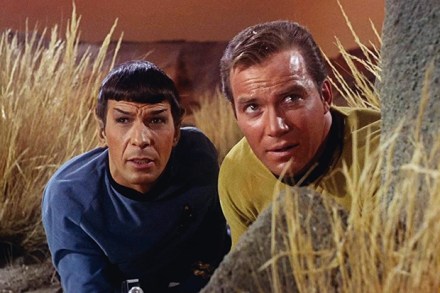
For a show with a self-proclaimed ‘five-year mission’, Star Trek hasn’t done badly. Gene Roddenberry’s ‘Wagon train to the stars’ is celebrating its 50th anniversary, although, as Marcus Berkmann’s entertaining and irreverent history points out, things could have been very different. Roddenberry’s initial idea was for a troupe of disparate 19th-century adventurers to explore the undiscovered corners of the New World in a grand airborne dirigible. While the prospect of Leonard Nimoy arching an eyebrow in a flimsy, flying gondola is irresistible, it’s hard to imagine such a concept proving as enduring as Roddenberry’s eventual brainchild.

A good editor and a good man

From our UK edition

Before embarking on this book, Jeremy Lewis was told by his friend Diana Athill that his subject, the newspaper editor and philanthropist David Astor, was too ‘saintly’ for a lively biography. As a publisher, she had worked on an earlier authorised tome, and thought she knew. Lewis, and Astor, proved more resilient. There are always column inches in a well-connected plutocratic clan such as the Astors. And Astor’s mother, Virginia-born Nancy, was the gold-plated battle-axe who made Cliveden, the family house in Buckinghamshire, the centre of 1930s appeasement. The story is really how Astor (born in 1912) took on his Christian Scientist mother, threw off the trappings of privilege, and became the owner and editor of the Observer during its mid-20th-century heyday.

Putting Germany together again

From our UK edition

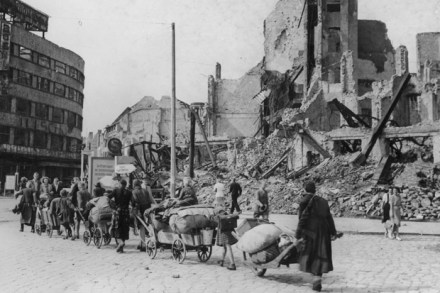
The purpose of Lara Feigel’s book is to describe the ‘political mission of reconciliation and restoration’ in the devastated cities of Germany after 1945 (though no politicians were directly involved). The chief needs of the shattered population at the time were, of course, practical: food, water, sanitation and the reconstruction of buildings. But a vital supplementary effort was made to address what was left of German culture and history after the crimes and falsifications of the Nazis. The idea was that the arts should revive an alternative, peaceful and civilised way of life in the ruins of the country.

The heavens are falling

From our UK edition

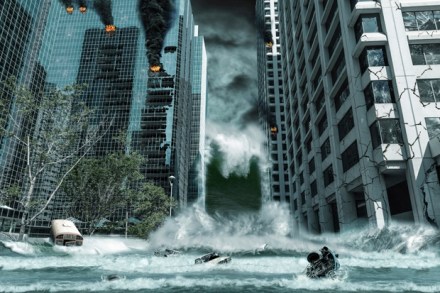
The dystopian novel in which a Ballardian deluge or viral illness transforms planet Earth has become something of a sub-genre, and Clare Morrall’s astute and vigorously imagined novel follows on from the best of them, such as Margaret Atwood’s MaddAddam trilogy and (most recently)Emily St John Mandel’s Station Eleven and Antonia Honeywell’s The Ship. Intriguingly, the future that Morrall imagines very much resembles the past. Following 50 years of climate catastrophe, and the spread of the population-depleting Hoffman’s disease, the only hope for humanity’s survival is to find ways of ‘living with the weather’, or learning ‘skills that don’t depend on failing technology’.

Scratching a living

From our UK edition

John Gross’s The Rise and Fall of the Man of Letters: English Literary Life since 1800, a standard text for anyone set on a life of writing about books, was intentionally truncated, ending its chronology before Gross’s own time of eminence. Two decades after the book’s publication in 1969, Gross explained in a new afterword that he had not wanted to comment on his peers and colleagues, for fear of misunderstanding or offence. A perfectly justifiable approach, but it made the book uncomfortably tantalising for those who prefer their gossip to be at the expense of the living. The Prose Factory is dedicated to Gross, and partially overlaps with The Rise and Fall, beginning in 1918.

British universities have a duty to defend the ‘unsafe’ space

From our UK edition

In the ever-noisier debate about campus censorship, one party has been noticeably silent: the universities themselves. Last week, the journalists Julie Bindel and Milo Yiannopoulos were forbidden to debate (on the topic of free speech) by Manchester Students’ Union. Manchester University made no comment. The week before that, Oxford’s SU banned from Freshers’ Fair copies of a student magazine designed to ‘publicise ideas people are afraid to express’; again, the university stood back. Nor did Warwick University intervene when the secularist Maryam Namazie, in the same week, was disinvited by Warwick SU. (After an outcry, they shamefacedly un-disinvited her.) Universities seem to assume that students should be left to sort out these kerfuffles by themselves.