George orwell

Why I left

From our UK edition

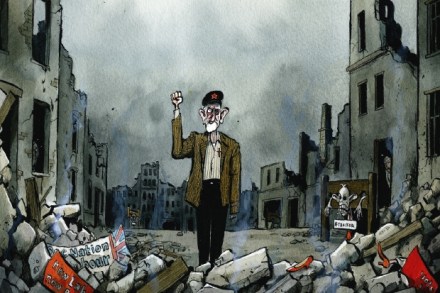
[audioplayer src="http://rss.acast.com/viewfrom22/thedeathoftheleft/media.mp3" title="Nick Cohen and Fraser Nelson discuss the death of the left" startat=32] Listen [/audioplayer]‘Tory, Tory, Tory. You’re a Tory.’ The level of hatred directed by the Corbyn left at Labour people who have fought Tories all their lives is as menacing as it is ridiculous. If you are a woman, you face misogyny. Kate Godfrey, the centrist Labour candidate in Stafford, told the Times she had received death threats and pornographic hate mail after challenging her local left. If you are a man, you are condemned in language not heard since the fall of Marxist Leninism.
Eastern airs

From our UK edition

On Private Passions this week the writer Amitav Ghosh gave us a refreshingly different version of what has become a Radio 3 staple. No Mozart, Mendelssohn or Monteverdi for Ghosh, who speaks five languages including Arabic and Bengali, was born in Calcutta and has lived in Delhi, Oxford, Alexandria, Brooklyn and Goa. Instead, his musical choices were all about fusion and cultural exchange. Perhaps most surprising was an ‘Oriental Miscellany’ from the late 18th century, played on the harpsichord and sounding initially quite baroque until you realised that the fingering was much more complex, more layered, infinitely more interesting. The composer William Hamilton Bird had for the first time given Hindustani folk tunes a Western notation.

Fighting talk | 17 September 2015

From our UK edition

If there’s one thing scarcer than hen’s teeth in serious choreography nowadays, it’s a light heart. When was the last time we had something jolly created in the artform that brought us La Fille mal gardée, Coppélia and Les biches? Still, the first week of the start of the dance year was all good stuff, if sombre (and Les Ballets Trockadero de Monte Carlo are over from New York at the Peacock right now, thank heavens). English National Ballet’s Lest We Forget bill of new ballets was made last year for the start of the first world war centenary, but deserved repeating as a demonstration of serious ballets by accomplished choreographers. War ballets tread a fine line between pacifist drool and emotional catharsis.

The perfect pub

From our UK edition

Whenever one of those news stories appears about how many pubs have been forced to close in the last year, I always think of George Orwell. He would have had the correct reaction: lots of pubs are forced to close because they’re terrible. Yes, the pub is a wonderful British institution, with a long and noble history — but that doesn’t mean that any individual pub has a God-given right to stay open forever. If a landlord waters down his beer and scowls at his customers, as plenty of them do, they’ve only got themselves to blame when the bailiffs come knocking. We know Orwell had strong opinions on the subject because he wrote an article about it, setting out the qualities of the perfect pub, a sadly mythical place he called the Moon Under Water.

Isis aren’t the only ones guilty of censoring the past

From our UK edition

Aside from reports about terrorism, war and the Vatican cosying up to Naomi Klein, few news stories this year have upset me as much as the ones about TV Land cancelling re-runs of The Dukes of Hazzard. TV Land, an American cable channel, announced this week that it will stop showing the oh-so-1980s TV show about the Duke boys and their sheriff-dodging antics in the state of Georgia, because the car they drove — a 1969 Dodge Charger — had the Confederate flag painted on its roof. And following Confederate fan Dylann Roof’s massacre of nine black worshippers at a church in South Carolina, the Confederate flag has become object non grata, verboten, a symbol of evil whose existence we mustn’t tolerate.

Letters | 2 July 2015

From our UK edition

How to fix Detroit Sir: When I last flew over my native Detroit five years ago, vast tracts of it still resembled Machu Picchu. From the ground, it was little better; in what had been a prosperous Italian-American neighbourhood when I lived there in 1964, there were only five houses left standing. Stephen Bayley (Arts, 27 June) marvels that ‘You could buy an entire house for $10,000’ — but in truth the taxes needed to support Detroit’s notoriously corrupt governments are so high that you can’t give them away unless they are in one of the few islands colonised by the middle classes. Indeed, the city filed for bankruptcy in 2013, with debts estimated at around $20 billion. I have no problem with gentrification, and I’ve done a fair bit of it myself.

Diary – 7 May 2015

From our UK edition

I am writing a play about Dr Johnson and his Dictionary. It will be performed in Scotland later this year. Five out of the great man’s six helpers were Scots (the only Englishman, V.J. Peyton, was considered a fool and a drunkard) and it’s timely to think of all those Scotsmen working away to consolidate the English language while their descendants try to define the general election. As a fully functioning Willie (‘Work in London, Live in Edinburgh’), I am startled by the zeal with which the SNP plans to take its revenge on Westminster after a decisive ‘no’ vote in the referendum.

Why are we getting fat while exercising so much? Try reading George Orwell

From our UK edition

Last week I mentioned a widely reported article in the British Journal of Sports Medicine which claimed that ‘physical activity does not promote weight loss’. The article was taken down by the journal last week due to 'an expression of concern'. It remains offline as I write this, but the controversy rumbles on. At the risk of further upsetting the low-carb community (who seem particularly antagonistic to the doctrine of 'calories in, calories out'), I am returning to it today. Let's start by looking at a series of blog posts by Jason Fung of Intensive Diet Management that have been doing the rounds on social media. He, too, argues that 'there is no measurable association between obesity and physical activity'.

What Samsung’s new TVs owe to Jeremy Bentham

From our UK edition

Watching brief Samsung warned users of its voice-activated televisions that what they said in front of the TV could be transmitted to other people. The story attracted comparison with the telescreens in George Orwell’s Nineteen Eighty-Four, but the principle of keeping a population under control by surveillance was foreseen a century earlier by Jeremy Bentham. — In 1791 he came up with the idea for a Panopticon, a circular prison with one-way observation holes which would allow a single gaoler to patrol several hundred prisoners, none of whom could tell whether they were being watched at any one moment. — Bentham saw the government’s eventual rejection of the scheme as ‘sinister’, a word now more likely to be used to describe the idea itself.

If we want to tackle anti-Semitism we must challenge hate speech, not censor it

From our UK edition

One month on from the Charlie Hebdo massacre, free speech is still under attack. The outpouring of public revulsion at the bloody silencing of ‘blasphemous’ cartoonists after the attack was inspiring. It was a visceral display of support for the right to speak one’s mind – as crudely, offensively and blasphemously as one chooses – that has been absent for some time. But deep-rooted ambivalences have remained – and now these look to be exploited by policymakers looking to institute blasphemy laws of their own. When it comes to cracking down on aberrant ideas, Europe has long been leading the way. Restrictions on hate speech are in place across Europe.

Page 3 was harmless. Here’s why I’ll miss it

From our UK edition

‘I for one would be sorry to see them go,’ wrote George Orwell. ‘They are a sort of saturnalia, a harmless rebellion against virtue.’ He was writing about the seaside postcards of Donald McGill in 1941, but his defence of them and their ‘enthusiastic indecency’ could equally well apply to Page 3. Orwell’s argument was that McGill’s caricatures of women, ‘with breasts or buttocks grossly over-emphasised’, gave expression to ‘the Sancho Panza view of life’. There’s a fat little squire in all of us, he thought, although few of us are brave enough to admit it. ‘He is the unofficial self, the voice of the belly protesting against the soul,’ he wrote.

The changing meaning of ‘prolific’, from Orwell to the Premier League

From our UK edition

I read somewhere recently of a Soho artist who was a ‘prolific drinker’. The meaning is clear, but hasn’t the word been taken for a walk too far from the neatly hedged semantic field where it was bred? Prolific is hardly ever used in the literal sense of ‘producing many offspring’. I had thought it was most often employed metaphorically of authors, but then my husband surprised me by saying something both true and relevant: that prolific is most often paired with goalscorer. He’s right. It is used dozens of times a week in the sports pages. ‘Adam Rooney,’ the Times notes, ‘is undoubtedly the most prolific of Aberdeen’s strikers.

Students – bunk off your sex classes and learn on the job

From our UK edition

[audioplayer src="http://traffic.libsyn.com/spectator/TheViewFrom22_25_Sept_2014_v4.mp3" title="Brendan O'Neill and Amelia Horgan discuss student sex" startat=1174] Listen [/audioplayer]The freshers heading off to university this month won’t only be bombarded with invites to join clubs and enough free Pot Noodles to sustain them till Christmas. They’ll also be swamped by advice on how to have sex. These young men and women, who probably thought that squirm-inducing sex-ed classes were a thing of their childish pasts, are in for a rude awakening. For now, sex education extends into adulthood: students must now have ‘consent classes’. At some universities, including Oxford and Cambridge, they’ll be compulsory.

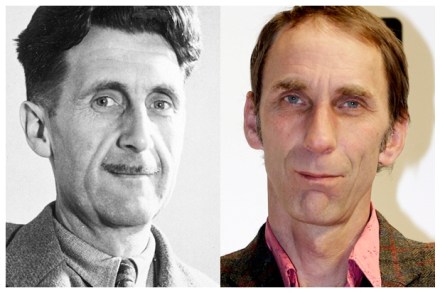
Will Self is in no position to criticise George Orwell

From our UK edition

In The Mating Season, P.G. Wodehouse – perhaps George Orwell’s only rival as the century’s greatest English writer – puts this piece of advice into Bertie Wooster’s gormless gob: 'In dishing up this narrative for family consumption, it has been my constant aim throughout to get the right word in the right place and to avoid fobbing the customers off with something weak and inexpressive when they have a right to expect the telling phrase. It means a bit of extra work, but one has one's code.' Orwell, I think, would have approved of Bertie’s code.

Will we learn to love our ugly houses?

From our UK edition

What are the root causes of Britain’s housing crisis? The Philosophers’ Mail – which has copied the format of MailOnline but I suspect is not aiming at quite the same demographic – recently offered an alternative to the usual explanations. That most people are opposed not to building more houses, but to building ugly houses, and that this accounts for most of what we dismiss as a nimbyism that prevents much-needed development. As they put it: 'Most of the large housing developments built in the South East of England in the last 25 years share one common and (in this context) generally undiscussed feature: they are very ugly. Or, to be more precise, they are far uglier than the countryside they have replaced.

Scottish Nationalists have become Masters of Doublethink

From our UK edition

Let's be fair, however, UKIP have not cornered the market in weirdness. One of the odder elements of the Scottish independence campaign is the manner in which so many Yes voters deny being nationalists: I support independence but please don't make the mistake of thinking me a nationalist. I only support nationalist aims, like.  I suppose this is just about tenable if you are a member of the Green party or if you swim in one of the Yes campaign's other minor tributaries but it's a mighty rum thing to hear from members of the SNP. Which brings us to Pete Wishart, member of parliament for Perth and North Tayside. The other day he tweeted that he has "Never much cared for any 'nationalisms' whether Scottish, British or Whateverish.

How to be a traitor

From our UK edition

No one is as hated as deeply as the apostate. Ordinary opponents are nothing in comparison. They are unbelievers, who know no better. It is not their fault if the light has not fallen on them. The apostate, by contrast, has known the truth and rejected it. There can be no excuses for his treachery, no defence of ignorance the law. The Devil must have seduced him, or to translate old superstitions into language of a secular age, he must have “sold out”. For all the apparent differences between left and right, they share a complacent assumption that only corruption can explain why a believer could reject them, when they are so obviously right and good. The Tea Party, Ukip and the Conservative right cannot have a polite argument with leaders who contradict their views.

Brains with green fingers

From our UK edition

‘Life is bristling with thorns,’ Voltaire observed in 1769, ‘and I know no other remedy than to cultivate one’s garden.’ This is the remedy espoused by Candide at the end of Voltaire’s satirical novel, published ten years earlier, and the literal and metaphorical cultivating of gardens is the subject of Damon Young’s sprightly and stimulating little book. Young examines the relationship between gardening and philosophy in the life and work of 11 writers, from the 18th to the 20th century, topping and tailing these individual essays with a consideration of the Ancient Greeks.

James Delingpole: Is the fight against environmentalism the new Cold War?

From our UK edition

Gosh it isn’t half irksome when someone who went to the same school as you but is considerably younger than you ends up doing dramatically better than you. But hats off to Dominic Sandbrook: his new series Cold War Britain (BBC2, Tuesday) is an absolute delight. Sandbrook has that rare gift of making things you thought you knew pretty well already seem startling and fresh. Take Churchill’s Fulton, Missouri speech. ‘Ah,’ I said expertly to the Fawn, a good five minutes before the programme reproduced the famous recording, ‘From Stettin in the Baltic...’ But what Sandbrook does is both put it in context and give it a human dimension that brings the whole business alive.

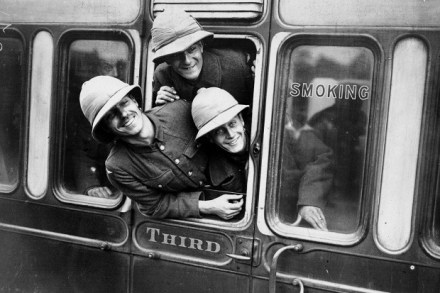
Why do we cringe at the term ‘third class’?

From our UK edition

Alas, it looks like the return to third class travel won't happen. The papers had got terrifically excited about what seemed like a rolling back of 56 years, when British Rail finally ditched its working class fare. The story was on the back of the privatisation of the East Coast Line from Aberdeen to London, for which it seemed at least one of the bidders had envisaged another tier of fares, though it appears the Department of Transport has been thinking along the same lines for the last year. But of course it wouldn't have happened, a return to third class tickets. At least, not described in that dramatically honest and comprehensible way.