Funding

Who will blink first to end the government shutdown?

From our US edition

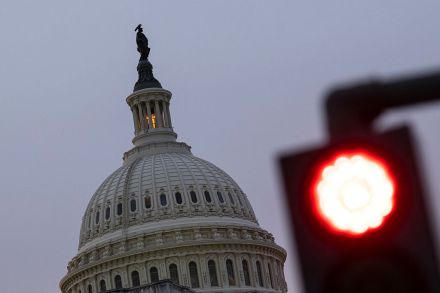
The surprising thing is not that the federal government has shut down. It would have been surprising if it did not. Each side thinks it has the cards and that it has put the other in a bad position. The result is that the budget feud could last for months, ending with a temporary armistice that satisfies no one. There is little incentive for either side to shut down the shutdown. Washington Post columnist Paul Kane notes that most Senators have little reason to compromise: “very few senators feel the political pressure that usually comes with calamitous events like a federal agency shutdown. Most sit in safe seats, many with reelection campaigns a distant concern.
How Harvard lost America

From our US edition

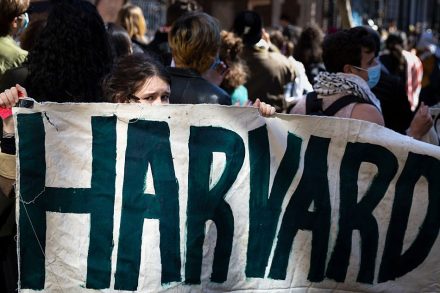
President Trump’s proclamation, “Enhancing National Security by Addressing Risks at Harvard University,” pays a compliment to that crossroads of brilliance and turbidity. It treats Harvard as a serious educational institution, and one that in its misbehavior “presents an unacceptable risk to our Nation’s security.”    Trump was not referring to the risk of immersing some of America’s brightest and most ambitious students in a toxic soup of anti-Semitism, DEI and disdain for our republic. Nor were the “risks” he had in mind “everybody-gets-an-A" grade inflation or a curriculum that wastes the students’ intellectual talents on courses that sound more like entertainment (e.g.

harvard

Tate’s finances are on the skids and I think I know why

Among the many destructive after-effects of the pandemic, the impact of two years of lockdowns has had serious consequences for public museums and galleries, particularly so for our national museums and galleries. More than two-and-a-half years since the last restrictions were lifted, visitor numbers to many of the big London institutions have yet to return to the levels seen pre-pandemic, according to the latest figures released by the DCMS. Although the British Museum and Natural History Museum have come roaring back, surpassing their 2019/20 figures (the NHM attracting some half a million more visitors alone), the picture varies wildly, mostly between the more ‘scientific’ museums and those whose remit is visual art.

How much does Britain still ‘love’ the NHS?

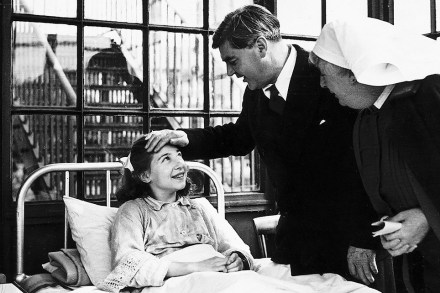
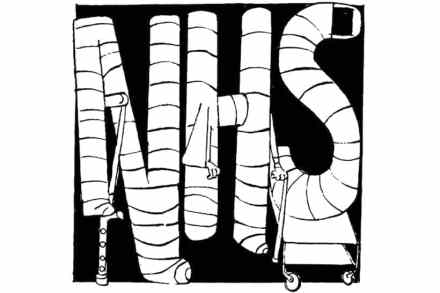
‘Of course I support the NHS. Everybody supports the NHS, or says they do,’ poked the comedian Frankie Boyle in one of the many campaigns promoting the health service. To admit you don’t believe in this national institution is as taboo as not caring about Britishness, about goodness, about people. The public is keen to find evidence for this collective belief. Nigel Lawson famously said that ‘the NHS is the closest thing the English have to a national religion’ – words which tend to be heard as praise. But his comment was laced with criticism. He continued, ‘with those who practise in it regarding themselves as a priesthood. This made it quite extraordinarily difficult to reform.

The budget fight and the new politics of entitlements

From our US edition

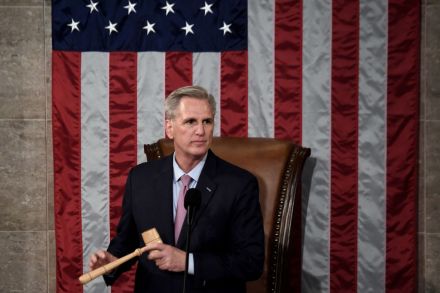
It’s almost spring, and you know what that means: buds popping on the trees, birds chirping as the days grow longer, and the president introducing a budget that will be quickly forgotten. And so it's happened. But there have been a few interesting twists that could make this budget season more interesting than most. President Biden wrote an op-ed for the Wednesday New York Times presenting his plan to “extend Medicare for another generation.” The piece was largely predictable: calls to raise taxes on the wealthy as a way “to increase the program’s solvency by twenty-five years.” While some fiscal conservatives welcomed the president’s willingness to raise the issue of Medicare solvency, his ideas are largely dead on arrival for Republicans.

kevin mccarthy

Why we must defend Radio 3 from threatened cuts

Who doesn’t love Eurovision? All that razzmatazz. The ghastly frocks and gloopy pop songs, the false bonhomie and bare-faced bias when the voting comes around. It’s an irresistible annual event, guaranteed to put a smile on your face and provide the pretence that we are all one happy European family. But all that showbiz comes at a cost (€6.2 million, and rising), with the host country’s broadcaster expected to cough up about one-third of that. What might have to be lost by the cash-strapped Corporation in the next year, or curtailed, to ensure that we put on the biggest and best show ever next year? The BBC budget has become a hot topic in recent weeks.

Congress pretends to hold the Pentagon accountable

From our US edition

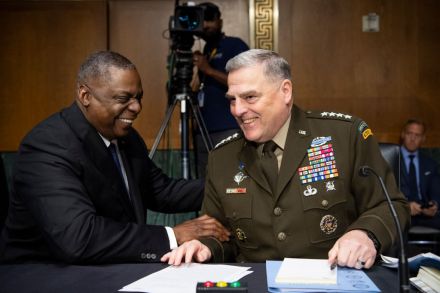
The Biden administration’s latest $3.5 trillion spending proposal continues to attract attention. With a hodgepodge of Democratic priorities ranging from climate change to Medicare expansion, the bill is the more partisan companion of the administration’s $1 trillion infrastructure plan. Of course, another blockbuster story has been distracting attention from these packages — the difficult withdrawal from Afghanistan. Many in Congress continue to be critical of the administration’s handling of the pullout, and some are determined to use the crisis to their political advantage.

congress defense budget

Javid’s cash boost can’t fix a battered NHS

The new £5.4 billion cash boost for NHS England is the easy bit of a very tricky situation for the health service and the politicians trying to work out how to deal with it. As Health Secretary Sajid Javid made clear on Monday, while the money will help deal with the backlog in treatment caused by the pandemic, it won’t do so immediately. He said that waiting lists would go up before they started to go down because people are still coming forward for treatment. Javid has been pitch-rolling for a dreadful winter ever since he took on the job, warning almost immediately that waiting lists could reach 13 million. Currently there are over five million people needing operations and other NHS services.

Is Covid really to blame for HS2’s runaway costs?

Covid has doomed the public finances — not just because the cost of mitigating it has been high in itself but because it has normalised high public spending. When you have just allocated £37 billion to Test and Trace and spend £54 billion on the furlough scheme, a £106 billion high-speed railway to Manchester and Leeds looks relatively good value — at least taxpayers will have something lasting for their money. And who would even notice if the budget for that railway quietly crept up by a further £1.7 billion? That is exactly what has happened today. The construction costs of the first phase of the railway, from London to Birmingham, have apparently been increased by social distancing.