French wine

Beaujolais – a refuge for impecunious wine lovers

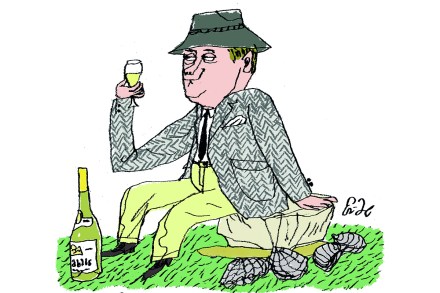
With his three-piece suits, poodle hairdo and bizarrely bendy physique, Tom Gilbey looks like he was created in a secret laboratory beneath the streets of Turnham Green by the Wine Marketing Board. But I have it on good authority that he is a real person. Gilbey came to prominence last year as the self-styled ‘wine wanker’ who ran the London marathon, stopping every mile to taste a wine blind and guessing most of them right. Now we have the inevitable book; and while Gilbey isn’t an elegant prose stylist in the manner of Oz Clarke, Thirsty: 100 Great Wines and Stories (Square Peg, £20) is an enormously entertaining read. It’s part memoir, part guide to wine. The author comes from wine royalty.
The Chablis complex

From our US edition

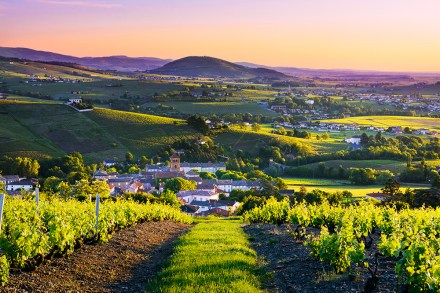
Chablis has the paradoxical distinction of being at once one of the most famous and least well known of French wines. Hugh Johnson opined that it is “one of the world’s most under-estimated treasures.” I agree. We say that Chablis is Burgundy, but, situated on the Serein River some 100 miles southeast of Paris, Chablis is nearly 100 miles north of Beaune. Perhaps we can say that it is the Hadrian’s Wall of Burgundy. Hadrian’s bit of Britain was part of the Roman Empire, but no one would confuse it with Rome. The climate in Chablis is markedly different from and less forgiving than that of the Côte-d’Or: chillier and windier. Think of Auden’s poem, “Roman Wall Blues”: “The rain comes pattering out of the sky, / I’m a Wall soldier, I don’t know why.

chablis

The heady reds of Avignon

From our US edition

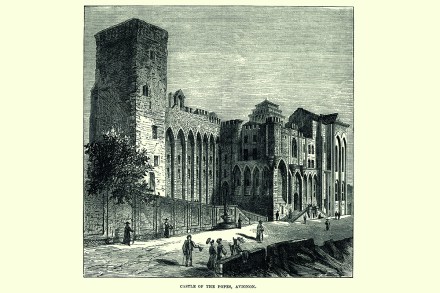
To you and me, “Châteauneuf-du-Pape” means the bold, dark, spicy red wine from the Rhône region of southeastern France, a bit north of the town of Avignon, with bottles usually featuring a glass-embossed representation of the keys of St. Peter. If you were Jacques Duèze, known to history as Pope John XXII, second and longest reigning (1316-34) of the Avignon popes, Châteauneuf-du-Pape meant first of all that “new castle of the pope” he built on the hill overlooking the town. After the popes left, it fell into desuetude and was raided for stone by local builders. During the Revolution, all the buildings except the great tower or donjon were sold off. During World War Two, the Germans attempted to dynamite the structure but succeeded in destroying only the northern half.

Châteauneuf-du-Pape

How to spot good French wine

From our US edition

‘If you swill it around, you look at the legs of the wine — we’re in the Naughty Room, so I’m sorry to talk about legs again!’ exclaims Prince Robert of Luxembourg, alluding to our saucy surroundings. We are tucked away in a bijou risqué room at 67 Pall Mall, a London private members’ club for wine lovers. The Naughty Corner, as it’s known, is adorned with erotic paintings, and a miniature sculpture of a naked man has been turned away from us. While members must be approved, there was little chance of Prince Robert being blackballed. His family owns the French wine estate Chateau Haut-Brion, the oldest of the great growths of Bordeaux.

good wine