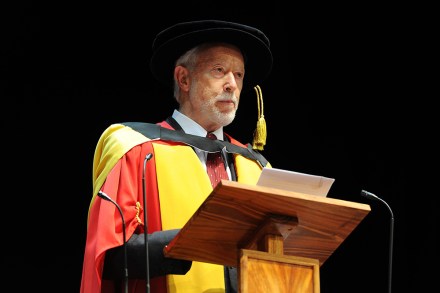
Franz Kafka

How the office has come to haunt us

Should we hop on a call? Let’s touch base. Let’s take this offline. Let’s circle back to your last slide deck. Let’s get those action items actioned by close of play. We need stakeholder buy-in. We need deliverables. We need to make sure you’re aligned with company culture. We’re concerned you’re not leveraging your core competencies. After careful consideration, management has made the difficult decision to terminate your contract. We’re committed to helping you with this transition. Corporate jargon is zombified language. These euphemisms and elisions are the soulless husks of words, meant to blunt the sharp edges of human emotion (sorry – ‘maintain professionalism’). And they often leave you feeling a sneaking sense of dread.

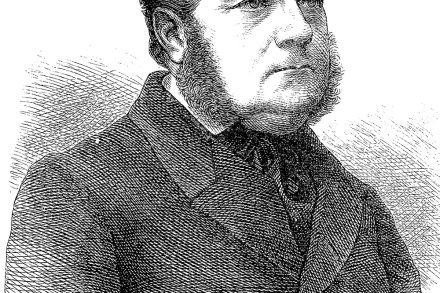
The beauty and tedium of the works of Adalbert Stifter

A commercial publisher bringing out a book of old academic essays on Austrian writers, some completely unknown to English readers, might need an explanation. In this case the author is W.G. Sebald, who produced a series of cogitative books that made his name in the 1990s. Before he acquired the worldwide authority of The Emigrants, The Rings of Saturn and Austerlitz, Sebald had a career in the academic proponency of German literature. Silent Catastrophes is the first English translation of two essay collections from 1985 and 1991, The Description of Misfortune and Strange Homeland. (‘Uncanny’ would be a better translation than ‘strange’, but neither title goes easily into English.

The Spectator’s 2024 Books of the Year

From our US edition

William Boyd It makes grim, compelling and minatory reading, but Hitler’s People (Penguin, $35) by Richard J. Evans is not only the only book you ever need to read about Nazi Germany but a salutary example of what happens when crazed populist leaders win power. Twenty-two short portraits of the key players and lesser apparatchiks of the Nazi years manage to encompass the whole history of the Third Reich and its baleful legacy. Evans’s hundred-page chapter on Hitler — the “Boss” — is masterly. Evie Wyld’s fourth novel, The Echoes (Knopf Doubleday, $28) with its edgy and moody supernaturalism (the narrator is a ghost) establishes her growing reputation as one of our finest young writers.

books

Peter Parker, Wayne Hunt, Nicholas Lezard, Mark Mason and Nicholas Farrell

33 min listen

On this week’s Spectator Out Loud: Peter Parker takes us through the history of guardsmen and homosexuality (1:12); Prof. Wayne Hunt explains what the Conservatives could learn from the 1993 Canadian election (9:10); Nicholas Lezard reflects on the diaries of Franz Kafka, on the eve of his centenary (16:06); Mark Mason provides his notes on Horse Guards (22:52); and, Nicholas Farrell ponders his wife’s potential suitors, once he’s died (26:01). Presented and produced by Patrick Gibbons.

A strong whiff of goodbyes: The Pole and Other Stories, by J.M. Coetzee, reviewed

New books by, articles about or Sasquatch-like sightings of J.M. Coetzee routinely send me back to that infamous YouTube clip of Geoff Dyer face-planting while being introduced by Coetzee at the Adelaide Book Festival – an episode often cited as evidence that the Nobel Laureate has no sense of humour. The garlanded ex-South African’s work is famously as dry as the Karoo, and Coetzee himself has been accused of having only ever laughed once. But a smile is visible in ‘The Pole’, the longest story in this collection. Beatriz, in her late forties, is an educated Spanish woman, ‘a good person’ in a ‘civilised’ (read dormant) marriage, involved in organising things like highbrow concerts but otherwise not taken seriously.