France

Europe’s year of insurgency

After the tumult of 2016, Europe could do with a year of calm. It won’t get one. Elections are to be held in four of the six founder members of the European project, and populist Eurosceptic forces are on the march in each one. There will be at least one regime change: François Hollande has accepted that he is too unpopular to run again as French president, and it will be a surprise if he is the only European leader to go. Others might cling on but find their grip on power weakened by populist success. The spectre of the financial crash still haunts European politics. Money was printed and banks were saved, but the recovery was marked by a great stagnation in living standards, which has led to alienation, dismay and anger.

Islamofascism and appeasement are the biggest dangers facing the West

The appeasers, apologists and 'useful idiots' have been out in force over the festive season, busily lighting candles, declaring 'Ich Bin Ein Berliner' and proclaiming that the murderous attack on the Christmas market had nothing to do either with Islam or mass immigration. Thinking of them prompted me to pluck from my shelf one of my favourite books, a slim tome entitled 'Ourselves and Germany', written in the winter of 1937 by the Marquess of Londonderry. Otherwise known as Charles Stewart Henry Vane-Tempest-Stewart, or 'Charley' to his pals, the Marquess could neither write well nor read men well, but his book is nonetheless riveting. It's a timeless reminder of where an educated man's moral cowardice and intellectual stupidity can lead.

Christine Lagarde’s conviction could play into the hands of the National Front

When Christine Lagarde stood before the Court of Justice of the Republic last week to defend herself against charges of criminal negligence in her handling of a long-running fraud case in France, the head of the IMF concluded: 'I have acted in conscience, in confidence and guided by the general interest.' But today, the court decided otherwise and announced a guilty verdict. The 60-year-old need not worry about going to prison or even paying a fine - and she won't even receive a criminal record. Yet nonetheless the verdict is a serious blow for Lagarde, and the IMF.

Marine Le Pen promises to drive the Machos from the Mosques

The National Front were out in force at my local Parisian market on Saturday. A coterie of volunteers handing out leaflets with suitably festive bonhomie. I took one from a smiling middle-aged woman. It was titled ‘Au Nom Du Peuple’ and there was a photograph of the party's leader, Marine Le Pen, looking pensive. She's dropped the surname for her election campaign. It's deemed too toxic, what with her reptilian father's reputation for playing down the holocaust and playing up the sins of homosexuality. There's a message from Marine at the top of the page, an extract from a speech she gave in September this year. ‘Nobody should ignore that this presidential election is about an inescapable choice,’ she said during an address at Frejus on the Côte d'Azur.

Low life | 8 December 2016

We’re driving east, destination Grasse. Hairpin bends circling oak-clad hills. Autumn gold and scarlet. Exciting cambers. Blinding winter sunshine. The radio tuned to France Musique. A virtuoso Latin jazz trumpet. A bit poncy but it’s better than nothing. We’ve been talking and not talking. Now we’re talking again. She asks me if I like the social class I was born into. I like it very much,I say. ‘You didn’t rebel against your parents as a teenager?’ she says. I might have against my parents but not against my class, I say. I thought everyone was lower middle class. And when I was old enough to recognise other social classes, I was pleased to be lower middle class because it seemed to be the funniest class. I didn’t stop laughing.

Power and the people

When The Spectator was founded 188 years ago, it became part of what would now be described as a populist insurgency. An out-of-touch Westminster elite, we said, was speaking a different language to the rest of London, let alone the rest of the country. Too many ‘of the bons mots vented in the House of Commons appear stale and flat by the time they have travelled as far as Wellington Street’. This would be remedied, we argued, by extending the franchise and granting the vote to the emerging middle class. Our Tory critics said any step towards democracy — a word which then caused a shudder — would start a descent into chaos. On the contrary, we said, the choice was between reform or a ‘revolution of the most sweeping character’.

The Spectator’s Notes | 1 December 2016

It seems perplexing that François Fillon, now the Republican candidate for the French presidency, should be a declared admirer of Margaret Thatcher. Although she certainly has her fans in France, it is an absolutely standard political line — even on the right — that her ‘Anglo-Saxon’ economic liberalism is un-French. Yet M. Fillon, dismissed by Nicholas Sarkozy, whose prime minister he was, as no more than ‘my collaborator’, has invoked her and won through, while Sarko is gone. In this time of populism, M. Fillon has moved the opposite way to other politicians. He says his failures under Sarkozy taught him that France needs the Iron Lady economic reforms which it has never really tried.

Algerian winter

It is more than possible that before any Brexit deal is discussed, let alone concluded, the EU will have effectively collapsed. And the key factor could be the demise of Algeria’s leader of 17 years. President Abdelaziz Bouteflika is 79 and has needed a wheelchair since having a stroke in 2013. ‘His mind is even more infirm than his body,’ one observer tells me. Bouteflika returned home recently after a week’s stay at a private clinic in France. His prognosis isn’t good. Officially, Bouteflika underwent standard ‘periodic medical tests’ in Grenoble. But no one believes this. Among people who know Algeria well, there is little doubt that he is severely incapacitated and does not have much time left.

Trump and Fillon mean that Britain matters far more to Eastern Europe

By next summer, Britain could be the only one of the three major Western military powers unequivocally opposed to the idea of Russian domination of its near neighbours. For François Fillon, the Republican candidate for the French Presidency and the favourite to win, has -- as UK security sources point out -- pretty much the same view of Russia as Donald Trump does. Fillon favours allying with Russia in Syria and seeking Vladimir Putin’s help to defeat both Islamic State and the broader Islamist terrorist threat. Fillon also wants EU sanctions on Russia, imposed because of its annexation of Crimea and broader interference in Ukraine, lifted. This shift in world affairs has profound implications for Britain.

Islamic State will want a landslide victory for Marine Le Pen

Yassine was one of the most popular teaching assistants at his primary school in Strasbourg. What is known in the French school system as an 'animateur', Yassine supervised the kids during their lunchbreak and in after-school activities. 'Nice,' 'sociable' and 'attentive' have been some of the words used by parents this week to describe the 37-year-old. Yassine had worked part-time at the school for a decade before he was taken on permanently in 2014 because of his popularity with the kids. Last weekend Yassine B [his surname hasn't been disclosed] was arrested by the French security services after an eight-month surveillance operation. When police raided his flat they allegedly discovered a letter of allegiance to Islamic State and two handguns.

France’s new right

The result in France in the first round of the Les Républicains party’s primary elections marks the political death of one of the big beasts of French politics. Nicolas Sarkozy, widely known as ‘Sarko’, has been a volcanic presence on the public stage since he became Jacques Chirac’s minister of the interior in May 2002. Within two years he had become president of the right-wing UMP (forerunner of Les Républicains), defeating the favoured candidate of President Chirac, and from there it was but a short step to winning the presidency of France itself.

Low life | 10 November 2016

I didn’t fancy the hotel breakfast, so I wandered into Arles old town looking for a café. The weather and the season had changed overnight. The day before had been hot, golden and still. This morning an icy wind was yanking the last of the dying leaves from the plane trees and my thin canvas jacket was no defence against it. Choosing a café at random on the Place du Forum, I pushed through the glass door and took a seat in the warmth of the café’s conservatory. Three other customers were inside, lingering over their coffee. I chose a bench seat, from where I could look south across the square. A big, blowsy, all-action waitress cantered up. I asked her for a cup of coffee, a croissant and a glass of orange juice.

Marine Le Pen is using fashion as a political weapon

In September, Marine Le Pen travelled to Brachay, a microscopic right-wing commune in northeastern France. Despite its diminutive size, this French locality has the greatest percentage of Front National voters – 72 per cent - so its politicians consider it emblematic. With her raucous gusto, produced thanks to decades of smoking, Le Pen regaled the local, mainly middle-aged assembly with a Trump-like speech, claiming she was there to listen to ‘les oubliés de la France’, the forgotten voices of this country, all 59 of them. There she was, in an outfit the French media appropriately described as ‘Madame Tout Le Monde’.

Europe’s press isn’t happy at the Brexit ruling either

Britain's newspapers aren't happy at yesterday's High Court ruling that the government cannot trigger Article 50 without the say-so of Parliament. And the news isn't going down well in Europe either. There are fears that a Brexit hold-up could have ramifications on the continent. In the days after the referendum, European leaders were quick to call for a speedy Brexit. Now there are worries that a delay in the British courts could make that impossible - spelling trouble for a European Union which, for the large part, wants to get Brexit over and done with.

Napoleon dynamite

I shall never forget my first encounter with Abel Gance’s Napoleon. I saw it under the most unpromising circumstances — fragments of the great original, shown on a home projector, 25 years after its original release. Yet those fragments changed my life. I was 15, still at school in Hampstead, and already obsessed by the cinema. My parents had given me a projector for my 11th birthday. Since the only films available to me were silent films, I found myself immersed in the rarefied atmosphere of a forgotten art. As home movies were being abandoned in favour of television, I found a surprising number in London’s junk shops. Among the best were the French silent films. My admiration for them, however, was subject to the occasional shattering blow.

Low life | 3 November 2016

‘Look at them, they’re all fat,’ he said. I’d slowed the car to allow four children to cross the zebra crossing. One of them secretly signalled thanks on behalf of them all as they trooped across. Polite. But they were all indeed a little on the plump side. ‘Even in France they’re getting fat now,’ he lamented, leaving unsaid the conclusion that if the French were getting fat, then that’s that, game over. ‘Of course it’s the working classes who get fat first,’ he explained. ‘Eating all that sugar and salt.’ I thought I detected blame and took exception. ‘Well, if anyone is to blame,’ I said, ‘it’s you.

Contours of the mind

In Australia, I have been told, the female pubic area is sometimes known as a ‘mapatasi’ because its triangular shape resembles a map of Tasmania. And since we are discussing cartography and the nether regions, it is wonderful to find in the British Library’s new exhibition, Maps and the 20th Century, that Countess Mountbatten wore knickers made out of second world war airmen’s silk escape maps. Maps certainly colonise our imaginations in many different ways. The allies in Iraq had a ‘road map’ rather than a strategy. So much of personal value can be lost in the creases and folds of our own ‘mental maps’.

Le Pen’s long game

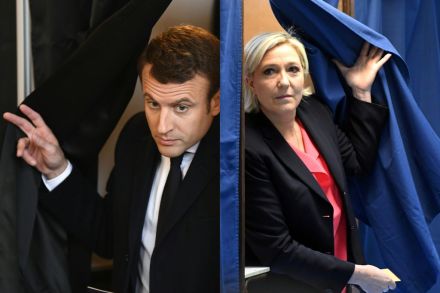
Marine Le Pen can be excused for thinking her time has come. With six months to go until France’s presidential election, the left-wing government of François Hollande has produced only one winner, and it is her. She’s providing the Gallic contribution to the insurgent charge epitomised elsewhere by Brexit and Donald Trump. France, the home of joie de vivre, has become an introverted place whose citizens fear their nation has lost its way. It is an existential challenge, in the birthplace of existentialism, that the mainstream right is failing to answer. Le Pen, on the other hand, says she has all the answers — and, despite the questionable nature of many of her remedies, up to a third of the electorate appears to agree.

Sooner or later, the Calais ‘Jungle’ will be back – and the British left can’t wait

The massive operation by 1,200 French riot police and gendarmes to bus the migrants in the 'Jungle' at Calais to reception centres elsewhere in France and to raze the illegal camp to the ground has begun. Allelujah. You might think that the destruction of this crime-ridden and rat-infested shantytown, where up to 10,000 mainly African and Afghani migrants live in shacks and tents without running water or mains electricity, was good news. At last, those poor migrants will have a decent roof over their heads while they finally get round to applying to the French government for asylum, as nearly all are required to do by the law. But no. Instead, the British left and the French right, joined in unholy alliance, are outraged: How dare François Hollande do such a thing!

Why the French favour secularism over appeasement in the fight to defeat Islamic extremism

In the apartment block next to mine in Paris there are two Muslim families. One I see often: the dad dresses in jeans and a t-shirt, and when the weather is good he's in the park playing with his kids. So, too, the mum: a stylish woman who matches her headscarves to whatever else she wears with the effortless chic of a Parisian. I see less of the other family: the husband dresses in the white robes of a Salafist and never goes to the park with his child. I've seen his wife only once. The two families are emblematic of the fight France faces to defeat Islamic extremism. It will be a long fight.