Philip Sime

European press on Catalonia: “Suddenly, Brexit doesn’t seem so bad”

From our UK edition

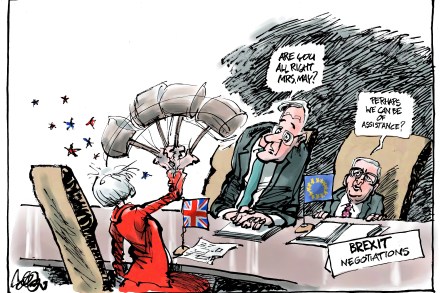
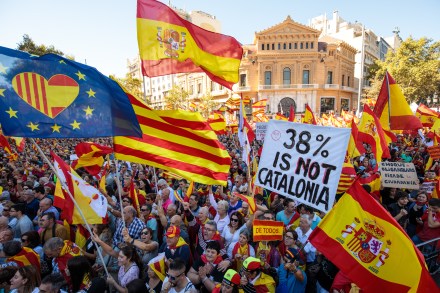
"Look on the bright side...Brexit no longer seems so serious" Chappatte in Le Temps, Switzerland The events in Catalonia dominate Europe’s press this morning, seen as the biggest political crisis to hit the country since the attempted coup d'état of 1981. The Madrid-based El País says the invocation of Article 155 was done so ‘legally and transparently’ and does not constitute an act of aggression against Catalan self-government or the rights of Catalans. Rather, El País views Madrid’s response to the crisis as ‘legitimate and necessary’ in the face of the challenge posed by Catalonia’s ‘irresponsible and reckless’ political leaders.
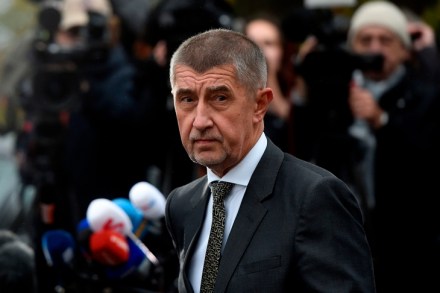
The Czech Republic could be the next country to leave the EU

From our UK edition

In the immediate aftermath of Britain’s vote to leave the EU, there were fears in the corridors of Brussels that it would trigger a so-called ‘domino effect’. Many predicted that other Eurosceptic nations would follow Britain’s lead, unravelling the European project which took 65 years to build. More than one year after the Brexit vote, spirits in Brussels are relatively high. The popular European federalist, Guy Verhofstadt, is even hailing a ‘reverse domino-effect’. However, over the weekend, a little-noticed political earthquake struck the Czech Republic as Andrej Babiš, a Trump-style populist billionaire, led his ‘Action for Dissatisfied Citizens’ party to victory in the country’s legislative election.

May’s meltdown: the verdict in the German press

From our UK edition

Theresa May had hoped her Conservative conference speech would not only paper over the cracks within her own party but also strengthen her Brexit negotiating position ahead of a crucial EU summit later this month. In around two weeks, EU leaders will gather in Brussels to decide whether to commence trade negotiations with the UK. The key player in this decision, as always, will be Germany. However, it would seem that Theresa May’s conference speech has done little to convince the Germans of her political nous. Here’s how the German press reacted to Theresa May’s conference speech: The country’s largest broadsheet, Süddeutsche Zeitung, says Theresa May’s keynote speech should have been an ‘act of liberation’.

Merkel limps to victory as AfD surges in German elections

From our UK edition

Angela Merkel has won, for the fourth time, but on her party's worst election result since 1949. Her main rivals did just as badly and the main winner looks like Alternative for Germany (AfD), now Germany's no3 party. Here's the national picture: [caption id="attachment_9940622" align="aligncenter" width="620"] The exit poll from Germany's election[/caption] So the centre-left Social Democratic Party is heading for just 20pc, its worst result since the Second World War.  Martin Schulz, SPD leader, said it has been “a difficult and bitter day for German social democracy”. By which he means that AfD are set to break through into the Bundestag with 13.5 per cent of the vote, a result that differs sharply in east and west.

‘Long and vain’: Europe’s press reacts to Theresa May’s Florence speech

From our UK edition

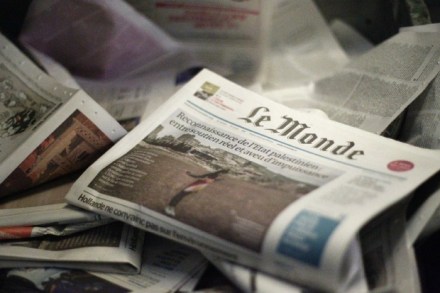
Following months of tortured negotiation between the UK and the EU, Theresa May delivered her speech in Florence yesterday in an attempt to break the Brexit deadlock. Mrs May proposed a two-year transition period during which Britain would retain its access to the single market and confirmed that the UK Government will honour its commitments to the EU budget. She also spoke of the ‘shared challenges and opportunities’ that face the UK and the EU in a bid to build consensus. Here’s how Europe’s press reacted to the long-awaited speech. France France’s centre-left daily, Le Monde, agrees with Theresa May that Brexit negotiations can be extended beyond March 2019, however, points out that all member states must be in favour of such a move.

Pew poll shows most Europeans want to take back control from Brussels

From our UK edition

Many in Brussels are anxiously looking out for any sign of what has been termed 'Brexit contagion' – the idea that the Brits might encourage others towards leaving the EU. The findings of a major Pew survey of European opinion does not point to a rush towards the exit, but it certainly does flag up dissatisfaction with the EU and its handling of many of the most pressing issues facing the continent.  Take, for example, trade policy: should a country set its own alliances or leave it to the EU? This is, in effect, a question about the Customs Union – staying in this union is often taken to define 'soft Brexit'.

Is the UK heading for a soft Brexit? The German press now thinks so

From our UK edition

Senior figures in Europe have spent the last few days pondering how Theresa May’s bungled election gamble will affect the upcoming Brexit negotiations. To the surprise of many, May, who campaigned to remain in the EU, had apparently set the UK on course for a hard Brexit, which involved leaving the single market behind. There was also the famous line that: 'No deal is better than a bad deal'. Now though, May’s botched election leaves a question mark over her Brexit strategy. These shifting political sands have not gone unnoticed on the continent, where politicians and bureaucrats are sharpening their pencils ahead of the start of Brexit negotiations.

‘From Cool Britannia to Poor Britannia’: Europe’s press ridicules Theresa May

From our UK edition

The people with whom Theresa May will soon be negotiating over Brexit have been looking on in astonishment at her self-immolation. Here's a selection of the media coverage on the continent. France Against all the odds, France’s new President, Emmanuel Macron, looks set to win an impressive majority in the upcoming parliamentary elections. So from chaos to stability – yet Britain has taken the reverse journey. This juxtaposition is detected by France’s press. Le Monde seeks to predict how the new formation of the House of Commons will impact the upcoming Brexit negotiations.

Britain’s ‘wobbly lady’: Europe’s press reacts to May’s bungled election gamble

From our UK edition

Theresa May's election gamble hasn't paid off. Yet in spite of the PM blowing her majority, May has vowed to carry on and offer 'certainty' to Britain. Overnight, May's miscalculation has transformed her from an 'iron lady' into a 'wobbly' political figure in the eyes of the European press. Here’s how the general election has been covered on the continent:  Germany: Germany’s largest daily newspaper Süddeutsche Zeitung rounds on Theresa May, branding her a 'terrible election campaigner' and contrasts the 'strong and stable' image that she sought to present with what was perceived as a very weak campaign.

Europe’s press isn’t happy at the Brexit ruling either

From our UK edition

Britain's newspapers aren't happy at yesterday's High Court ruling that the government cannot trigger Article 50 without the say-so of Parliament. And the news isn't going down well in Europe either. There are fears that a Brexit hold-up could have ramifications on the continent. In the days after the referendum, European leaders were quick to call for a speedy Brexit. Now there are worries that a delay in the British courts could make that impossible - spelling trouble for a European Union which, for the large part, wants to get Brexit over and done with.

Forget the ‘Norway model’. Germany suggests UK could get ‘special’ EU status

From our UK edition

Britain’s decision to leave the EU sent shockwaves crashing throughout the continent. As Europe struggled to interpret the outcome of the referendum, we heard calls for Brussels to drive a hard bargain with the UK in order to contain the 'Brexit contagion'. The European Council President Donald Tusk's warning that the UK must not be allowed to 'profit' from leaving the bloc summed up this mood. But now, it seems, our neighbours in Europe are coming to terms with Brexit. And with it, the desire to punish the UK appears to be dampening. Michael Roth, Germany's European Affairs minister, has this week suggested that a 'special status' could be achieved which would take into account Britain’s size and previous commitment to the European project.

Is Theresa May using Hinkley Point to hold the French hostage over Brexit?

From our UK edition

Plans to build a new nuclear power station at Hinkley Point in Somerset suffered a surprise setback on Friday after the Government said it wanted to 'review' the decision before it gave the go-ahead. But what are EDF - the French company which had approved funding for the project - and the French press making of the Hinkley hold-up? With the Brexit vote having tested Franco-British relations somewhat in recent weeks, Theresa May's decision to review the building of Britain's first new nuclear power plant in two decades isn't helping matters - with the French press reacting with consternation to the delay.

French press fury after Hollande caves in to May

From our UK edition

Theresa May's warm reception in France has gone down well in Britain after she won key concessions from the beleaguered French President, François Hollande. But the cordial nature of their meeting - and the fact that Hollande appeared to cave in to May on a number of important issues - has not been so happily received in France. It had been expected that Hollande would take a much harder line on Brexit and the French press had hoped the bilateral meeting would be an opportunity for the French President to take Britain's new Prime Minister to task. As it happened, the two leaders agreed that British border controls will remain in place at Calais and that Britons living in France will be allowed to stay for as long as they desire.

‘Horror, once again’: French press reacts to Nice terror attack

From our UK edition

Once again, France is waking up to a massacre on its streets. In Nice, as people gathered on the seafront promenade to celebrate their national holiday, Bastille Day, a terrorist drove a 25-ton lorry at high speed through the jubilant crowd, leaving at least 84 dead. ‘Once more horror has struck France’, said President Hollande, linking the killings to Islamist terrorism. Last night’s incident is the third major terrorist attack in France since the Charlie Hebdo assault in January 2015. As a result, the French press reacted with a sense of familiarity. Here's what they said: Le Figaro: ‘Horror, once again’, reads the front page of Le Figaro.

Theresa May’s first day and Boris at the Foreign Office: How the foreign press reacted

From our UK edition

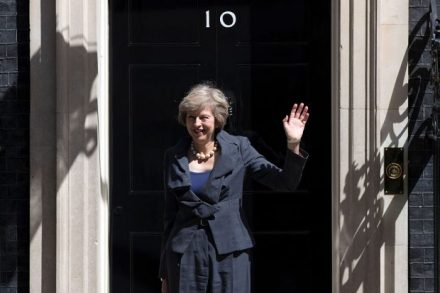
A new British Prime Minister is always big news on the continent and around the world. This time around, with Mrs May tasked with redefining Britain’s relationship with the EU, the foreign press has taken a special interest in recent events in Downing Street. One of the big stories aside from Britain's new Prime Minister taking up her role is Theresa May's decision to make Boris Johnson Foreign Secretary. Here's how the press around the world reacted to the news: France: With France bracing itself for a protracted period of arduous negotiations with the UK, Britain's new Prime Minister is big news across the Channel. Le Figaro goes as far as to brand Theresa May Britain’s new 'Iron Lady'.

Is Theresa May Britain’s Angela Merkel? The German press thinks she might be

From our UK edition

As Britain's second female Prime Minister, Theresa May has inevitably been compared to Margaret Thatcher. But she's also been linked to a contemporaneous politician: Angela Merkel. Whilst some have dismissed the comparisons, it's not only British journalists drawing on the similarities between Theresa May and the ‘Iron Frau’ - German newspapers are now doing the same. The initial parallels are clear; two middle-aged women who have fought their ways to the top of the male-dominated world of politics. However, both Bild and Die Welt - two of Germany's biggest newspapers - believes there is much more which unites May and Merkel and has uncovered a surprising number of similarities to back up their argument.

Disunited Europe: Brexit exposes cracks in EU relations

From our UK edition

Much of the media attention in recent days has been focused on the vacuum of leadership in Westminster. However, Britain’s momentous decision to leave the EU has exposed deep cracks in relations with the European Union. Almost immediately after the Brexit vote, nations across continent woke up to the new possibility of leaving the bloc. This has left Europe’s leaders scurrying to prevent the so-called 'Brexit contagion'. The Eurosceptic charge was led by Marine Le Pen who called for a referendum in France and all other EU states. President Hollande has since rejected her calls, however, it would seem that Le Pen is echoing concerns of the majority in France.

Can the European press convince Britain to stay?

From our UK edition

The debate around withdrawing from the European Union has dominated front pages and column inches for several months in Britain. However, with less than 24-hours until the UK makes the biggest democratic decision for a generation, the word ‘Brexit’ is now beginning to appear in newspapers across the continent and permeate the consciousness of our European neighbours. Europe is a continent in crisis. Brussels is desperately trying to foster unity while facing rising anti-EU sentiment, the most-severe migration crisis since WWII and a Eurozone struggling to recover from the 2008 financial crash. However, facing the prospect of a member state abandoning the Union, Europe’s leaders are now urging the United Kingdom to stick with it.

Frexit and Italexit? Support for the EU dwindles in France and Italy

From our UK edition

Various freak political events—the unexpected Tory election victory, the rise of Ukip—have conspired to allow Britain to hold its referendum on the EU this week. But if the rest of Europe were asked, what would they say? The Berlin-based Bertelsmann Foundation commissioned a study of 11,000 people in Germany, France, Italy, Spain and Poland to find out their attitudes towards Brexit and to the EU. Just 41 per cent of French and 54 per cent of Germans want us to stay. The Spanish are most keen for Britain to Remain, with 64 per cent opposing Brexit, followed by Poland with 61 per cent.