Ben Judah

The ‘Anglo-Gaullism’ debate | Ben Judah

From our UK edition

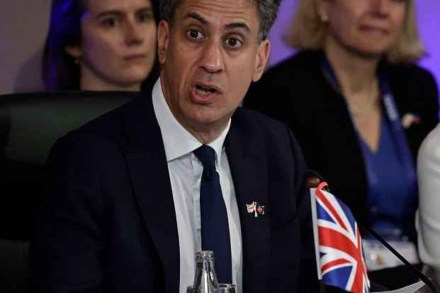
In the magazine this week, Ben Judah – former adviser in the Foreign Office – makes the case for ‘Anglo-Gaullism’. He says that Britain should learn the lessons of France’s Charles de Gaulle when carving out its place in the world, especially given the increasingly erratic nature of the US and the fragmentation of politics at home. In practice, Ben suggests that this would involve an Australian-style ranked-choice voting, injecting Whitehall with experts (in tech and AI), taking on the welfare system (including ending the pensions triple lock) and European geo-political co-operation which would limit reliance on the US. But would Anglo-Gaullism ever work in Britain? And is it still possible to produce a leader with the authority of de Gaulle to implement it?

The 'Anglo-Gaullism' debate | Ben Judah

De Gaulle or nothing: lessons from the General

From our UK edition

The first time I set foot in the White House as a Labour political adviser, in spring 2024, to see a then all-powerful Jake Sullivan as the US National Security Adviser, I went as an Atlanticist. By my final visit to the West Wing in January, accompanying David Lammy as his aide to see J.D. Vance, I was an Anglo-Gaullist. In between lay the humiliation of Chagos, twists and turns over Ukraine, surprise American strikes on Iran and the realisation that our closest ally, the superpower we had built our entire security around, had become erratic, emotional and unpredictable. When Labour came to power, I truly believed the country had been suffering mainly from Tory problems. I learnt the hard way that our instability stemmed mostly from British problems. And this brought me to Gaullism.

Why we left the Foreign Office | Ben Judah & Ameer Kotecha

From our UK edition

35 min listen

Does Britain still have a coherent foreign policy? James Heale and Tim Shipman are joined by Ben Judah, former special adviser to David Lammy, and Ameer Kotecha, who recently resigned from the Foreign Office. Together they discuss why Britain’s diplomatic establishment is under growing criticism – from accusations that the department has become bloated and distracted by DEI, to Chagos and deeper concerns that Whitehall no longer has the expertise or strategic clarity needed in an increasingly unstable world. With wars raging from Ukraine to the Middle East and tensions rising with China, they ask whether Britain has adapted to a more chaotic global order – or whether the country is still operating with the assumptions of a different era.

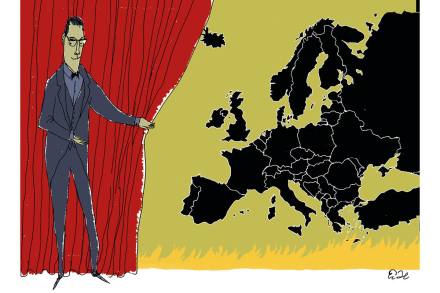
Europe is not a museum

The temperature, at last, is starting to drop — and for Europeans that only means one thing: peak season is over. The crowds in the piazzas and on the beaches are starting to thin. And in the tavernas that were TikTokked you can finally think about getting a table. It’s time. Like the clockwork of migrating swallows — the Americans are going home. And knowing you can finally count on a breeze and far fewer strong-dollar spenders than a few weeks earlier, a stingier tipping class of European grande bourgeoisie in West London or the 8ème arrondissement — that has long since given up on July and August for the Mediterranean — is now contemplating a holiday. It’s still, however, at least conversationally, Europe season in the United States for a few more weeks.

europe museum america