

Reading the annual economic report of the Bank for International Settlements while lying beside a pool with an Aperol spritz in hand is a challenge I accepted on your behalf. Based in Basel as a hub for the world’s central banks, BIS is always careful in its prose for fear of setting cats among global pigeons. But this year’s bulletin is a serious storm warning, based on four factors that in a worst-case combination could trigger market mayhem.
First, inflation driven by Middle East conflict has left oil market imbalances that will take ‘several quarters to purge’, with the risk of further volatility; BIS doesn’t actually say ‘If Trump goes batshit crazier’, but that’s the subtext. Second, beware of competitive overinvestment in AI projects, ‘increasing the risk of a sharp reversal if AI payoffs disappoint’.

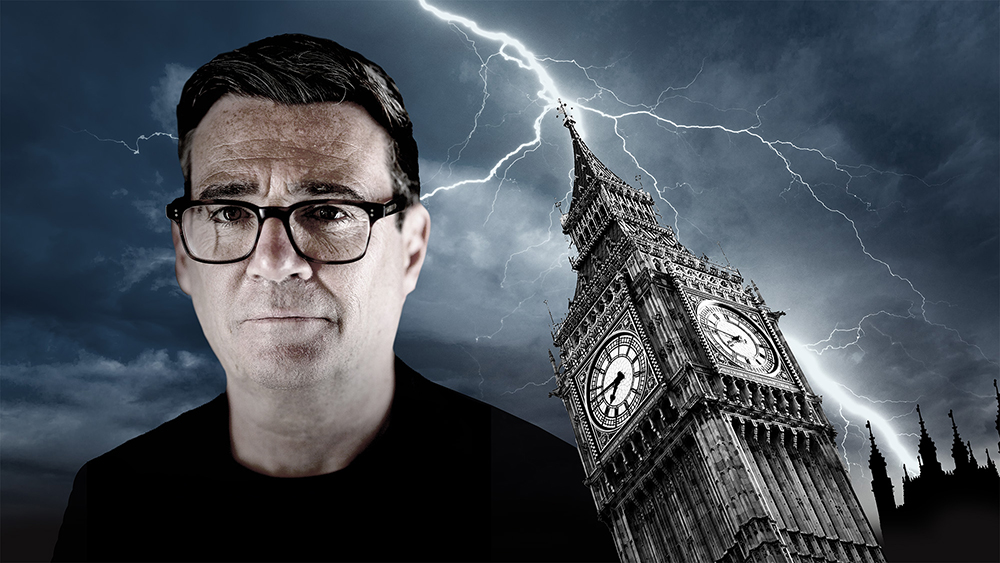
Third, and here the language is less guarded, financial markets could ‘unwind abruptly’ as a result of ‘increasingly opaque financing of AI activities, high leverage… and the growing footprint of private credit’. Finally, governments with already strained debt levels face rising demands for more spending – not least on defence – while ‘the financial structure of sovereign bond markets has become more fragile’. In short, Andy Burnham please note, any whiff of fiscal irresponsibility and your borrowing cost will rocket or investors will shun your debt altogether.
Too gloomy for high summer? The AI boom is the hardest part to assess: opinions about the technology’s rapid advance are so cacophonous that what happens next is literally anyone’s guess. On the other hand, the dangers of embedded inflation, excessive risk-taking and profligate public spending are so familiar that we hardly need a forecast from Basel’s weathermen. As my wise predecessor Christopher Fildes once wrote: ‘Hold tight and watch the wheel come round.’
Mr Nice Guy
A Mancunian who worked alongside Burnham calls him ‘a retail politician who speaks human’. The nice-guy style was well displayed in Monday’s speech about ‘good growth in every postcode’, with its quivers of emotion about better housing and working-class opportunity. But the truth of good growth – indeed, any growth that isn’t generated purely by Keynesian public works – is that it can only come from entrepreneurship and private-sector investment. For businesses large or small, the PM-in-waiting offered no more than a paragraph of platitudes that sounded like a speechwriter’s late insertion.
His big idea for industrial revival was about directing state procurement towards UK firms. But ‘imagine if we could bring down the cost of energy’, his nod to the prime reason our factories are so uncompetitive, was the vaguest of aspirations, far short of commitment. Likewise, his embrace of business rates reform will be too late to save pubs or make high streets ‘the new symbol of Britain’s renaissance’ unless he’s also prepared to reverse last year’s NIC hike, slash red tape and allow micro-businesses to thrive.
Above all, this performance reminded us that Burnham is a socialist who values ‘public control’ above private flourishing. But business leaders can take some comfort from the fact that their peers in Manchester, as I reported recently, found him to be a good listener and a more pragmatic operator than his rhetoric suggests. And let’s be frank, can he really be worse than Sir Keir Starmer?
Reality hits home
What of Burnham’s headline pledge to launch ‘the biggest council house building programme since the postwar period’, based on the anti-Thatcherite assertion that to be a tenant of the state, rather than a homeowner, is a worthy working-class ambition? He referred to 1.5 million council houses lost since the mid-1980s and the same number of people on housing waiting lists today – but wisely did not recite Labour’s doomed manifesto pledge to deliver 1.5 million new homes (public or private) within this parliament.
Even by using vacant public land, permitting higher-density development and giving himself ten years to fulfil whatever his actual promise turns out to be, he is about to be thwarted by multiple problems besetting housebuilders: cost inflation, shortage of skilled labour, draconian safety rules and a broken planning system. As an industry spokesman put it, reform will need to be ‘supercharged and wholesale’. And if slow delivery of new housing is combined with shrinkage of the private rental market thanks to the recent Renters’ Rights Act – plus even stronger measures from Manchester’s former champion against ‘rogue landlords’ – then waiting lists will grow ever longer.
Meanwhile, his threat of a ‘land value tax’ is one more factor contributing to a moribund house sales market, following Rachel Reeves’s removal of stamp-duty discounts in April. And mortgage rates will rise if bond markets don’t like the new regime’s broader spending plans. So whether you aspire to be a tenant for life or to climb the ladder of home ownership, nice-guy Andy probably won’t be your new best friend.
French fried
In France, the national weather map was the colour of a livid bruise as the mercury topped 40ºC day after day – and the high productivity I praised last week wilted faster than my potted geraniums. The joiner who came to fit new shutters started at 7 a.m. and brought his wife to mop his brow, but our un-airconditioned village bistro was one of many businesses that gave up the struggle and closed until the canicule receded.
Hence I must disappoint those who expect new restaurant tips each time I travel, though perhaps not the reader who tells me he spent one of the worst nights of his life at a hotel in Normandy recommended here in January. The best I can do is suggest an authentic outpost of Frenchness in slightly cooler (in this context) London: the best moules-frites and boudin noir I’ve found lately on this side of the Channel are at Gazette, inside South Kensington’s Institut Français.





Comments