Foreign policy

Lessons from costly wars past

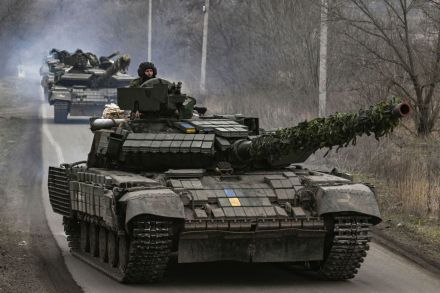
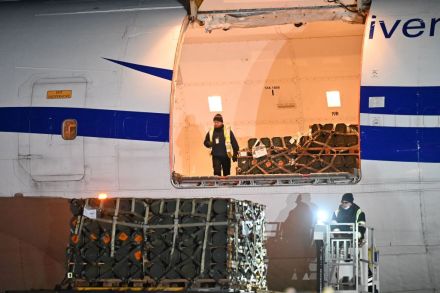
Money is often a substitute for strategy in US foreign policy. We spent $2 trillion in Afghanistan, only to lose the country the minute our troops began to pull out. How much will it realistically cost, then, to beat Russia in Ukraine? Will the next $100 or $200 billion do the trick? This is not a question that supporters of war-spending ask themselves. As in Afghanistan, spending is a way to defer thinking about actually winning — or facing the serious possibility of losing. Our aid buys delay, not results. Ironically, while the specter of World War Two is invoked every time there’s a conflict, our experience then teaches the same lesson as recent attempts to purchase victory.

wars
foreign policy

Where is the clarity in modern center-right foreign policy?

When Ohio senator J.D. Vance arrived at the Munich Security Conference in February, he had a clear message meant for the world: the Republican Party was no longer the party of Ronald Reagan. Standing outside the Hotel Bayerischer Hof, he informed reporters that he did not believe American support for combat against authoritarian regimes should extend to Ukraine — and that he would continue to oppose efforts to “increase the supply of weapons in Ukraine because we’ve already expended so many of our munitions and resources” to achieve a victory that he does not foresee. Vance’s bootstrap story is well-known — he’s a Marine veteran turned Yale Law grad turned venture capitalist made prominent by his bestselling Appalachia memoir Hillbilly Elegy.

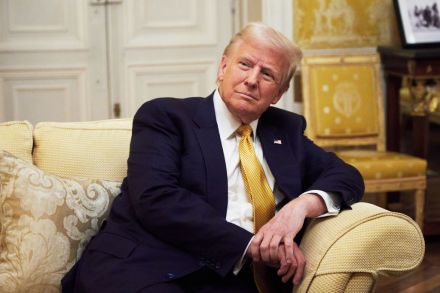
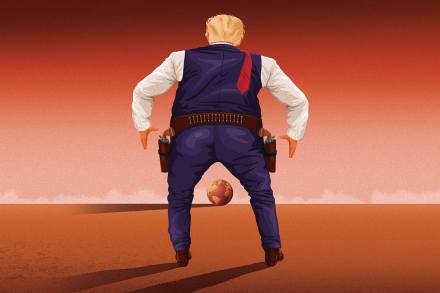
What will the new Trump foreign policy look like?

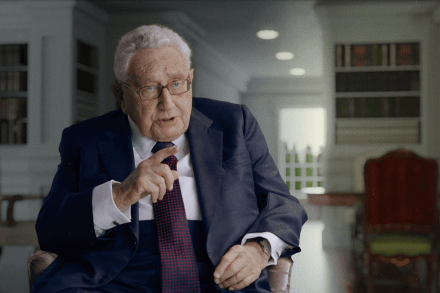
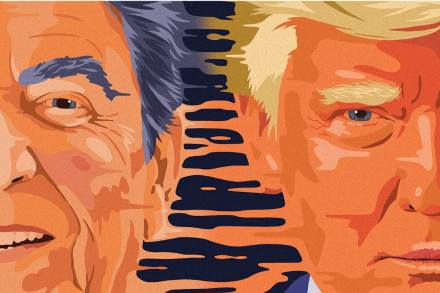
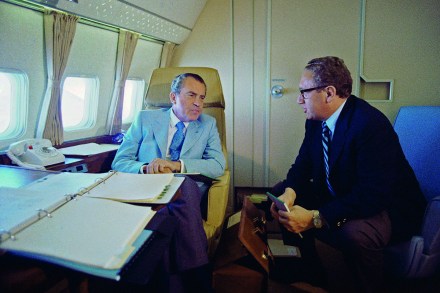
A month after the election shock of 2016, CBS’s John Dickerson sat down with the ninety-three-year-old Henry Kissinger to get his assessment of the incoming president. “Donald Trump is a phenomenon that foreign countries haven’t seen,” Kissinger pronounced, noting that many nations would have to weigh “their perception that [Barack Obama] basically withdrew America from international politics, so that they had to make their own assessment of their necessities,” along with “a new president who is asking a lot of unfamiliar questions.” Given “the combination of the partial vacuum and the new questions, one could imagine that something remarkable and new emerges out of it,” Kissinger added. “I’m not saying it will. I’m saying it’s an extraordinary opportunity.

trump

Biden chickens out on Ukraine and NATO

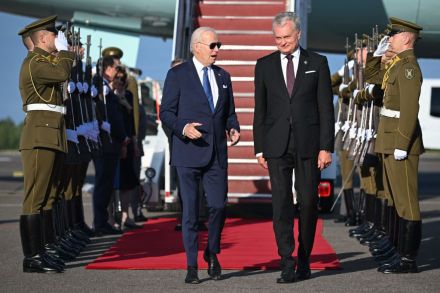
Shortly before his trip to Europe and the NATO summit in Lithuania, President Biden told CNN that he does not think Ukraine has an easy path to NATO membership. “I don’t think it [Ukraine] is ready for NATO,” he said to Fareed Zakaria. “I don’t think there is unanimity in NATO about whether or not to bring Ukraine into the NATO family now, at this moment, in the middle of the war.” “I mean what I say," Biden continued, "we are determined to commit [defend] every inch of territory that is NATO territory... If the war is going on, then we are all in a war.” That Ukraine would not join NATO in the middle of a war has generally been accepted due to the risks. Membership would come, albeit on a longer timeline, and after the war is over.

joe biden nato

In defense of America the arms dealer

As the world enters a new era of great power competition, countries are arming themselves at a rate unseen since the end of the Cold War. The war in Ukraine, China’s increasing belligerence and angst over rogue states like Iran and North Korea are driving defense spending and weapons purchases the world over. Amid all this, the United States does not have the luxury of being too picky as to who among its friends gets the weapons they need to defend themselves. Nor can Washington continue to avoid drastic reforms to its arms export controls to face the challenges of the twenty-first century. Standards are necessary — they are what should set America apart — but they must not become so onerous that the security of the US and its partners suffer.

Macron’s China controversy is a big nothingburger

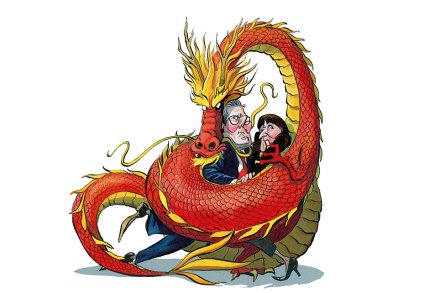
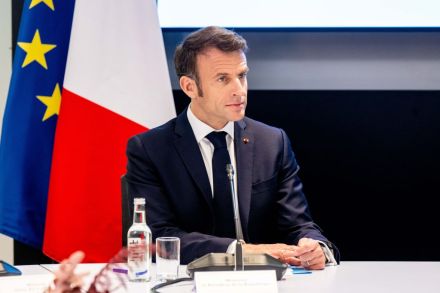
French president Emmanuel Macron, the self-appointed leader of Europe, is having a not so great week. His multi-day visit to China and successive meetings with Xi Jinping were high on pomp but low on deliverables. But it was during the plane ride back to Paris, when he gabbed with journalists, that he got into trouble. Seated aboard France’s version of Air Force One, Macron presented himself as a leader with an independent streak who believes Europe can't follow the United States like docile little ducklings. His interview wasn’t remarkable, yet foreign policy commentators and politicians are hung up on his remarks about China and Taiwan.

emmanuel macron

Washington’s dirtiest war at last goes silent

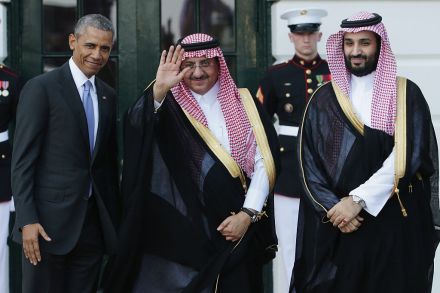
Something strange, but miraculous, is happening in Yemen right now: no bombs are falling from the sky. According to the Yemen Data Project, an independent group keeping track of the violence in the Arab world’s poorest country, there hasn’t been a single Saudi coalition airstrike over the last week. This is the first time since Yemen’s civil-turned-proxy war began that an airstrike hasn’t been recorded, an unprecedented and welcome development for the millions of Yemenis who have lost so much as their rich Saudi neighbors seek to drive the Houthi-led rebel movement to the negotiating table.

Don’t expect the midterms to change our foreign policy

President Joe Biden and his Democratic allies were expecting a romp on Tuesday. So were many of the career prognosticators surveying the election landscape. Instead, many of the close Senate races, including in all-important Georgia and Nevada, haven’t been called. Those of us who have been staring at the returns for hours on end still don’t know the full extent of the results. But what can be said with reasonable certainty is that however the balance of power stacks up, foreign policy is likely to be the same as it ever was. The status quo is an all-powerful force inside the Beltway, where conventional wisdom rules the roost and any tilt away from the mainstream is usually corrected before an honest discussion can be had on the merits. Part of this is institutional.

How the British helped JFK navigate the Cuban Missile Crisis

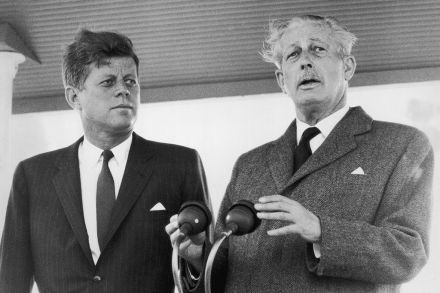
The Atlantic alliance hasn’t always been quite as special as politicians on both sides of the sea like to pretend. To take just the last sixty years: there were the differing views on Vietnam that led Lyndon Johnson to assess the British premier Harold Wilson as "a creep," while Richard Nixon privately considered Ted Heath "weak" and "as crooked as a corkscrew" (which was saying something coming from him). In October 1962, however, the principal Western leaders really did have something special. Between them, they probably helped save the world from nuclear annihilation. When on October 16, President John F.

Henry Kissinger’s likely last book is on leadership

Leadership, Henry Kissinger writes in his latest book, is a medium by which a society moves from the past of its memory to the future of imagination. It is “indispensable.” As Kissinger says, “Decisions must be made, trust earned, promises kept, a way forward proposed.” Without leadership, ordinary people are, he argues, incapable of “reach[ing] from where they are to where they have never been and, sometimes, can scarcely imagine going.” But leadership is also, in Andrew Roberts’s phrase, “a ‘protean’ thing with little fixed definition.” Leadership is ultimately what leaders do; it goes in whatever direction they choose.

kissinger

The reviled Woodrow Wilson

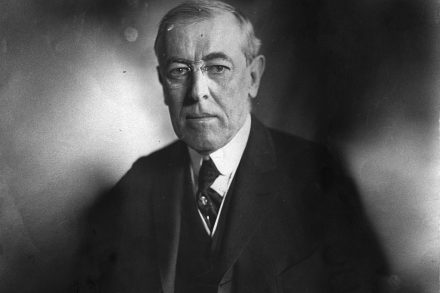
Woodrow Wilson can’t seem to catch a break. Since Princeton University’s 2020 decision to remove the name of the former president (both of the United States and the university) from its school of Public and International Affairs for his “racist thinking and policies,” other academic institutions have followed suit. An elementary school in Trenton, New Jersey, decided in May to drop his name because of Wilson’s “racist values.” Another school in San Leandro, California, made the same decision, as has a high school in our nation’s capital. There’s more than a little irony here. Wilson, racist though he was, was also a leading champion of the progressive, globalist worldview shared by our technocratic elites.

woodrow wilson

Noninterventionists never win arguments

I’ve been thinking about where I was on the eve of the US invasion of Iraq in 2003, and my memories of the event are quite depressing. What have we learned? As a research fellow at the Cato Institute at that time, I was working with other analysts preparing research, authoring commentaries, publishing op-ed articles and giving interviews to the broadcast media, warning about the consequences of the coming American military conquest in the Middle East. It's not polite to toot one’s own horn, but we were right.

terror

Biden’s coming year of paralysis

The first workday of 2022 and already Washington, DC has been paralyzed by snow. That isn't saying much, given that half an inch is enough to shut things down around these parts. As a kid growing up in Connecticut, I remember countless snowy mornings when I'd wake up early, pad downstairs, turn on the listings, only to be devastated to learn that school was only delayed by half an hour. Cut to DC, where they'll close the schools because it's cold outside. So it goes in our thin-blooded nation's capital. And in fairness, the fact that many federal employees are still working from home has mitigated the paralysis somewhat. Still, a city needs to move in order to work, and it's there that the literal gets at something figurative.

Iran’s president is a mass murderer

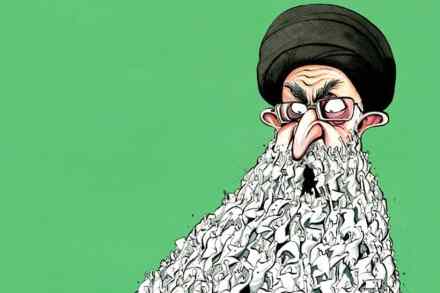
The US and other western countries are faced with a dilemma: how to bring to justice a man with the blood of thousands on his hands when you have to do business with him. Ebrahim Raisi’s path to the presidency of Iran is strewn with corpses. He comes to office this month already under American and European sanctions for the mass murder of prisoners in 1988. Some 5,000 may have been killed, though we can only guess at the true number of dead. It was a crime against humanity in the strict legal meaning of that term. At an earlier stage in his career, Raisi is said to have personally supervised the torture of dissidents, but in the 1988 case his responsibility was bureaucratic. He was a grim fanatic, eager to carry out orders. He was — and remains — Iran’s hanging judge.

raisi

What Syria should teach us about Venezuela

It is no mere coincidence that Donald Trump turned his attention to Venezuela straight after announcing the withdrawal of US troops from Syria. Nicolás Maduro, fighting for his survival on so many fronts at home and abroad, probably hasn't had much time to think about the man who thus inadvertently created the political quagmire engulfing him: Syrian leader Bashar Al Assad. Maduro would do well, though, to brush up on how Assad survived against all the odds, as would Trump. The knowledge could prove invaluable for averting another reckless US push for regime change abroad. Trump's decision last month to accept Assad remaining in power in Syria enraged many Middle East hawks, who long saw Assad's removal as the springboard for war against Iran.

maduro venezuela syria