Foreign policy

The problem with Thomas Massie

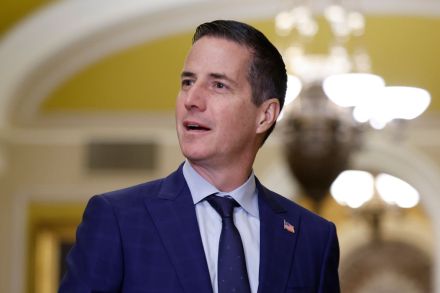
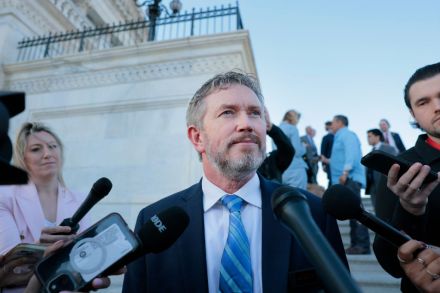
Thomas Massie’s predicament, as he fends off a Trump-backed challenger – and Trump himself – in the Republican primary for his seat in Congress, is symbolic of the vexed relationship libertarians have with the right these days. Massie was not only a Tea Party Republican when he was first elected in 2012, he was a Ron Paul Republican, inspired by the longtime, philosophically libertarian Texas congressman who made his second bid for the GOP presidential nomination that year. The Commonwealth of Kentucky had sent Paul’s son, Rand, to the US Senate two years before, and its 4th congressional district put Massie in the House. Libertarians are natural junior partners in someone else’s enterprise ​Now Trump is trying to take him out.

Thomas Massie
landlord

Landlord Trump, the tenants’ best bet

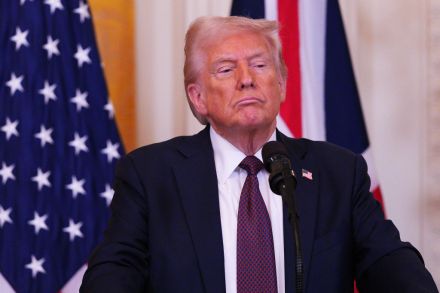
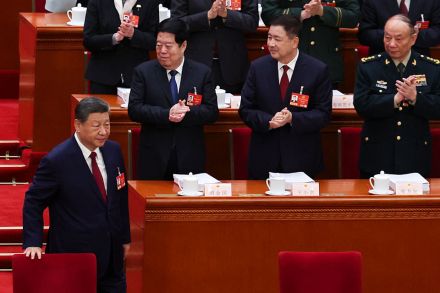
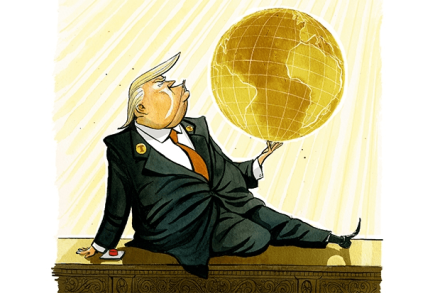
Donald Trump is the world’s largest landlord — not in his own capacity, perhaps, but in his role as leader of the most powerful nation on earth. He’s the CEO of America, and his development corporation owns the Western hemisphere. It also owns property in Europe, where the tenants are troublesome and are always behind on their rent. There are just a few other landlords on the planet, notably Vladimir Putin, who isn’t a rival, and Xi Jinping, who is. This might sound like a perspective on world politics for someone who rose to prominence in the cutthroat environs of New York real estate. Yet the truth is that government is always about who’s the landlord and who’s the tenant.

Will the war in Iran really weaken China?

Analogies in international politics are tricky and easily abused, yet they remain irresistible because they can illuminate patterns that are otherwise hard to see. Consider the present moment.  Just as Ukraine has become a growing burden for Washington and its Western allies, Iran is now a strategic burden for Moscow and Beijing. The US, particularly under the Trump administration, appears to be placing less emphasis on supporting Ukraine. Something similar may be happening in reverse with Iran.  Moscow continues to provide Tehran with assistance – most notably intelligence on US military targets – but the broader pattern suggests caution rather than deep commitment.

China Iran

Gabbard 2028, anyone?

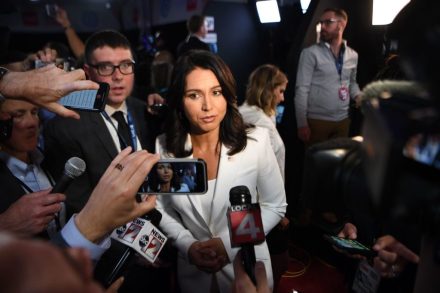
"The United States needs to stay out of Venezuela," said Tulsi Gabbard. "Let the Venezuelan people determine their future. We don’t want other countries to choose our leaders – so we have to stop trying to choose theirs."That was in 2019, when Gabbard was still a rebellious anti-war Democrat. Nobody then could have predicted that, six years on, she would be Donald Trump’s Director of National Intelligence (DNI). But in 2024, Gabbard jumped aboard the Trump Train and became a key player, alongside Robert F. Kennedy Jr., in the big realignment of that year. Yet now, she finds herself isolated. Her dovish foreign policy views make her a bad fit for an administration committed to the "Donroe Doctrine" – and, asserting itself through violence in Latin America.

Tulsi Gabbard

Did Robert McNamara know Vietnam was unwinnable?

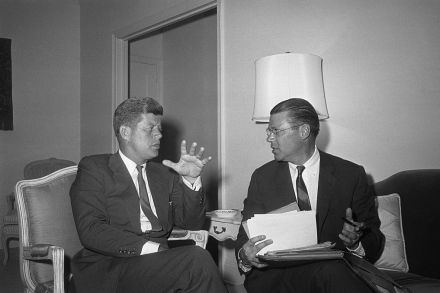
Former US defense secretary Robert McNamara was known in Washington as a relentless, humorless taskmaster or even “a computer on legs.” Then on February 9, 1962, a little over a year after taking office, McNamara made headlines when he danced the twist with Jackie Kennedy at a White House party. A few days later, the then-first lady sent by hand to McNamara a lighthearted Valentine collage she had made from the news coverage of their dance. After her husband’s assassination, their friendship deepened. Jackie’s opposition to the Vietnam War grew, as did her conviction that McNamara secretly opposed it.

mcnamara

The case for MAGA imperialism

Empire has always been part of the American tradition. We are a sequel state to the greatest empire in world history. Our period of colonial tutelage under that empire taught the lessons of legitimate territorial expansion against French and Spanish rivals. Our continental aggrandizement after independence was necessary. Later overseas expansion, including periods of imperial apprenticeship in places such as Liberia, the Philippines and Panama, was further evidence of our colonial métier. Like it or not, imperialism and colonialism are congenital to the American experiment. This has been the case since 1779, when the Continental Congress branded a proposal to limit westward expansion an “intolerable despotism.

Imperialism

Memories of the 12 DAY WAR

President Trump didn’t start the war. But if we’re to believe the greatest social-media post of all time, he sure finished it, and quickly. Either way, he definitely branded it, and in geopolitics, as in business, branding is everything. If you break the terms of the brand, Israel and Iran have found out, the President is going to whup you, at least verbally. “Upon the 24th Hour,” Trump posted yesterday about a peace of his own making on Truth Social, a website of his own making, “an Official END to THE 12 DAY WAR will be saluted by the World. . . . On the assumption that everything works as it should, which it will, I would like to congratulate both Countries, Israel and Iran, on having the Stamina, Courage, and Intelligence to end, what should be called, ‘The 12 DAY WAR.

America no longer knows how to fight a war

When educated Americans think about war, they’re apt to think of it in ideological terms. Wars are fought between dictatorships and democracies and the goal is to establish one form of government or the other in the defeated opponent’s territory. That’s certainly been the way American policymakers have thought about the wars of this century and it was the framework during the Cold War as well, when the conflict was said to be, fundamentally, a clash of ideologies. The French Revolution is probably the source of this concept, as the wars it set off were indeed largely about regime change, if not that alone.

war

Why Washington should make Latin America a priority

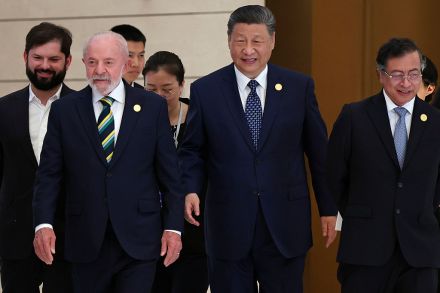
As American eyes remain fixed on the Middle East — understandably so — China has been rolling out the red carpet for Latin America, and we have barely noticed. While Xi Jinping welcomes Colombia, one of Washington’s historically reliable allies, into the controversial Belt and Road Initiative, he’s also introducing visa-free entry for South America’s largest economies and greeting regional leaders in Beijing with billion-dollar credit lines and lavish, all-expenses-paid political junkets. Washington, meanwhile, was… busy. If this sounds familiar, it’s because it is. The US has been snoozing through Latin America’s strategic realignment for years, occasionally waking up to mutter something about narcos or illegal migration, then hitting the snooze button.

washington

Trump’s foreign policy isn’t unprincipled

"He [Donald Trump] sees American leadership as merely a series of real estate transactions." That was the verdict of the Democratic senator Elissa Slotkin following the President’s address to Congress. Trump 2.0 does, admittedly, have the appearance of a political version of The Art of the Deal, in which the Donald is prepared to leverage a bilateral compact with every country in the world — so long as the price is right. There are no friends in The Art of the Deal, no permanent friends anyway, only prospective business associates. Ukraine wants the flow of armaments to resume? Sign over the rights to half your natural resources.

Trump

China’s response to Trump’s tariffs marks a dramatic escalation

Might peace in Ukraine be prelude to an even more serious conflict between the United States of America and China? Is that a hysterical question? The deal-or-no-deal drama starring Donald Trump, Volodymyr Zelensky and European leaders has dominated the news in recent days, so much so that the latest clash between Washington and Beijing has gone all but unnoticed. Yet China’s official response to the Trump administration’s move to raise its tariffs on Chinese imports to 20 percent does appear to mark a dramatic escalation. "Exerting extreme pressure on China is the wrong target and the wrong calculation,’’ said China’s foreign ministry spokesperson Lin Jian. "If the US has other intentions and insists on a tariff war, trade war or any other war, China will fight to the end.

How Trump is revolutionizing Washington

Weeks into his second term, it’s clear President Trump intends to be the most transformative force our politics has seen in a century. He seems equally determined to change the course of the world — and perhaps its map, too. Trump’s enemies can blame themselves for making this possible. They showed him that impeachment is nothing to fear: securing conviction in the Senate is nigh impossible and whatever damage impeachment might do to a president’s reputation has already been inflicted on Trump. Two impeachments and a welter of post-presidential criminal prosecutions and even convictions failed to stain Trump in voters’ eyes. On the contrary, they left him more popular than ever and discredited the institutions his opponents employed as weapons of their “lawfare.

Trump

Get ready for Trump’s ‘FAFO’ foreign policy

President Donald Trump posted an AI-picture of a gangster version of himself on Instagram at around 3 p.m. Sunday. Behind the fedora-clad figure, the text “FAFO” — short for “fuck around and find out” — appears alongside a smiling face.  What happened earlier that Sunday, and the machine-made picture that followed, tells us a lot about how Trump 2.0. will deal with the world.  After two planes carrying Colombian illegal aliens departed the United States this weekend, self-proclaimed humanist and former guerrilla fighter Gustavo Petro, Colombia’s president, refused to allow the plane to land. “I deny the entry of American planes carrying Colombian migrants into our territory,” Petro said on X.

tulsi gabbard

Tulsi Gabbard will bring sunlight to a rotten system

First, a disclaimer: Tulsi and I are good friends. Despite our political differences, we’ve forged a deep bond over the years.  At our first lunch together, we got kicked out of the restaurant because we couldn’t stop talking. Today, I’m proud that she and her husband Abraham are godparents to my eldest daughter, Liberty. It’s because I know Tulsi so well that I understand why she would make an excellent director of national intelligence. Americans have understandably lost trust in our intelligence services. In choosing Lieutenant Colonel Gabbard, President Trump has picked a highly-qualified, reform-minded leader who can regain that trust.

The heterodox cabinet

As Inauguration Day approaches, the second Trump administration is staffing up. The president-elect’s picks are more or less what everyone expected, outside of a few curveballs. To be honest, the lack of outrage from Trump critics is the big surprise: apparently Trump Derangement Syndrome is a passing fever; even many who’ve argued against him seem to see some logic in the administration of outsiders he’s been signaling he’ll pick for years. In Washington, where almost nothing changes from administration to administration, these cabinet picks might actually be able to effect some meaningful disruption. In almost every role that matters, Trump has opted for a nominee who has been an extreme critic of the very body he or she is set to oversee.

cabinet
Trump

Trump’s new world order

Donald Trump’s ascension to his second presidency comes with a new cadre of followers and sidekicks, in the form of a cabinet built almost entirely from fresh faces. This is not a president interested in continuity, which he signaled early on, stating on social media that Nikki Haley and Mike Pompeo — his erstwhile United Nations ambassador and secretary of state — would have no place in his second administration. The first name wasn’t a surprise, given the obvious tension he had with the woman who was his last challenger in the primary. The second was because Pompeo had been a dutiful supporter of Trump while in office, wrote a book defending their shared record on foreign policy and rejected the opportunity to run himself.

Biden-Harris should help destroy Iran’s nuclear and missile infrastructure

Iran on Tuesday launched 180 ballistic missiles against Israel, a democracy the size of New Jersey. It was the largest escalation to date in a year-long, seven-front war waged by the world’s leading state sponsor of terrorism against Israel, the United States, and global maritime shipping. President Joe Biden and Vice President Kamala Harris must come to terms with the fact that this attack resulted from their own foreign policy — subsidized by billions of dollars in US sanctions relief, legitimized by strategic accommodations to Tehran, encouraged by pressure on Israel and invited by the non-stop signaling of American fear of escalation.

Seized Russian assets should be used against Putin

The seizure of enemy treasure, formerly known as plunder and pillage, is an ancient tool of war. Though still practiced in the world’s nastiest conflict zones, it’s a tricky business within a rules-based international order. The G7’s agreement to lend $50 billion to Ukraine — using income from $300 billion of frozen Russian assets to cover interest and repayments on the loan — is a vivid case in point. And some would say, a lily-livered half-measure. The key feature of the deal is that it does not actually claim ownership of Russian loot — which however ill-gotten is mostly held in EU banks in the form of western government bonds. It merely diverts interest payments due on the bonds from the issuing governments.

Russian

Who actually gets hurt by sanctioning Russia?

The US crackdown on trade finance for Russia from international banks — designed to impede imports needed for the continuing assault on Ukraine — is biting hard, reports the FT, quoting an investor who thinks “the logical endpoint of this is turning Russia into Iran.” Quite right too: sanctions like these are a vital non-military way to hobble Vladimir Putin’s campaign. But war and finance intersect in many different ways. Consider also the fate of 400 western-owned commercial aircraft that were leased to Russian airlines before the invasion in February 2022. Now stuck in Russia or its satellites, unmaintained to western standards and unfit to fly back into our airspace, they’re a potential multibillion loss for their owners and insurers.

Russia

David Cameron meets Trump at Mar-a-Lago

Lord Cameron, the UK foreign secretary, is stopping off at Mar-a-Lago tonight before once again making the rounds in Washington, DC to tub-thump for Ukraine aid. Cameron, who served as Britain's prime minister from 2010 to 2016, is meeting with Republican presidential candidate Donald Trump, who has been skeptical about Ukraine’s prospects of beating back the Russian invaders. A spokesperson for the UK Foreign Office downplayed the significance of Cameron meeting Trump as "standard practice." “The foreign secretary is on his way to Washington DC, where he will hold discussions with US secretary of state Blinken, other Biden administration figures and members of Congress," the spokesperson said.

david cameron