Foreign aid

Trump is working overtime to restore the rule of law

From our US edition

In the matter of Donald Trump v. Leviathan, let me begin by stipulating that Sir Thomas More was right in A Man for All Seasons when he remonstrated with his future son-in-law William Roper.  Roper was urging More to arrest the scheming Richard Rich, whose machinations would eventually lead to More’s execution. But, More points out, Rich had broken no law.   William Roper: So, now you give the Devil the benefit of law! Sir Thomas More: Yes! What would you do? Cut a great road through the law to get after the Devil? William Roper: Yes, I’d cut down every law in England to do that! Sir Thomas More: Oh? And when the last law was down, and the Devil turned ’round on you, where would you hide, Roper, the laws all being flat?
Putin tariffs

Keir Starmer’s welcome embrace of realism

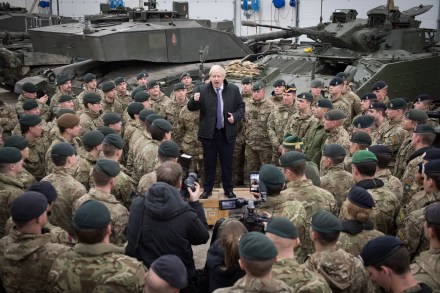
Sixty-five years ago, a British Prime Minister acknowledged that a new world order was coming to pass and that it was time to lay down a burden the country could, and should, no longer shoulder. Harold Macmillan’s ‘wind of change’ speech in Cape Town signalled the eclipse of empire, the retreat of Britain from imperial pretensions and a new age of nationalism in Africa. Today, our own Prime Minister has trimmed his sails to catch a very different wind of change. He is navigating a new path – necessitated by the impact of Storm Donald from across the Atlantic. Sir Keir Starmer has indicated that Britain is willing to bear new burdens, shoulder graver responsibilities and prepare for a new era of realism across the globe.

The reformation of the Labour party

The world order has shifted on its axis, having been given a peremptory boot by the US President. What is striking to me is the speed with which our government has accustomed itself to the new dawn, overnight, almost with a sense of relief. Listen to senior Labour figures today and they do not always sound like the internationalist lifestyle-leftist Labour ninnies of old. They sound rather less internationalist than previous Conservative administrations. A whole stupid ideology seems to have been shed within a week or so. It would not surprise me hugely to hear Keir Starmer talk of ‘remigration’ in fond terms in the not-too-distant future.

Letters: The brilliant uselessness of art

Wonderfully useless Sir: Michael Simmons overlooks some scandalous examples of frivolous funding right under his nose (‘Waste land’, 15 February). A few minutes from our offices, there are several vast buildings, all lavishly subsidised by the taxpayer, whose sole purpose is to allow hordes of strangers to stare at rectangular sheets of fabric on which are daubed various colours and shapes – most of which quite wastefully replicate things that we can already see with our own eyes in the real world.

Letters: The real value of independent schools

Strength of service Sir: Matthew Lynn and Steven Bailey (Letters, 1 February) are quite wrong to deplore the decline of Britain as a manufacturing nation. Manufacturing – especially of the heavy sort – is best suited to a country with plenty of space, little regulation, cheap energy and cheap non-unionised labour. That was once the case for Britain but it is no longer; nor is it so for the majority of European countries. Germany epitomises the folly of mindlessly adhering to manufacturing, as is well explained in Wolfgang Munchau’s excellent book Kaput. Britain, on the other hand, has successfully diversified into services and is now the world’s second-largest exporter of this income earner.

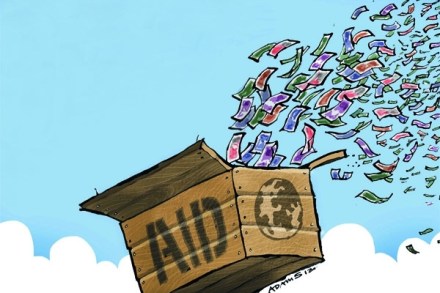
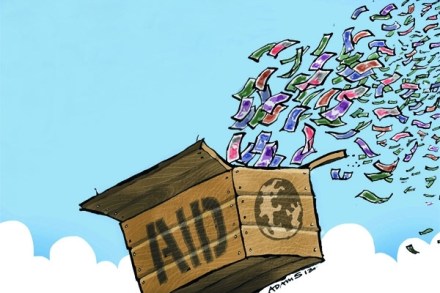
America has seen sense on aid. When will we?

The new administration in Washington has somewhat startled its critics by issuing a blizzard of executive orders during its opening weeks in office. So far the reaction from the American left might be summed up by the sentiment: ‘That’s not fair – it’s only us that are allowed to do things when we are in power.’ The American left are in a particular funk about the Department of Government Efficiency (Doge) – as though railing against the proposed reduction of federal spending and reduction of the American deficit is a natural vote-winner. But good news does just keep on coming. On Monday, Elon Musk said that President Donald Trump had agreed to shutter USAID – the US government money spigot that sprays money around the world, much of it to people who hate America.

‘Trumpists and Communists’ on Ukrainian NGO list fight back

From our US edition

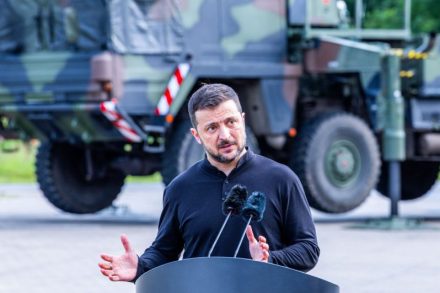
A US government-affiliated Ukrainian NGO, texty.org.ua, published a list last week of all the Americans “impeding aid to Ukraine.” There are 388 individuals and seventy-six organizations on the list, including members of the conservative media Alex Jones, Tucker Carlson, members of Congress and a few Spectator writers. The piece is titled “Rollercoaster: From Trumpists to Communists. The forces in the US impeding aid to Ukraine and how they do it.” “The title of this article oversells the product: it is a substantively thin piece, largely an excuse to smear a large group of Americans who have been skeptical of aid to Ukraine in one form or another,” Senator J.D. Vance and Representative Matt Gaetz wrote in a letter to secretary of state Antony Blinken on Tuesday.

ukraine ngo

Congress approves massive foreign aid package

From our US edition

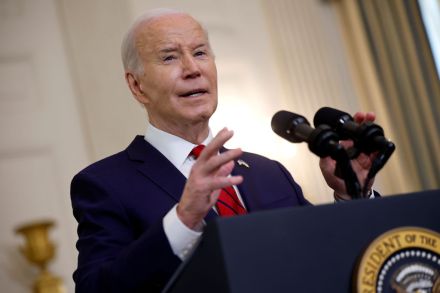
President Joe Biden signed the foreign aid package, which features $95 billion for Ukraine, Israel and Taiwan, on Wednesday after the bill swiftly moved through Congress. The breakdown of aid is as follows: $61 billion for Ukraine, $26 billion for Israel and $8 billion for Taiwan.Speaker Mike Johnson infuriated some of his Republican colleagues by even negotiating on the legislation, let alone bringing it to the House floor for a vote; he previously said he would not move any foreign aid until Democrats agreed to give additional funds for border security. Instead, after the Senate rejected the border security bill HR-2 and Johnson rejected the Senate-negotiated immigration package, the speaker made moves to go ahead with sending money abroad anyway.

The UN’s constant famine crisis problem

From our US edition

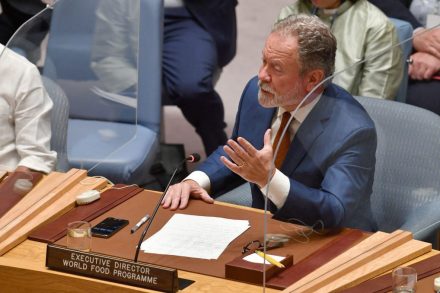
David Beasely, head of the UN’s World Food Program, has said that 350 million people are at risk of hunger and 50 million are “knocking at famine’s door.” Cockburn sees this as a serious humanitarian issue, which is why he is also concerned about the UN’s growing messaging problem. For years, the UN has raised the alarm about impending famines, but in most cases — either because of its efforts or other factors — such catastrophes have not yet come to pass. This is excellent news, and speaks to the skill and dedication of aid workers both in the UN and beyond — but it also risks creating the false impression of crying wolf. Since the US withdrew in 2021, Afghanistan has been in a dire state.

un world food famine crisis

Europe is more bark than bite on Ukraine

From our US edition

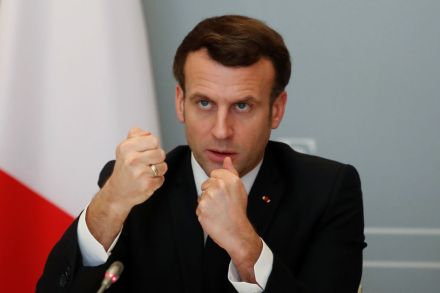
Last Friday, President Biden signed a spending bill that will keep the government’s lights on until December 16, when lawmakers will have to cobble together a funding resolution to avert a shutdown. Tucked into that law was another tranche of security and economic assistance to Ukraine, to the tune of $12.3 billion. The signing came two days after the Defense Department announced the release of an additional $1.1 billion military package for Kyiv, which will include 18 more HIMARS systems, 150 armored vehicles, and ammunition of various calibers. The Biden administration has provided the Ukrainians with over $16 billion in security assistance since Russia’s invasion in February. Washington’s hands have been cramping up from writing so many checks.

macron europe blame

The rise of the unwhippable Tories

When the government announced a Commons vote on its decision to cut the foreign aid budget from 0.7 per cent of GNI to 0.5, the expectation was that the vote would be tight. In the end, the government won comfortably: it had a majority of 35. But despite their success, the whips would be wrong to be feeling triumphalist about this, I write in the magazine this week The usual whips’ line — if you keep your nose clean preferment might come your way — is ineffective Twenty-four Tories voted against the government, 14 of which were former ministers. The overwhelming majority of these are either uninterested in returning to ministerial office or are only interested in doing so on their terms.

The callousness of the Conservative foreign aid cut

A billionaire who reduces his or her charity is a billionaire asking to be judged and found wanting. When they do so, not on the basis that their charity is squandered but because they fancy keeping more of their wealth for their own purposes, they demand to be judged and found wanting all over again. This morning, the United Kingdom and its government is that billionaire. The government has won its campaign to reduce Britain’s foreign aid contributions. As so often, a much-vaunted Tory rebellion delivered rather less than it promised. As a consequence, money will be withheld from some of the world’s poorest peoples and kept instead by some of its wealthiest. Of course voters — from across the political spectrum — hate foreign aid. But what of it?

The vote to cut foreign aid is looking tight

Things are looking tight this morning for the government’s vote on aid spending. Ministers were hoping that springing the vote on rebels at the last minute might help to peel away some softer MPs, and there's a list doing the rounds this morning of 14 backbenchers who’ve said they are supporting a compromise which would mean the government committing to restoring the 0.7 per cent target when economic conditions improve, using OBR forecasts to gauge when that is.

The foreign aid vote may shatter Boris’s fragile majority

The vote on the cut to the foreign aid budget, which Jacob Rees-Mogg has just announced in the Commons, will be tight. The government has said that it plans to return to its manifesto commitment of 0.7 per cent but only when the Office for Budget Responsibility's forecasts show the UK is no longer borrowing for day-to-day spending and the debt is in decline. But that may not be enough to edge it given that the rebels want it restored when the economy returns to pre-pandemic levels, which will come much sooner. Reducing the aid budget from 0.7 per cent of GDP to 0.

Boris Johnson takes aim at ‘lefty’ aid rebels

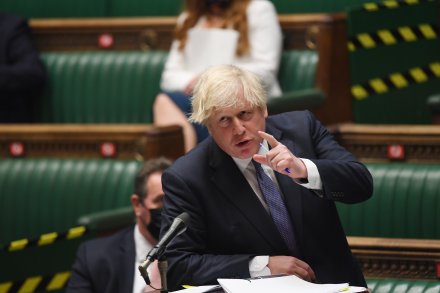
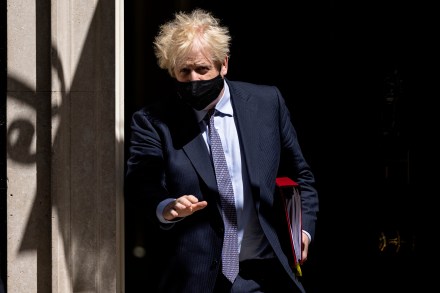
Normally when a Prime Minister goes on the attack in the Commons, it's the opposition in his sights. Not so today, when Boris Johnson accidentally attacked his own MPs, including former prime minister Theresa May, for being 'lefty' propagandists. He was responding to questions from SNP Westminster leader Ian Blackford about the cuts in foreign aid spending from 0.7 per cent to 0.5 per cent, and said: 'We are in very very difficult financial times but you shouldn't believe the lefty propaganda that you're hearing from the people opposite.' Blackford was amused by this and quipped that he'd never expected to hear May referred to as a leftist.

In defence of the foreign aid cut

It says something for the persuasive powers of former international development secretary, Andrew Mitchell, that he mustered enough potential votes to inflict defeat on Boris Johnson’s government, if only his amendment had been permitted and a vote had been held. Mitchell’s consolation prize, awarded by the Speaker in recognition of the strength of feeling in the Commons, is an emergency debate on what would have been the substance of his amendment: to reinstate foreign aid at 0.7 per cent of GDP from next year, rather than the reduction to 0.5 per cent that was set in the Budget.  The rift this row has exposed among Conservative MPs could embarrass the Prime Minister as he prepares to host G7 leaders in Cornwall.

Boris Johnson avoids a Commons vote on foreign aid

Update: Commons speaker Lindsay Hoyle has announced that a vote on the aid spending amendment has not been selected. Hoyle says the amendment is out of the scope of the current bill, meaning Boris Johnson will avoid a potentially difficult vote on the issue – for now. Hoyle suggested the government should give MPs an opportunity for a vote at a later date on restoring the foreign aid pledge to 0.7 per cent of gross national income. As preparations get underway in Downing Street for this week's G7 summit, trouble is brewing in the House of Commons. The government is facing a potential defeat on a vote it didn't want to have: the cut to the foreign aid budget.

No. 10 should expect an aid rebellion

If a vote is called on the government’s aid cut on Monday, it will be very tight for the government. Andrew Mitchell is a former chief whip as well as a former development secretary and it is hard to believe that he would have put this amendment down if he didn’t have the numbers to defeat the government. This is, in some ways, an odd rebellion. The rebels claim they are not really rebels at all and just trying to uphold the Tory manifesto from the last election. But the size of this rebellion should concern Boris Johnson and the Tory whips. It highlights how many former ministers there now are on the backbenchers who are prepared to defy the government.

Trade not aid: spending more doesn’t mean we care more

Outside the Catholic mission I walked through rows of women in traditional hide skirts, squatting or sitting with legs astride, palms upturned in supplication. Many suffered from scabies and cradled emaciated babies, and all looked 20 years older than their true age. These are my memories of the Uganda famine in 1980 and these were the survivors. Africa is a different place today and so are the methods used to combat famine. But this was where I learnt about the contradictions of overseas aid. Aid is pernicious, and injudicious aid can destroy all before it. Take food aid. It is wonderful for saving those in extreme peril, but once the extreme event has passed, it destroys farmers and local markets, and inevitably leads to corruption.

The foreign aid cut marks a change of priorities

The proposed reduction in international aid from 0.7 to 0.5 per cent of GDP has elicited a furious reaction from some quarters. It has been condemned by five former prime ministers, three of whom never met the target when they were in office. What is missing from this debate is the historical context. The rise in development spending was part of the peace dividend that followed the end of the cold war. But the just-concluded defence spending settlement marks a UK recognition that this peace dividend is over — great power competition is back and this country’s military spending now needs to increase. Over the next decade or so, military spend is likely heading back to the level it was when the Berlin Wall fell.