Film

Peace on Earth? 10 films about Christmas on the front line

From our UK edition

Christmas may ostensibly be a time of goodwill to all men, but war rarely takes a break for the festive season – as events in Ukraine sadly demonstrate. Here are ten films set during Yuletide where the front line is front and centre: Castle Keep (1968) – Amazon Rent/Buy https://www.youtube.com/watch?v=8uALKeb0C6U&t=1s Sydney Pollack’s (Three Days of the Condor) Castle Keep is set during the Germans’ failed Ardennes offensive of December 1944 and stars Burt Lancaster as one-eyed US Major Abraham Falconer. But if from that description you expect a meat-and-potatoes world war two actioner, think again.

An ingloriously dumb adaptation

There’s always been a market for nostalgia. Keats, the huckster of Greek glories, put it best: “Heard melodies are sweet, but those unheard are sweeter.” But the peculiar achievement of Lester Bangs, the cantankerous rock critic played by Philip Seymour Hoffman in the film Almost Famous (2000), is to sell us some self-confessedly unsweet music. True rock and roll, the Bangs character tells us, is “gloriously and righteously dumb” and could suffer no worse fate than to become an “industry of cool.” Of course, by his lights, the golden age has passed; all that remains is “the death rattle, the last gasp, the last grope.” If nostalgia is a drug, he has mainlined the stuff. What are you on, man, and where can I get some?

almost famous
Cleopatra

Cleopatra still dazzles sixty years later

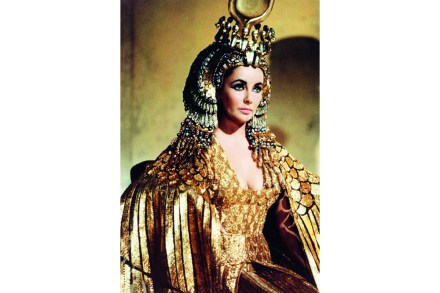
It’s a dazzlingly staged event that evokes the ancient theater, Italian operas, elaborately choreographed Busby Berkeley films and an open-air spectacle on par with WrestleMania at Caesar’s Palace. I’ve watched it knowing that as a small boy, I tugged on my mother’s blue jeans and asked a question informed purely by cinema: “Is Cleopatra the most beautifulest woman in history?” “No,” replied mother, with a cigarette stuck between her clenched teeth. “Elizabeth Taylor is.” I was, of course, picturing Elizabeth Taylor as Cleopatra. The event I’m referring to isn’t mere cinematic overindulgence; it is a monumental moment — six decades after moviegoers first saw it — which transforms a movie star into a deity.

Remembering Jean-Luc Godard

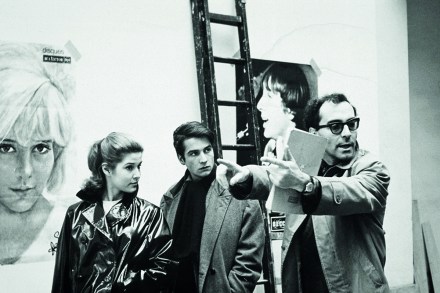
In March 2021, during his last major interview, Jean-Luc Godard reiterated a previous point about the coronavirus being a form of communication. “At first, I thought that production was the main aspect of cinema, and I realized distribution was more important, today more than before. Distribution has choked production by pretending to be at the service of the audience...The virus in its own way, distributes. Today, it would be interesting to know how the virus produces, but we only care about what it distributes.

Godard

The remaking of Margate

From our UK edition

The faded splendour of 1980s Margate is the backdrop for Sam Mendes’s new film Empire of Light, starring Olivia Colman and Colin Firth. Coming to UK cinemas on 9 January, it’s about a romance in the north Kent seaside town and the revival of a striking 1930s cinema with a distinctive brick ‘fin’ tower. Renamed briefly as the Empire Cinema during filming in the spring, Margate's Grade II-listed Dreamland Cinema takes a starring role. In reality it's part of the Dreamland amusement park complex that’s had 102 years of rollercoaster fortunes.

Indiana Jones and the absurdity of Hollywood de-ageing

From our UK edition

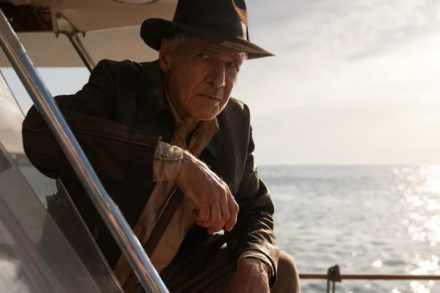
This week, in homes across the land, there is one guarantee: somewhere, someone will be watching one of the Indiana Jones films, and it’ll likely be the first or the third in the series. Raiders of the Lost Ark and Indiana Jones and the Last Crusade are little less than perfect seasonal comfort food: witty, exciting, stuffed full of indelible characters and unforgettable set-piece action scenes. These films stand as those rare pictures that, however many times you watch them, continue to be fabulously entertaining. The others in the franchise – Temple of Doom and Kingdom of the Crystal Skull – are less effective, and the latter has become a byword for mediocrity.

The best Oscar Wilde films

From our UK edition

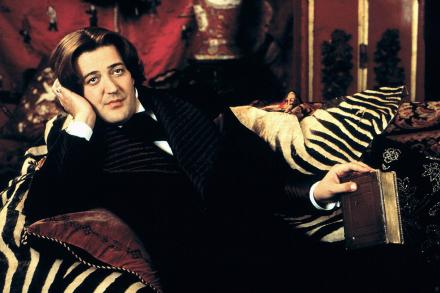
It is 122 years this week since Oscar Fingal O'Flahertie Wills Wilde died – in exile, poverty and disgrace – at Paris’s shabby St Germain Hôtel d'Alsace. His last words were said to be: ‘My wallpaper and I are fighting a duel to the death. One or the other of us must go.’ Despite Wilde’s precipitous fall from grace and the ignominy heaped upon him (his children had to change their surname to Holland), within a relatively brief time his plays were revived and books reissued to renewed popular acclaim. And more than a century later, that appeal hasn’t faded: this year in England alone, The Importance of Being Earnest toured the north and Richard Strauss’s adaptation of Salome was performed at the Royal Opera House.

The return of Lindsay Lohan

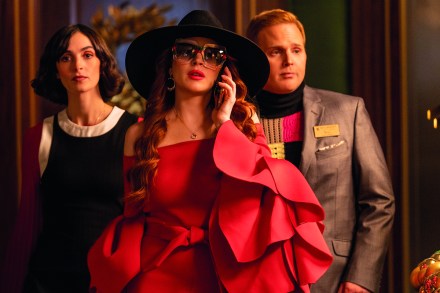
Falling for Christmas has a ridiculous logline: “Newly engaged, spoiled hotel heiress gets into a skiing accident, suffers from total amnesia and finds herself in the care of a handsome, blue-collar lodge owner and his precocious daughter in the days leading up to Christmas.” The Netflix romp is notable only as it marks Lindsay Lohan’s return to a genre that made her famous. “It’s such a refreshing, heartwarming romantic comedy and I miss doing those kinds of movies,” Lohan told Netflix, in earnest, while describing her character as, “Extravagant. Temperamental. Glamorous.” You could build a campy slasher flick or porno off such plot scaffolding; none would be great cinema. And yet Falling for Christmas is more complicated than that. Why?

lohan

Happy birthday Martin Scorsese, the Don of movies

Later this week, probably the world’s greatest living film director will celebrate his eightieth birthday. However he celebrates — whether in the company of friends and family in his no doubt opulent Manhattan home, or working on his eagerly awaited new film Killers of the Flower Moon — Martin Scorsese can reach his milestone age in the confidence that his position in cinematic history is assured forever. For a man so steeped in the art and practice of filmmaking — and who has made several excellent documentaries about movies — it must be intensely gratifying for Scorsese to be aware that he is that rarest of persons, a living legend, whose contributions to film will live forever.

‘Luxury’ cinemas are a horror show

From our UK edition

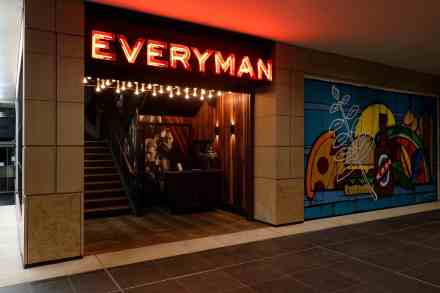
‘I know,’ I said to my friend recently. ‘Let’s see a film!’ We booked the Everyman Kings Cross, the only cinema that happened to be showing what we wanted to watch at a convenient time and location. You might already be familiar with the Everyman concept. According to the chain, it’s ‘redefining cinema’ with an ‘innovative lifestyle approach to our venues, where you swap your soft drink for a nice glass of red wine and a slice of freshly made pizza served to your seat’. And apparently it's popular – an Everyman opened in September in Egham, Surrey, bringing the total to 38, and another one is announced for Durham early next year. But after my latest visit, I found myself marvelling at the success of what might be the most annoying cinema concept on earth.

The truth about the curse of the pharaohs

From our UK edition

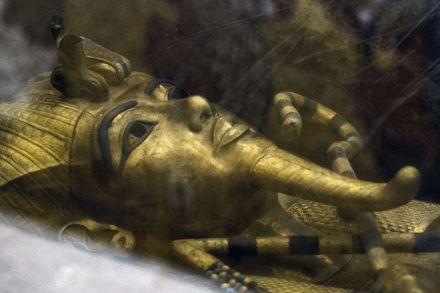
George Edward Stanhope Molyneux Herbert, 5th Earl of Carnarvon, was bitten on the cheek by a mosquito some time in early March 1923. The bite became infected. By April he was running a high fever, had pneumonia in both lungs and his heart and respiratory systems were failing. He died in a Cairo hospital on 5 April. His death came less than six months after Howard Carter, the Egyptologist whose excavations Carnarvon was funding, first discovered evidence that there was an undisturbed tomb in the Valley of the Kings in Thebes. That was on 4 November 1922 – 100 years ago this month. A few days later, Carter, Carnarvon and his daughter, Lady Evelyn Herbert, had squeezed through a roughly-hewn hole in the wall of the burial chamber of Tutankhamun, uncovering its glittering treasures.

Pure scorn without wit or insight: Triangle of Sadness reviewed

From our UK edition

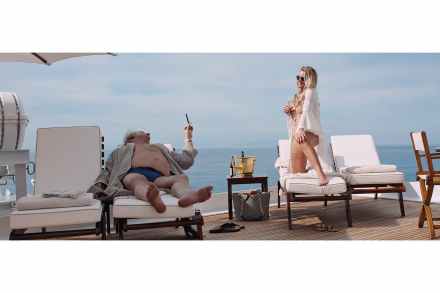
The latest film from Ruben Ostlund received an eight-minute standing ovation after its screening in Cannes and also won the festival’s top prize, the Palme d’Or, and this has left me entirely baffled: what, the film I’ve just seen? The one where every scene is far too long? The one billed as a ‘satirical black comedy’ even though the targets are easy and it doesn’t say anything and I didn’t laugh once? That film? I should add, it’s not for the emetophobic. One of the scenes that goes on far too long involved so much vomiting that I could only watch the bottom 5 per cent of the screen. Ostlund needs someone like my mother in his life to tell him it’s not clever, it’s not funny, pack it in.

At eighty, Casablanca embodies Hollywood high style

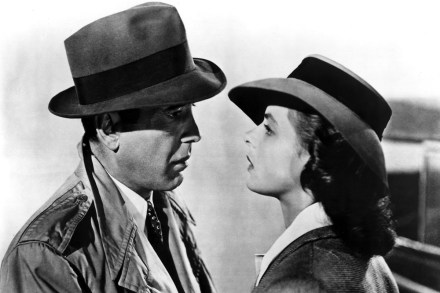
In considering what makes a masterpiece of film, the critical community has its shortlist of highly artistic favorites: Citizen Kane, Vertigo, Battleship Potemkin, the like. But in the hearts and minds of average moviegoers, another kind of picture has come to encapsulate “the big screen”: one with less aesthetic ambition, perhaps, but an exceptional dose of romance and style. For this set, Casablanca remains something like the main attraction. Eighty years ago this November, Warner Bros.

casablanca

Blonde shows a Marilyn Monroe robbed of motherhood

From our UK edition

Andrew Dominik’s film Blonde, a story of Marilyn Monroe's life based on an adaptation of a Joyce Carol Oates novel, has been the subject of much divisive discourse on both sides of the Atlantic. Caren Spruch of Planned Parenthood told the Hollywood Reporter that she sees the film as 'anti-abortion propaganda'. A tweet that went viral said filmmaker 'Andrew Dominik didn’t even try to conceal his anti-choice views and hatred for Marilyn'.

Harry Styles’s behind is the only draw: My Policeman reviewed

From our UK edition

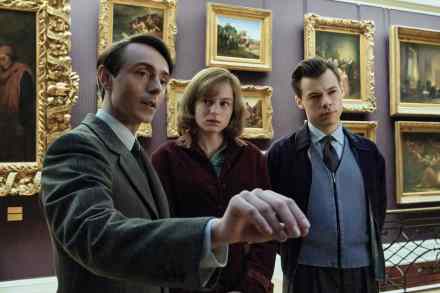
My Policeman is a forbidden love drama starring both Harry Styles – whose bid for movie stardom continues apace – and his naked bottom. The bottom is good. Ten out of ten for the bottom, particularly during a scene in Venice when the light from the window casts it in a golden, buttery glow. But otherwise, this is an average, meek and soporific endeavour which hits quite a few bum notes of the kind that aren’t ideal. It is based on the novel by Bethan Roberts, which in turn was inspired by the romantic life of E.M. Forster, who had a long-term relationship with a married policeman who suffers a stroke and is nursed by his wife, May. (Big shout out for May, I think.

The sexing-up of Emily Brontë

From our UK edition

In a month that has seen more than its fair share of chaos, I had hoped the release of the first-ever Emily Brontë biopic would at last offer some cause for celebration. But Emily, which arrived in cinemas this week, has provided quite the opposite.  Frances O'Connor’s directorial debut focuses on a fling between Emily (played by Emma Mackey) and her father Patrick’s dishy assistant curate William Weightman (Oliver Jackson-Cohen), suggesting that their racy romance inspired Wuthering Heights.  Not only is there no evidence that this relationship took place, but there are clues that it was actually the youngest of the sisters, Anne, who caught Weightman's eye.

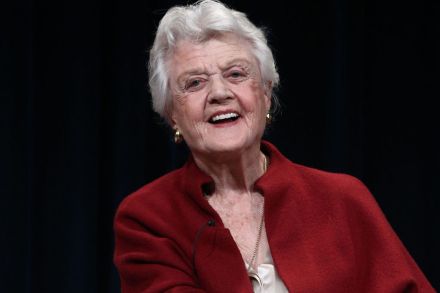
Angela Lansbury was so much more than Murder, She Wrote

The only time I ever saw Angela Lansbury on stage was in 2014 in London, when she played the half-baked medium Madame Arcati in a revival of Noel Coward’s supernatural comedy Blithe Spirit. Although it was rumored that the then-88-year-old Lansbury was having her lines fed to her via earpieces, it did not affect her comic timing one iota. It is no exaggeration to say that Lansbury took a character who has passed into over-familiarity via decades of revivals and made her fresh and hilarious once again. For anyone to achieve this is remarkable, but to do so at an age when most actors would have long since retired is little short of phenomenal. Lansbury’s death at the age of 96 — a few days shy of her 97th birthday — has some uncanny parallels with the recent passing of the Queen.

Ravishing, daring biopic of Emily Brontë: Emily reviewed

From our UK edition

The life of Emily Brontë is an enduring object of fascination. So small, the life, so sparse, so limited. Yet it delivered those magnificent poems and Wuthering Heights. How could this be? Genius, I suppose, paired with a vivid interior life. But as neither of those are cinematic, Emily imagines what could have led her to write as she did. It’s a ‘speculative biopic’, and modern, but there’s no Billie Eilish on the soundtrack or breaking of the fourth wall or jokey intertitles or any of those larks, which is a mighty relief. Instead, it’s daring, and ravishing. If you’d asked me if Emily might have ever tried opium, or had a passionate affair with a sexy curate, I’d have laughed in your face. But here I absolutely bought it.

Bullet Train is an unabashedly manly palette cleanser

David Leitch’s new action movie Bullet Train is noisy, bloody, jokey, highly derivative and, in its plot machinations, positively Delphic. It has the character of a cinematic testosterone injection. Yet, in the Year of Our Lord 2022, when American mass media has been overtaken by a spirit of androgynous wokeness, this unabashedly manly flick works more like a palette cleanser. Based on the novel Maria Beetle by Japanese author Kotaro Isaka, Bullet Train stars Brad Pitt as an American assassin living in Japan. As the picture opens, the executioner has a run of bad luck and wants to get out of the whole shady business.

train
bodies

Bodies Bodies Bodies cancels its characters to death

Movies that define an era — Fast Times at Ridgemont High, Easy Rider, Casablanca — rarely get stuck there, even if anachronistic references and jokes fly by without notice today (does anyone watching Fast Times today know what a mimeograph is?). Annie Hall and Nashville are as particular to mid-1970s America as they are timeless works of art, both emotional panoramas of a period filled with affluent and successful but unhappy people, confused and eventually destroyed by their own wandering eyes and broken hearts. You didn’t have to have lived through the disappointment of the late 1960s — Vietnam, all of the assassinations — to feel the exhaustion and disillusionment of these films: it’s in every frame, often unsaid.