Film

Michael Cimino’s gift to cinema

In the spring of 1981, I committed what the entertainment press of that day regarded as an act of self-abuse: I bought a ticket and sat through Michael Cimino’s epic flop Heaven’s Gate, and then I went back for another viewing before the universally reviled film ended its one-week run at the local cinema. In the four decades since, I have abused myself in similar fashion four or five more times. Heaven’s Gate is a 200-minute-plus mess of beautiful incoherences and stupefying contradictions, its pattern set by a gorgeously preposterous prologue in which forty-something actors Kris Kristofferson and John Hurt waltz across the greensward as newly minted Harvard graduates, class of 1870.

cimino

Warm, charming and tender: Are You There God? It’s Me, Margaret reviewed

From our UK edition

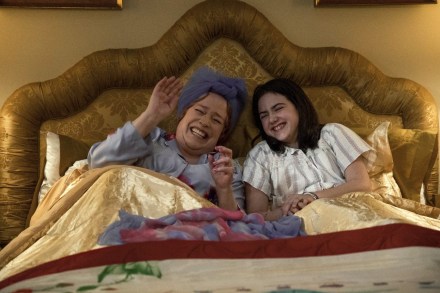
Are You There God? It’s Me, Margaret is an adaptation of Judy Blume’s seminal young adult novel (1970) about an 11-year-old girl who talks to God about her friends and boys and who she wants to kiss and whether she’ll ever get breasts or menstruate. (This could also be called Are You There, Margaret? It’s Me, Your Period, and I’ll Come When I’m Ready!) Not being the target demographic, I assumed I’d be bored to death but, ever the professional, I drank 12 espressos and 17 cans of Red Bull beforehand. That turned out to be wholly unnecessary. This is a wonderfully charming, warm, tender, pitch-perfect film, much better than anything else I’ve seen recently. So that’s a good outcome, even if I did jangle for days afterwards.

The reinvention of Jude Law

From our UK edition

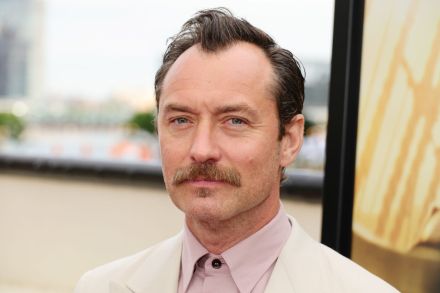
The late director Anthony Minghella made three films with actor Jude Law: The Talented Mr Ripley, Cold Mountain and Breaking and Entering. They would undoubtedly have made more if Minghella hadn’t died at the cruelly young age of 54 in 2008. He referred to the actor as ‘my muse’, but had a more perceptive comment about him too. ‘Jude is a beautiful boy with the mind of a man. A true character actor struggling to get out of a beautiful body.’ For years, Law seemed to struggle with the weight of his good looks, taking on mediocre roles that talent agencies and producers had shoehorned him into. Now, at the age of 50, he has embraced middle age and the greater opportunities for versatility it offers.

Movies to get you in the Eurovision mood

From our UK edition

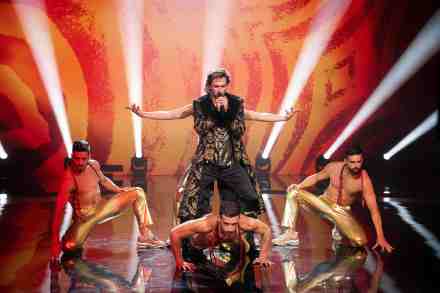
We might never have taken the Eurovision Song Contest terribly seriously in the UK – but with British Ted Neeley lookalike Sam Ryder winning second place last year and the staging of this year’s event in Liverpool, some are singing to a different tune. This year’s UK entry comes from Mae Muller – ‘I Wrote a Song’ is a serviceable enough generic toe-tapper, but no ‘Puppet on a String’ (Sandie Shaw, 1967 winner) if you ask me. Or even ‘Ooh Aah… Just a Little Bit', Gina G’s 1996 banger that claimed eighth place in the contest. Ahead of tomorrow night’s final, here are ten movies to get you in the mood for Eurovision 2023 – films where the plucky underdog (almost always) triumphs.

Deeply moving but bleak: Plan 75 reviewed

From our UK edition

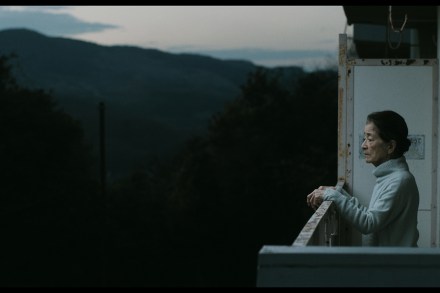
Plan 75 is a dystopian Japanese drama about a government-sponsored euthanasia programme introduced to address Japan’s ageing society. Aged 75 or over? Agree to die and we’ll give you $1,000 to spend as you like in your last days! With a collective funeral thrown in for free! Actually, it’s not sold aggressively like that, as this is an understated film. But, despite the hopeful ending, it is so sad and bleak that if you didn’t feel minded to take $1,000 before, you may feel like taking it afterwards. You could spend it on a spa break and a deluxe sushi platter, which is one of the options, if that takes your fancy. Aged 75 or over? Agree to die and we’ll give you $1,000 to spend as you like in your last days!

Cannes 2023: 10 films to watch out for

From our UK edition

This year’s Cannes Film Festival promises to be interesting viewing, with a record number of female directors in contention (a stark contrast to the 2023 Academy Awards) and a greater than usual representation of old-guard auteurs (including Martin Scorsese, Wim Wenders, Ken Loach and Finnish maverick Aki Kaurismäki). Fans will no doubt be enthused by the return of Jonathan Glazer (Sexy Beast) with his first picture since 2013’s acclaimed Under the Skin. I can’t say Glazer’s choice of material - Martin Amis’s 2014 concentration camp novel Zone of Interest – particularly grabs me, but the director’s work is always worth checking out.

The best coronations in literature

From our UK edition

‘In her big, white dress the Queen looks like a balloon that’s about to float up to the roof of Westminster Abbey and bob about up there amongst the gilded arches and roof bosses. To prevent this happening people keep weighing her down with cloaks and robes, orbs and spectres, until she’s so heavy that bishops and archbishops have to help propel her around.’ This is the coronation of Elizabeth II in 1953 as described by one-year-old Ruby Lennox in Kate Atkinson’s Behind the Scenes at the Museum. These observations might seem preternaturally advanced from a narrator not yet old enough to walk and talk, but that is consistent for this witty novel. It opens with Ruby being fully aware of her own conception: ‘I exist!

Crowning moments: coronations in the movies

From our UK edition

Before Westminster Abbey opens its doors on Saturday, what better way to get in the spirit than to explore the storied history of coronations in the movies? The sheer spectacle of a monarch’s formal coronation has an inherently cinematic aspect – and it's one that motion pictures have long exploited. Here are ten films to savour before the event: The Lord of the Rings: the Return of the King (2003) – NOW, Amazon Rent/Buy https://www.youtube.com/watch?v=r5X-hFf6Bwo Impressive as King Charles III’s coronation is sure to be, it’s unlikely to match the crowning of Aragorn (Viggo Mortensen) as King Elessar in the final instalment of Peter Jackson’s Lord of the Rings trilogy.

Why are there no paintings in Star Wars?

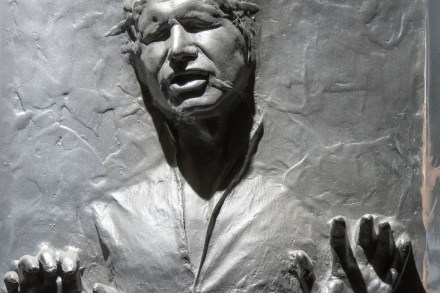
Why are there no paintings in Star Wars movies? The question occurred to me recently, rewatching The Rise of Skywalker. I’m old enough to recall seeing A New Hope in a drive-in in summer 1977, as well as the infamous Star Wars Holiday Special on television in 1978. Over time, my interest in Star Wars has shifted into something akin to nostalgia, so it may not be surprising that this question never struck me before. What is surprising, however, given their glaring omission from the films, is that the man who created the Star Wars universe happens to be a major collector of art — including paintings — and is due to open the Lucas Museum of Narrative Art in Los Angeles by 2025.

Star Wars
movies theaters

The importance of going to the movies

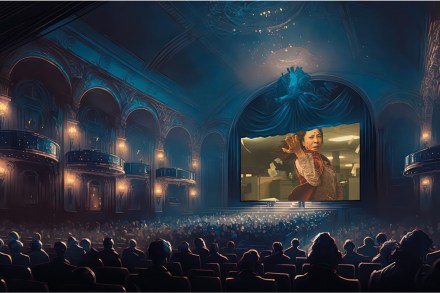
By the beginning of this decade, popular American cinema was once again in peril — just as it was in the 1950s and the Eighties. Then the threat was television and home video, respectively. Now it is streaming. There have been peaks and valleys in between, but before the pandemic, these were the major existential challenges to Hollywood and American movie theaters. The survival of theatrical exhibition after an unprecedented sixteen-month absence speaks to the power of the medium and the ineffable itch that going the movies scratches. Even Steven Spielberg looked desperate, if relieved, when he told Tom Cruise earlier this year, “You saved Hollywood’s ass and you might have saved theatrical distribution” with Top Gun: Maverick.

The case for remaking great films

From our UK edition

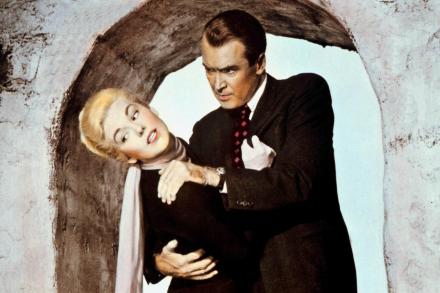
Afew weeks ago, news broke that Paramount was planning to embark on a remake of Alfred Hitchcock’s Vertigo with a starring role for Robert Downey Jr. You are forgiven if your reaction is one of deep scepticism. What can possibly be gained by remaking a film widely regarded as the apex of the art form? What director today can step into the shoes of the Master of Suspense? And who would ever mistake the star of Iron Man for Jimmy Stewart?  Gut reactions of this sort remind us of the scorn with which remakes in general are usually – sometimes unfairly – met. After all, remakes are considered by all fair observers to be inherently synthetic and unoriginal, right?

The romcom is dead

From our UK edition

From bucket hats to Britney Spears, the 1990s and 2000s are back in vogue. Who could have predicted that the cringe-inducing baggy trousers and All Saints-esque crop tops that filled teenage wardrobes 20 years ago would be resurrected with such gusto by Gen Z? But there’s one part of turn-of-the-century culture that remains firmly consigned to the past. Unlike the clothing of the era, the romcom has proved remarkably resistant to modern reinvention – no matter how hard Hollywood tries. Last month, two romantic comedy veterans – Reese Witherspoon and Ashton Kutcher – reunited in a stoic effort to woo audiences back to the genre.

Why were 2000s movies so hypersexual?

Even though the endless debate about sex scenes in movies recurs every three or four months, it remains fixed. Nothing ever moves forward; nothing more is understood; no one’s perspective is shifted. Dug in on both sides of an argument that remains black and white, people refuse to move. Maybe one day they’ll be able to talk in Technicolor, but for now, some are distressed by erotic cinema and others are desperate for more of it. Stellar home-video labels like Severin, Arrow and Vinegar Syndrome continue to provide high-definition discs of genre films full of naked women and bloody bodies. But if Tom Cruise is the only real movie star left, the world won’t get more than a chaste kiss (maybe) from modern American cinema.

sex

Plot twist: the 10 most surprising Best Picture Oscar winners

From our UK edition

The received wisdom that the Oscar for Best Picture always goes to mainstream, generally inoffensive ‘quality’ pictures is only partially true. There have been multiple exceptions to this – and increasingly so over recent years, with an influx of younger Academy voters and a desire to be seen as more progressive than in the past. Who knows what it might mean for this year’s Best Picture nominees – which are All Quiet on the Western Front, Avatar: The Way of Water, The Banshees of Inisherin, Elvis, Everything Everywhere All at Once, The Fabelmans, Tár, Top Gun: Maverick, Triangle of Sadness and Women Talking.

The legacy of Chaim Topol

From our UK edition

In 1969, for my seventh birthday, I was taken – dragged, probably – ‘up west’ to the theatre to see a musical. As I recall, it didn’t fill me with joy to be going, but it turned out to be fantastic. The songs, the acting, the dancing: it was great fun. Then we went for pasta in Soho, which was also a special event in those days. More importantly, though, I think it was the first time I became truly aware of a vital part of my identity: that I was here because decades earlier my great-grandfather had arrived on these shores, driven out of his native Russia by a pogrom, the ethnic cleansing of Jews across that vast country.

The Christian movie finally finds its niche

When Mel Gibson’s ultra-violent, ultra-religious Passion of the Christ made $612 million worldwide, it was not earning its money from teenagers looking for a night out. Despite its R rating, churchgoers were being bused to theaters by the millions, thanks to the heavy support it received from evangelical Christian groups. Everyone from Billy Graham and Jerry Falwell to Pat Robertson and Chuck Colson came out in support of the film, although the Pope’s supposed endorsement — "it is as it was" — was denied by the Vatican. Yet faith-based films have quietly been big business in Hollywood for decades now.

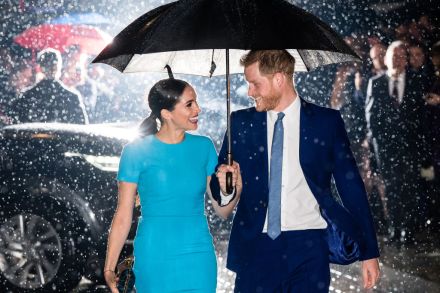
Harry, Meghan and the rise and fall of the folie à deux

From our UK edition

I was interested to read that the next Joker film has the subtitle ‘Folie à Deux’ – a lovely phrase not used enough these days. When shrinks talk about folie à deux (also known as Lasègue-Falret Syndrome, after the 19th-century French psychiatrists who discovered it) they mean a ‘shared delusional disorder’ in which symptoms of an irrational belief are transmitted from one individual to another – including folie en famille or folie à plusieurs ('madness of several’), sometimes leading to violence and even murder.

Bored of the Rings: the Tolkien industry has gone far enough

From our UK edition

In 1969, Henry Beard and Douglas Kenney, future founders of National Lampoon, published a satirical takedown of J.R.R. Tolkien’s Lord of the Rings, entitled Bored of the Rings. It holds up remarkably well today as a closely observed parody of Tolkien’s more windy stylistic tics. One critic, David Bratman, remarked: 'Those parodists wrought better than they knew. I think it is highly significant how close Tolkien came to inadvertently writing the parody version of his own novel – and how completely, in the end, he managed to avoid it.

Mary Blair, doyenne of Disneyland

On a cold day at Disneyland, I walk through sugarplum-scented air, past a midcentury-modern poster for Alice in Wonderland, and beneath a plaque that reads, “Here you leave today and enter the world of yesterday, tomorrow and fantasy.” Walt Disney — the controversial impresario of twentieth-century animation and escapism, not the corporation that bears his name — intended his magic kingdom as an escape, a real-life never-never land devoid of the politics and troubles of the everyday. But on this visit to the park, I encounter the here and now around every corner. Passersby notice that an empowered female pirate has replaced the bride-auction scene in the Pirates of the Caribbean ride. (“Did anyone really believe pirates were role models?” one visitor asks.

mary blair

The dangerous myth-making in the Banshees of Inisherin

From our UK edition

I never made it to the end of Martin McDonagh’s The Banshees of Inisherin, which won four Baftas on Sunday and has been tipped for further success at the Oscars next month. Inisherin is a fictional place that apparently translates as 'Island Ireland'. I know it’s probably churlish of me, but, being Irish, I was turned off by the film’s maudlin sentimentality mixed with self-obsession, self-harm, child abuse, wanton violence, dead pets and suicidal ideation. It bothered me that the film trotted out as many Oirish stereotypes as were in Gone With the Wind, released in 1939. Let me list some of the most obvious of these at the outset.