Film

If you’re going to make it up, please make it up better: Eiffel reviewed

From our UK edition

Eiffel is a romantic drama purporting to show how a passionate but forbidden love inspired Gustave Eiffel to design and build the Eiffel Tower. The producers say that, by merging fact and fiction – the romance is a fiction, more or less – they hope to create ‘the French Titanic’, which is aiming rather high, if not way, way too high. The love affair is tiresomely humdrum – if you’re going to make it up, please make it up better – plus the stakes are too low, particularly as the Eiffel Tower never hits an iceberg, does not sink, and nobody dies. Although you might, a bit, from boredom. https://www.youtube.com/watch?

Heat 2 is a classic of the crime genre

From our UK edition

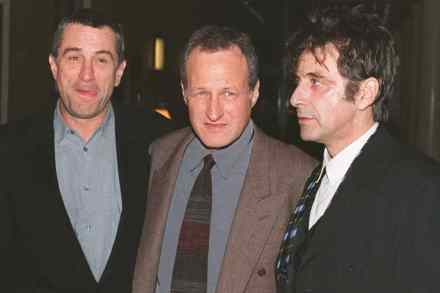
Of all the things in the world of entertainment that might get me excited, 'a new Michael Mann project' tops the list. A film writer and director, Mann not only is a talented storyteller, but has mined the criminal underworld for his subject matter, from his debut feature in 1981, Thief. Since then, he’s rarely veered from criminal elements in his subject matter (Last of the Mohicans and Ali being the two notable exceptions). He is the great auteur of the crime genre; in other words, he makes arthouse films for dads. In 1995 Mann released what many consider to be the greatest crime film ever made.

The making of The Godfather was almost as dramatic as the film: Paramount+’s The Offer reviewed

From our UK edition

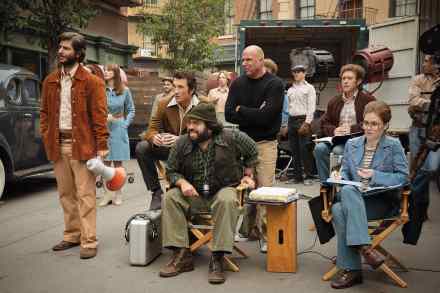
It’s hard to imagine in the wake of GoodFellas, The Sopranos and Gomorrah but there was a time, not so long ago, when the very existence of the Mafia was widely dismissed as an urban myth. What changed was Mario Puzo’s 1969 bestselling novel The Godfather, which sold nine million copies in two years. You might assume, not unreasonably, that the 1972 movie version – now acknowledged as one of the greatest films of all time – was one of the most obvious commissions in Hollywood history. But it was dogged by so much controversy and plagued by so many disasters that it was very nearly stillborn.

Sinking into the pixels

More than two decades into internet ubiquity, we’re finally seeing the rise of a generation raised by screens as much as by their parents and peers. Smartphones and social media may not have reared their ugly heads completely until the 2010s, but even in the lead-up to the millennium, computers and the “World Wide Web” were a frequent topic of pop cultural conversation. Within those conversations was always an enormous amount of anxiety. Chatroom “stranger danger” and scammers posing as Nigerian princes seem quaint now compared to the overflowing sewers on display daily in the most craven corners of the web. Digital anxiety is done.

world's fair
North Star

Ukraine in black and white

Displays of wanton brutality and heroic resistance in the Russo-Ukrainian War of 2022 have prompted some in the West to proclaim a moment of “moral clarity.” Some caution might be wise here, since moral clarity in world affairs is not always as clear or as moral as its claimants think. It was Soviet ideology, succeeding czarist imperialism, that for so long smothered Ukraine, along with the other captive nations consigned to Stalin at Yalta. As Ukraine may now be slipping captivity at last, the West rejoices. But how clear is the clarity? History’s players sometimes switch roles even from one act to the next. It has not, for example, always been brutal Russians that heroic Ukrainians went up against. Eighty-one years ago, it was brutal Germans.

Heavy is the head: ten films about the challenges facing new leaders

From our UK edition

The Tory leadership race may already have supplied plenty of entertainment – but sometimes the real drama begins when a new ruler actually takes power. Many films have examined what can happen when an inexperienced leader assumes control, from the Biblical epic Exodus: Gods and Kings (2014) to sci-fi blockbuster Dune (2021). Others have explored the challenges that face new leaders at the helm – whether it’s being duped into invasions, subduing those who don’t accept your rule or catching conspiracists. Here are ten that might make informative (or cautionary) viewing for the next Tory leader: The King (2019) – Netflix https://www.youtube.com/watch?

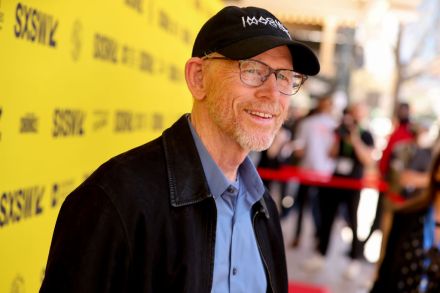
Ron Howard: nobody’s favorite Hollywood director

If anyone told you that Ron Howard was their favorite film director, you might be forgiven for laughing out loud. Yet on paper, Howard has had as successful a career as any other filmmaker working today. Of the twenty-seven pictures he's directed, there are Academy Award winners and nominees for Best Film, massive box office hits and several critically acclaimed pictures that show a degree of both eclecticism and an apparent ability to turn his hand to anything imaginable. There are few directors who have made everything from epic fantasy to gritty '70s-set dramas about the David Frost and Richard Nixon interviews.

Spare us the preaching: The Railway Children Return reviewed

From our UK edition

It doesn’t help the cause of The Railway Children Return that the original 1970 Railway Children film is currently on iPlayer. Just to test my capacity to cry, having emerged dry-eyed from the new one, I came home and re-watched the original. Yup. The 2022 sequel has three scenes of the new cohort of Railway Children – three second world war evacuees from Manchester, Lily, Pattie and Ted – waving goodbye to their soldier father as he departs for war, in the fog, never to return. Violins soar. Eyes remain dry. The 1970 film has just one scene of Daddy arriving home, in the fog of a steam train, and it still makes me sob every time. So is a return more moving than a departure? It certainly can be, but you have to live through the desolation first.

This lot should be sent to prison too: Where the Crawdads Sing reviewed

From our UK edition

Where the Crawdads Sing is based on the bestselling book (by Delia Owens) that I picked up from one of those three-for-two tables at Waterstones and always thought I’d read but for some reason never did. I can’t now say the film’s not as good as the book and send everyone involved to prison, which is a pity, as that was most satisfying. (See last week’s review of Persuasion.) Still, it’s always interesting to find out what they’ve done with a book you haven’t read and, based on this, it was a lucky escape. The film is so cliché-ridden there’s a point where an entire courtroom gasps and I laughed. Not proud, but it was beyond my control. Could I send everyone involved to prison anyway? For cocking up a book I haven’t read?

The joy of volcano-chasing

From our UK edition

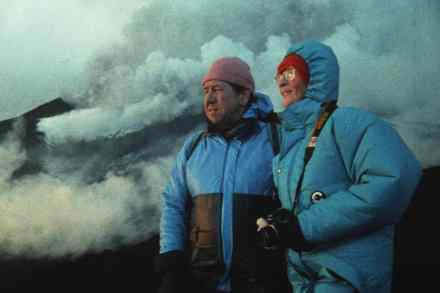
Katia and Maurice Krafft were both born in the 1940s in the Rhine valley, close to the Miocene Kaiser volcano, though they didn’t know each other as children. They met on a park bench when they were students at the University of Strasbourg, and from that moment on, according to their joint obituary in the Bulletin of Volcanology, ‘volcanic eruptions became the common passion to which everything else in their life seemed subordinate’. They married in 1970, formed a crack team of volcano-chasers, équipe volcanique, and set off to get as close as they possibly could to the very edge of every fiery crater, to collect samples and data and just to be there, ecstatic with the enormity of it all, like a pair of mad moths drawn into a candle flame.

Everyone involved should be in prison: Netflix’s Persuasion reviewed

From our UK edition

You may already have read early reviews of Netflix’s adaptation of Jane Austen’s Persuasion saying it’s ‘the worst adaptation ever’ as well as ‘mortifying’ and ‘a travesty’, but I know you won’t believe it unless you hear it from me, so here you are: it is truly horrible. I would also add that everyone involved should probably be sent to prison. Not for life, but until we could be confident they’d learned the error of their ways and there was minimal risk of reoffending. A probation officer would possibly be required to keep a close eye, just to make sure. Better safe than sorry. There are ways to adapt Austen for a contemporary audience, but those ways are not this way, and I say this not as a purist.

How green is your Soylent?

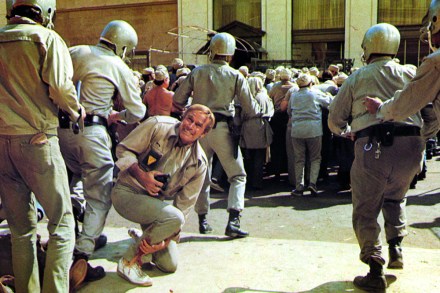
In 1966, when Harry Harrison penned his dystopian thriller Make Room! Make Room!, which began life as a serial in Impulse magazine, he predicted that by 1999, there would be more than 7 billion people on earth, and a robust 35 million in New York City alone. The 1973 film adaptation of Harrison’s novel, Soylent Green, altered several aspects of Harrison’s novel, including the year in which the thriller is set: 2022. Now that we’re there (and decades past 1999), it’s worth asking: did Soylent Green director Richard Fleischer and his writer, Stanley R. Greenberg, get things right?

Soylent
northman

Why did no one see The Northman?

The American director Robert Eggers has had an auspicious early career. His first two movies were smash hits in the arthouse world: 2015’s The Witch, which launched the career of Anya Taylor-Joy, and 2019’s The Lighthouse, which starred Robert Pattinson and Willem Dafoe. Both films were produced on small budgets by indie powerhouse A24, and both have already achieved a kind of cult status among horror buffs and cinephiles alike. So when news broke that New Regency was offering the auteur director a budget of around $70 million for his third film — a Viking revenge epic starring Alexander Skarsgård, Taylor-Joy, Ethan Hawke and Nicole Kidman — movie geeks went wild. Just not quite wild enough to buy actual tickets, apparently.

A goofy, non-taxing delight: Brian and Charles reviewed

From our UK edition

Brian and Charles is a sweetly funny mockumentary about a lonely Welsh inventor who is not that good at inventing. That said, I reckon his ‘pine cone bag’ would sell pretty well if Vivienne Westwood got behind it. (His ‘trawler fishing net shoes’ would, admittedly, be a tougher proposition.) Then, more by accident than design, he manages to invent a robot, and a friendship develops between the two. This film won the Audience Award at the Sundance Film Festival, and while it doesn’t invent much itself – it is essentially Wallace & Gromit in spirit – it is still loveable beyond all measure. https://www.youtube.com/watch?

The highs and lows of Brad Pitt

From our UK edition

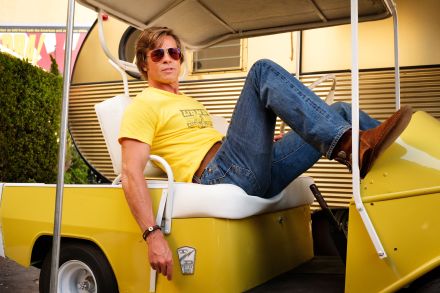
This December Brad Pitt will hit the grand old age of 59. Hard to believe, considering that he has retained much of his youthful appeal, despite a well-documented penchant for cigarettes, weed and booze, habits apparently now finally kicked to the kerb. As he approaches his seventh decade, Pitt has discussed his desire to transition from acting to a production-focused role, which has already long been a feature of his career. Pitt’s impressive production credits include many pictures where he didn’t appear onscreen, including Running with Scissors (2006), The Departed (2006), Kick-Ass (2010), Selma (2014), Moonlight (2016) and The King (2019).

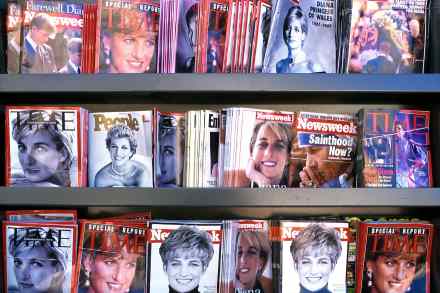
The definitive Diana doc? Possibly not: The Princess reviewed

From our UK edition

The Princess, a new documentary film, is the first re-framing of the Princess Diana story since it was last re-framed, about ten minutes ago, and before it will be re-framed again, probably by Tuesday. We’ve had The Crown recently, and Spencer, and our favourite, Diana: The Musical (‘It’s the Thrilla in Manila but with Diana and Camilla’), and there are several upcoming books, one of which, R is for Revenge Dress, ‘explores the celebrated life of Princess Diana through the alphabet’. To those who say the poor woman should be left to rest in peace, I would say: F is for Fat Chance. But is this the definitive documentary we’ve all been waiting for? Possibly not. https://www.youtube.com/watch?

What to watch on Paramount+ and will it rival Netflix?

From our UK edition

Wednesday saw a new entrant into the streaming world with the UK debut of Paramount+. The launch event in London on Tuesday didn’t hold back on star power, with Kevin Costner, Sylvester Stallone, Gillian Anderson, Viola Davis, David Oyelowo, Michelle Pfeiffer, Chiwetel Ejiofor, Bill Nighy, Naomie Harris and Jessica Chastain all in attendance. Unlike BritBox and Apple TV, who have built up content slowly, Paramount+ have decided to come out all guns blazing with their programming. Apple TV+ boasted a limited slate of big-name originals when it kicked off in November 2019, but the likes of The Morning Show, See and For All Mankind were starry but not especially enthralling, as the service took time to find its feet with Ted Lasso, Severance, Mythic Quest, and Slow Horses.

The hips are electric but you will be willing it to stay put: Baz Luhrmann’s Elvis reviewed

From our UK edition

Elvis is Baz Luhrmann’s biopic of Elvis Presley and it’s cradle to grave but told at such a gallop you’ll be willing it to stay put even if it’s just for two minutes. You may even be begging: Baz, come on, just hold still. But no, we’re off again. I’ve had fever dreams that have been less delirious. But on the plus side, even if it’s never deep or enlightening, it has a fizzing energy, and because it doesn’t dwell on anything, we don’t dwell on fat, sad Elvis at the end. Which is a relief. https://www.youtube.com/watch?v=Gp2BNHwbwvI Because it doesn’t dwell on anything, we don’t dwell on fat, sad Elvis at the end. Which is a relief The film opens as it means to go on. That is, flashily.

The man who changed Indian cinema

From our UK edition

At 6ft 4½in tall, Satyajit Ray was head and shoulders above his countrymen. His height was unheard of among Bengalis, ‘a low-lying people in a low-lying land’, as the colonial saying went. With his stature, jawline and baritone voice, he might have been a Bollywood hero. Instead, he chose to tower over the world of art-house cinema, a directorial giant among the likes of Bergman, Kurosawa and Fellini, alongside whom he is credited with inducting cinema into the temple of high culture. His standing was secured with his first film, Pather Panchali, which premièred at New York’s Museum of Modern Art in 1955. India then only churned out musicals which, as Ray later put it, ‘present a synthetic, non-existent society’.

Ten thrillers that channel Jason Bourne

From our UK edition

Amazingly, at least to this reviewer, the first film in the popular Bourne franchise was released 20 long years ago. A fresh-faced Matt Damon (then aged 32) played the titular character (real name David Webb), a memory loss-afflicted master assassin with more than a little red in his ledger. In Robert Ludlum’s Bourne novels JB is masquerading as a hit man to infiltrate a terrorist cell, unlike the film series, where he actually is former assassin with many kills. Richard Chamberlain (The Thorn Birds) played an older, less intense Bourne (he was 54 at the time), hewing closer to the novel in a largely forgotten 1988 TV movie, which is currently available to watch on YouTube.