Fiction

A choice of recent thrillers

From our UK edition

Sam Bourne’s new thriller, Pantheon (HarperCollins, £12.99), is set just after Dunkirk in the darkest days of the second world war. James Zennor, an experimental psychologist, returns to his family’s Oxford home to discover that his biologist wife has disappeared, taking with her their two-year-old son. Zennor, scarred in body and mind by his experiences in the Spanish Civil War, fears that she may have fled from his ungovernable rages. Or was she acting under coercion? He pursues her to neutral America where uncomfortable truths gradually emerge in another university city. This novel is something of a departure for Bourne. Zennor’s emotional fragility lends an extra dimension to a powerful plot, skilfully constructed and narrated.


Our man in Vienna

From our UK edition

Just in case Private Eye smells a rat, let me put my cards on the table. Not once, but twice, I have sent the galley proofs of my novels to William Boyd and, not once, but twice, he has responded with generous ‘blurbs’, which my publishers have gratefully emblazoned on the covers. Believe me, in the exalted literary company Boyd keeps, that kind of generosity of spirit is as rare as hen’s teeth (try asking Sebastian or Salman for a jacket quote and see how far it gets you). So I’m not about to give Boyd a stinking review. Waiting for Sunrise could have been a sub-Da Vinci Code catastrophe, and I would still have felt obliged to describe it as ‘a compelling and heartbreaking masterpiece from one of the great storytellers of the age’.

Winter wonderland | 18 February 2012

From our UK edition

Jack and Mabel move to Alaska to try to separate themselves from a tragedy — the loss of their only baby — that has frozen the core of their relationship. They intend to establish a homestead in the wilderness, but it is 1920 and they are middle-aged, friendless and from ‘back east’ — unprepared and ill-equipped for the backbreaking work and unspeakable loneliness of pioneer life. By the middle of their second winter the climate, isolation and sorrow of their situation seem to have got the better of them; at the opening of The Snow Child we find them at the end of their wits and their resources. During a singular moment’s lightheartedness  after a snowfall the desperate couple builds a snow child beside their house and dresses it in hat and scarf.

Many parts of man

From our UK edition

In some ways, you’ve got to hand it to Craig Raine. Two years ago, after a distinguished career as a poet and all-round man of letters, he published his first novel — and received a series of reviews that, as Woody Allen once put it, read like a Tibetan Book of the Dead. According to virtually all of them, Heartbreak was fragmented, name-dropping, pretentious, and not really a novel anyway: more a loose collection of thoughts, revealing an alarming obsession with sexual organs. But with The Divine Comedy, Raine responds with almost heroic defiance. If you felt like that about the last book, it seems to shout, try this one for size. In Heartbreak, for instance, the fragments were comparatively chunky, even featuring some recognisably extended narrative.

Bookends: A network of kidney-nappers

From our UK edition

Raylan Givens, an ace detective in the Raymond Chandler mould, has encountered just about every shakedown artist and palooka in his native East Kentucky. His creator, Elmore Leonard, is a maestro of American noir; Raylan (Weidenfeld, £18.99), his latest thriller, presents a familiar impasto of choppy, street-savvy slang and hip-jive patter that verges on a kind of poetry. Typically, Raylan charts a murky underworld where criminals are in cahoots with politicians, and where murder is a consequence of this corruption. In his curl-toed cowboy boots, Federal Marshal Givens is summoned to investigate a case of trafficking in human body-parts. A man has been found moribund in a bathtub with his kidneys apparently removed by surgery.

Menace, mystery and decadence

From our UK edition

It is fitting that Charles Dickens’s bicentenary coincides with Lawrence Durrell’s centenary, for the two novelists have crucial resemblances: both of them are triumphant in the intensity and power of their writing, but capable of calamitous lapses of taste; both of them are riotous comedians who sometimes plunge into hopeless melodrama. It is true that Einstein’s theory of relativity, which Durrell foisted on the structure of The Alexandria Quartet (reprinted, with a new introduction by Jan Morris) has no more part in Martin Chuzzlewit than the ludicrous sexual obsessions derived from Sade and Henry Miller which sully Durrell’s plot. But Dickens in certain moods was, as Angus Wilson said of Durrell’s novels, ‘floridly vulgar’.

Intrigue and foreboding

From our UK edition

In 2009, Alone in Berlin, Hans Fallada’s masterpiece about civilian resistance to Nazism, appeared in English for the first time. Now A Small Circus, Fallada’s literary breakthrough, makes its English debut.  Both novels are admirably translated by Michael Hofmann. The earlier novel will be of deep interest to the many admirers of Alone in Berlin. Once again, Fallada shows an uncanny prescience in his ability to interpret contemporary political developments through the lives of ordinary Germans. A Small Circus is based on real events that took place in 1929 in Neumünster, Schleswig-Holstein, lightly fictionalised by Fallada as Altholm.

Frank exchange of views

From our UK edition

Solomon Kugel is morbidly obsessed with death: his own, and that of those he loves, including his wife Bree and his only son Jonah. He spends his idle hours writing down possible last words in a notebook, and contemplating the undignified and senseless extinctions that await him around every corner. His outlook is not helped by his therapist, Professor Jove, who is convinced that hope is the cause of all human suffering and works hard to extinguish it; nor by his brother-in-law, the unsubtly named evolutionary biologist Pinkus Stephenor — a professional optimist whose latest book is You’ve Got To Admit It’s Getting Better, A Little Better All The Time. (He is a best-seller; Jove can’t get his book published.

A choice of first novels | 4 February 2012

From our UK edition

Mountains of the Moon is narrated by a woman just released after spending ten years in jail. The reason for her sentence and the details of her previous life are pieced together through disjointed fragments, forming a complex jigsaw. Lulu had a shocking childhood, with a violent stepfather and negligent mother. Her only loving relatives were her grandfather, who fuelled her imagination by conjuring up the Masai Mara in her dreary south-England surroundings, and her two half brothers, from whom she was eventually separated. This account, related in an idiosyncratic patois, with the matter-of-fact innocence of an abused child for whom abnormality is the norm, is quite horrifying.

Bookends: Trouble and strife

From our UK edition

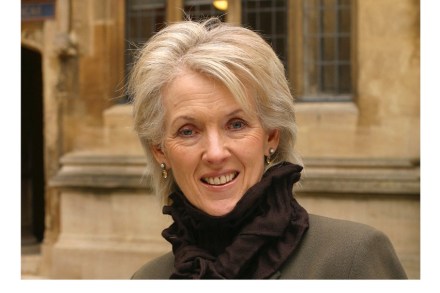
It isn’t true that Joanna Trollope (pictured above) only produces novels about the kind of people who have an Aga in their kitchen: what she writes about are families. Her books have a knack of chiming with current social concerns, of examining how the family is adapting to changing social mores. She is deservedly a very popular writer, but she isn’t a frivolous one. The Soldier’s Wife (Doubleday, £18.99) is a cracking read and has clearly been thoroughly researched. All the little details which animate a novel ring true. It centres on the homecoming of a Major who has been on a six-month tour of duty in Afghanistan, the effect of this supposedly joyous reunion on his wife and children — and himself.

Chaos and the old order

From our UK edition

If Gregor von Rezzori is known to English language readers, it is likely to be through his tense, disturbing novel Memoirs of an Anti-Semite (partly written in English), and/or his ravishing memoir Snows of Yesteryear. Rezzori was born in 1914 in Czernowitz in Bukovina, when it belonged to the Austro-Hungarian Empire. After the first world war he became a citizen of Romania, from where, as a so-called ethnic German, he was ‘repatriated’ to Germany during the second world war. From the 1960s he lived in Italy, at Santa Maddalena, the home that he shared with his second wife near Florence, which she has since set up as a writers’ retreat. In the garden there is a porphyry pyramid, a monument to the deceased writer on which is inscribed ‘citizen of Czernopol’.

The phantom lover

From our UK edition

Driving past several long abandoned second- world-war airfields in East Anglia last year I was struck by how spooky they seemed, just like the decommissioned army base that used to exist near me. Places where people have not only lived and worked but which form the background of wartime drama, and from which men went to their deaths, are bound to be haunted, and in Helen Dunmore’s short novel, it is an airfield that once saw Lancaster Bombers fly out into the night that forms a ghostly scene. Isabel is newly married to a doctor, Philip, and the two have moved to Yorkshire where he is now a GP. It is the early 1950s, the country is still redolent of wartime hardships, ration books, nasty linoleum in rented flats and nosey landladies.

Finding Mr Wright

From our UK edition

The film When Harry Met Sally may be infamous for the scene in which the heroine mimics orgasm in a crowded café, but the real point of the story is a question: can a man and a woman ever be true friends, or must sex always get in the way? Jack Holmes and His Friend poses the equivalent question about a straight man and a gay one. If it’s made into a movie, the working title will surely be When Harry Met Gary. Homosexual writers seem to be much better than straight ones at combining high literary style with vastly enjoyable descriptions of really filthy sex. Edmund White is a master of both. This novel is like one from the French 18th century, where passages of intricate social comedy alternate with carnal episodes of Baroque detail.

Lake Michigan days

From our UK edition

It is probably hard to enjoy this new big novel from America without some understanding of the shortstop’s position on the baseball field. But that is easily remedied, thanks to YouTube, where searching for ‘shortstop, fielding’ arouses multiple videos that compete for attention, with stars of the game in their infield position between second and third base, taking ground balls hit at, near, or even away from them, scooping them up, throwing to first base for the out: something the shortstop does six or more times in a game.

Questioning tales

From our UK edition

Tessa Hadley’s previous book, The London Train, was one of the best novels of last year, though overlooked by prize committees. It concerned the gently disentangling lives of a pair of middle-class couples, and found its strengths in numinous revelations of the everyday. These short stories (all previously printed in magazines such as Granta and The New Yorker) explore, with a questioning intelligence, a mostly similar territory. Here people try to shore up their lives as best they can in the face of vicissitudes. They do so by reaching out to others, often in the face of convention; and by trying to square life with the worlds that they create in their heads, and that are created around them in the forms of fiction.

Rather a cold fish

From our UK edition

Published first novel (Salmon Fishing in the Yemen) at the age of 59, Richard and Judy choice, won Bollinger Everyman Wodehouse Prize for Comic Fiction; spent his whole career in industry; lives in Northumberland, wears tweed cap, likes fishing…These are the facts you read about Paul Torday time and again, and he must be getting tired of them.    That first book really was good: the kind of novel you wish you’d written yourself, all done in emails, extracts from diaries and letters, snatches of Hansard, articles in newspapers, transcripts of interrogation sessions. It was a charming satire, about politicians, entrepreneurs and fish. His late career-change and success gave hope to thousands of 59-year-olds.

Poison Ivy

From our UK edition

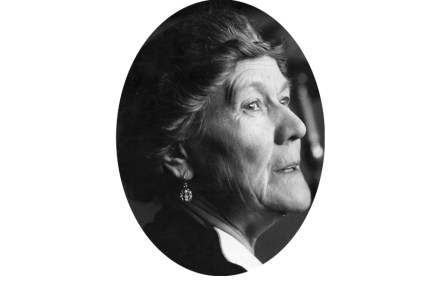
‘Who was she?’, a browser might ask on finding three re-issued novels by Ivy Compton-Burnett, and ‘Why should I read them?’ Dame Ivy Compton-Burnett (1884-1969) was one of 13 children of a Victorian physician. After his death, his widow wrapped herself in anger and subjected her children to cruel, neurotic tyranny. Their verbal laceration continued after her death in 1911, for Ivy took control of her siblings, and enforced a sadistic autocracy learnt from her mother. On Christmas Day 1917, the two youngest girls, ‘Topsy’ and 18-year-old ‘Baby’, for whom family life seethed with aggression, nerve storms and spite, locked themselves in a bedroom, and died in one another’s arms of overdoses of barbiturates.

Bookends: Saving JFK

From our UK edition

Stephen King’s latest novel is a time-travel fantasy about the assassination of John F. Kennedy. At almost 750 pages, 11.22.63 is drawn-out even by blockbuster standards. Critics have bemoaned its surfeit of period detail (bobby socks, Hula Hoops, big-finned cars). I rather enjoyed it. King, now an august-looking 64, is a writer of towering cleverness, whose fiction manages to appeal to a reading public both popular and serious. Much of what passes these days for literary fiction is mere creative writing. Give me genre fiction (John le Carré, Martin Cruz Smith) any day. A fiction without a story — Kings knows — is scarcely worth its weight in paper. Before King was the emperor of bestsellerdom he studied English at the University of Maine (his birthplace). 11.22.

Lifelong death wish

From our UK edition

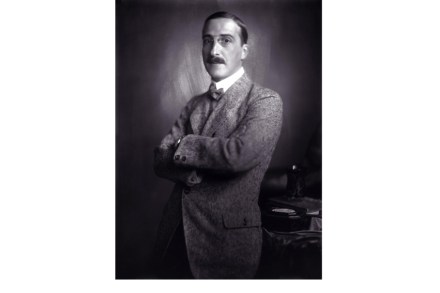
In February 2009, in a review in these pages of Stefan Zweig’s unfinished novel, The Post Office Girl, I wrote: ‘Here surely is what Joseph Conrad meant when he wrote that above all he wanted his readers “to see.’’  In The Post Office Girl Zweig explores the details of everyday life in language that pierces both brain and heart.’ Especially the details of loneliness, I should have added. Intimations of suicide darken this novel, and in 1942, with the manuscript incomplete, Zweig, age 60, and his much younger second wife, Lotte, poisoned themselves in a small Brazilian town and died in bed with her embracing him. It is telling that she did the embracing.

Recent crime novels | 3 December 2011

From our UK edition

The crop of recent crime fiction is generously sprinkled with well-known names; as far as its publishers are concerned, Christmas is not a time of year for risk-taking. The Impossible Dead (Orion, £18.99) is the second novel in Ian Rankin’s post-Rebus series featuring Inspector Malcolm Fox of ‘The Complaints’, the team that investigates allegations of misconduct among the police themselves. Fox and his colleagues arrive in Kirkcaldy, where a detective constable stands accused of corruption — by his own uncle, who is in the same force. But the case mushrooms into something far more momentous that leads to some dark corners of the Scottish nationalist movement in the 1980s.