Fashion

The case against a European army

From our UK edition

The end of the Cold War was used by the victors to unite Germany. To balance this, Europhiles created a single currency which, by replacing the deutschmark, would ‘hold Germany down’. The reverse occurred. The euro made Germany the most important power in the European Union, and so it remains. Today, the same Europhiles want to use the rebirth of the Cold War to encourage Germany to re-arm. To balance this, they want to create a truly ‘European’ defence, of which Germany would be a vital part. The EU would prevent Germany from using its force for national needs. For this purpose, they say, Nato would be no good because it is intergovernmental.

Tweed is of the essence

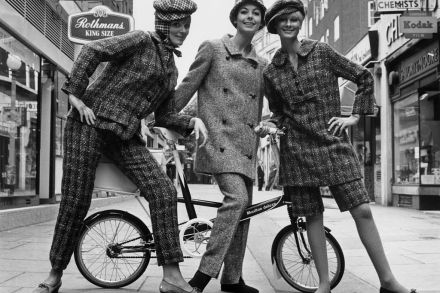
Rushing through Dulles Airport after a trip abroad this winter, I noticed a policeman following quickly but discreetly behind me. Not having smuggled any sausages or cigarettes on that particular flight, I was of clear conscience, and nodded hello at him when he caught up. All he said was: “Love the jacket.” It was a heavy, scruffy, brown herringbone tweed. People like tweeds. When I wore one, my parents’ friends used to tell me what a nice-looking young man I was. At college, women I didn’t know would occasionally run a fingertip down the sleeve and say, “Mmm.” Never found out what that meant. Too late now. The cop’s compliment was a bit different. There was pity in it. “My wife’s grandfather had one,” he said. “That’s old-school.” I suppose he was right.

tweed

Birds have helped mankind throughout history — but we have repaid them cruelly

From our UK edition

Unusually for a book about nature, the species in question, in this lucid story of the relationship between birds and humans, is ours. Why catch six million ibises, attractive water birds with curved beaks, plunge them into vats of liquid resin, wrap them in bandages and bury them in vast cemeteries in Middle Egypt in 650 BC? When There Were Birds explains that these ibises were offerings to Thoth, god of knowledge and wisdom. Throughout this story, faith, cash and custom drive humans to behave in astonishing ways towards birds. From the early 15th century we were moving canaries to the Swiss Alps and southern Germany, where breeders might raise 50,000 birds a year, which were then transported and sold across the world. In 1871 America alone bought 48,000 as pets.

Style and substance

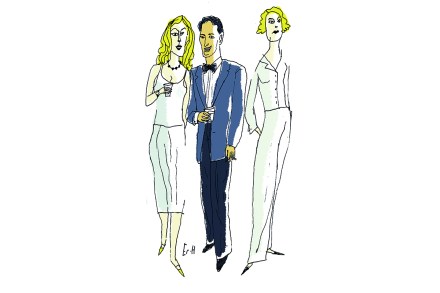
In Ravelstein, Saul Bellow’s thinly disguised account of the final years of the University of Chicago professor Allan Bloom, the narrator Chick and his close friend Abe Ravelstein go on a shopping spree in Paris sometime in the 1990s. For all their highfalutin philosophical talk about Athens versus Jerusalem and the like, Bellow makes it clear that there is a Dionysian as well as Apollonian cast to the bond between Chick and Abe. After departing the Hôtel de Crillon, their first stop is Lanvin. There, Abe is smitten by a beautiful flannel jacket retailing for $4,500. He buys it.

de mans

Covid is no excuse to dress like a slob

The Covid-19 outbreak has been hard on us all. So please: as we slowly return to our in-person office jobs (assuming we do at all), don’t make it any harder than it already is by dressing like you’re still working from your makeshift at-home “office.” “The coronavirus pandemic has boosted Americans' love of comfort wear, accelerating a trend toward wearing athletic attire — also known as ‘athleisure’ wear — at all hours of the day,” reports CBS News. “Since the beginning of the pandemic, sales of formal attire have slumped as stuck-at-home workers prioritize how they feel over how they look.” The athleisure market — already a $155 billion industry — is expected to skyrocket to $257 billion over the next five years.

athleisure

Worth seeing for Lady Gaga but little else: House of Gucci reviewed

From our UK edition

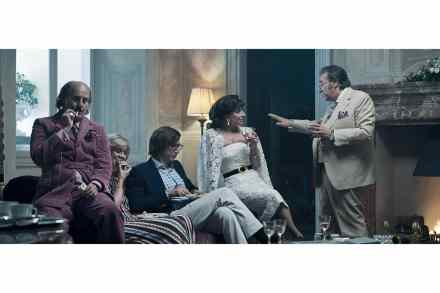
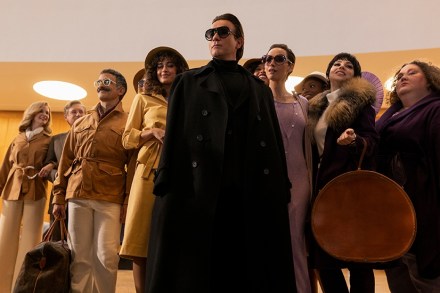
Ridley Scott’s House of Gucci has been much anticipated. The cast is stellar. It’s based on a luscious, true story (so juicy) featuring vicious family infighting and culminating in a murder. I was thinking Succession, but with luxury leather goods and the hiring of a hit man. It can’t miss, I was thinking. Except it can. Not entirely. It has its moments. But the middle act drags (it’s two hours and 40 minutes long) and also the decision to have the English-speaking cast a-speak-a in Italian accents may not have been the wisest one. There were many times I thought Gino D’Acampo was in the room-a. This stars Lady Gaga and she really stars.

A dream of a dress

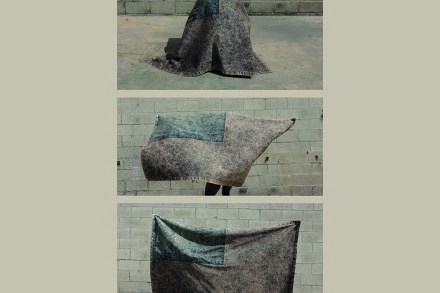
In America: A Lexicon of Fashion, now at the Metropolitan Museum’s Costume Institute, leads with a quote from Jesse Jackson: “America is... like a quilt — many patches, many pieces, many colors, many sizes, all woven and held together by a common thread.” Odd, then, that framed above the first wall panel is a drab, blank-faced suggestion of an American flag constructed from just two rectangular pieces of faded denim. Created by Sterling Ruby as a mourning garment — a model huddles under a wearable version in the exhibition poster — “Veil Flag” (2020) sits awkwardly next to the bright patchwork skirts, dresses, trousers and jackets also on display in the first room. Yet it’s the right way to open a fashion exhibition that makes you think, not swoon.

dress
fashion

Fashion, fairies and folklore

In blows the dark of winter, bringing with it partially estranged family members, seemingly endless nights and all those television movies about a big boss lady who gets stranded in a small town for the holidays and learns the true meaning of Christmas by falling in love with a lumberjack. It is not a great time of year. But as every sullen teenager knows, headphones are a great way to escape the gathering and retreat inward. There is an abundance of podcasts about how great the holiday season is — how festive, how rich with tradition and meaning. I get through the holidays with day-drinking and bingeing French television shows while shoving cheese into my face, so these don’t really speak to me.

If the Croc fits

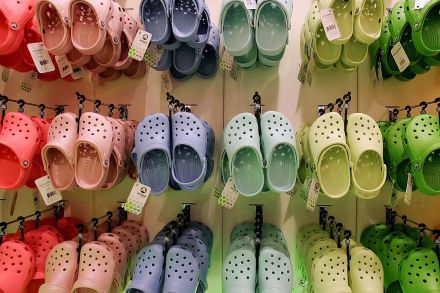
'I don’t get Brooklyn fashion,’ an out-of-towner said the other day. We were brunching at a French restaurant on Williamsburg’s Bedford Avenue, and eyeing a couple by the door — she dressed in faded black pipe-leg men’s jeans crudely cut off at the ankles above a pair of two-inch granny heels, he in a stained and tattered, burnt-orange Abercrombie & Fitch t-shirt draped like a cobweb on his skeletal frame. ‘It’s all about looking as shitty as possible,’ I told the tourist. ‘They like to blur the lines between the guy who just crapped his pants shooting up on the corner and having $200,000 in art school debt.’ In my youth I too was a thrift-store aficionado. I loved the hunt, digging around for the amusing, exquisite, old and odd.

crocs

I remember Halston

'Imperious’ comes to mind in describing the great American fashion designer Halston. ‘Perverse’ does too; ‘grand’, ‘haughty’, ‘intimidating’ also fit. But, once you got to know him, it was apparent that he was a sweet and clever boy from the corn fields of the Midwest putting on a show for the big city sophisticates he sought to impress — and impress them he did. I met Halston in the summer of 1971 when I was brought to a party at the fashion illustrator Joe Eula’s by Andy Warhol, who had made me editor of his new magazine Interview the previous fall at age 22. Halston terrified me.

halston

The season for seersucker

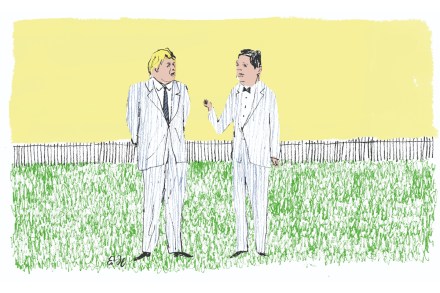
'To every thing there is a season,' we read in Ecclesiastes, and summer is the season for seersucker. No fabric is better suited for long summer days. Its lightness reflects the sun. Its pucker ventilates the skin. Rather than avoid the heat, seersucker dresses up for the hot occasion. Summers in New York are infernally hot. Seersucker makes it livable, if not always desirable. Since fashion dictates that seersucker only emerge between Memorial Day and Labor Day — timing that varies as you head south — its absence also makes its return that much more rewarding. As the weather warms, out it comes, radiating the light of summers past.

seersucker

Victoria’s Secret clips its angels’ wings

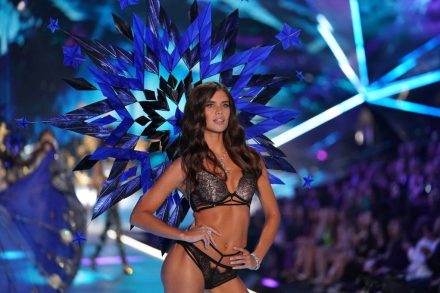
Millions of unshaved lesbians are celebrating this week after Victoria's Secret decided to go all-in on marketing with a butch over-opinionated soccer star instead of naughty, scantily-clad models. The lingerie giant announced Wednesday they were cutting ties with their iconic Victoria's Secret Angels, the tall Barbie doll-esque models sporting fluffy wings. In their place are Megan Rapinoe, 35, along with six other female athletes, as well as transgender and plus-size women for the ‘VS Collective’. Hot, right? https://twitter.com/sapna/status/1405270760994709505 Rapinoe, a member of the US women’s national soccer team, made a name for herself in 2016 after she kneeled during the national anthem in solidarity with Colin Kaepernick.

victoria’s secret

I can finally spill the beans about Halston and Princess Margaret

From our UK edition

New York Already on your idiot box via Netflix is a mini-series about a man who also used one name, but burned out rather early due to an outsized ego and too much coke. His name was Halston, and his fame was based on the fact that he designed a pillbox hat that Jackie Kennedy Onassis wore at her hubby’s inauguration. Yes, fame is tricky, especially in America, where self-creation was invented and where superciliousness and sleekness pass for gravity and depth. I knew Halston, he was a friend of my then sister-in-law, but we had zero in common. In fact, he thought I wasn’t important enough to greet in a nightclub, and I didn’t exactly ever mistake him for a Hemingway hero. Never mind.

The politics of handbags

From our UK edition

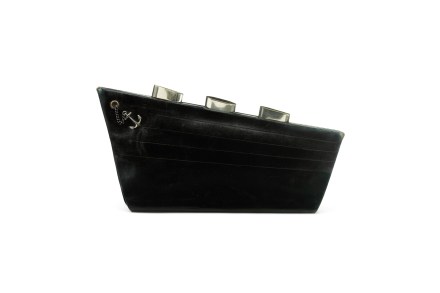
‘Of course, I am obstinate in defending our liberties and our law — that is why I carry a big handbag,’ Margaret Thatcher once told an interviewer. That handbag was part of the Iron Lady’s suit of armour; a fashion accoutrement turned into a political prop. But an accessory that became instantly recognisable on the outside held secrets on the inside. Thatcher referred to it as the only ‘leak-proof’ place in Downing Street, and it was a bag of tricks from which she might conjure pertinent quotes from Abraham Lincoln or Friedrich Hayek, or a crumpled brief from a mysterious source.

Make Status Quo sound like Stockhausen: AC/DC’s Power Up reviewed

From our UK edition

Grade: C The fear is this: you’re wearing a leather jacket and hipster jeans and think you look cool, but you can’t fasten either item of clothing and your teeth have fallen out. Instead you are simply an undignified granddad and everybody knows it. Hell, I’ve been there, over the years, until kindly women intervened. Apparently no women have intervened with guitarist Angus Young. He’s still wearing his short-trousered schoolboy outfit, gurning like a man who has just discovered a kidney stone, at the age of 65. No matter how desperately, inelegantly, you cling to your youth, there’s always Angus to make you look kind of measured.

Letters: The limitations of a Covid vaccine

From our UK edition

Still distant Sir: In James Forsyth’s analysis (‘Boris’s booster shot’, 14 November) he infers that a vaccine, if provided to the majority of the UK population, would deliver herd immunity from Covid-19, noting that ‘it seems increasingly probable that by the second half of next year, we will be emerging from this Covid nightmare’. I pray that he is right, though fear he may not be. In a recent Lancet editorial the view expressed was the exact opposite, as it notes that any vaccines are ‘unlikely’ to prevent transmission, though will reduce the severity of symptoms and likelihood of death.

The language of lounging around

From our UK edition

At the Austrian embassy in Naples, a German diplomatist asked the great beauty Madame de Ventadour if she had been in the Strada Nuova that morning. ‘What else have we to do with our mornings, we women?’ replied Madame de Ventadour. ‘Our life is a lounge from the cradle to the grave.’ How true. The observation comes in Bulwer Lytton’s novel Ernest Maltravers (1837). I was put in mind of lounging by remarks that Anne McElvoy made on the wireless about the use of video-conferencing and broadcasting allowing people to attend to their visible top half while wearing lounge pants below. I wasn’t too sure what lounge pants were. I don’t wear them and my husband certainly doesn’t.

The ludicrousness of stemmed wine glasses

From our UK edition

In 1989 I answered my first mobile phone call on Oxford Street using a brick-sized Motorola borrowed from work. Several people shouted abuse at me from passing cars. Back then, it was also rare to make a mobile-to-mobile call. If you did, it was the main topic of conversation for the first few minutes: ‘Where are you?’ ‘On a boat.’ ‘Wow, I’m on a train going through Leighton Buzzard.’ And you’d laugh at the absurdity of the whole thing. The world’s most ludicrous object is the stemmed wine glass. Why does this idiotic item persist? Now let’s imagine that, owing to a technological limitation, early cellphones hadn’t offered interconnectivity with the fixed-line network.

The rise of blocked-off design

From our UK edition

Plexiglass bubbles hover over diners’ heads in restaurants. Plastic pods, spaced six feet apart, separate weightlifters in gyms. Partitions of all kinds are creeping up in workplaces. As offices, restaurants, bars and businesses reopened after months of lockdowns and closures, a new phenomenon emerged, one that I’ve come to think of as ‘blocked-off design’. It’s design and layout that aims to construct and enforce distancing in a somewhat makeshift way. It’s characterised by partitions, sheer walls, six-foot markers. As a visual language, it’s defined by barriers and blockage — physical reminders that spaces where we once went to mingle with others are now fraught, and that even in public, isolation is necessary.

This is what cinema is for: Netflix’s Cuties reviewed

From our UK edition

Cuties is the subject of a moral panic and a hashtag #CancelNetflix. It tells the story of Amy (Fathia Youssouf), an 11-year-old Franco-Senegalese girl living in Paris, who learns that her father is taking a second wife. (Polygamy is widespread in west Africa, but you wouldn’t know it from mainstream cinema. You wouldn’t know much from mainstream cinema.) The film deals with the lead-up to the wedding. Amy watches the suffering of her mother (the superb Maïmouna Gueye), who must prepare the house for the interloper, scattering cushions over the marital bed, and the bombast of her small brother, who eats cereal and is learning to be a misogynist. (I suspect the baby will get there too, in the end. But he will have to learn to talk first.