Fashion

Steve Bannon’s army of lookalikes

Stephen K. Bannon positioned himself as the godfather of a new American political movement. Now he’s cultivated the aesthetic of a true guru. Bannon appeared on Fox News's Sunday Morning Futures sporting a new, more laid-back summer look, with flowing gray locks and a Mediterranean tan, as if he'd wandered off the set of a mid-Nineties Coen Brothers movie. https://twitter.com/maggieserota/status/1295035966344830984 Cockburn knows it's rather unfair to judge political figures by their physical appearances — particularly someone like Steve Bannon, who has been scrutinized for wearing two collared shirts at once by podcasters and described as looking like 'if Nick Offerman drowned' by comedians.

bannon
nonbinary fashion

What woke journalists are calling ‘nonbinary fashion’ we used to just call ‘clothes’

When I was 13, I wore my dad’s clothes to school every day. Men’s overalls, stinky old t-shirts, a flannel shirt tied around my waist...sometimes Dr Martens, sometimes too-big combat boots. If I was feeling bold, I’d ignore my insecurities about my bony knees and skinny legs and wear a skirt and tights with my unisex boots. It was called 'grunge.' No one ever thought of it as 'gender bending': it was just what we wore. Apparently, those of us who came of age in the Nineties, smoking on the corner instead of going to class, our second-hand itchy wool sweaters soaking up the stench of rain and cigarettes, were revolutionaries. This week, the New York Times, one of the world’s most-respected sources of journalism (or so they'll tell you), published a story about 'nonbinary fashion.

Takes us deep into an unknown world: Channel 4’s Inside Missguided reviewed

From our UK edition

If it’s a test of a good documentary series that it takes us deep into an unknown, even unimaginable world, then Inside Missguided: Made in Manchester passes with flying colours — especially for the more middle-aged viewer. Missguided, it turns out, is a fast-fashion company, which means that it spots what celebrities are wearing online and then designs, makes and sells much cheaper versions within days — all while indignantly denying the outrageous charge that ‘we just rip off other people’s designs’. The target market apparently consists of young women obsessed with Instagram and Love Island. And so, on the whole, does the staff, who have names like Treasure, Zee and Karolina, and are keen for us to understand how excited they are at all times.

From Hogarth to Mardi Gras: the best art podcasts

From our UK edition

If you study History of Art, people generally assume you’re a nice, conscientious, plummy-voiced girl. Sometimes, people are right. It is the only subject I can think of that requires a student to describe what is already printed on the exam sheet. ‘In the foreground of the picture is a tree — in full leaf! — and on the horizon, a tower.’ It feels a little basic. But with art history podcasts description is everything. And to do it well is a real art in itself. The presenters of the Art Newspaper’s The Week in Art podcast were superb last week in their exploration of a portrait by William Hogarth.

Christian Dior’s woke advertising woes

The left is really going to hyperventilate once they realize during World War Two Christian Dior, along with most French designers, made dresses for the wives of literal Nazis in occupied France. The fashion house that carries his name has come under attack for ‘racism’ and ‘cultural appropriation,’ after running an ad for its Sauvage perfume that featured overly flattering depictions of Native Americans. https://www.youtube.com/watch?v=cYyGHOwxjUY Fortunately, anyone who’d get upset by this can’t afford Dior, so the idea of a boycott never occurred to them, but the online left screamed regardless, causing Dior to remove the ad from Twitter.

christian dior

Fashion plates

From our UK edition

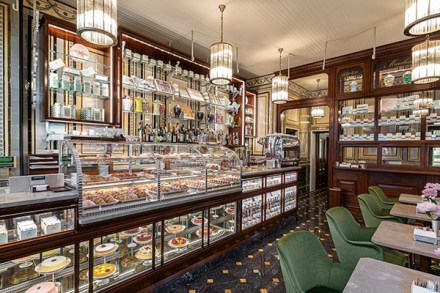
The Prada Café is both a cake shop and a historical inevitability. It sits on Mount Street, almost opposite the Connaught hotel, and between what used to be Nicky Clarke’s hairdressing salon and a luggage shop so expensive it has a queue outside. People are queuing up to explore late capitalism through the prism of luggage but, that aside, they seem quite disinterested in the world around them. Perhaps they are marvelling at their own stupidity in yearning for a £1,000 bag with no zip. The Prada Café is a nickname. Its real name is Patisserie Marchesi 1824 and it travelled from Italy to the silliest part of Mayfair to join the vogue for fashion cafés in London.

There’s something about Mary

From our UK edition

I think I probably qualify as the oldest fashion editor in the world, because in spite of my advanced age I am still writing about clothes (in the Oldie). This gives me one USP: it means that I was actually around — even wearing them myself — when the revolutionary fashion ideas that are now the stuff of museum exhibitions were being invented. Next month the Mary Quant exhibition opens at the V&A, and sure enough I have been asked to talk about those giddy times for a video that will be shown at the museum. I was 16 in the autumn of 1955 when Quant’s shop, Bazaar, first shocked the passers-by in the King’s Road, Chelsea, with its startling window displays. One of these featured a black-and-white gingham skirt.

It’s high time to butcher PETA

Animal liberation charity PETA (People for the Ethical Treatment of Animals) has gone and done it again. Notorious for using cheap shock tactics to make a noise and pull in more donations, the organization sent a press release and posted a tweet within an hour of the announcement that fashion icon Karl Lagerfeld (for whom I personally felt no love) had died: ‘Karl Lagerfeld has gone, and his passing marks the end of an era when fur and exotic skins were seen as covetable. PETA sends condolences to our old nemesis’s loved ones.’ Last year, Lagerfeld, who had long defended his use of fur, conceded to demands that that he stop using fur and crocodile, lizard, snake and stingray skins in his designs.

peta

Joy Villa: Border wall Grammys dress made people angrier than ever

Joy Villa shot to infamy in 2017 by donning a Make America Great Again dress. She set eyeballs rolling again last year with her pro-life fetus-in-the-womb outfit. How could she top that, you ask? Why, by dressing as the border wall of course! Her outfit included a barbed wire necklace, a Pink Floyd-inspired border wall gown and a MAGA handbag (handMAG?), and was designed by Desi Lee Allinger-Nelson. Cockburn caught up with Villa last night in New York to find out the gossip from the ceremony. ‘On the red carpet, I was getting a lot of side-eye from celebrities, which I kind of expected,’ she said. ‘Camila Cabello smiled at me, and Lele Pons, the YouTuber was really nice, she came up and was like “I love your dress, I’m in gold and you’re in silver!

joy villa camila cabello lele pons wall grammys

The waist land

From our UK edition

Strange to think when you visit the Christian Dior show at the V&A that his time as designer was so very short. From the first show in 1947 when he brought the war to an end — at least in terms of clothes — with the New Look, to his sudden death at the age of 52 was just a decade. But in that brief time he brought about a revolution in fashion, creating some of the most beautiful dresses ever made for women, with a line that was wholly his own. It was both architectural and natural: the skirt of his celebrated Bar suit was based on the corolla of a flower. He was a creative genius, but also brilliant at PR and commercially astute, as you would be if you’d lived through the interesting times he had.

Moderne times

From our UK edition

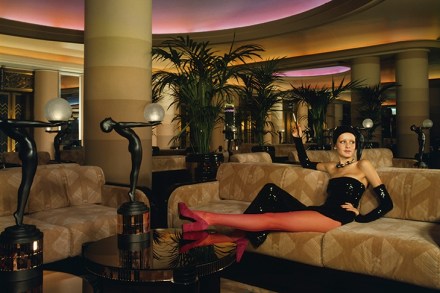
On 10 September 1973 the 1930s Kensington High Street department store formerly known as Derry & Toms reopened as Big Biba. It sold the dress designer Barbara Hulanicki’s distinctive look in furniture, paints and wallpaper, sports equipment and food, as well as her familiar fast fashion. If you had to define that aesthetic then, you’d have said it was campy and kitschy. But above all you’d have said it was deco, an increasingly familiar word for the between-wars moderne style in everything from buildings to jewellery. Derry & Toms itself was a 1933 moderne temple of commerce, slathered in stylised ironwork and bas-reliefs.

Girls from the black stuff

From our UK edition

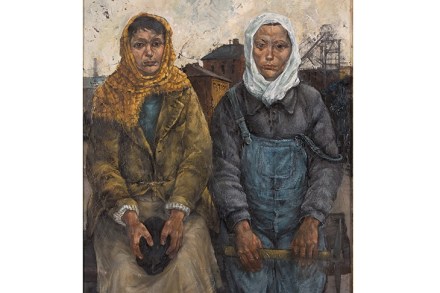
‘They did not look like women, or at least a stranger new to the district might easily have been misled by their appearance, as they stood together in a group, by the pit’s mouth.’ As opening sentences go this is a cracker, but few modern readers of Frances Hodgson Burnett’s That Lass O’Lowrie’s get far beyond it because the novel’s characters speak in a Lancashire dialect that makes Mark Twain’s Huck Finn sound like a Harvard preppy. In real life, though, it wasn’t the Lancashire pit girls’ lingo that put contemporaries off so much as their costume.

A self examined

From our UK edition

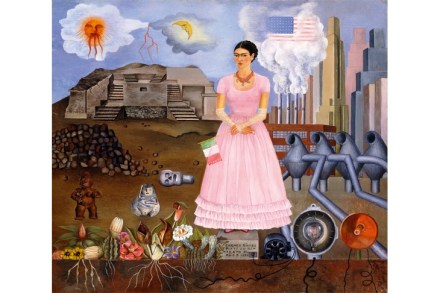
In 2004 Mexican art historians made a sensational discovery in Frida Kahlo’s bathroom. Inside this space, sealed since the 1950s, was an enormous archive of documents, photographs and personal possessions. This hoard forms the basis of Frida Kahlo: Making Herself Up, an exhibition at the V&A. Oscar Wilde once remarked that ‘one should either be a work of art or wear a work of art’. Kahlo opted for both, and she didn’t stop there. Though she was a Marxist who numbered Trotsky among her many lovers, she also channelled the role of saint and martyr. She was neater than Francis Bacon, whose studio-floor detritus has also been subjected to zealous forensic analysis — but the clutter Kahlo left behind her was similarly eclectic.

You didn’t have to be mad to work for Tommy Nutter — but it helped

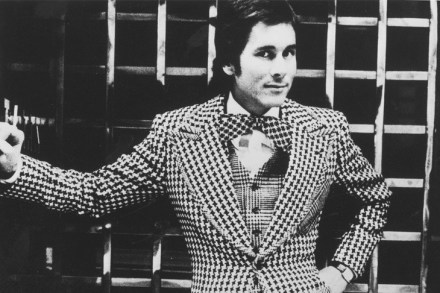
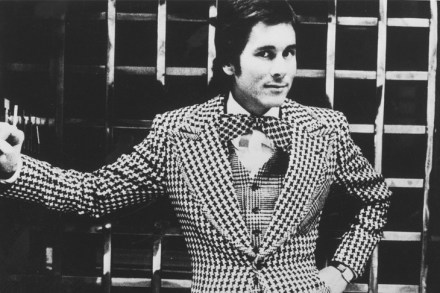
The tailor’s art is a triumph of mind over schmatte. Not just in the physical cutting and stitching, but in the faith that style makes content. This, not the question of which way you dress, is the secret compact between tailor and client. ‘Every faculty of his soul, spirit, purse and person is heroically consecrated to this one object, the wearing of clothes wisely and well, so that as others dress to live, he lives to dress,’ Carlyle wrote of the dandy in Sartor Resartus. Tommy Nutter was one of Tommy Carlyle’s dandies, a ‘clothes-wearing man’ and a ‘poet of the cloth’. From 1969 to 1976, Nutter bestrode the world of tailoring like a Narcissus. Though he could barely manage a backstitch, his designs rewrote the book on male style.

Suits you, sir

The tailor’s art is a triumph of mind over schmatte. Not just in the physical cutting and stitching, but in the faith that style makes content. This, not the question of which way you dress, is the secret compact between tailor and client. ‘Every faculty of his soul, spirit, purse and person is heroically consecrated to this one object, the wearing of clothes wisely and well, so that as others dress to live, he lives to dress,’ Carlyle wrote of the dandy in Sartor Resartus. Tommy Nutter was one of Tommy Carlyle’s dandies, a ‘clothes-wearing man’ and a ‘poet of the cloth’. From 1969 to 1976, Nutter bestrode the world of tailoring like a Narcissus. Though he could barely manage a backstitch, his designs rewrote the book on male style.

Catholics can cope with ‘cultural appropriation’

From our UK edition

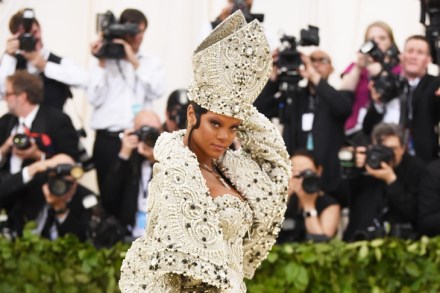
The Met Gala is among the most iconic nights of the fashion calendar. Every year, A-list celebrities flock to New York City to attend the annual fundraiser for the Metropolitan Museum of Art’s Costume Institute. There’s always a theme. This year it was, 'Heavenly Bodies: Fashion and the Catholic Imagination.' Getting into the spirit of things, Rihanna took to the red carpet with a jewel-encrusted papal hat and robe, showing off lots of boob and leg. Olivia Munn wore a gold and sparkly 'chainmail dress' – inspired by the crusades, naturally. Actress Lena Waithe (don’t worry, I hadn’t heard of her either) showed up in a rainbow pride cape; a statement which, I'm sure, is considered quite radical in certain circles.

Catholic fashion is in vogue – but spare us the rosary beads!

From our UK edition

Which was your favourite outfit then, for the Met Gala on the theme of Heavenly Bodies – Catholicism and Fashion – the images of which are everywhere right now? Madonna was true to form with a heavy black mantilla, channelling a Sicilian widow, and Anna Wintour’s dress was, apparently, Cardinal Chanel – though if I may be pedantic, a Cardinal’s colour is scarlet, not white (that’s for the Pope). But Elon Musk, the Tesla man, was pretty good with a kind of reverse clerical suit…white, with a black dogcollar. Frankly, an awful lot of people missed the point of the thing, the theme being Sunday best, loosely interpreted as going to church crossed with fancy dress, crossed with the highest clerical camp.

Call of the wild | 19 April 2018

From our UK edition

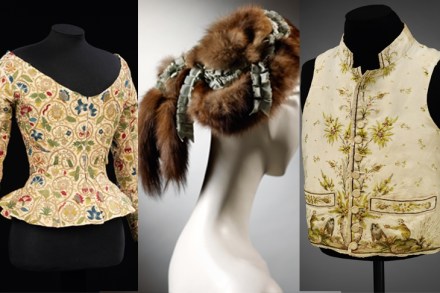
One of the prettiest pieces in the V&A exhibition Fashioned from Nature is a man’s cream waistcoat, silk and linen, produced in France before the revolution, in the days when men could give women a run for their money in flamboyant dress. It’s embroidered with macaque monkeys of quite extraordinary verisimilitude, with fruit trees sprouting all the way up the buttons. And what we know is that they were derived from the Comte de Buffon’s Histoire Naturelle, générale et particulière, of 1749–88.

Hair-raising

From our UK edition

One of the best things about Beehives, Bobs and Blow-dries — yep, an exhibition about hairdressing — is the reaction of visitors. Some are getting on a bit and their pangs of recognition as they pass 1970s straightening tongs or Carmen heated rollers are evident. One woman exclaimed, as she passed a Ronson hairdryer with its shower-cap hood, ‘Ooh, they were good, they were. We’ve only just got rid of my mum’s.’ A hairdresser called Keith from Wakefield observed of the Beatles era that it was a worrying time to begin with: ‘Nothing happened for about two or three months. Nobody came. We thought we’d lost our business. But it turned out that the men were just growing their hair. They came back when it was shoulder length.

Worse for wear

From our UK edition

Erté was destined for the imperial navy. Failing that, the army. His father and uncle had been navy men. There were painters and sculptors on his mother’s side, but they were thought very frivolous. Romain de Tirtoff (‘Erté’ came from the French pronunciation of his initials) was born in 1892 at the St Petersburg Naval School where his father Pyotr was inspector. When he was a little boy, his aunt bought him a set of wooden soldiers. Instinctively, he hated war, violence and, above all, uniforms. He burst into tears and threw the box out of the window. What he liked best was to play with his mother’s old perfume bottles, which he dressed in scraps of lace to make ballerinas.