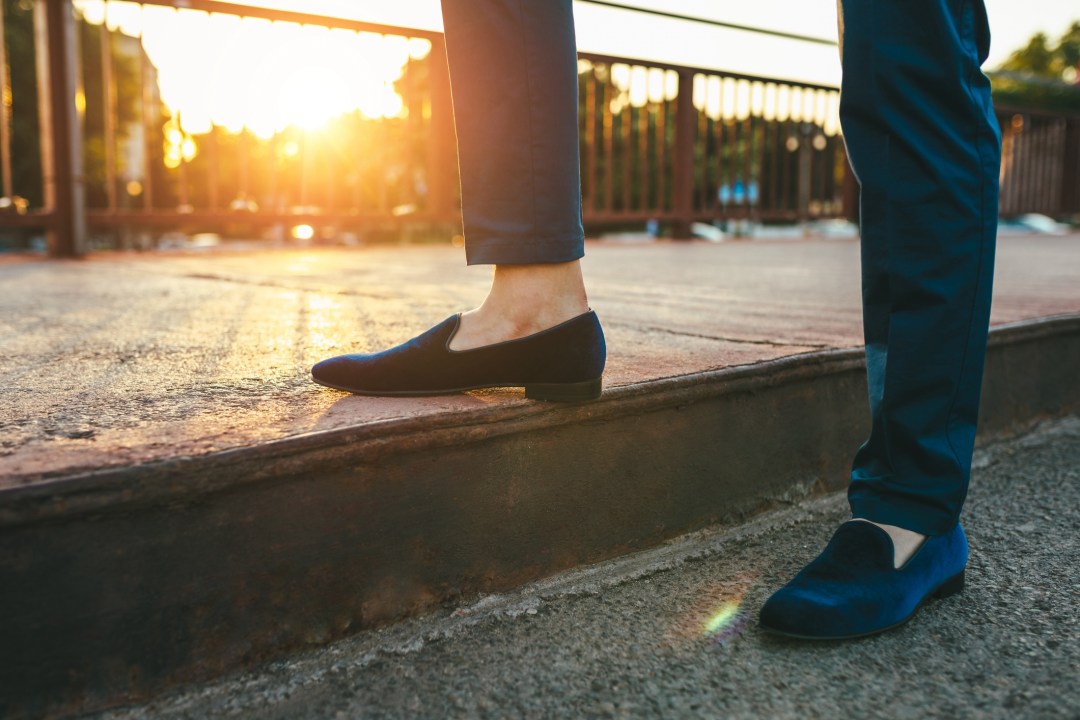
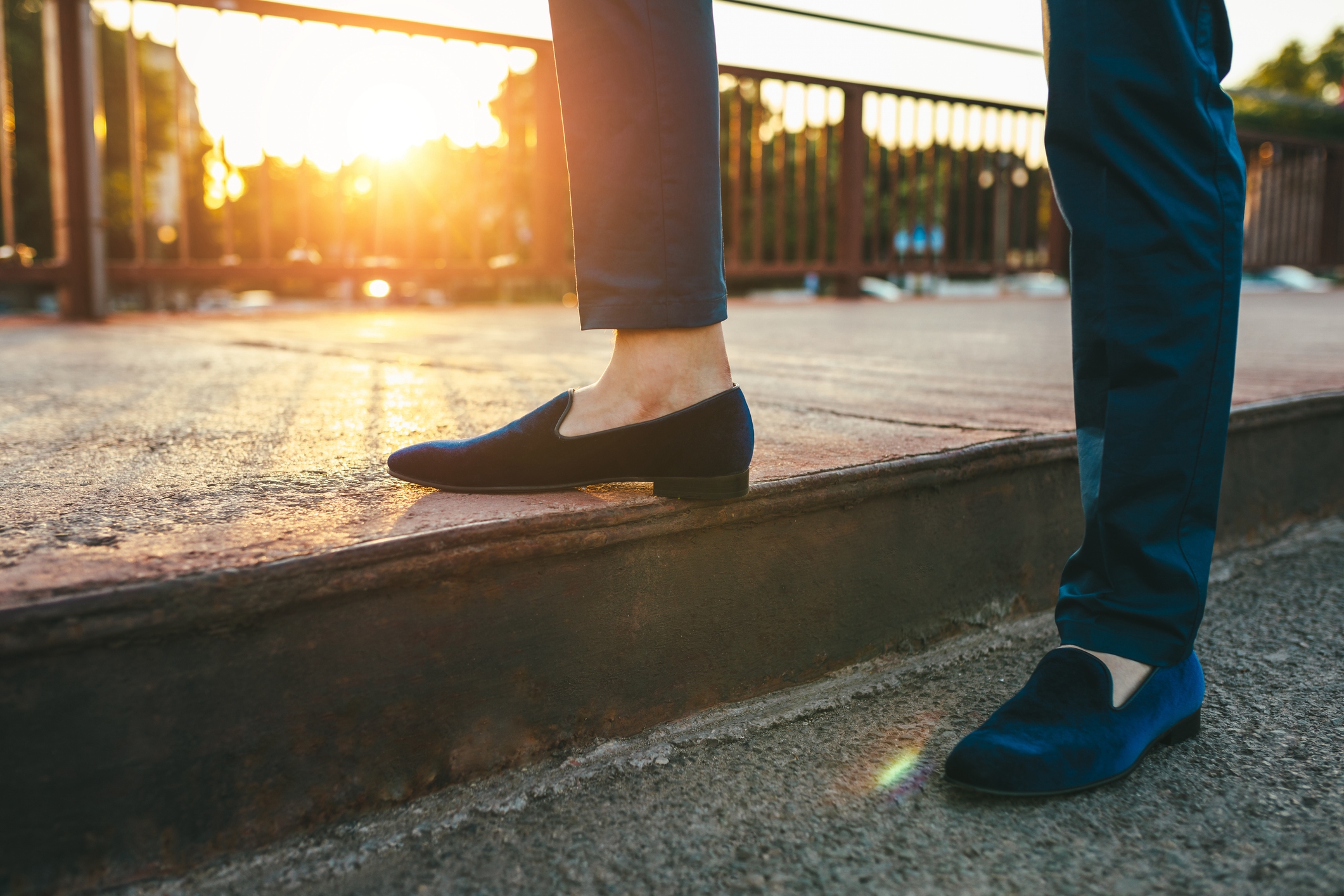
People can seem completely normal, until you look at their shoes. Particularly men. There they are, appearing sane: natty haircut, ironed shirt, non-psychotic trousers. But then: oh, horror! Terrible shoes. Slimy-looking Docksides, or Toms espadrilles, or something shiny and pointy. Or tremendous show-off brogues like Mr Noisy, with those execrable metal tap things, worn only by bounders and con men.

I was once, aged 23, struck silent with horror by the shoes of a boy who accompanied me to a beach: a pair of dusty brown lace-ups it seemed he’d had since Upper Sixth. I now understand this to be tremendously posh but at the time it turned my stomach. I am too suburban for that kind of thing.
On a first date with my now-husband, we went to the now-closed Fino tapas restaurant on Charlotte Street. I peeped at his shoes, tense, but he wore a splendid pair of sensible brown suede Chelsea boots. Mendelssohn’s Wedding March struck up in my head.
I was wearing terrific shoes at the time as well, by the way. Vain about my slightly stumpy legs, I lived in high heels during my 20s. When I was a diarist at the Evening Standard, I had an exotic array of crazy shoes and clattered about town in them.
But in 2010 the creative director of Céline Phoebe Philo put a stop to all that. She closed her Fashion Week show wearing slim-cut trousers and a pair of white Adidas Stan Smiths – and immediately triggered what fashion people call ‘a vibe shift’. Overnight, heels and boots became ghastly. What we all wanted was trainers. Specifically, Phoebe’s trainers.
Around the same time as this fashionista rush on Stan Smiths, I met a woman who was very senior at a major tech firm (sounds like ‘Boogle’) who was also very stylish.
I said: ‘What shoes do you wear at work?’
She replied: ‘A pair of Lanvin flats.’
‘Do you ever wear heels?’
‘Oh no, never.’
‘Why not?’
‘I’m a bit too busy to wear heels.’
No one has the grit to break a proper shoe in these days because we’re sloppy and demanding and spoiled
Until the 2010s, executive women were often seen in heels. It added to their air of steeliness. They were so steely they didn’t even feel pain in their feet – their feet were made of steel! But the problem was, once women were given the option to wear shoes for comfort and speed, it was difficult to go back to the hobbling effect of a heel. Or shoes with any rigidity at all. Once influential women, like my Boogle executive friend, were seen skipping about in flat shoes and designer trainers, the message was that comfort equaled authority. Their ambitious underlings followed suit.
But now everyone slops about in trainers. Think Rishi Sunak in his Adidas Sambas or the new charm-adorned trainers, being sold by everyone from Nike to Miu Miu. Or worse! After an operation on my foot, which briefly ruled out closed footwear completely, I discovered Archies sandals: a thick rubber ‘pool slide’, which offers a level of comfort bordering on scandalous. I wore them in a putty-pink colour far beyond my operation recovery time until my husband eventually said, ‘Oh no, please not those again.’
Perhaps we will see a backlash, another vibe shift. I am already starting to see young men about town wearing shiny black loafers or even stout lace-ups. I fear Generation Z is a lost cause but I would wager Generation Alpha will be in the market for a Lobb lace-up, a briefcase and a bowler hat to differentiate themselves from revolting millennials with their rancid trainers and pink hair.
But there are two major problems. The first and most serious: can even the furious self-definition of Gen Alpha neutralise the naff, golf-club sheen that rigid shoes have acquired? Proper footwear has become the victim of a toxic PR campaign marketing men must lie awake wondering what to pin it on. Was it lockdown? Was it Phoebe Philo? Was it a sophisticated social campaign from China, a market leader in the trainer manufacturing sector?
The second problem comes in two parts: part one is the proliferation of advice to prioritise the health of our backs and our feet; part two is that we’re nagged by the state to walk 10,000 steps a day. We do need a certain shoe in which to achieve these things.
I have spent some time in Namibia and encountered the peaceful Himba tribe who walk great distances each day. (At least, they did in 1998 – perhaps Uber has now reached the Kunene River.) Some of the Himba undertook these distances barefoot, others in cow-hide sandals. But I saw many choose to fashion sandals from repurposed car tyres. The Himba don’t do what they ‘should’, they do what works – and what works is trainers.
Adjacent to this (not quite its own point) is that no one has the grit to break a proper shoe in these days because we’re sloppy and demanding and spoiled. Yes, I agree, you are probably better off doing all those steps in a pair of Doc Martens, which will last for 900 years. But have you ever tried breaking in a pair of Doc Martens? It’s like trying to break in shoes made from iron.
It all adds up to a populace that knows it ought to wear a nice plain Oxford but, time after time, hesitates in the hallway. It considers the day’s distances to be walked, the emotional toll, the psychological discomforts to be endured – and then reaches for the Asics.





Comments