Europe

The recapturing of Snake Island shows what Ukraine can do

From our UK edition

After days of missile strikes, Ukrainian forces have forced Russia off Snake Island in the Black Sea. ‘The enemy hastily evacuated the remnants of the garrison in two speedboats and left the island’, according to the Ukrainian Operational South Command. Russia's defence ministry appeared to concede defeat, saying that ‘Russian forces have completed the assigned tasks and withdrew as a step of goodwill’. The retreat is huge news in Ukraine, as Snake Island is not only important strategic territory, but has acquired a cult status as a representation of Ukraine’s resistance. Snake Island became world famous on the first day of the war when Ukrainian troops broadcast a message saying: ‘‘Russian warship, go fuck yourself’.

Is Russian Orthodoxy dying in Ukraine?

From our UK edition

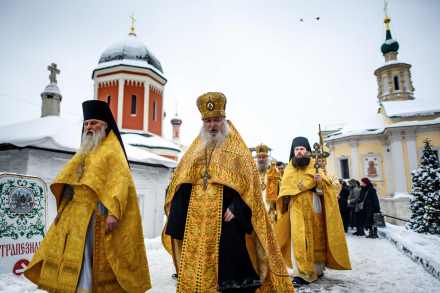
Ivano-Frankivsk has just become the first city in Ukraine to have no Russian Orthodox Church, amid a mass defection of churches away from the Moscow patriarchate and towards the breakaway Orthodox Church of Ukraine.  At the start of the invasion in February, almost two-thirds of Orthodox churches were still formally aligned with the Russian Orthodox Church whose leader – Patriarch Kirill – is a close ally of Putin. Until recently, the Russian Orthodox Church claimed dominion over Ukraine for centuries. The 2014 invasion of Crimea dampened its appeal. In 2019 a new Orthodox Church of Ukraine was recognised by Patriarch Bartholomew – the archbishop of Constantinople and the de facto leader of Orthodoxy.

Defending Ukraine should be a European project

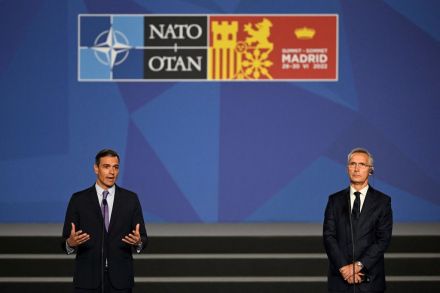
NATO gatherings at the head-of-state level are ordinarily placid, even boring affairs. But this week’s three-day NATO summit in Madrid will be quite different. For the first time in twenty-three years, the alliance is meeting as a war churns on European soil. Russian President Vladimir Putin’s invasion of Ukraine has been an electric shock to the continent’s defense establishment, at least if their rhetoric is any indication. European officials have finally come around to noticing that Europe isn’t an exceptional zone of peace and tranquility, but a region no more immune to armed conflict than any other. NATO, which was straying out of theater in a desperate attempt to stay relevant, is now back to performing the defensive mission it was meant to do.

Macron vs the deep state

From our UK edition

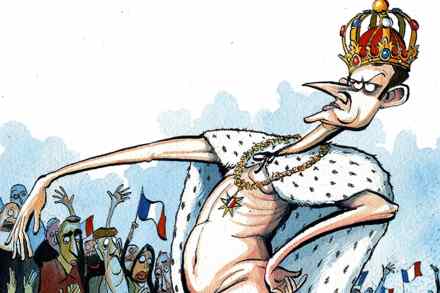
French diplomats are on strike today. But will anyone notice? Not to be immodest, I am especially well qualified to comment on French diplomacy. Some time ago, between gigs in Washington DC, I was employed as a consultant by the French embassy there. The embassy is a modern building in Georgetown, conveniently near all the best restaurants, although the food at the embassy itself was both fabulous and cheaper than McDonalds. The wine list was, obviously, exceptional. I was not allowed to see deeply into the embassy’s most sensitive operations (there was a mysterious wing that seemed to be entirely occupied by spooks) but must admit that in the scientific service where I worked as an astonishingly well-paid editor, there was very little sign of stress.

How Russia wins

From our UK edition

It is still too early to predict the outcome of the war in Ukraine. Russia has certainly solidified its position in the east and is making small military gains. What's become clear over the last few days is that Russia may, after all, be able to achieve at least some of its military goals. Here is an interesting, albeit disturbing, political scenario by Sabine Fischer, a senior fellow at a German foreign policy tank. She notes that the mood in Moscow itself has shifted. It is the Kremlin’s political calculation that the western nations will not sustain their massive financial and military support for Ukraine.

EU: normal disservice resumes

From our UK edition

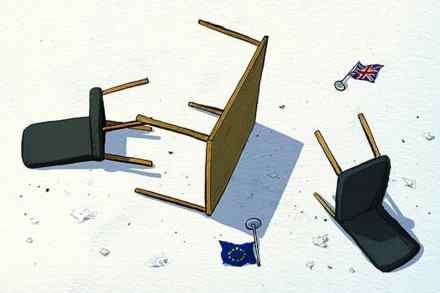
In the past few months, relations between the UK and the EU have been the best they have been since Brexit. Vladimir Putin’s assault on Ukraine reminded the two sides of the need for the world’s democracies to co-operate. Disputes over fishing rights could wait. It is tempting to hope that relations could continue to improve, especially now that the French presidential election is out of the way. But this is unlikely to happen. This week Bruno Le Maire, France’s economy minister, dismissed the suggestion that fixing relations with Britain will be a priority for Emmanuel Macron’s second term.

Europe’s finest grand hotels

From our UK edition

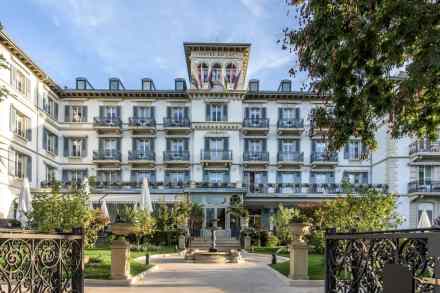
Most of life’s guilty pleasures eventually lose their lustre, but one decadent delight that never fades is spending a long weekend with a significant other in one of Europe’s grand hotels. For a few days you’re living a different life, a more glamorous existence, like characters in a Continental film noir. You’re bound to have your own favourites, places you love to revisit, but if you’re looking for somewhere new to stay, here’s my top ten. They’re not the most opulent hotels, or even the most expensive. What sets them apart is their understated elegance. Naturally they’re not cheap, but if your travel dates are flexible you can often find a bargain.

The end of the last Arab Spring success story

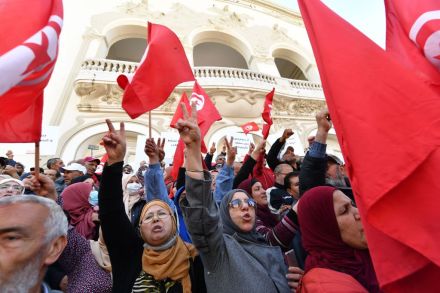
Visibly, and with very little pretense, Tunisia is sliding into tyranny. In the last two years, its president, Kais Saied, has frozen and dissolved the country’s parliament and threatened its former members with prosecution. He has dismissed an errant prime minister. He has ruled by decree. He has quashed the high judicial body attempting to scrutinize his changes to the constitution and replaced it with a new organization filled with hand-picked appointees. Accusing his opponents of planning their own coup attempt, Saied has faced down months of protests over each of these individual changes with uncommon steeliness. Saied’s hold over the instruments of government and his comradery with the brass of the army appears near total.

Michel Houellebecq may be honoured by the French establishment, but he’s no fan of Europe

From our UK edition

For many years, Michel Houellebecq was patronised by the French literary establishment as an upstart, what with his background in agronomy rather than literature, his miserable demeanour, his predilection for science fiction and his gift for unyieldingly saying the unsayable, especially about relations between the sexes. That’s all changed now. He won the Prix Goncourt in 2010 for The Map and the Territory and in 2019 was elevated to the Légion d’Honneur. The Nobel cannot be long delayed, the committee after all having honoured the equally ornery V.S. Naipaul and J.M. Coetzee.

Boris and Scholz parade the new Europe

From our UK edition

Russia's invasion of Ukraine has changed Europe forever. That was the argument that Boris Johnson made on Friday when he held a joint press conference with German Chancellor Olaf Scholz. One of the changes Johnson was keen to emphasise was that European leaders are united in their support of Ukraine and against Putin. This, he argued, was one of the ways in which the Russian President had failed: he had sought to create divisions in Europe, but had 'demonstrably failed'. 'The Europe we knew just six weeks ago no longer exists: Putin's invasion strikes at the very foundations of the security of our continent,' he said, adding: 'Putin has steeled our resolve, sharpened our focus, and he has forced Europe to begin to rearm to guarantee our shared security.

Putin’s war is a disaster for Russia

From our UK edition

Strasbourg Europhobes will never have a better argument against European integration than the seat of the European parliament in Strasbourg. It’s not just the €200 million per year it costs to move MEPs to and from Brussels once a month at great inconvenience to everyone; the building itself is a disgrace. It feels like a prison: identical glass corridors look out over a useless inner courtyard, so you can go on walks without the danger of escape. The former president of the European Commission José Manuel Barroso once suggested turning the building into the headquarters of the European Institute of Technology, which was an excellent offer both for the country and the city, but to no avail.

Don’t blame the West for its Ukraine hesitance

As Ukrainian President Volodymyr Zelensky addressed the UN Security Council today with all the anguish you would expect from a wartime commander-in-chief, he could nonetheless be relatively pleased about several things. Sure, Zelensky and his advisers are constantly making the point that Ukraine needs bigger and better weapons to resist Russia’s invasion, but the West has been quite responsive to Kyiv’s requests. The Biden administration’s latest weapons shipment, announced last week, adds to the $1.6 billion in military aid the US has sent to the Ukrainian military since the war broke out on February 24.

Why Hungary’s opposition failed

From our UK edition

Viktor Orbán has now spent a total of 16 years as Hungary’s Prime Minister but he has not lost his hunger for power. Energetically campaigning across the country, exploiting every advantage of incumbency, and excoriating the incompetent opposition, on Sunday he notched up his fourth landslide victory in a row. Crucially, he maintains the two-thirds majority in parliament that he has held since 2010, allowing him him to amend the constitution whenever he chooses. Predictably, the opposition challenged the legitimacy of the election process even before the votes had been counted. They note that the lion’s share of the media supports Orbán. But this is an excuse, not an explanation.

Hungary’s Orbán remains a thorn in everyone’s side

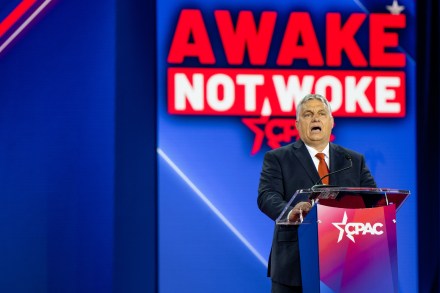
Viktor Orbán has just won another election. The Hungarian prime minister has secured a hefty majority in his country’s legislative elections, and in his victory speech, Orbán revealed once again that he is a thorn: in the side of Europe most obviously but, if need be, in the side of all. I’ll leave for others the discussion of Hungarian democracy — whether Orbán has so manipulated national life that his continued electoral successes are unimpressive, even fraudulent. But Orbán, in his own mind, thought an “overwhelming force” ranged against him. “We never had so many opponents,” Orbán said.

Germany’s progressives have a Putin problem

From our UK edition

Eighty-nine years ago this week, the German Social Democrats in the Reichstag cast the only votes opposing Adolf Hitler’s dictatorial power grab, the Enabling Act. Today’s SPD members often cite that moment as the proudest in their party’s 146-year history. With a memory like that, there is something awkward about the current SPD Chancellor’s position. Olaf Scholz is now having to come to terms with decades of SPD appeasement towards the dictator in Moscow. Before Putin’s invasion, Russian doves could be found across the German political spectrum, but Scholz's now-ruling SPD has an especially long and developed history of Kremlin cosiness.

The last American tourist

I was driving along a curvy English road outside a village in Gloucestershire a few weeks ago when a sign loomed on our left. It said: CATS EYES REMOVED My first thought was: What a horrible way to make a living in this day and age, even out here in the countryside. So much for All Things Bright and Beautiful... Maybe those people who said that Brexit would turn the English into depraved monsters were right. I was jumping to conclusions. It hadn’t been put up by an entrepreneur or veterinarian but by the highway authority. Cat’s eyes are what the English call those super-reflective bumps embedded in the stripes on minor highways to keep drivers from drifting across lanes. The sign was a warning that this curvy road had recently become much more dangerous.

tourist

David Frost’s solution to cool UK-EU relations

From our UK edition

Since David Frost quit the government in December over its political direction, he has not said that much about the future of UK-EU affairs. But in the Churchill lecture at the University of Zurich tonight, he sets out a potential new basis for relations. His tone is warm and marks a deliberate attempt to move on from the scratchy relations of the last few years: he argues that there is a ‘need to recognise that the EU is a natural ally of the United Kingdom, and that we should seek – as sovereign equals – ways to cooperate and work together more.

Chernobyl Two?

From our UK edition

The electricity supply to the ruined nuclear plant at Chernobyl in Ukraine has been cut off. According to one knowledgeable source I spoke to, this is a serious problem as power is needed to pump water around spent nuclear fuel rods stored there. There is a back-up diesel generator, but it has just one day’s supply of fuel left and once that runs out, the temperature could start to climb. If the water evaporates, the zirconium metal ‘fuel assemblies’ could start to melt – with radioactive material released into the atmosphere. This would not be anywhere near as bad as the original Chernobyl disaster, in 1986, when a reactor had a power surge and exploded – but still bad enough.

Sanctions on Russia will shake the world economy for years

The war in Ukraine will dominate the news for the foreseeable future. But while the bombings will eventually cease, the economic consequences for the world have just begun. That’s because in an era of increasing interconnectedness, economic impacts don’t stop at borders. Most attention has been focused on the immediate impacts of sanctions on Russia, and they are significant. In the past, sanctions have proven largely ineffective at punishing foreign enemies. President Barack Obama, for example, failed to use them effectively in 2014 during the last Ukrainian-Russian dispute. But this time, the actions taken against Russia were largely unprecedented, with even traditionally neutral countries like Switzerland and Sweden calling for restrictions that are “as big as they can be.

economy

Putin the reckless gambler

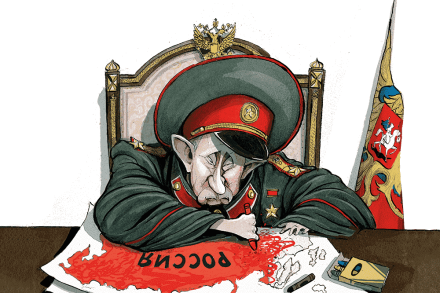
Vladimir Putin’s two-week-long war in Ukraine is not going as planned. What the Russian strongman thought would be a romp of the Ukrainian army in a matter of days has turned into a slow-motion train-wreck, with thousands of Russian soldiers killed in battle, images of burned-out tank husks littering the roads and Russia’s economy circling the drain. CIA director William Burns told the House Intelligence Committee today that Putin is increasingly frustrated about the level of progress achieved thus far in the campaign. "He was confident that he had modernized his military and they were capable of quick, decisive victory at minimum cost,” Burns said during his testimony. “He’s been proven wrong on every count.

vladimir putin alexei navalny