Europe

Is Europe a continent? Does it matter? 

Nikole Hannah-Jones, who is never at a loss for a tweet, ridiculed Americans who are expressing alarm over the threat to Europe implicit in Putin’s invasion of Ukraine. She put down those spoilsports for their referring to Europe as a “continent.”  Quoth Hannah-Jones, under her nom-de-plume Ida Bae Wells: What if I told you Europe is not a continent by definition, but a geopolitical fiction to separate it from Asia and so the alarm about a European, or civilized, or First World nation being invaded is a dog whistle to tell us we should care because they are like us. The triumphant silliness of the author of the 1619 Project always comes down to her desire to find racism at the root of whatever happens.

europe nikole hannah-jones

‘Staying Switzerland’ on Ukraine is impossible

From our UK edition

The striking thing about the financial sanctions on Russia is not their severity, but just how many countries are joining in the effort. Switzerland has today announced that it will adopt the EU sanctions on Russia, particularly significant because it has been the biggest recipient of private transfers by Russians in recent years. The fact that such a traditionally neutral country is imposing sanctions will deepen the wedge between Putin and the rest of the ruling elite. Meanwhile in Asia, Japan, South Korea and Singapore have signed on to the economic measures on Russia.

Viktor Orbán has played a perfect game with Putin

From our UK edition

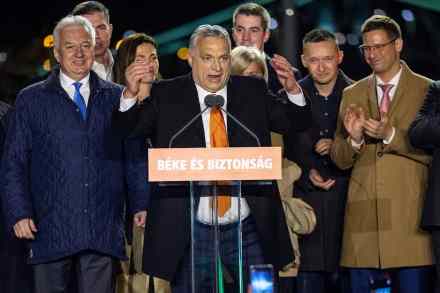
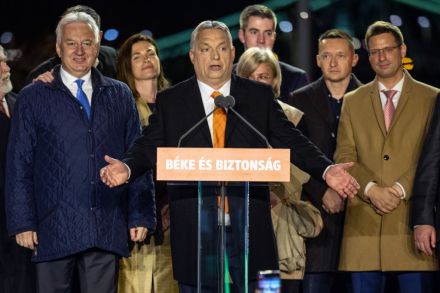
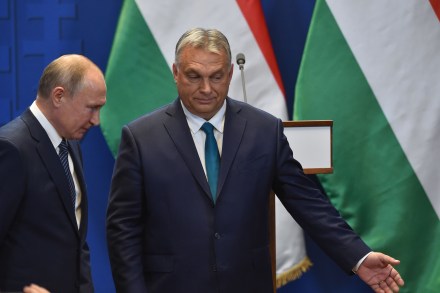
On 3 April Hungarians will have their ninth set of free parliamentary elections since the collapse of the communist dictatorship in 1989. The winner is likely to be Viktor Orbán and his Fidesz-KDNP coalition, which is leading in five of the six major polls. Russia’s invasion of Ukraine will not change that dynamic even though the opposition leader, Péter Márki-Zay has called Orbán a ‘traitor’ for his long-standing friendship with Vladimir Putin. Ever since Viktor Orbán began his second stint as Hungary’s prime minister in 2010, he has repeatedly played the provocateur within the EU, tweaking the eurocrats’ noses with his cultural conservatism and hostility to mass immigration.

A new Europe is emerging from this crisis

From our UK edition

With every hour that Kiev holds out, the geopolitics of Europe changes more. Germany, which so values its prohibition on sending weapons into warzones, has just announced that it is sending 1,000 anti-tank weapons and 500 Stinger missiles to support the Ukrainian forces. I expect that defence spending will rise considerably in the coming years Germany is also allowing other Nato members to export arms with German-made parts to Ukraine — which will make a material difference to the supplies that the Ukrainian government receives. Yesterday evening, it was announced that Russian banks are going to be cut off from Swift.

It’s time for Germany to stand up to Russia

From our UK edition

In his novel The Loyal Subject, which appeared on the eve of the first world war, Heinrich Mann, the brother of Thomas, satirised Wilhelmine Germany as a hotbed of chauvinistic nationalism. The servile nationalism that Mann mocked could not be further from the ethos of the Federal Republic of Germany today. So pervasive is Germany’s eirenic disposition that on Thursday, as Russian president Vladimir Putin ravaged Ukraine, Lieutenant General Alfons Mais, the head of the German army, took the unusual step of turning to LinkedIn to ventilate his exasperation at the impotence of his own fighting forces. ‘In my 41st year of peace-time service, I would not have thought that I would have to experience a war,’ Mais stated on Thursday.

Putin’s invasion has exposed the frailty of Europe’s armies

From our UK edition

Putin’s forces are currently steamrolling Ukraine’s defences, with Russian troops circling the capital and invading from the south and east of the country. Meanwhile European leaders, neutered by their military weakness, have been unable to do little more than offer pointless sanctions and statements of solidarity. As Russian troops streamed across the border, European Commission President Ursula von der Leyen condemned the ‘unprecedented military aggression.’ When the Kremlin moved to recognise the Donetsk and Luhansk oblasts as independent states, the response in Brussels was to pass a fresh package of sanctions.

Europe’s ‘green’ transition put it at Russia’s mercy

Germany’s “halt” on the certification of the Nord Stream 2 pipeline on Tuesday is a classic case of too little, too late — a fact made all the more painfully clear in light of Russia’s invasion of Ukraine. Oil and gas still flow through Nord Stream 1 and many other Russian pipelines to Europe, and the continent has no choice but to keep importing the fossil fuels that finance Vladimir Putin’s offensive. We all saw this coming. Europe’s supposed “green” energy transition disregarded energy security and common sense, and Ukraine is now paying the price. The world will never tackle climate change if it's in a constant state of geopolitical energy insecurity, relying on authoritarian regimes like Russia and China to meet its basic needs.

The stakes for Europe are even higher than in 1938

Any analysis of the Ukraine situation risks lagging behind the news. As of the time this article was published, Russia had conquered the former Chernobyl nuclear power plant. Its forces are only about sixty miles away from Ukraine’s capital, Kyiv, which has already experienced shelling. Russians have also attempted to capture Antonov International Airport, just fifteen minutes away from the capital’s ring road. Meanwhile, European leaders are resorting to the usual responses: “concerned,” “strongly condemning." There is even a Twitter account mocking the EU’s approach to all major crises, called “Is EU Concerned?” The response to the invasion of Ukraine is not spared from similar mockery. Here in Europe, it feels like 1938 all over again.

Europe is painfully reliant on Putin

From our UK edition

Vladimir Putin declared war on Ukraine in the early hours of this morning, starting with a massive air attack from the north, south and east, targeting military and civilian infrastructure. This is the worst-case scenario. Putin's speech on Monday set the ideological groundwork. This morning he spoke again, calling Ukraine ‘our historic lands’. He said he was launching what he called a ‘special military operation’ with the goal, not of occupying the country, but of ‘demilitarising and de-Nazifying’ Ukraine. And Putin spoke too to us here in the West: To anyone who would consider interfering from the outside: if you do, you will face consequences greater than any of you have faced in history. All relevant decisions have been taken. I hope you hear me.

Are the lights about to go out across Europe?

From our UK edition

Impact-Site-Verification: de2f122d-4b66-49e8-911d-d4d5628b0063 Today’s snap decision by German Chancellor Olaf Scholz to halt Nord Stream 2 — the new pipeline intended to export vast amounts of Russian gas into the EU — will make precisely no difference to European energy security, at least in the short to medium term. It could force a rethink of Berlin’s longer-term energy strategy, but the bigger question facing energy markets is whether Russia will curtail existing gas flows into Europe. Scholz on Tuesday instructed Germany’s Federal Ministry for Economic Affairs and Climate Action not to allow the Baltic Sea pipeline to start pumping gas 'for now'.

It’s too late to break Europe’s gas reliance on Russia

From our UK edition

So, Nord Stream 2 will not be plugged into Germany’s gas grid. A little surprisingly, Chancellor Olaf Scholz has been first out of the blocks this morning in the western economic response to Putin’s recognition of breakaway states in eastern Ukraine. The block is not total: what Scholz says is that the certification process for the pipeline will be halted — leaving open the possibility that it might, after all, be connected if Putin starts to behave himself, or Germany becomes especially desperate for gas. Nevertheless, it is a significant move which will have an economic impact on Russia. But it is astonishing that the project was ever allowed to come this far in the first place.

Will Putin now roll on to Kiev?

From our UK edition

The White House told us with absolute certainty that there would be an invasion of Ukraine this week — instead Vladimir Putin bit off a chunk of Ukraine without firing a shot. Perhaps it seemed to him that recognising the two breakaway territories of Luhansk and Donetsk was a clever move: he had not, after all, ignored the warning that — in Boris Johnson’s phrase — one Russian soldier putting a toe-cap over the border would make sanctions inevitable. But sanctions will come anyway — the issue is only about how severe they will be — imposed because, as Johnson says, there has been a clear breach of international law.

The seismic importance of Putin’s latest move

From our UK edition

Vladimir Putin has tonight unilaterally recognised the two breakaway republics in Ukraine. In doing so, he has effectively ended the Minsk peace process. The move also begs the question of whether Putin is recognising the territory that these so-called republics actually hold, or the much larger territory that they claim. If the latter, then that raises the question of whether Russian troops will be used to take that land given that Putin immediately signed ‘friendship and mutual assistance’ treaties with them at the end of his speech this afternoon. The speech, though, went even further than recognising the break-away republics, carving off another chunk off Ukraine after the annexation of Crimea in 2014.

Kudos to Macron for going to Moscow

Landing in Moscow on February 7, French President Emmanuel Macron had a twinkle in his eye and a spring in his step. There he was, taking it upon himself to be the first European head-of-state to meet Russian President Vladimir Putin since over 130,000 Russian troops massed on Ukraine’s border from three sides. Macron's mission was to explore whether a de-escalation with Russia was possible. “I believe that our continent is today in an eminently critical situation, which requires us all to be extremely responsible,” he told reporters before his five-hour session with Putin began. The other option, what could be the largest land war in Europe since World War II, would be far worse.

Viktor Orbán or: How I Learned to Stop Worrying and Love Putin

From our UK edition

Viktor Orbán first came to prominence when in 1989 he declared on live TV that Hungary must put an end to the ‘Russian occupation’. On the first day of February this year, he held his thirteenth meeting with Vladimir Putin. What’s changed? Like much of his generation, Orbán initially believed that the fall of communism would mean a ‘return to Europe’ — with not only western democracy but also a western standard of living. Yet after a brief and unpleasant stint studying in Oxford, the student politician discovered that Britain’s future elites were ignorant and decadent.

Europe: the little kids’ table at the Ukraine talks

While American and Russian officials are yelling at one another in the UN Security Council chamber, another international actor has found itself at the little kids’ table: Europe. It's possible the phrase “little kids’ table” is too harsh. To be fair, French president Emmanuel Macron is at least in direct communication with Russian president Vladimir Putin and urging his European colleagues to formulate a joint European negotiating position on the Ukraine question. France is also a chief mediator of the Normandy Format, which seeks to resolve the eight-year conflict in Ukraine’s Donbas region. But Macron is largely an outlier on his own continent.

Will the old world order end in Ukraine?

As Russian troops encircling eastern Ukraine are preparing to attack, western leaders are bracing for a Russian invasion while struggling to maintain a united front. Following the fallout of peace negotiations and numerous deterrence measures that appear to be inconsequential, French President Emmanuel Macron has called on the EU to conduct its own dialogue with Russia and forge its own plan for security and stability. It’s an indication that most European nations are tired of being sidelined during negotiations and reluctant to impose harsh sanctions against Russia, especially since it could risk a gas shortage that would impact recovering European economies.

chinese meddling

Europeans are still free-riding off American security

Remember how Washington’s foreign policy establishment and their media echo chamber bashed the “isolationist” President Donald Trump for abusing, humiliating and making life miserable for our close European allies, in the process obliterating the “liberal international order”? Remember how some of the Europeans responded? Germany’s Angela Merkel declared “a new chapter” in US-European relations, saying that Europe “really must take our fate into our own hands.” France’s Emanuel Macron stated that Europeans need to stop “being naïve,” and assert their strategic independence from the US. What happened? Nothing. Here we are, three decades after the end of the Cold War, and it is déjà vu all over again between Washington and Moscow.

angela merkel

The crowd-free European city breaks to try this year

From our UK edition

Finally, it looks like we might actually be able to go on holiday in Europe again. I’ve been overseas a few times since this pesky covid business began, but it’s always been for work, not leisure, and it’s always been a nuisance: tests on the way out, tests on the way back and yet more tests when you get home… However now travel restrictions are loosening up, a trip to the Continent no longer feels quite so fraught, and that magnificent indulgence – a short-haul city-break – seems like a practical option once more. So where to go? Well, you’re bound to have your own favourite destinations - but if you fancy trying somewhere new, here are a few of mine. They’re all popular with locals, but they’re not overrun with sightseers.

America still won’t risk a war with Russia over Ukraine

Anybody who thought this week’s intense diplomacy between American, European, and Russian officials would magically resolve the ongoing crisis in Ukraine should lie down until the feeling passes. Crisis diplomacy isn’t a walk in the park; if anything, it’s a slow-moving car ride through rush-hour traffic, with plenty of speed bumps along the way. On Monday, January 10, Washington and Moscow met for a round of discussions in Vienna to sound each other out and present their list of seemingly endless grievances. After eight hours of talks, both delegations left the room with, coincidently, similar assessments as to how it all went.