Europe

Immigration: The BNP are Winning and Britain is Losing

One of the odder aspects of contemporary politics is the amount of attention lavished upon the goons at the BNP. Anyone would think they were about to win the election. But they’re not. Nevertheless, grant Nick Griffin and his pals this: they’ve managed to hijack the debate – such as it is – on immigration. Despite what the media might have you think, there is no party of open borders in this country. Instead both the Tories and the Labour party effectively concede the argument to the BNP. Labour boast that they have immigration “under control” and then the Tories complain that the government isn’t “cracking down” hard enough. The

Mars & Venus Revisited

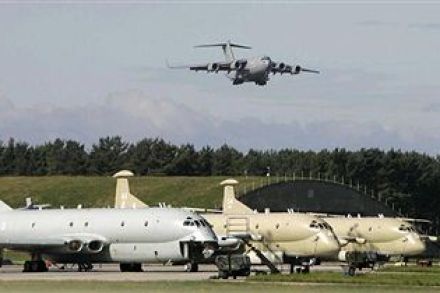
Bob Gates’ criticism of european defence shortcomings yesterday was couched in unusually harsh terms. Then again, NATO faces an uncertain future and there’s a growing sense in the United States, I think, that europe is failing to lift its weight when it comes to defence matters. As Gates pointed out just 5 of NATO’s 28 members spend more than 2% of GDP on defence. Consequently: The demilitarization of Europe — where large swaths of the general public and political class are averse to military force and the risks that go with it — has gone from a blessing in the 20th century to an impediment to achieving real security and

ISAF = I Saw Americans Fight?

The imminent Dutch withdrawal from NATO’s Afghan mission will ignite the question of allied troop contributions. But what are the real numbers and how do they compare to past missions? In a new article for the Spanish think tank FRIDE, I have done the sums, as part of a broader analysis of transatlantic “AfPak” policy since President Obama came to power. The contribution of EU member states to NATO’s ISAF has grown from 16,900 soldiers in 2007 to 22,774 in 2008, 25,572 in 2009 and 32,337 in 2010. Soldiers from EU countries have until this year made up 45–53 per cent of the total force and for three consecutive years.

David Miliband would set the people free

What is it about the Blairite passion for abstract nouns? I ask, not out of facetiousness, but because I want to know what they mean by loose terms such as ‘empowerment’. David Miliband joins James Purnell among the progressive left’s thinkers who are reimagining the relationship between state and citizen, and he gave a concept heavy, substance light speech to Demos this afternoon. I’ve read it a couple of times and can’t get my head round it. Peering through the glass darkly, the central concept is attractive: Miliband wants to give more power to the people. Some valid policies season his argument. For instance, the 1 week cancer pledge would

Balkan business

Catherine Ashton is visiting the Western Balkans this week on her first foreign trip as the EU’s top diplomat. Though she has come in for criticism for not going somewhere more foreign, like the Middle East, her visit to the region is, in fact, timely and should be welcomed. The region has a few hurdles to clear on its journey away from the misery of the past and towards a more stable future. What can Ashton do to help that process along?  Well, her job is best described with historian Richard Neustadt’s moniker “Persuader-in-Chief”. She can cajole member-states, put issues on the EU’s agenda and suggest ideas. That is probably

Turbo-charged fiscal crises

The crisis in Greece shows just how quickly a fiscal crisis can blow up. Just two-and-a-half weeks ago, Greece was able to raise several billions in financing, with demand for almost 25 billion of their debt in an auction. The very next day, their bond market collapsed and the rout began. Just ten days later, they were turning up in Brussels with a begging bowl, and inviting the European Commission and IMF to Athens to start making their tax and spending decisions. There can be nothing worse for a government than having your economic policy dictated by the markets, and then other governments, as access to finance disapears. All you

Yanukovych wins Ukrainian election – but that may not be all bad

With just over 2% of votes still to be counted, Ukraine’s pantomime villain, Viktor Yanukovych, is coasting for victory in the country’s presidential election. Yulia Tymoshenko, the current prime minister and one of the leaders of the pro-Western ‘Orange Revolution’ in 2004 has yet to accept her loss, but with the EU praising the “impressive display of democratic elections” it will be hard for her to do anything but concede. So is this game, set and match for Vladimir Putin, who has done everything in his power to snuff out the ‘Orange Revolution’? “Revolutions devour their own children”, the saying goes, and this has certainly been true of the 2004

Post-election Entene Cordiale?

If there is a strategic thought lurking inside the Tories’ grab bag of foreign policy ideas, it seems to be closer cooperation with France, particularly on defence matters. Should William Hague become Foreign Secretary after the election, he might end up working with a new French counterpart, as rumours persist about Bernard Kouchner’s imminent departure (knowing this, he apparently even floated his own name for the Kabul UN job). A new Parisian counterpart for Hague – for example, the current French Agriculture Minister, Bruno Le Marie – could make a new Entente Cordiale easier. But, even then, would the French be up for closer links with the UK? Angela Merkel

Not yet a post-American Europe

I’m in Brussels where the only news is Obama’s cancellation of a trip to Madrid to join an annual EU-US confab.  The FT’s Gideon Rachman explains the anxiety caused by the decision: ‘There is no doubt that the Spanish government, which currently holds the rotating presidency of the EU (You thought it had been abolished? Fooled you!), will treat this as a bitter blow. The Spanish prime minister Jose Luis Zapatero was royally snubbed by George W. Bush and so it was really important to him to underline that he has a great relationship with the sainted Obama. (…) The Spanish are not the only Europeans feeling snubbed by Obama.

Terrific, Baroness Ashton has made a dreadful start

Gordon Brown is a master of connivance. I never understood that he is contriving the EU’s destruction until hearing of Baroness Ashton’s glorious exploits. Agnes Poirier reveals all in the Times. CND’s sole attraction was that its protesters went home every evening and never worked weekends. Alas, the EU is for twenty four hour party people, but the 9 to 5 spirit of Greenham Common lives on in the EU’s High Representative and one time CND Treasurer, Baroness Ashton. Conscious of her carbon footprint, the Baroness commutes between London and Brussels most days and never answers the telephone after 8pm. This thoroughly civilised existence is a little maddening for the

Rompuy wants the EU to slither onto the world stage

Well hello there, Rompuy. We haven’t heard much from the new EU president so far – he was upstaged by Barroso at the Copenhagen conference, showing that the EU stage only has room for one super-ego*. But with the Lisbon Treaty ratified, in defiance of public opinion in Britain (and Labour’s manifesto pledge), he now has powers to advance the EU project further. His idea today: the possible development of a “humanitarian rapid reaction force” for the EU. This rung a bell with me. When I did my tour of duty in the Scottish Parliament, this was a goal of the SNP. They want to creep on to the world

2010: my predictions and yours

It’s that time of year – TV and radio are packed with special editions of Dr Who, news reviews and numerous best-ofs. So let me add to the cacophony with a look ahead to next year. Here are thirteen (and a bit) predictions for 2010: 1. The Taliban will mount a Tet-like attack on an Afghan town centre, such as Laskar Gar, prompting the Lib Dems to call for a British withdrawal from Afghanistan. 2. Iran’s regime will arrest and condemn to death one of the contenders in the 2009 presidential election. 3. Brazil will win the World Cup in South Africa. 4. The Pakistani president will be forced from

Is the EU not glamorous enough for Lord Mandelson?

James Macintyre is well connected among Mandelson’s associates and he discloses that Gordon Brown agreed to back Mandelson if he chose to board the Eurotrain once more. Macintyre describes the revelation as a ‘demonstration of the supportive dynamic between what were at one time bitter enemies’, that’s true, though Brown would scarcely brand his right hand man an overrated liability. What’s more intriguing is why Mandelson chose not to apply for the job of EU foreign minister, which he considered for a time. Baroness Ashton can only expect to exercise ‘quiet diplomacy’ at best, which is unlikely to appeal to a man of Mandelson’s tastes. As Fraser noted yesterday and

Europe: ignoring the Lisbon Treaty when it suits them

Is Greece too big to fail? When the Eurozone project was up and running, its taxpayers were promised: this was not a system where they’d have to bail out a badly-run country like Greece or Italy (or Brown’s Britain, were we members). But this rule (a clause in the Lisbon Treaty) is being torn up with various assurances from Germany and the ECB that they Greece is too big to fail – and they’d rather put their taxpayers’ wonga on the table than risk their precious promise. I made this point in my News of the World column yesterday (that bit not online). Here’s the story: 1. The Eurozone did

The spectre at the climate change feast

Today the TaxPayers’ Alliance is releasing a new report which sets out the huge and excessive burden that green taxes impose on families and business across the UK. At the moment, 14 percent of domestic bill costs are the result of climate change policies.  Increasing the price of energy hits the poor and elderly hardest – which, in turn, increases poverty and benefit dependency.  At the same time, 21 percent of industrial electricity bills are the result of climate change policies.  If we want to make our economy less dependent on financial services, driving up a major part of many manufacturing firms’ costs isn’t the way to do it. Despite

What do Muslims think?

Coffee House readers sometimes complain that we do not talk enough about Muslims and Islam. I have certainly shied away from the subject, fearing that emotion and prejudice, rather than argumentation and empirical data, would dominate the debate. I don’t write about Christians, Jews or Buddhists, so why focus on Muslims? At any rate, I don’t like talking about collective groups, much as I prefer not to be talked about based solely on my heritage. But now a new study called Muslims in Europe allows for an empirically-based debate about sentiments across a number of Muslim communities. Based on interviews and surveys in 11 European cities, it presents some interesting

At least Gordo and Sarko are still friends...

If you’re looking for some sort of light relief after yesterday’s horror-PBR, then can I recommend the joint article by Gordon Brown and Nicolas Sarkozy in today’s Wall Street Journal.  Yep, the two men have put their recent spat behind them, and have cemented their relationship by huddling over a typewriter and bashing out just under 900 words on global financial regulation.  The Entente Cordiale never looked so strong.    Beyond the display of unity, it seems the article’s purpose is to convince the City that the EU’s French finance commissioner won’t blunt our competitive edge.  Hence lines like this: “We recognize the importance to Europe of ensuring that we

Sarko pulls it off

The news that Nicolas Sarkozy has cancelled a proposed flying visit to London, in order to smooth over the fall out from his attack on the City, has got tongues wagging. Adam Boulton reports: ‘It’s claimed Sarkozy asked for this week’s meeting to patch things up. So by implication their (his Westminster sources) argument goes – if it isn’t happening it’s because Brown is snubbing Sarko and not the other way round.’ This line doesn’t convince. According to the Elysee’s diary, Sarkozy is otherwise engaged tomorrow, so the finance cordiale will now take place at…wait for it… the European Council meeting in Brussels next week. Why would Brown give away

This small man thinks he’s St. Joan

I sympathise with Alistair Darling and his defence of the City. When he’s not contending with Gordon Brown’s suicidal Tobin tax proposals, Darling has to confront Nicolas Sarkozy’s calculated anti-Anglo popular politics. Yesterday, the Elysees’s Puss-in-Boots delivered a deliberately provocative and economically senseless attack on what he described as the “unconstrained Anglo-Saxon market model.” Sarkozy sees the appointment of Michel Barnier as EU financial regulation supremo as a “victory” for France; he expressed himself in those exact terms: “Do you know what it means for me to see for the first time in 50 years a French European commissioner in charge of the internal market, including financial services, including the

The case for NHS reform

Britain remains the sick man of Europe. Professor Sir Mike Richards’s report finds that although progress has been made on cancer treatments, diagnosis rates, and therefore the chances of survival, lag behind European standards. A deluge of statistical analysis supports Richards’s findings. The European Journal of Cancer’s recent research into solid cancers, such as breast cancer and melanoma, demonstrated that the speed of diagnosis and survival rates in the UK were “20% below” the European average. Additionally, the table below, which is taken from 2009’s OECD health data, illustrates that the gap between the number of cancer deaths per 100,000 population in Europe and the UK has widened.   1997