Europe

Why I no longer want to live in America

A few years ago I would have quite liked to live in America. I’m not sure now. For one thing, most of the things perfected by Americans (convenience, entertainment, technology, a very small bottle of Tabasco to accompany your breakfast) very soon make their way over here. On the other hand, the things Europeans do well (cathedrals, four weeks’ annual holiday, more than two varieties of cheese, general all-round classiness) don’t travel in the other direction. In fact, once the right-hand-drive version of the Ford Mustang reaches the UK in 2015, it is hard to think of any remaining reason to emigrate at all. Besides, the political scene over there is just too absurd. The US has always been oddly polarised in lots of ways, not only politics.

How Nick Clegg missed his chance with Nigel Farage

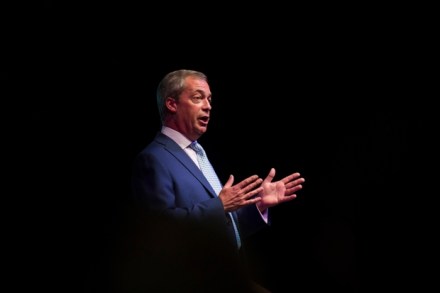
At the start of the year, some of the air seemed to have gone out of the Ukip balloon. The party’s warnings about the scale of Romanian and Bulgarian immigration to Britain hadn’t been borne out by events. But the debates with Nick Clegg enabled Nigel Farage to get his momentum back. In those debates, Clegg was too passive in the first one and then over-compensated in the second with the result that he ended up losing both of them. Clegg’s decision to not engage with Farage in the first debate meant that he missed his best chance to get under the Ukip leader’s skin.

How Nigel Farage hopes that immigration can deliver victory for Ukip

Nigel Farage’s strategy for winning the European Elections is based around winning over blue collar workers who normally vote Labour. Ukip believe that they can use immigration as a battering ram to break through Labour’s defences in the north. One of the party’s campaign billboards unveiled last night simply says, ’26 million people in Europe are looking for work. And whose jobs are they after’. (I suspect that Ukip will welcome the controversy these posters are attracting because it will help amplify their message) https://twitter.com/Adrian_Hilton/statuses/458163441531097088 Ukip’s argument is that it is the only party that can actually do something about immigration.

An American, an Australian and a South African walk into a British election

All three main parties have now hired foreign advisers to help run their general election campaigns. These foreign advisers have one thing in common: they’re all from the English speaking world. Despite our membership of the European Union, when it comes to winning elections, all our political parties think there is more to learn from other English speaking countries than France or Italy. Indeed, it is hard to imagine any of them putting a European in charge of their campaign. But they are all delighted to have their American, Australian and South African campaign hands. Partly, this is a language thing. But, I think, it also goes deeper than that.

The Keyser Söze of Ukrainian politics

Dmitry Firtash is the Keyser Söze of Ukrainian politics — a mystery figure about whom you hear two very different stories. According to one version, he’s a benign self-made businessman who gives generously to charities around the world, with the power — perhaps greater than any other Ukrainian citizen — to steer his troubled country towards stability and prosperity. According to the other, completely unproven version, which he denies, he’s Putin’s bagman, another of those crooked oligarchs who made their money through dirty means — and is now about to get his just deserts at the hands of the US legal system, which has the power to extradite him, imprison him and seize his billions.

Ukraine increases mistrust and misinformation between Russia and the West

The tense situation in Ukraine has escalated overnight. A deadline has passed for pro-Russian agitators to vacate government buildings in eastern Ukraine or face military action. There is no indication that the agitators have retreated. Meanwhile, reports from Kiev suggest that the government is trying to raise volunteer militias – perhaps in an attempt to avoid deploying the country’s armed forces, which would antagonise Russia. Last night a special session of the UN Security Council, called by Russia, was the scene of disagreement between Russia and the western powers. Ukraine and the western powers say that Russia is behind this unrest; as Vladimir Putin tries his hand at provatskiya (as described by Anne Applebaum in the Spectator recently).

Cameron’s renegotiation strategy is no longer an obstacle to a second Tory-Lib Dem coalition

David Cameron’s plan to renegotiate Britain’s membership of the European Union has long been regarded as a major obstacle to a second Tory-Lib Dem coalition. But, as I report in the Mail on Sunday, this is no longer the case. The Lib Dem logic is essentially that any deal that other European leaders are prepared to offer Cameron is one that they can accept as well. One Clegg confidant tells me that when it comes to the renegotiation, ‘It is not us David Cameron is going to have a problem with but the Tories.’ Indeed, there are parts of the renegotiation that the Liberal Democrats are already on board with. Clegg is fully supportive of the tightening up of the benefit rules for EU migrants that Employment Minister Esther McVey will announce on Wednesday.

Clegg lost against Farage, but that’s not the point

Why did Nick Clegg bother debating Nigel Farage? The Ukip leader bagged two decisive victories in the battles. But that doesn't mean the Lib Dem leader has failed to set out what he wanted to do. Clegg needed these debates to reach out to his base, to motivate them to go out campaigning and vote in May. He didn't need to 'win' in order to do that: he just needed to put the case for EU membership loudly and proudly. He had to remind some of his party's supporters why they joined the Liberal Democrats and he needs to motivate pro-Europeans from other parties to lend their vote to the Lib Dems too in order to prevent a wipeout. During the debate on Wednesday the Lib Dems sent a text message to all their members asking for £5 if Nigel Farage was making them angry.

Nigel Farage’s diary: Comfort for Cameron, and the wonders of German traffic

What a week! I was thrilled to have a chance to confront Nick Clegg but my excitement was tempered with disappointment that neither Cameron nor Miliband agreed to take part — although both were invited. I’d love to have challenged Miliband about the effects of uncontrolled immigration: wage compression, for instance, and the erosion of job opportunities within working-class communities. Why did he chicken out? My bet is he knows these facts are unanswerable. Cameron is, by all accounts, having kittens about Ukip but I think I can set his mind at rest. Our current wave of support seems to be thanks to working-class former Labour voters, which makes perfect sense.

Will Nick and Nigel be sidelined from the 2015 TV debates?

Has last night’s debate affected Nigel Farage’s chances of being involved in the general election TV debates? Although the broadcasters and political parties have yet to agree any dates or formats, the precedent has been set and the public will be expecting them. With weasel words from No.10 and a bullish attitude from some broadcasters, there’s a long way to go before an agreement is made. The public already have a clear idea of what they expect. According to the last YouGov polling on the subject, nearly half believe there should be a four-way debate between Cameron, Miliband, Clegg and Farage: [datawrapper chart="http://charts.spectator.co.uk/chart/noqHV/"] It’ll be interesting to see whether the public have changed their minds following Nick vs.

Nick Clegg stands to beat Nigel Farage in tonight’s Europe debate. Here’s why.

Tonight is the first round of the Clegg/Farage debate on Britain's EU membership. It is perfectly possible that both of the leaders could benefit from it. They could emerge as champions of their causes and gain plaudits for having the courage to debate the issue. But I suspect that this won't happen. They both believe too passionately in their positions on Europe to play it safe, thought they might be cautious tonight knowing that there's another debate coming in a week's time. One other thing that has raised the stakes is the barrage against Farage. If Farage has a poor night tonight, there'll be a lot of talk about how Ukip has lost the momentum that it had at the end of last year. My instinct is that the format slightly favours Clegg.

Ken Clarke: We don’t need treaty change to reform Europe, and my eurosceptic colleagues are eccentric

Tory europhiles don't often come out in the daylight: they normally give the impression they're frightened that their associations will get grumpy, or that their fellow MPs will try to shout them down. But today the pro-EU group European Mainstream launched their new pamphlet, In Our Interest: Britain with Europe, which takes a stance that is quite unusual in the Conservative party: it agrees with the Prime Minister's Europe strategy. The 62 MPs on the group - who include Ken Clarke, Damian Green, Richard Benyon and Caroline Spelman - didn't seem at all shifty or nervous when they gathered in Westminster Hall this afternoon to launch the pamphlet and make a positive case for Britain in Europe.

Our own folly may yet lead us to a second dishonourable Yalta

'He was back after less than two years’ pilgrimage in a Holy Land of illusion in the old ambiguous world, where priests were spies and gallant friends proved traitors and his country was led blundering into dishonour.' Those words are taken from Officers and Gentlemen, the second volume in Evelyn Waugh’s Sword of Honour, his trilogy about the second world war. The words describe the disillusion of the protagonist, Guy Crouchback, as Britain sides with Soviet Russia to defeat Hitler: an alliance with an atheist tyranny to defeat an atheist tyranny, an alliance that led to the betrayal – perhaps necessary – of Eastern Europe at Yalta.

Will there really be a ‘furious backlash’ to Ed Miliband’s EU referendum stance?

The Tories have been hoping that their pledge for a referendum on Britain's membership of the EU would split Labour – it was the rationale behind John Baron's regular pushes for legislation in this parliament for a referendum in the next, which David Cameron eventually satisfied as far as he could with the Wharton Bill. But so far the only dissenting voices on Ed Miliband's pledge today for an 'unlikely' referendum have been the usual suspects on the backbenches such as Graham Stringer and John Mann. That's hardly a 'furious backlash' and more expected and manageable rage – at present, anyway. It will be interesting to see whether there are many more senior figures who break cover or at least brief off the record about the Labour stance on this issue.

Ed Miliband’s speech on Europe: full text

In a speech today at the London Business School, Ed Miliband set out Labour's policy on an EU referendum: unless there are further transfers of powers, there won't be one. Here's what he said: listen to ‘Ed Miliband on an EU referendum’ on Audioboo It is great to be here at the London Business School. For fifty years, in the teaching you provide you have made a major contribution to helping businesses succeed across the world. And today I want to talk about an issue that I know is close to your heart: Britain’s place in the European Union. I want to set out why I believe our country’s future lies in the EU. Why the EU needs to change.

Douglas Alexander’s weasel words on Labour’s EU pledge

Unsurprisingly, Douglas Alexander's Today interview about Ed Miliband's pledge to not give the British people a referendum without saying he's not giving you a referendum wasn't the most edifying performance. Alexander admitted that what Miliband is promising is an 'unlikely' referendum, saying: 'He will say that our priority in government would be tackling the cost-of-living crisis and getting the economy back on track, not getting Britain out of Europe. He’ll set out some very practical and I think needed changes to make Europe work better for the United Kingdom. And he’ll also be open that we are not, as a prospective Labour government, proposing a further transfer of powers to Brussels.

Nigel Farage keeps on about EU migration, but non-EU migration is the greater problem

Last week, I spoke alongside Nigel Farage in a debate about immigration organised by the Evening Standard. It was good fun, as you’d expect, with David Lammy, Tessa Jowell and Simon Walker of the IoD on the other side, and David Goodhart alongside me and Mr Farage. You’d be startled, mind you, at the way Nigel Farage gets mobbed by an audience, and in a good way. I did get the chance to get to talk briefly to him myself and ask the question I’d wanted to put to him for ages: why it is that he keeps on about EU migration, when it’s non-EU migration that’s the greater problem. He was unfazed, of course, and said, look, when we meet again in the future to talk about all this, it’ll be EU immigration that’ll be the problem.

Nick Clegg’s comedy act

I much recommend Nick Clegg’s weekend speech. Since it was given at the Liberal Democrat Spring some people may have missed it. There is hardly a line that cannot draw a laugh. My favourite passage is this subtle reference to UKIP: ‘An ungenerous, backwards looking politics has emerged in Britain. The politics of blame has found an acceptable face: it wears a big smile and looks like someone you could have a pint with down the pub. So I’m drawing a line in the sand. I am going to defend the tolerant and modern Britain we love, and I am going to start by showing people what’s at stake at the upcoming European elections: do you want Britain in Europe, or out?’ I imagine that the success of this strategy will be demonstrated at the EU elections in May.

The Spectator: on 150 years of punishing Russia

Russia’s military intervention in Ukraine has left western diplomats scrabbling for sanctions that won’t backfire on to the rest of Europe and America. The foreign secretary William Hague said Russia must 'face consequences and costs'. When a policy paper was photographed that said the UK should not support trade sanctions or close London’s financial centre to Russians, Mr Hague said it did not reflect government policy. But punishing Russia is sure to be an expensive business. Just before the Crimean War, when Russia invaded Turkish Moldovia and Wallachia in 1853, a Spectator editorial took a hard line; Russia should be punished on principle.

Europe’s ‘new world order’ is letting Vladimir Putin run riot

[audioplayer src="http://traffic.libsyn.com/spectator/Untitled_2_AAC_audio.mp3" title="John O'Sullivan discusses why we shouldn't be so afraid of Putin" startat=1088] Listen [/audioplayer]If Vladimir Putin’s invasion and occupation of the Crimea brings to an end the Pax Americana and the post-Cold War world that began in 1989, what new European, or even global, order is replacing them? That question may seem topical in the light of Russia’s seemingly smooth overriding in Crimea of the diplomatic treaties and legal rules that outlaw aggression, occupation and annexation. In fact, it is six years behind the times. To understand the situation in the Ukraine, we need to go back to the Nato summit in Bucharest, in April 2008.